
What Should a Toilet Partition Handover Pack Include?
Quick project answer
A toilet partition handover pack is the controlled set of records that a project team assembles so the installed cubicle work can be reviewed, maintained and closed out with clear evidence. It is not a marketing folder and it is not a substitute for approved technical submittals.
For overseas contractors, architects, interior designers, owners and renovation teams, the pack should show what was reviewed, which decisions remain open and where project-specific evidence is still required. EBUNGE supplies commercial Toilet Partition / Toilet Cubicle as a product category; every material, hardware, dimension, finish, mounting and rating item in a pack must be matched to approved technical evidence for that project.
Why a Handover Pack Matters on Cubicle Projects
Toilet cubicle work sits between several trades: sanitary installation, partitions, doors, ironmongery, finishes and cleaning. Without a single handover reference, site teams rely on memory, marked-up drawings or informal messages. That creates avoidable risk at practical completion, when the owner needs to understand what was installed and how it should be maintained.
A well-structured pack does not claim compliance by itself. It records the project team’s review of layouts, privacy, door operation, support interfaces, cleaning documentation and applicable local requirements. Compliance statements belong to the responsible local professionals and the approved project documents.
Core Sections of a Toilet Partition Handover Pack
Think of the pack as a layered record. Each layer answers a different question, from what was designed to what the maintenance team needs after occupancy.
1. Project and Scope Information
Include the project name, location, floor or zone references, the responsible parties and the agreed scope of cubicle work. Note any areas excluded from the handover, such as future phases or tenant fit-out zones.
2. Approved Layout and Configuration Records
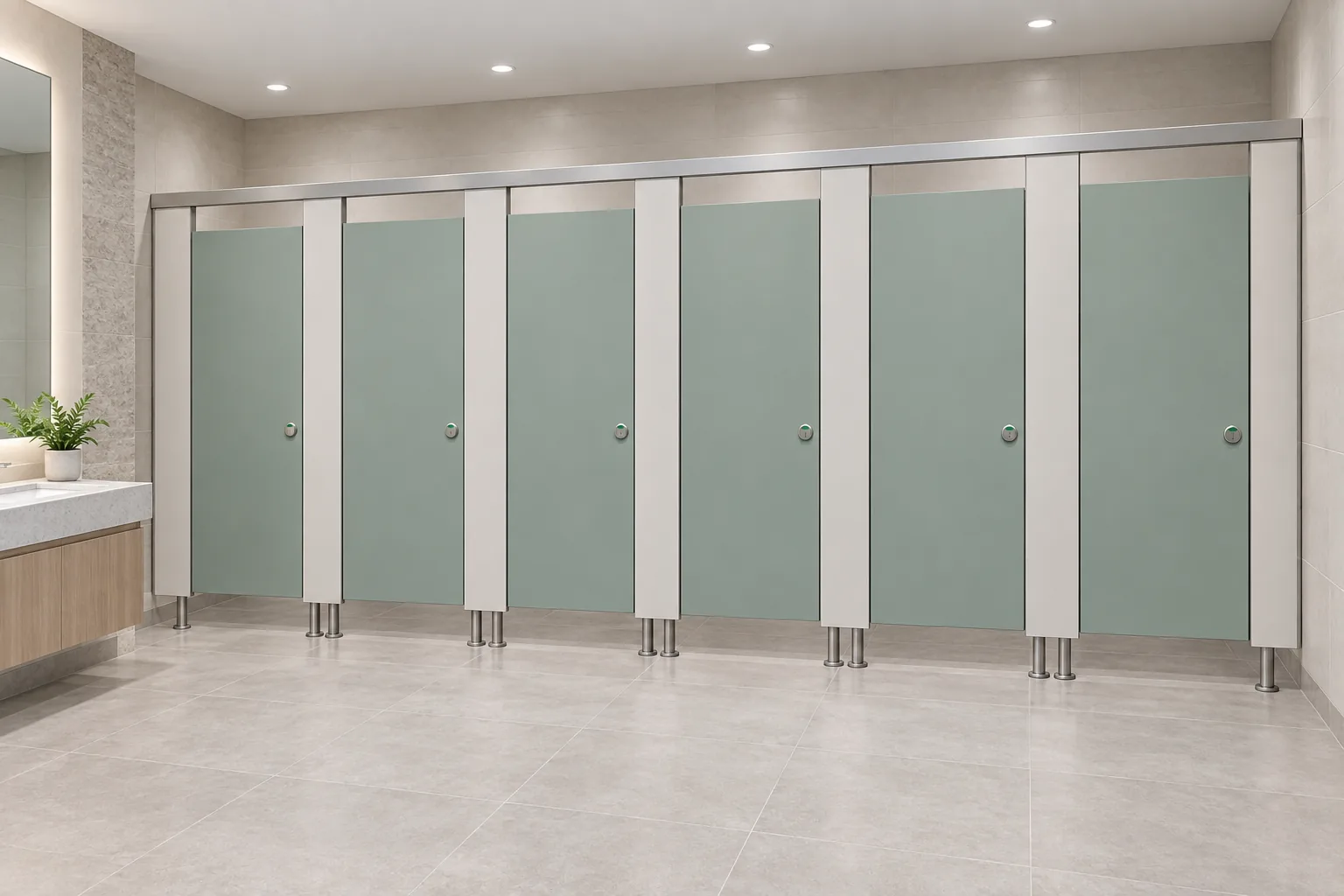
Keep the latest approved layout drawings, elevation references and setting-out information. Where the layout changed during construction, record the revision that was actually built. Do not infer hidden construction from illustrations; illustrations are generic design references, not completed EBUNGE customer projects.
3. Door Operation and Hardware Review
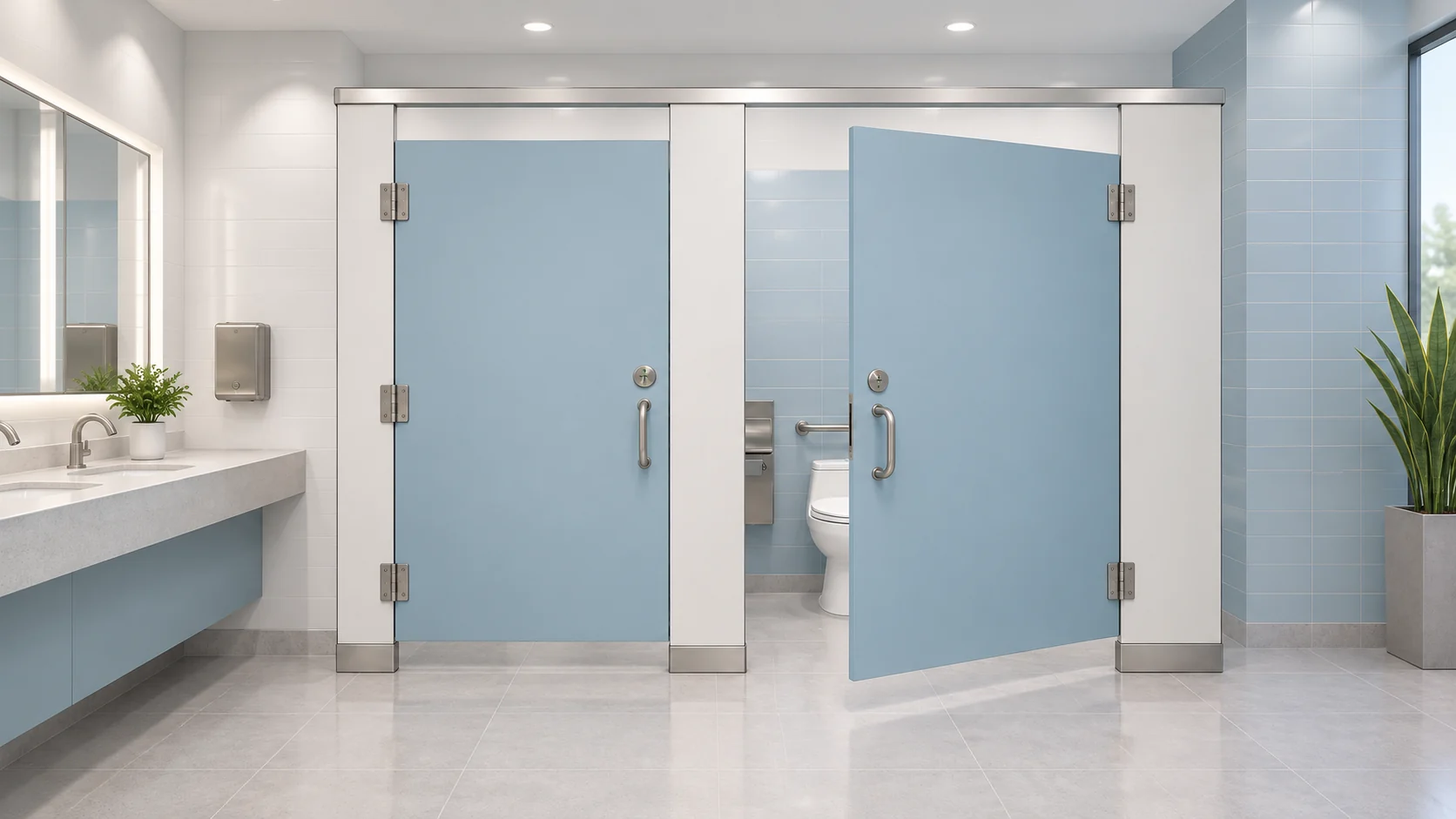
Document how each door type was reviewed for operation, clearance and closing behaviour. Hardware schedules should reference the approved project specification rather than a generic catalogue assumption. Any project-specific hardware detail requires matching approved technical evidence.
4. Support Interface and Fixing Coordination
Record how cubicle supports interface with walls, floors, ceilings or adjoining construction. This section should identify the responsible trade for each interface and any coordination item that remains open. Do not state load capacities or fixing performance unless the project has approved evidence for them.
5. Cleaning and Maintenance Documentation
The project team should confirm project-specific requirements against the relevant approved technical evidence. Keep them specific to the project specification. Avoid generic advice that could conflict with the manufacturer’s approved guidance.
6. Open Items and Evidence Register
List any outstanding information, such as a revised drawing, a confirmation from a supplier or a local authority query.
Decision Checklist for Assembling the Pack
- Confirm the approved layout revision matches the installed configuration.
- Check that door operation and hardware references match the project specification.
- Record support interface responsibilities between trades.
- Attach cleaning and maintenance documentation for the approved finishes.
- List applicable local requirements and who confirmed them.
- Flag any material, hardware, dimension, finish, mounting or rating item that still lacks approved technical evidence.
Evidence Boundaries Every Reviewer Should Respect
A handover pack is strongest when it separates confirmed information from assumptions. The following evidence note is a useful discipline for project teams.
Do not treat HPL, compact laminate, phenolic or stainless steel as interchangeable. Do not describe toilet cubicles as movable operable walls or introduce suspended wall travel, stacking or parking mechanisms. Any project-specific material, hardware, dimension, finish, mounting or rating requires matching approved technical evidence.
This boundary protects the owner as much as the contractor.
How to Coordinate the Pack Across the Project Team
The contractor can own the installation records, the architect can confirm the approved layout, and the owner’s representative can confirm acceptance criteria. The supplier’s role is to provide product information that matches the approved specification.
Use a simple review cycle: draft, comment, revise, approve. Keep each revision dated and attributed. When a question cannot be answered from approved evidence, record it as an open item rather than filling the gap with an assumption.
Common Gaps That Delay Practical Completion
Delays often come from missing records rather than missing physical work. Typical gaps include outdated layout drawings, unclear responsibility for wall or floor interfaces, cleaning instructions that do not match the installed finish, and unresolved local requirement queries. A short pre-handover review against the checklist above can surface these issues early.
For product category context, see the EBUNGE toilet partition product range. For broader planning guidance, visit the resources section. If your team needs to confirm project-specific information, use the contact page to start a documented conversation.
Frequently Asked Questions
What is the purpose of a toilet partition handover pack?
It gives the project team a controlled record of what was reviewed, approved and installed, so the owner can maintain the cubicles and close out the work with clear references.
Does a handover pack prove compliance?
No. It records the project team’s review of layouts, privacy, door operation, support interfaces, cleaning documentation and applicable local requirements. Compliance statements remain the responsibility of the relevant local professionals and approved project documents.
Can I use generic illustrations in the pack?
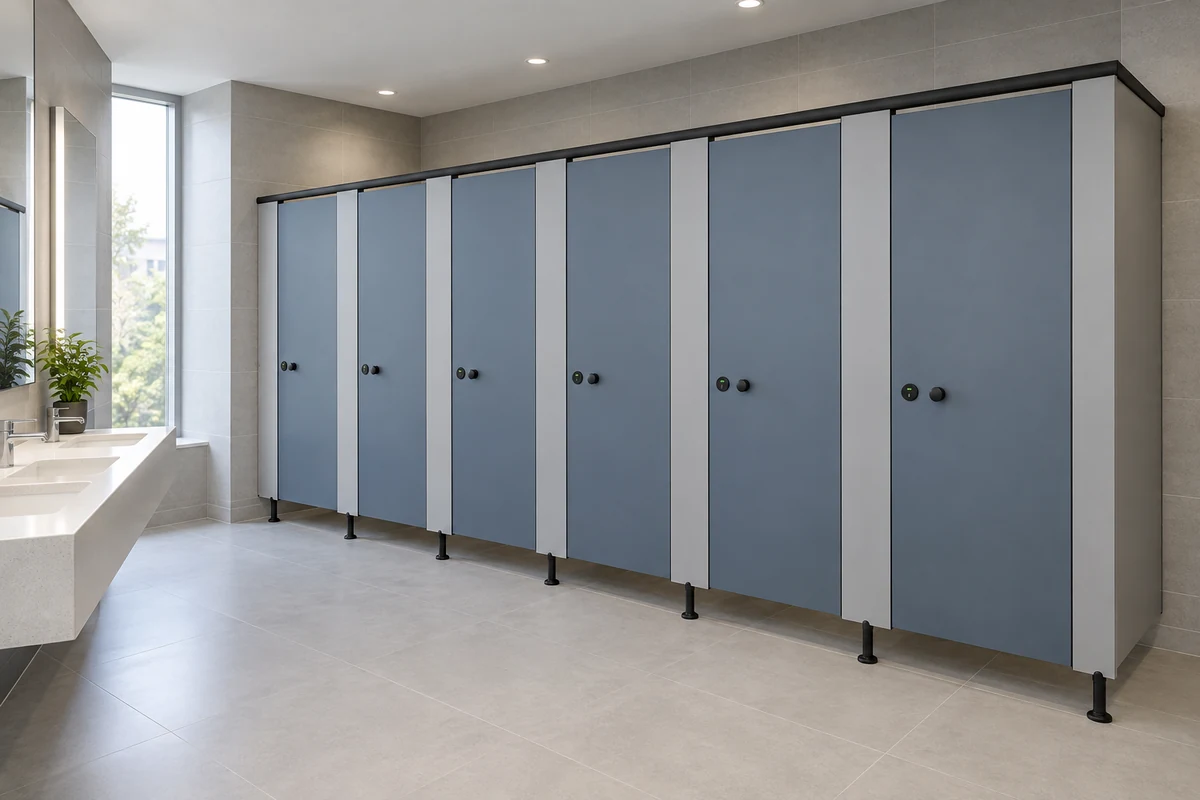
Illustrations may be used as generic design references, but they must not be presented as completed EBUNGE customer projects or as evidence of hidden construction.
What should I do if a material or hardware detail is missing?
Record it as an open item and obtain matching approved technical evidence before treating it as confirmed. Do not infer the detail from a similar project or a catalogue image.
Who should own the handover pack?
One nominated person should own the pack, with contributions from the contractor, architect, owner’s representative and supplier as appropriate to the project structure.
How often should the pack be updated?
Update it at each significant revision, such as a layout change, a hardware confirmation or a cleaning instruction update. Keep earlier revisions traceable.
Conclusion and Next Step
A toilet partition handover pack should be a disciplined, evidence-bounded record, not a collection of unverified statements. Build it around approved layouts, door operation, support interfaces, cleaning documentation and applicable local requirements, and keep every project-specific material, hardware, dimension, finish, mounting or rating tied to matching approved technical evidence.
If your team is preparing a handover pack and needs to confirm product category information, contact EBUNGE to begin a documented review.