
How Architects Set a Toilet Partition Hardware Review Cadence
Quick answer: toilet partition
A toilet partition hardware review cadence is the scheduled rhythm a project team uses to check door operation, support interfaces, privacy, cleaning access and applicable local requirements before construction documents are finalized. Architects set this cadence early because hardware decisions rarely sit in isolation: they touch layouts, adjacent finishes, structural supports and maintenance routines. EBUNGE product category includes commercial Toilet Partition / Toilet Cubicle.
That confirmed scope is the starting point, not a substitute for project-specific evidence. Every material, hardware item, dimension, finish, mounting condition and rating must be matched to approved technical evidence for the application reference. Illustrations in this article are generic design references, not completed EBUNGE customer projects.
Why a Review Cadence Beats a One-Time Hardware Check
A single review meeting often arrives too late to influence wall layouts, door swings or support coordination. A cadence spreads the same decisions across predictable checkpoints, so unresolved items surface while drawings are still flexible. It also gives contractors, owners and distributors a shared language for what is confirmed and what remains open.
The cadence is not a compliance claim. It is a project-team habit: review layouts, privacy expectations, door operation, support interfaces, cleaning documentation and applicable local requirements without asserting unverified compliance. When a question cannot be answered from maintained product facts or approved project evidence, it stays open rather than becoming an assumption.
Who Should Be in the Review Loop
Architects usually convene the loop, but the useful participants depend on project stage. A contractor can flag site tolerances and sequencing. An interior designer can speak to finish coordination and cleaning routines. An owner or facility representative can describe daily use and maintenance access. A distributor can confirm what documentation is available for a proposed configuration.
Keep the group small enough to decide and broad enough to catch interfaces. The goal is not to approve a product family in the abstract. It is to confirm that the project-specific configuration has matching approved technical evidence before it is fixed in drawings or procurement documents.
A Five-Stage Cadence for Project Teams
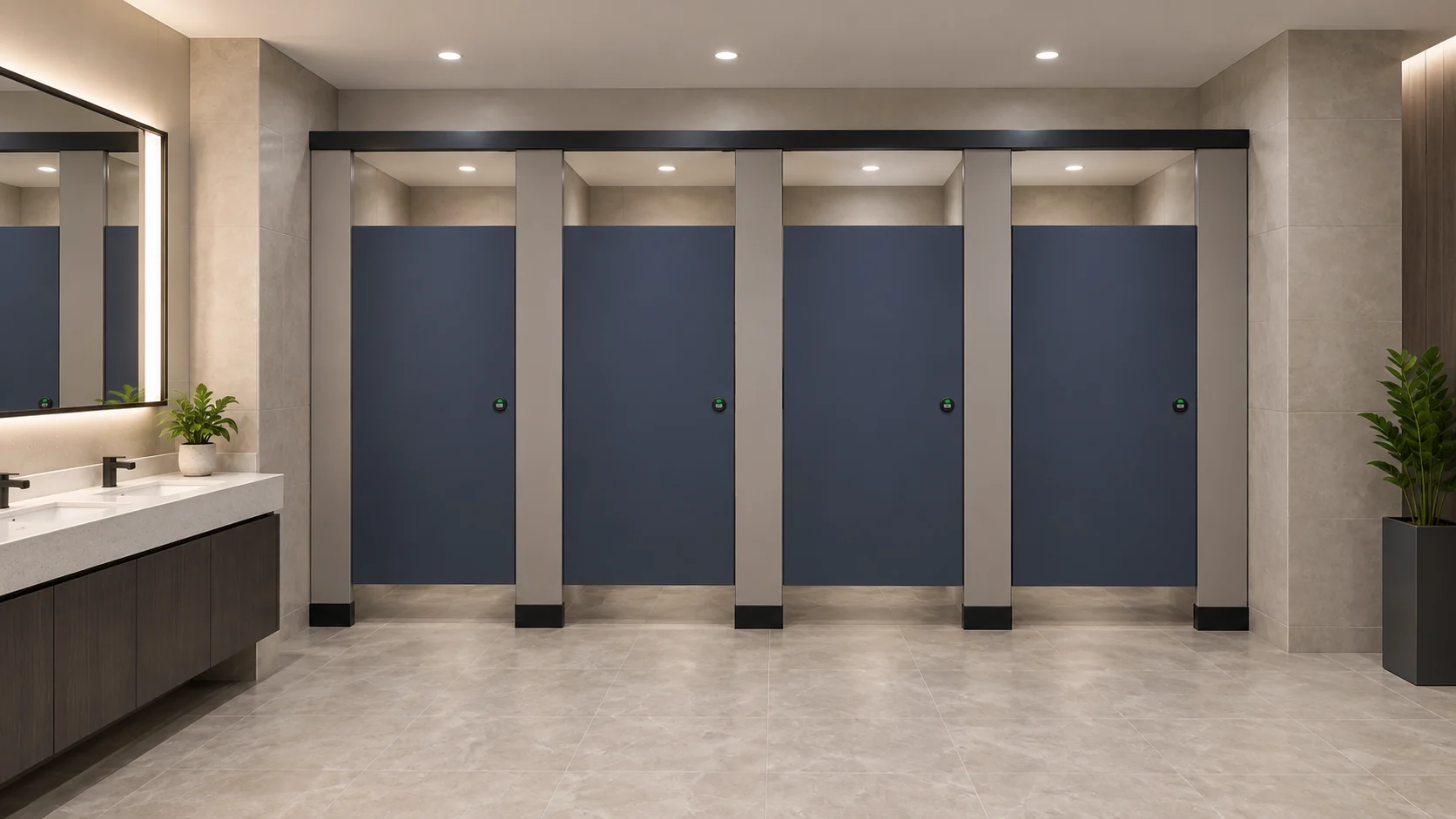
- Stage 1 — Scope and constraints: Record the room layout, privacy expectations, door operation needs, support conditions and cleaning access. Note applicable local requirements as questions to verify, not as assumed compliance.
- Stage 2 — Evidence mapping: For each proposed material, hardware item, dimension, finish and mounting condition, identify the approved technical evidence that supports it. Mark anything unsupported as open.
- Stage 3 — Interface review: Check how partitions meet floors, walls, ceilings, adjacent fixtures and services. Confirm support interfaces with the structural or coordination team.
- Stage 4 — Documentation review: Align drawings, schedules and cleaning documentation. Confirm that what is drawn matches what is specified and what can be maintained.
- Stage 5 — Pre-construction confirmation: Re-check open items, confirm that project-specific evidence is still current, and close or escalate each question before installation planning proceeds.
Decision Checklist for Each Review Meeting
- Are layouts, privacy expectations and door operation described in the current drawing set?
- Does every proposed material, hardware item, dimension, finish and mounting condition have matching approved technical evidence?
- Are support interfaces coordinated with the relevant structural or services team?
- Is cleaning documentation available for the intended maintenance routine?
- Are applicable local requirements listed as verification items rather than assumed outcomes?
- Are unresolved items assigned an owner and a date?
This checklist is deliberately evidence-bounded. The project team should confirm project-specific requirements against the relevant approved technical evidence. Those claims require their own approved evidence and should never be inferred from a generic illustration or a product category name.
Coordination Interfaces Architects Should Track
Layout and privacy
Review sightlines, door positions and panel relationships as a project-specific exercise. Do not treat HPL, compact laminate, phenolic or stainless steel as interchangeable, and do not infer hidden construction from an illustration. If a material or finish is proposed, its evidence must match the project.
Door operation and support
Toilet cubicles are not movable operable walls, and they should not be described with suspended wall travel, stacking or parking mechanisms. Keep the review focused on fixed partition coordination.
Cleaning and maintenance
Cleaning documentation helps owners plan daily routines and long-term maintenance. Ask what documentation is available for the proposed configuration, and record any gaps as open items rather than filling them with assumptions.
Evidence Notes: What Can and Cannot Be Said
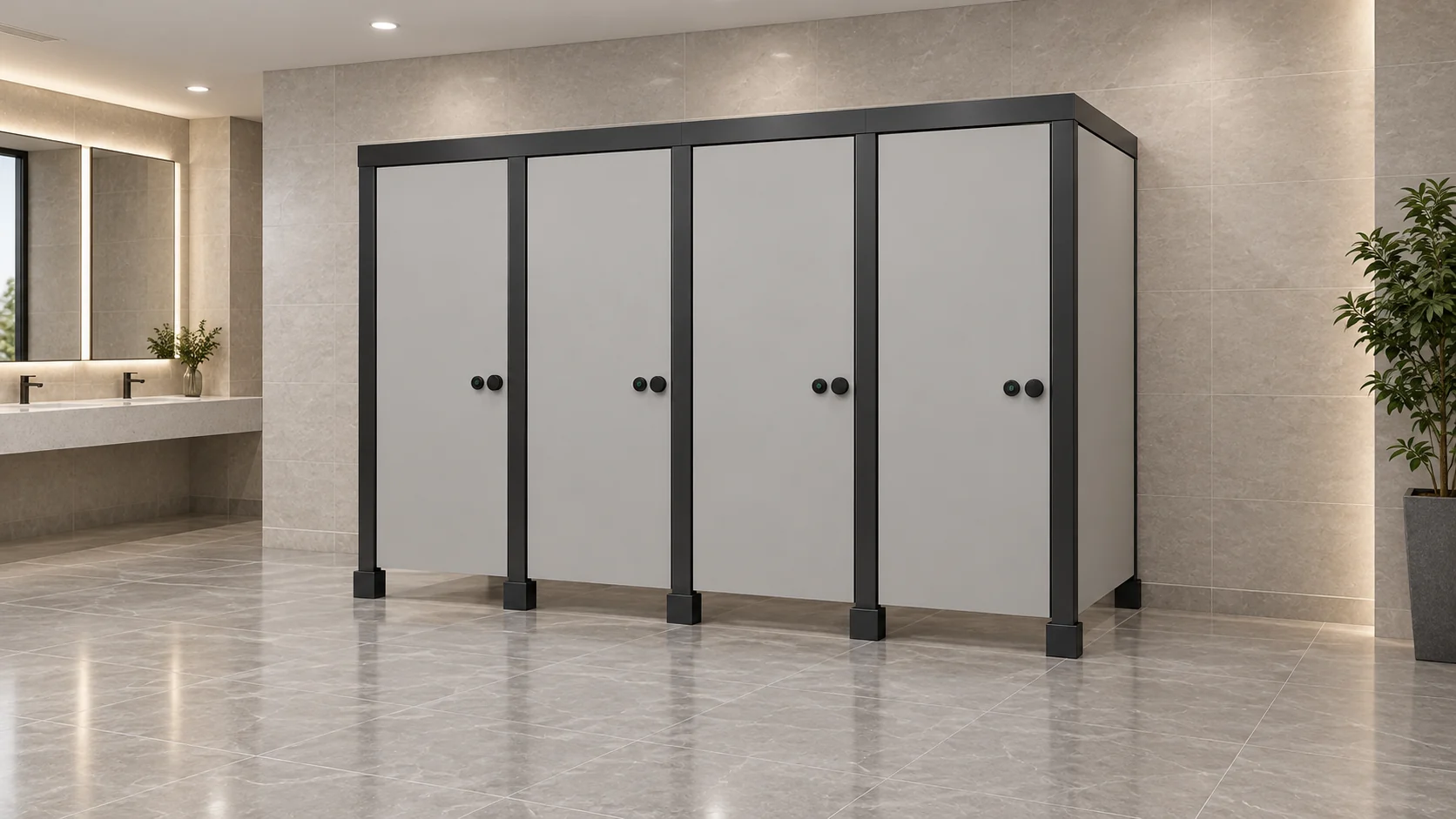
Confirmed fact: EBUNGE product category includes commercial Toilet Partition / Toilet Cubicle. All other project-specific material, hardware, dimension, finish, mounting and rating statements require matching approved technical evidence.
When a supplier or team member offers a performance claim, ask for the approved evidence that supports it. If the evidence is not available, the claim stays out of the specification. This discipline protects the project from unsupported conclusions and keeps the review cadence honest.
For maintained product context, see the EBUNGE toilet partition product overview. Additional planning references are available in the resources section.
Common Cadence Mistakes to Avoid
One common mistake is treating the first hardware review as a final approval. Another is letting a generic illustration stand in for a project-specific drawing. A third is allowing a material name to imply performance that has not been evidenced.
Keep the cadence alive through design development, construction documentation and pre-construction. Revisit open items at each stage, and confirm that approved technical evidence still applies to the current configuration. If the configuration changes, the evidence review restarts for the changed items.
Frequently Asked Questions
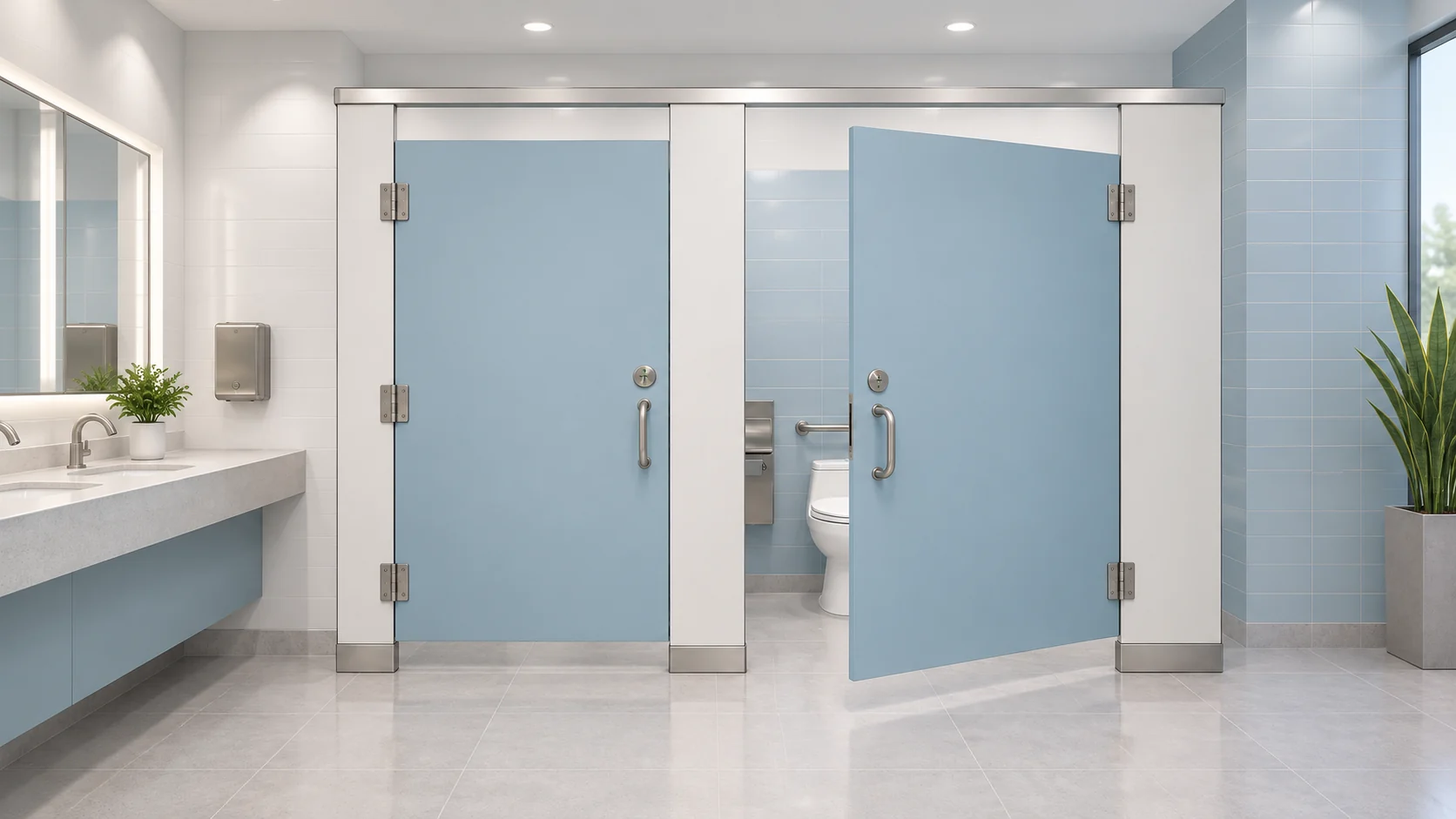
What is a toilet partition hardware review cadence?
It is a scheduled series of project-team checkpoints for reviewing layouts, privacy, door operation, support interfaces, cleaning documentation and applicable local requirements. It is a coordination habit, not a compliance certification.
How often should the review happen?
Timing depends on project stage and complexity. A practical approach is to review at scope definition, evidence mapping, interface coordination, documentation and pre-construction. The cadence should be agreed by the project team rather than assumed.
Can a product category confirm project-specific performance?
No. EBUNGE product category includes commercial Toilet Partition / Toilet Cubicle, but project-specific material, hardware, dimension, finish, mounting and rating statements require matching approved technical evidence.
Are HPL, compact laminate, phenolic and stainless steel interchangeable?
They should not be treated as interchangeable, and hidden construction should not be inferred from illustrations. Each proposed material must be supported by approved evidence for the specific project.
What should be documented after each review?
Record decisions, open items, assigned owners and dates. Note which statements are supported by approved technical evidence and which remain unverified. Keep cleaning documentation and applicable local requirements visible in the record.
Do illustrations show completed EBUNGE projects?
No. Illustrations show generic design references, not completed EBUNGE customer projects. They can support discussion but cannot substitute for project-specific drawings or evidence.
Conclusion: Make the Cadence a Project Habit
A toilet partition hardware review cadence works when it is scheduled, evidence-bounded and shared across the project team. Architects can use it to surface layout, privacy, door operation, support interface and cleaning questions while drawings are still flexible. Keep every project-specific material, hardware, dimension, finish, mounting and rating tied to approved technical evidence, and leave unverified claims out of the specification.
To discuss a project-specific review approach, contact the EBUNGE team and share the current drawing stage, open questions and documentation needs.