
How Changeover Buffers Keep Toilet Partition Rooms on Schedule
Quick project answer
Review focus: changeover buffers.
Toilet partition changeover buffers are schedule allowances that protect a handover date when a washroom area must be completed, inspected and released before the next trade or occupancy phase begins. For overseas contractors, architects and renovation teams, the buffer is not a product feature. It is a planning decision that links layout review, privacy expectations, door operation, support interfaces and cleaning documentation to the wider construction programme.
EBUNGE product category includes commercial Toilet Partition / Toilet Cubicle. This article explains how to use changeover buffers as a coordination tool without assuming unverified performance, compliance or configuration.
What a Changeover Buffer Means in a Toilet Partition Programme
A changeover buffer is the time and sequence space reserved between completing one activity and starting the next. In a toilet partition room, that may sit between first-fix support preparation and cubicle installation, or between installation and final cleaning. The buffer absorbs coordination delays without compressing the inspection period.
It is not a substitute for design information. A buffer only works when the project team has agreed what must be checked before the room can be released. That list should include layout dimensions, door swing, privacy interfaces, support locations and the cleaning regime expected by the owner.
Why Toilet Partition Changeover Buffers Matter to Project Teams
Washroom areas sit at the intersection of several trades. Floor finishes, drainage, electrical services, access panels and partition supports can all compete for the same zone. If the partition package is treated as a single installation event, any late decision about door operation or support interface can push the room past its handover date.
A changeover buffer gives the project team a defined window to resolve those interfaces. It also creates a visible point in the programme where the owner, contractor and designer confirm that the room is ready for the next stage. The buffer does not remove the need for approved technical evidence; it simply prevents unresolved questions from being discovered too late.
Information to Gather Before Setting the Buffer
Before a buffer duration can be discussed, the project team should assemble the information that affects the room sequence. This is a review exercise, not a compliance statement. Any project-specific material, hardware, dimension, finish, mounting or rating requires matching approved technical evidence.
- Layout drawings showing cubicle positions, circulation and door approach.
- Privacy expectations agreed with the owner or operator.
- Door operation requirements, including swing direction and clearance.
- Support interface locations and the structural or service zones they affect.
- Cleaning documentation and the access needed for routine maintenance.
- Applicable local requirements identified by the project team.
Where any item is unresolved, the buffer should be treated as a coordination risk rather than a fixed allowance. The project team should record who owns each decision and when it must be closed.
A Step-by-Step Review Process for Changeover Buffers
The following process helps a project team turn a buffer from a vague time allowance into a controlled sequence. It does not replace project-specific drawings or approved evidence.
- Confirm the room handover date and the activities that must finish before it.
- Review the layout for cubicle positions, circulation and door approach.
- Check privacy interfaces and door operation against the agreed design intent.
- Map support interfaces and identify any service or structural conflicts.
- Agree the cleaning documentation and access requirements for the completed room.
- Identify applicable local requirements and the evidence needed to address them.
- Assign owners and deadlines for each open decision.
- Set the buffer duration only after the open items have been reviewed.
This sequence keeps the buffer tied to real decisions. It also gives the contractor a clear basis for reporting progress without making unsupported claims about performance or compliance.
Coordination Points That Commonly Consume the Buffer
Most schedule pressure in a toilet partition room comes from interfaces rather than the partition itself. The project team should treat the following as coordination points that may need buffer time.
Support interfaces and adjacent trades
Support locations can affect floor build-up, wall construction and service routing. If these are not confirmed early, the installation sequence may need to change. The buffer should reflect the time needed to resolve those interfaces, not an assumption about hidden construction.
Door operation and privacy review
Door swing, latch approach and privacy gaps are design decisions that should be reviewed against the agreed layout. They require project-specific evidence before they can be treated as fixed. A buffer allows the team to close these items before the room is released.
Cleaning documentation and final access
Cleaning teams need to understand how the completed room will be maintained. If documentation or access arrangements are incomplete, the handover can stall. The buffer should include time for the owner to receive and review the relevant information.
Evidence Boundaries for Toilet Partition Changeover Buffers
Changeover buffers are a planning concept, not a product performance claim. The project team should keep a clear boundary between what is confirmed and what still requires evidence.
| Item | Status | Action |
|---|---|---|
| EBUNGE product category | Confirmed: commercial Toilet Partition / Toilet Cubicle | Use as category context only |
| Material, hardware, dimensions, finishes | Project-specific | Match to approved technical evidence |
| Ratings and performance | Not confirmed | Do not infer or publish |
| Compliance with local requirements | Project-specific | Verify through the project team |
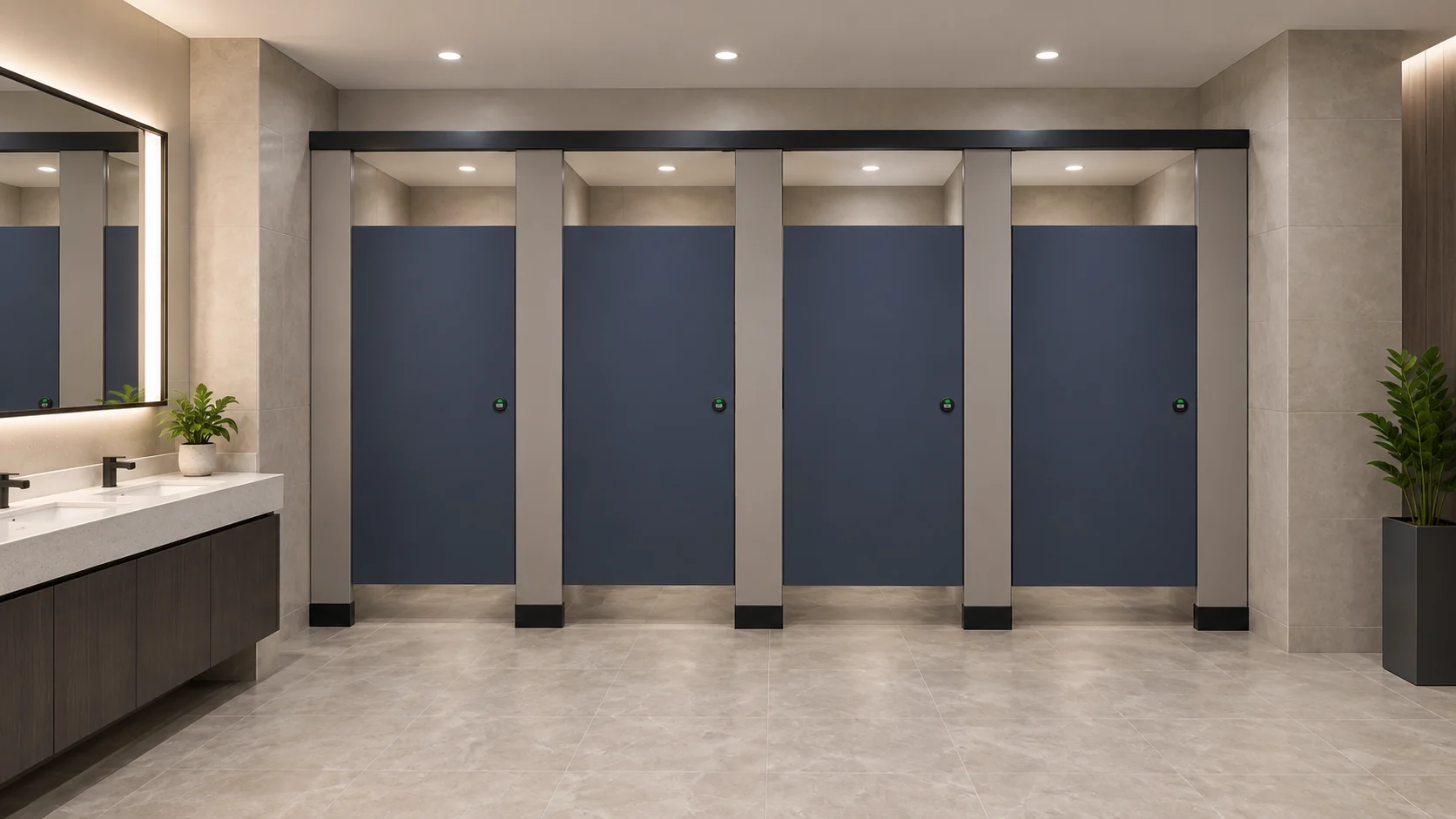
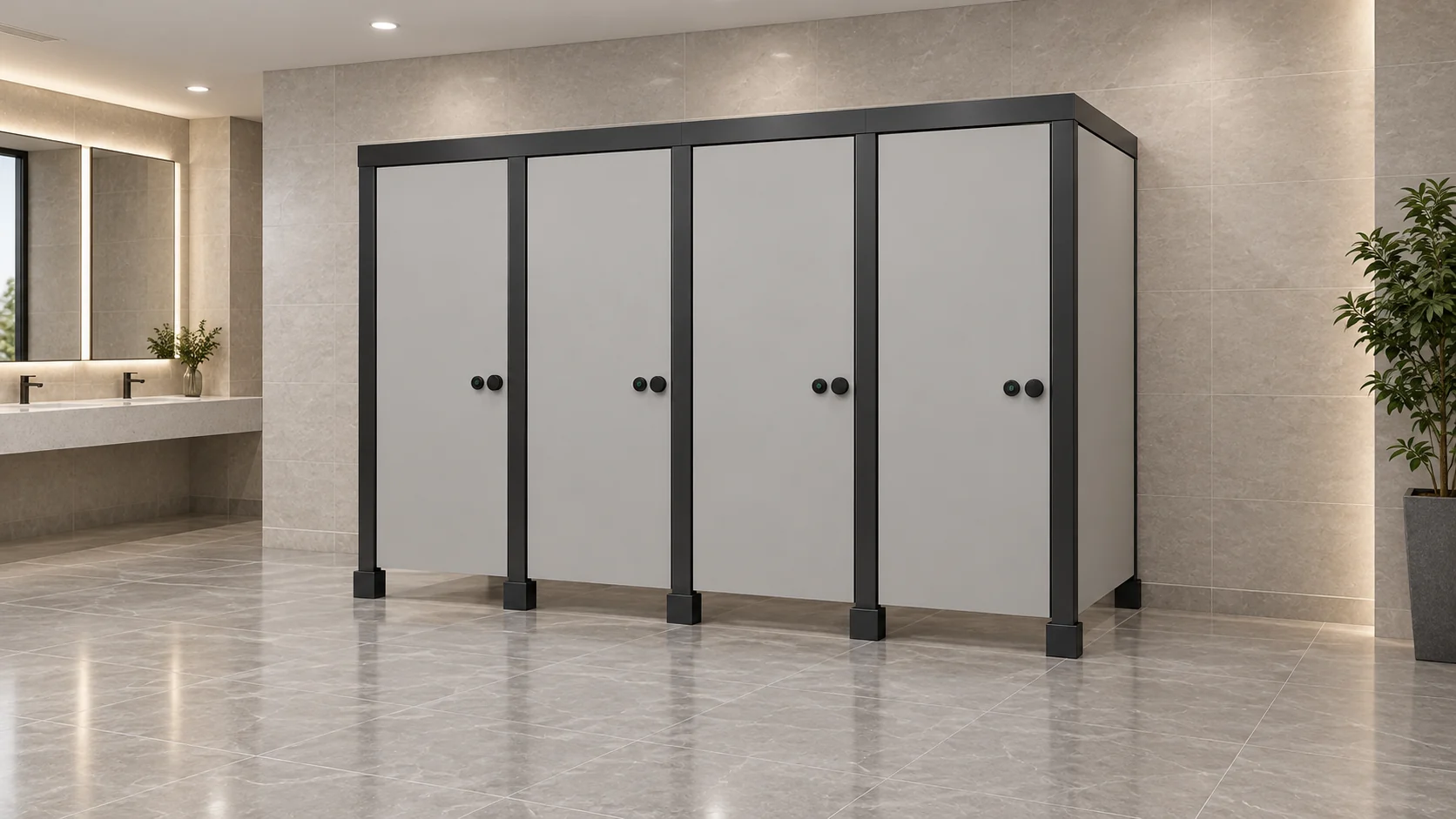
Illustrations show generic design references, not completed EBUNGE customer projects. Any quotation term, drawing rule or configuration detail must come from the project’s own approved documents.
How to Document the Buffer Decision
A buffer decision should be recorded in the programme and in the project’s coordination notes. The record should state the handover date, the activities covered, the open items and the owner of each item. It should also note which decisions depend on approved technical evidence.
This record helps the project team avoid two common errors: treating the buffer as a guarantee, or treating it as unnecessary because the partition package looks simple. Neither position is supported by evidence. The buffer is a risk-management tool that should be reviewed as the project develops.

Frequently Asked Questions
What is a toilet partition changeover buffer?
It is a schedule allowance that protects the handover of a toilet partition room by giving the project team time to close layout, door operation, support interface and cleaning documentation items before the next phase begins.
Does a changeover buffer guarantee that a washroom will be completed on time?
No. A buffer is a planning tool, not a guarantee. It only helps when the project team has identified the decisions that must be closed and assigned owners for each one.
Which product details can be confirmed from EBUNGE?
The confirmed fact is that EBUNGE product category includes commercial Toilet Partition / Toilet Cubicle. Material, hardware, dimensions, finishes, ratings and other project-specific details require matching approved technical evidence.
Can the buffer be used to claim compliance with local requirements?
No. Applicable local requirements must be reviewed by the project team. A buffer does not assert compliance and should not be presented as evidence of it.
How should the project team handle illustrations?
Illustrations show generic design references, not completed EBUNGE customer projects. They should not be used to infer hidden construction, material composition or performance.
When should the buffer duration be set?
Only after the project team has reviewed the layout, privacy expectations, door operation, support interfaces, cleaning documentation and applicable local requirements. Setting a duration before that review can hide unresolved risk.
Conclusion: Use Buffers to Protect Decisions, Not to Replace Evidence
Toilet partition changeover buffers help project teams keep washroom areas on schedule by making coordination visible. The project team should confirm project-specific requirements against the relevant approved technical evidence.
For project teams evaluating commercial toilet partitions, the practical next step is to review the available product category information and then confirm every project-specific detail against approved documents. You can start with the EBUNGE product overview, review additional planning resources, or contact the team to discuss the information your project needs.