
How Changeover Policy Shapes Toilet Partition Room Scheduling
Quick project answer
Toilet partition changeover policy planning is the project-team discipline of deciding how a washroom or cubicle room moves from one use state to another without creating unsupported assumptions about materials, hardware or performance. For overseas contractors, architects, interior designers, owners, renovation companies, distributors and construction teams, the policy is not a product specification.
It is a coordination framework that links layout review, privacy expectations, door operation, support interfaces, cleaning documentation and applicable local requirements. EBUNGE product category includes commercial Toilet Partition / Toilet Cubicle. Every project-specific material, hardware, dimension, finish, mounting or rating still requires matching approved technical evidence.
What Changeover Policy Means in Toilet Partition Room Scheduling
A changeover policy describes the sequence and conditions under which a toilet partition room is released, cleaned, inspected and returned to service. In scheduling terms, it answers who confirms readiness, what evidence is checked, and when the next user group can enter. It does not describe movable operable walls, suspended wall travel, stacking or parking mechanisms. Toilet cubicles are fixed room elements in this planning context.
The policy becomes useful when it is written as a review routine rather than a performance promise. Project teams should separate confirmed product facts from project-specific decisions. The only confirmed product fact available here is that EBUNGE product category includes commercial Toilet Partition / Toilet Cubicle. All other configuration details must come from approved drawings, schedules and technical submittals.
Why Scheduling Depends on Layout and Privacy Review
Room scheduling is often treated as a cleaning timetable. In practice, it depends on layout and privacy decisions made much earlier. If the project team has not reviewed cubicle count, circulation, sightlines and door swing, the changeover policy cannot be applied consistently. These are project-specific matters, not general product facts.
Layout review inputs
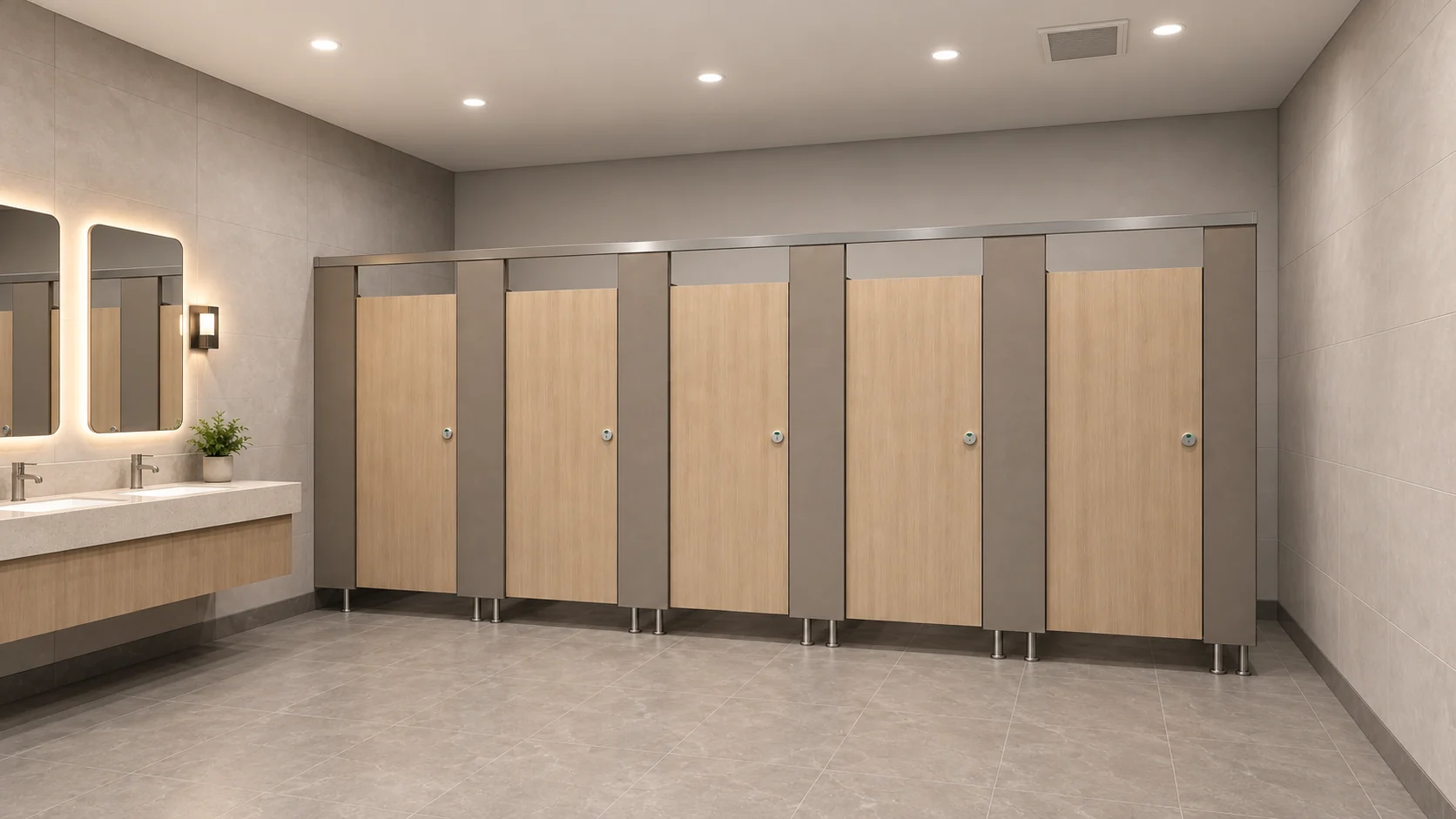
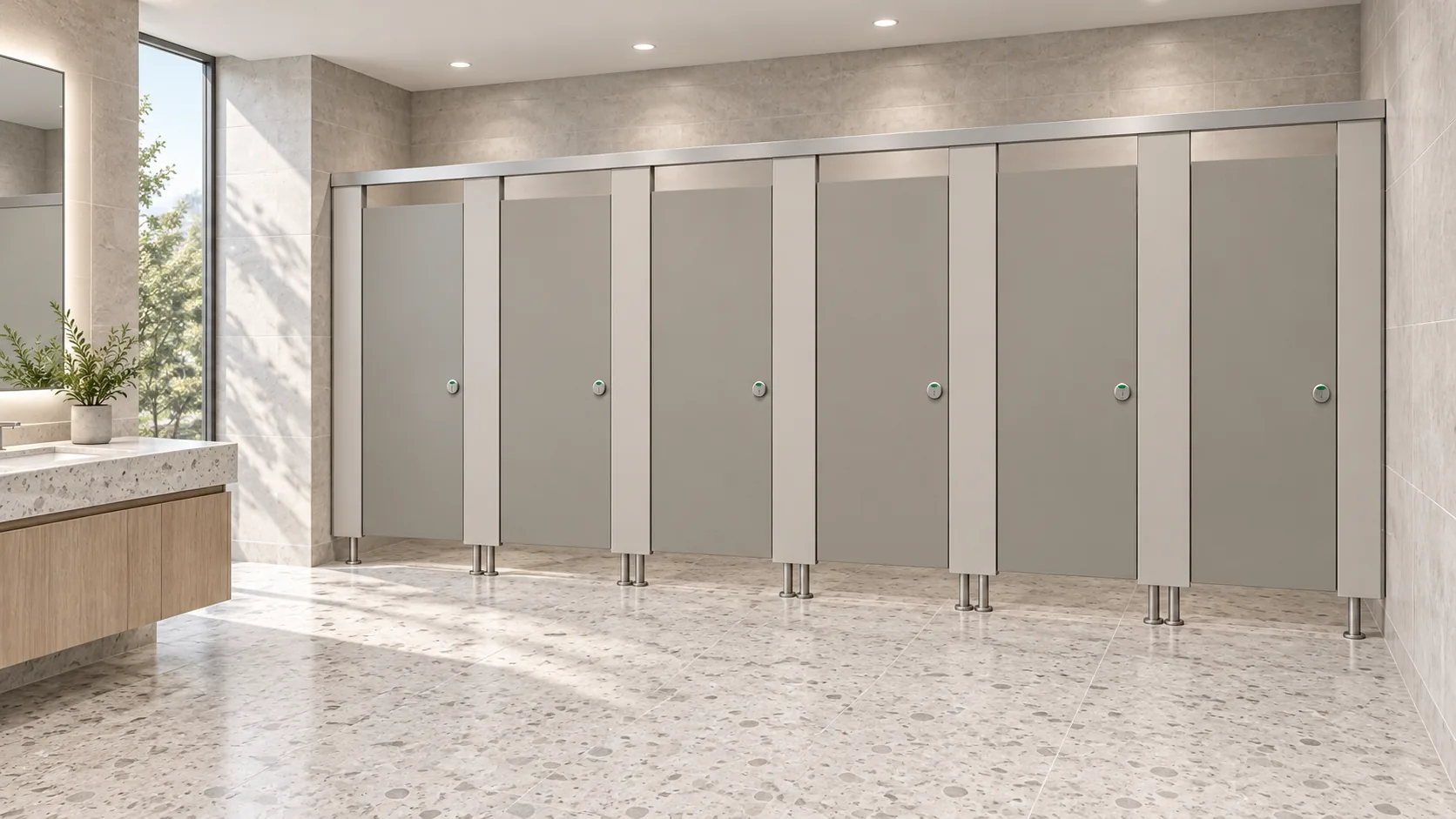
Layout review should identify the room boundary, entry point, cubicle positions, accessible route and any support interface that affects cleaning or inspection. The review should record assumptions that need confirmation, such as whether a partition run meets a wall, column or duct enclosure. Illustrations show generic design references, not completed EBUNGE customer projects.
Privacy review inputs
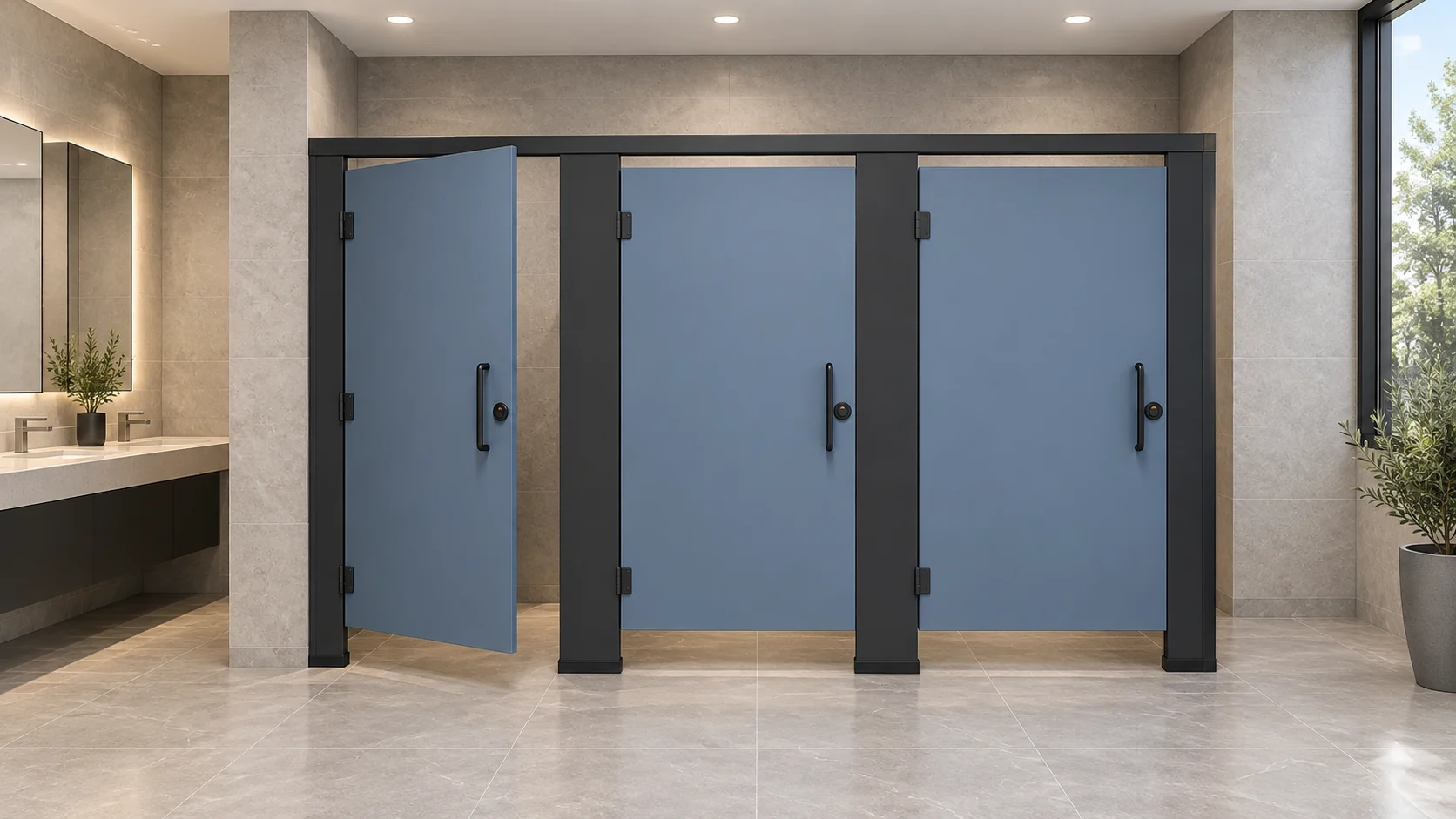
Privacy review considers door height, panel joints, gaps and the relationship between cubicles and public areas. These are project-specific and must be checked against approved technical evidence. A changeover policy should not claim acoustic, antimicrobial or waterproof performance unless that evidence exists for the exact configuration.
Door Operation and Support Interfaces in the Changeover Sequence
The project team should confirm project-specific requirements against the relevant approved technical evidence. The policy should state who checks each door, what is recorded, and how faults are reported. It should not infer hidden construction from illustrations or treat HPL, compact laminate, phenolic or stainless steel as interchangeable.
Support interfaces include the connections between partitions and the building structure, as well as any coordination with sanitaryware, accessories, lighting or ventilation. The changeover policy should list these interfaces as review items, not as verified conditions. Any project-specific mounting detail requires matching approved technical evidence.
A Decision Checklist for Changeover Policy Planning
Use this checklist during project-team review. It is a planning aid, not a compliance statement.
- Confirm the room boundary and the scope of the changeover.
- List the user groups and the sequence in which they occupy the room.
- Record layout, privacy and door-operation assumptions that need approval.
- Define the cleaning documentation to be checked before release.
- Note applicable local requirements for the project team to verify.
- Assign responsibility for inspection, sign-off and fault reporting.
- State which items remain open pending approved technical evidence.
Cleaning Documentation and Handover Evidence
Cleaning documentation is the bridge between changeover policy and room scheduling. The policy should specify what records are reviewed, who reviews them, and how exceptions are handled. It should not assert that a particular cleaning method is suitable for every material or finish. That determination belongs to the project-specific specification.
Handover evidence may include approved drawings, schedules, inspection records and maintenance instructions. The project team should confirm that these documents match the installed configuration. Where documentation is incomplete, the changeover policy should require a hold point rather than an assumption.
How to Coordinate Toilet Partition Changeover Policy Planning
The following numbered process can be adapted to the project.
- Collect approved drawings, schedules and project-specific requirements.
- Map the changeover sequence against room scheduling and user groups.
- Review layout, privacy, door operation and support interfaces.
- Confirm cleaning documentation and inspection responsibilities.
- Record open items that require approved technical evidence.
- Issue the policy for project-team review and sign-off.
- Revisit the policy when the configuration or schedule changes.
This process does not certify compliance with any local requirement. It simply gives the project team a traceable way to coordinate. For maintained product context, see the EBUNGE product category. Additional planning references are available in the resources section.
Evidence Boundaries and Common Planning Errors
Changeover policy planning fails when assumptions are treated as facts. Common errors include inferring material composition from an illustration, assuming that different panel materials are interchangeable, and describing toilet cubicles as movable operable walls. These errors can distort scheduling and create false expectations.
Evidence note: The only confirmed product fact in this guide is that EBUNGE product category includes commercial Toilet Partition / Toilet Cubicle. All project-specific materials, hardware, dimensions, finishes, mountings and ratings require matching approved technical evidence.
Where such information is needed, it must come from the approved project record.
Frequently Asked Questions
What is toilet partition changeover policy planning?
It is the project-team process of defining how a toilet partition room is released, cleaned, inspected and returned to service. It coordinates layout, privacy, door operation, support interfaces, cleaning documentation and applicable local requirements without asserting unverified compliance.
Does changeover policy require a specific partition material?
No. The policy should not treat HPL, compact laminate, phenolic or stainless steel as interchangeable. Any project-specific material must be confirmed against approved technical evidence for that project.
Can changeover policy be based on an illustration?
No. Illustrations show generic design references, not completed EBUNGE customer projects.
Who should review the changeover policy?
The project team should include the parties responsible for design, construction, cleaning, inspection and handover. The exact roles depend on the project and applicable local requirements.
How does changeover policy affect room scheduling?
It defines the conditions that must be met before a room is released to the next user group. Clear hold points and inspection responsibilities help avoid unsupported assumptions about readiness.
What evidence is needed for project-specific claims?
Any project-specific material, hardware, dimension, finish, mounting or rating requires matching approved technical evidence.
Conclusion and Next Step
Changeover policy shapes toilet partition room scheduling by turning coordination into a documented review routine. It helps project teams separate confirmed product facts from project-specific decisions, and it keeps layout, privacy, door operation, support interfaces and cleaning documentation visible. The policy should remain evidence-bounded and should be updated when the project configuration changes.
To discuss your project requirements, contact the EBUNGE team. Bring your approved drawings, schedules and open questions so the review can focus on the evidence your project actually has.