
Review Toilet Partition Tenders Without Overlooking Hardware
Quick project answer
Toilet partition tenders can look complete while leaving hardware, interfaces and documentation unresolved. For overseas contractors, architects, interior designers, owners and renovation teams, the risk is not only price comparison. It is awarding a scope that cannot be coordinated on site. Review the layout, privacy requirements, door operation, support interfaces, cleaning documentation and applicable local requirements with the project team, using the relevant approved technical evidence. Any project-specific material, hardware, dimension, finish, mounting or rating requires matching approved technical evidence. Illustrations show generic design references, not completed EBUNGE customer projects.
Why Hardware Deserves Its Own Tender Review
Hardware is often treated as a minor line item in toilet partition tenders. In practice, hinges, latches, keepers, support interfaces and fixing details influence door operation, cleaning routines and long-term maintenance planning. When these items are described only by generic phrases, the tender does not give the project team enough information to compare offers fairly.
Reviewers should separate what is visible in the tender documents from what still requires project-specific evidence. A drawing may show a door swing, but it does not confirm a hardware type, material grade or fixing method unless that information is explicitly documented and approved for the project.
Start With Layout and Privacy Assumptions
Before comparing hardware, confirm the layout logic. Cubicle count, compartment proportions, door swing direction and circulation space affect how hardware is coordinated. Privacy expectations should be discussed as a project requirement, not assumed from a generic illustration.
Questions for the layout review
- Does the tender show door swing direction and clearance in relation to adjacent fixtures?
- Are privacy gaps or sightline concerns described as project requirements rather than product claims?
- Do support interfaces appear on the drawings, or are they left to the contractor to interpret?
- Are cleaning access and maintenance routes considered in the cubicle arrangement?
These questions help the team identify missing information early. They do not confirm compliance with any local code or standard. Applicable local requirements must be checked separately by the responsible project professionals.
Door Operation and Hardware Coordination
Door operation is a practical tender topic. Reviewers should ask how doors are intended to open, close and be maintained. The tender should describe the hardware interface clearly enough for the contractor to coordinate installation and for the owner to plan cleaning and maintenance.
Do not infer hidden construction from an illustration. If a drawing shows a hinge position but the tender does not specify the hardware, that gap should be listed as an open item. Project-specific hardware details require matching approved technical evidence before they can be treated as confirmed.
Hardware review checklist
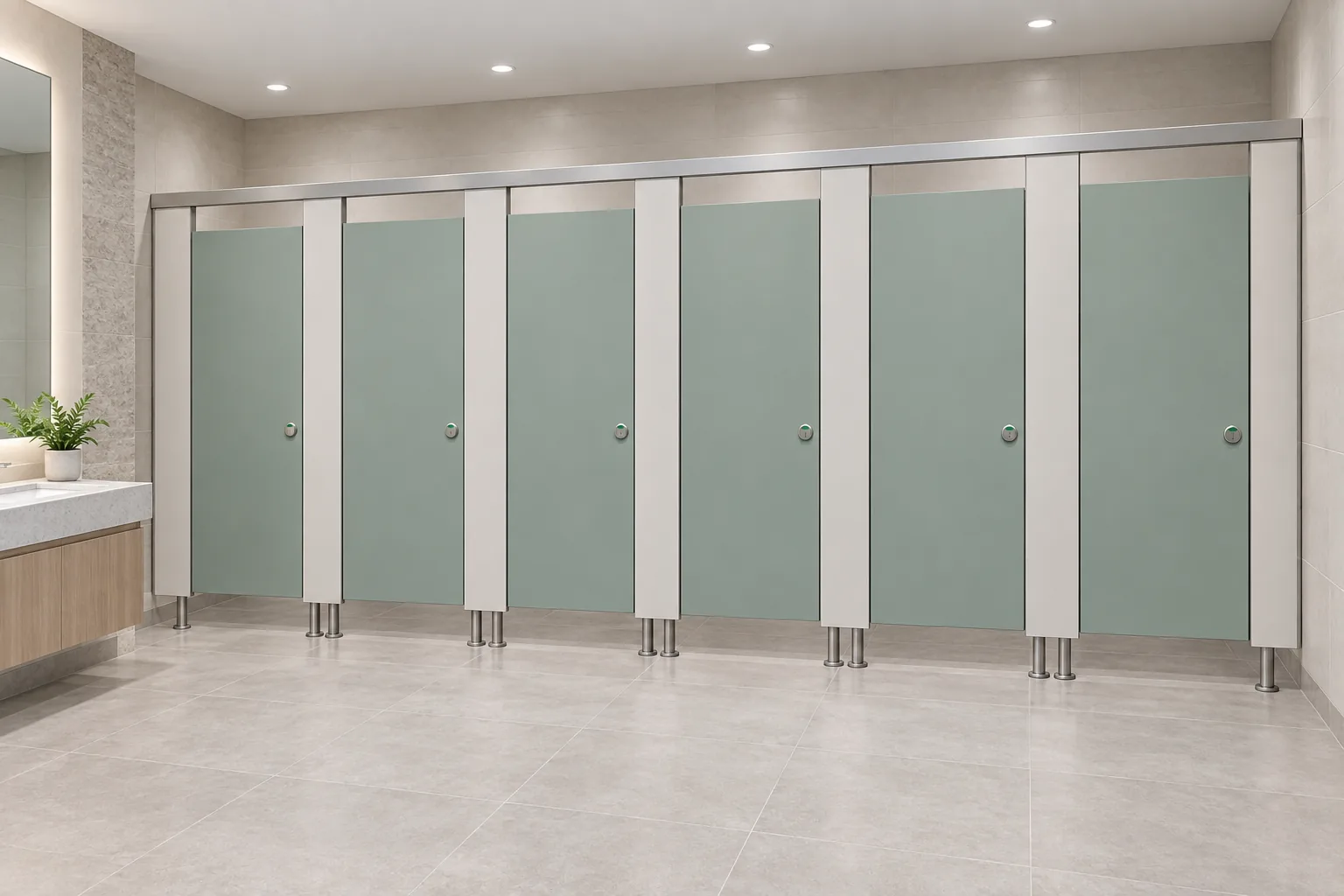
- List every hardware item mentioned in the tender and note where it is specified.
- Mark items that are shown only in drawings without written description.
- Identify interfaces with supports, panels and adjacent construction.
- Record cleaning and maintenance access assumptions for each hardware item.
- Flag any item that requires project-specific evidence before approval.
Support Interfaces and Mounting Evidence
The project team should review the documented support interfaces against approved drawings. Tender reviewers should confirm whether the drawings show fixing points, substrate conditions and coordination responsibilities. These are project-specific matters. They cannot be resolved by a generic product statement.
Where the tender refers to mounting methods, the project team should request the corresponding approved technical evidence. If that evidence is not available, the item remains an open coordination point rather than a confirmed solution.
Cleaning Documentation and Maintenance Planning
Cleaning documentation is often overlooked in toilet partition tenders. The review should establish what cleaning information will be provided, who will receive it and how it aligns with the owner’s maintenance routines. This is a documentation and handover topic, not a claim about antimicrobial or waterproof performance.
Project teams should also clarify how replacement parts and future maintenance access will be handled. These are commercial and operational questions that belong in the tender review, even when the final answers depend on project-specific agreements.
Evidence Boundaries in Tender Evaluation
Every tender review should distinguish confirmed product facts from project-specific requirements. EBUNGE product category includes commercial Toilet Partition / Toilet Cubicle. That is the confirmed product context.
Illustrations show generic design references, not completed EBUNGE customer projects. Any project-specific material, hardware, dimension, finish, mounting or rating requires matching approved technical evidence.
This boundary protects the project team from treating a generic image or a broad product description as a verified specification. It also keeps the tender comparison focused on what can actually be confirmed.
Common Gaps That Reviewers Should Flag
Certain gaps appear repeatedly in tender reviews. They are not product defects; they are documentation and coordination issues that should be resolved before award.
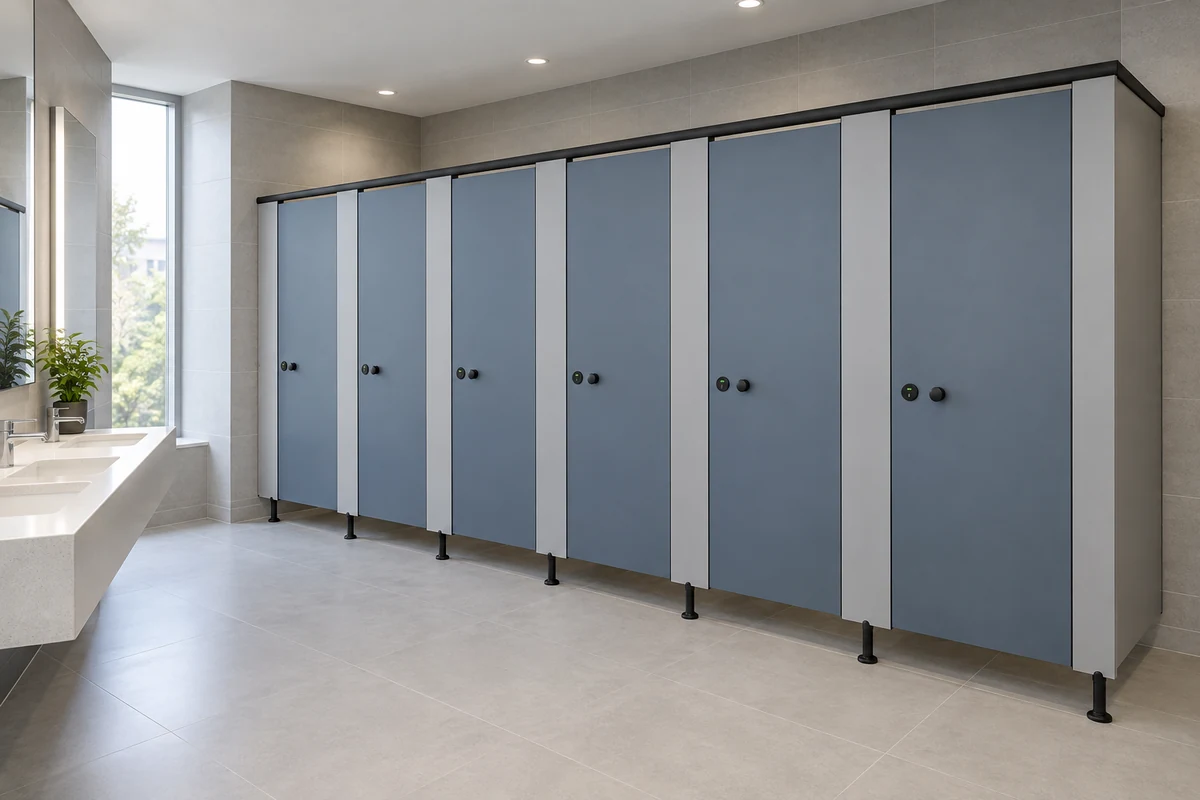
| Review area | Common gap | Action for the project team |
|---|---|---|
| Layout | Door swing shown without clearance notes | Request clarification and update drawings |
| Hardware | Items listed by name only | Ask for project-specific evidence |
| Support interfaces | Fixing points not coordinated | Confirm responsibilities with the contractor |
| Cleaning | No handover documentation described | Define what will be provided and to whom |
| Compliance | Local requirements not referenced | Verify with the responsible local professionals |
Use this table as a discussion tool, not as a compliance checklist. Applicable local requirements remain the responsibility of the project team and its appointed professionals.
How to Structure the Tender Review Meeting
A structured review meeting helps the team move from document comparison to coordinated decision-making. The goal is to leave with a clear list of confirmed items, open questions and responsible parties.
- Confirm the layout and privacy assumptions against the drawings.
- Walk through door operation and hardware items line by line.
- Review support interfaces and mounting coordination.
- Check cleaning documentation and maintenance access expectations.
- List every item that requires project-specific evidence.
- Assign follow-up actions and deadlines before award.
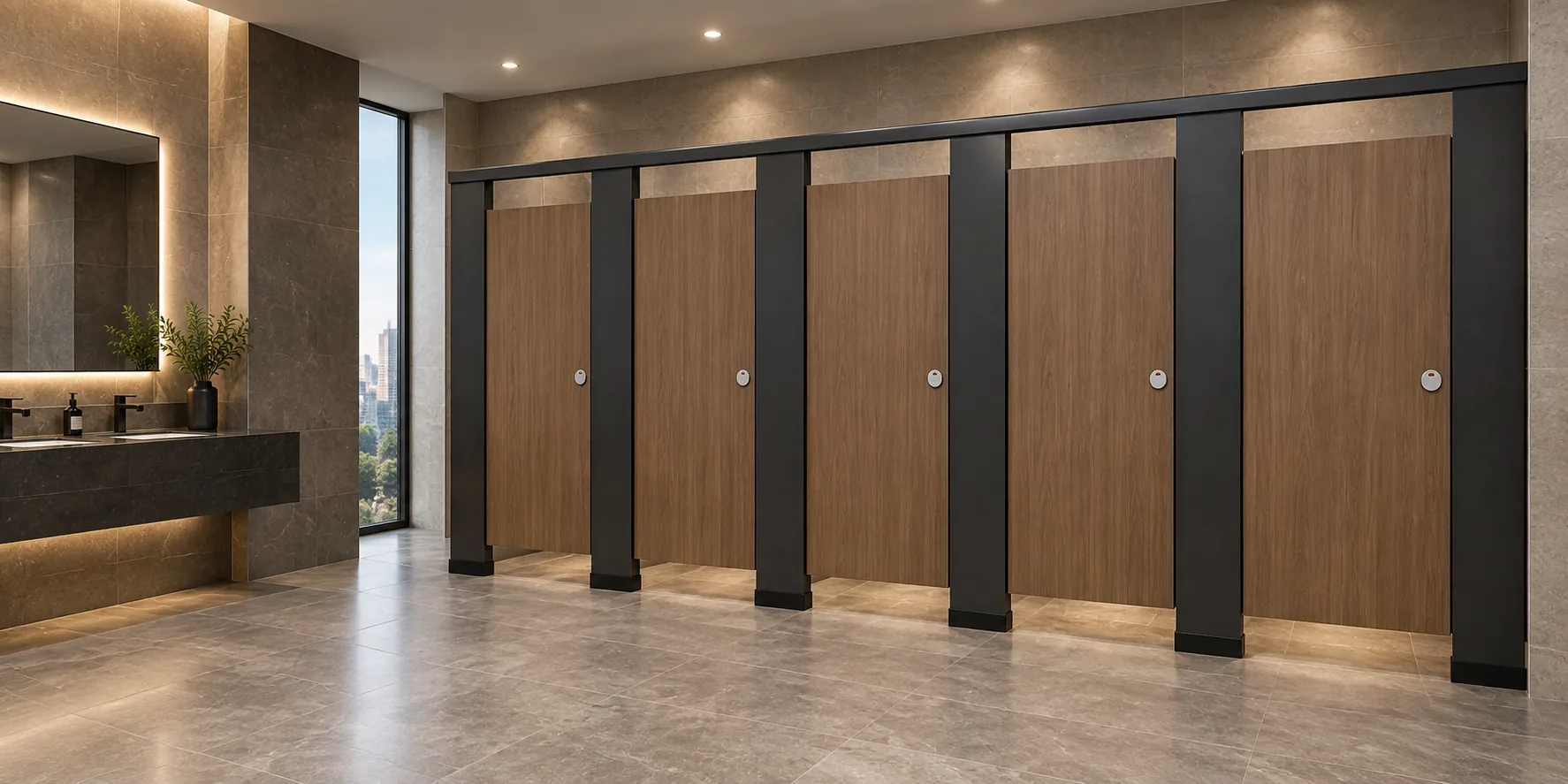
This process does not replace technical review by qualified professionals. It simply ensures that hardware and coordination topics are not overlooked when the tender is evaluated.
FAQ: Toilet Partition Tender Review
What should a toilet partition tender include for hardware?
The tender should describe hardware items clearly enough for the project team to coordinate installation, operation and maintenance. If an item appears only in a drawing without a written description, it should be flagged as an open item requiring project-specific evidence.
Can I rely on an illustration to confirm hardware details?
No. Illustrations show generic design references, not completed EBUNGE customer projects. Hardware details require matching approved technical evidence for the specific project.
How should privacy be addressed in the tender?
Privacy should be discussed as a project requirement. The review should confirm that door swing, gaps and sightlines are described in the drawings or specifications. It should not assume compliance with any local standard without separate verification.
What does EBUNGE confirm about its product category?
EBUNGE product category includes commercial Toilet Partition / Toilet Cubicle. Other project-specific details, such as materials, dimensions, finishes, mounting and ratings, require matching approved technical evidence.
How do I handle cleaning documentation in the tender?
Ask what cleaning information will be provided, who will receive it and how it supports the owner’s maintenance routines. This is a documentation and handover topic, not a performance claim.
Where can I find more guidance or ask a question?
Review the product overview and the resources section for general information. For project-specific coordination, contact the EBUNGE team to discuss your tender review questions.
Conclusion: Review Hardware as a Coordination Topic
Project teams should keep confirmed product facts separate from project-specific requirements, request approved technical evidence where needed, and verify applicable local requirements with the responsible professionals.
This approach does not produce a universal specification.
To discuss your project’s tender review needs, contact EBUNGE and share the layout, hardware and documentation questions your team is working through.