
Circulation Review Before Finalizing Toilet Cubicle Hardware Layouts
Quick project answer
A toilet cubicle circulation review is the point where a project team checks how people approach, enter, use and leave a washroom before hardware layouts are locked. It is not a substitute for code review, structural design or product approval. It is a coordination step that surfaces conflicts early, when drawings are still easy to change. This guide is written for overseas contractors, architects, interior designers, owners, renovation teams and distributors who need a shared vocabulary for that review. EBUNGE product category includes commercial Toilet Partition / Toilet Cubicle. Everything below is a planning framework, not a performance claim. Any project-specific material, hardware, dimension, finish, mounting or rating requires matching approved technical evidence.
Why circulation review belongs before hardware finalization
Hardware layouts are often finalized late, after the room shell and services are already fixed. At that stage, a door swing that conflicts with a hand dryer, a support interface that lands on a tiled joint, or a cleaning route that is blocked by a return panel becomes expensive to resolve. A circulation review moves those questions earlier.
The review does not decide the product. It decides whether the proposed arrangement is workable for the people who will use and maintain the space. That distinction matters because illustrations and generic references show design intent, not completed EBUNGE customer projects.
What the project team should actually review
Treat the review as a set of interfaces rather than a single drawing check. Each interface has an owner and a piece of evidence.
Layout and approach
Confirm the route from the entrance to the cubicle row, including any turning space, queuing area and accessible route. Check that the arrangement does not force users to cross an active door swing.
Privacy and sightlines
Review sightlines from the entrance, from adjacent cubicles and from any mirror or counter position. Privacy is a design outcome, not a single component property.
Door operation
Check the direction of travel, the clear space in front of each door and the interaction between adjacent doors. Door operation must be reviewed against the actual proposed hardware, not assumed from a generic illustration.
Support interfaces
Identify where the cubicle system meets walls, floors, ceilings, services and adjacent finishes. The project team should confirm project-specific requirements against the relevant approved technical evidence.
Cleaning documentation
Ask how the space will be cleaned, which surfaces need access, and what documentation the cleaning team will receive. Cleaning routes should not depend on removing hardware.
A numbered review sequence for coordination meetings
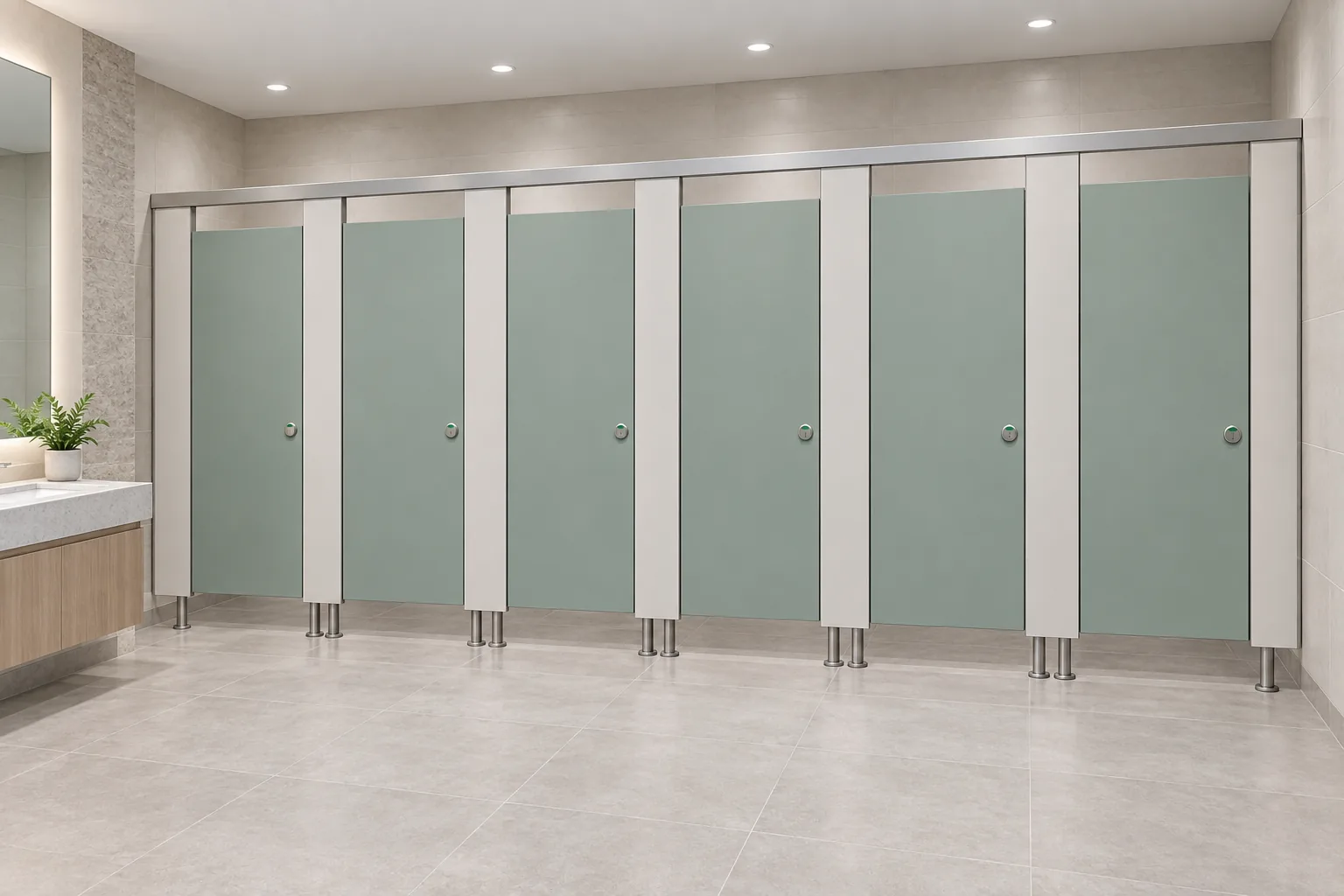
- Circulate the current layout, elevation and services drawings to all disciplines before the meeting.
- Walk the approach route and mark any conflict between circulation and door operation.
- List every support interface and note who is responsible for confirming it.
- Record privacy and sightline observations with a sketch, not a verbal note.
- Confirm the cleaning route and the documentation that will be handed over.
- Log open items as project-specific evidence requests, not assumptions.
- Re-issue the layout only after each open item has an owner and a due date.
This sequence keeps the conversation on coordination. It does not certify compliance with any local requirement, and it does not replace review by the responsible local professional.
Evidence boundaries that keep the review honest
Project teams often drift from coordination into claims. The table below separates what can be discussed in a review meeting from what needs separate evidence.
| Review topic | Can be discussed as planning | Requires project-specific evidence |
|---|---|---|
| Layout and approach | Route, turning space, queuing | Final dimensions and clearances |
| Privacy | Sightline observations | Any stated privacy performance |
| Door operation | Swing direction and conflicts | Hardware type, mounting and rating |
| Support interfaces | Interface locations | Structural and fixing evidence |
| Cleaning | Access route and documentation | Any stated surface performance |
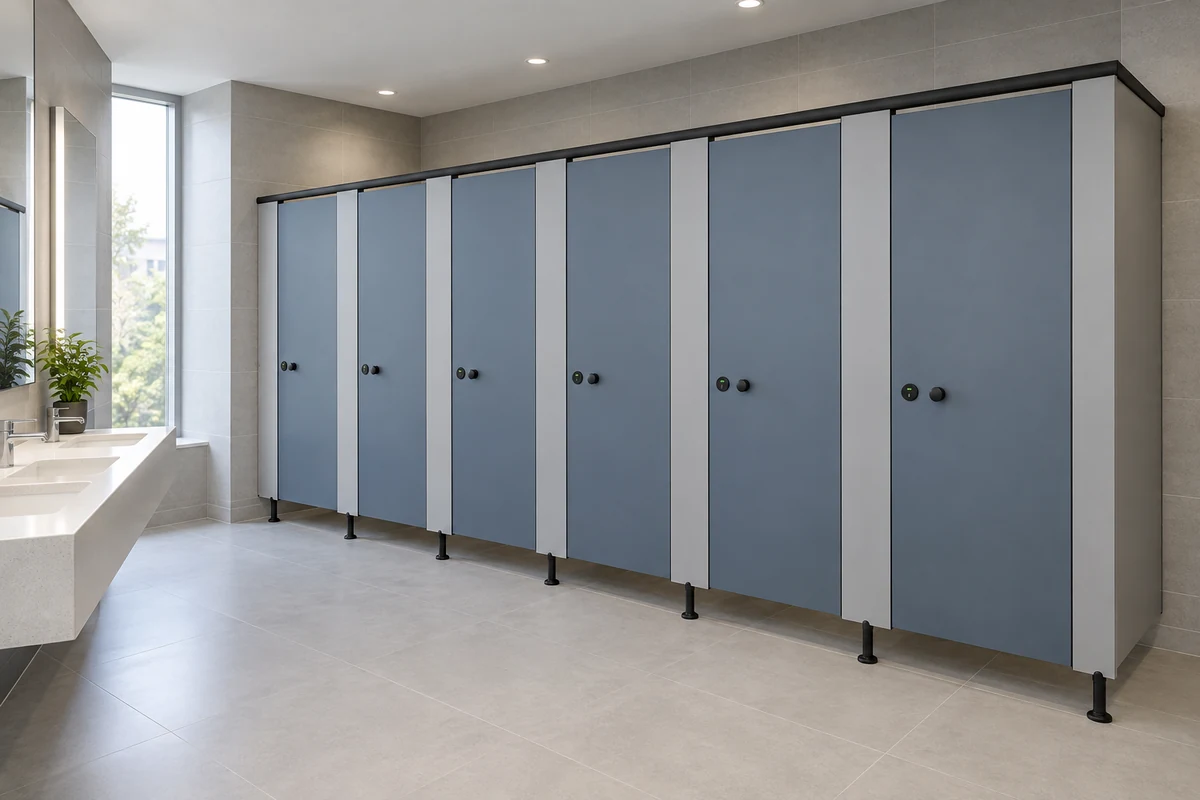
Do not treat HPL, compact laminate, phenolic or stainless steel as interchangeable, and do not infer hidden construction from an illustration.
How to document the review without overclaiming
Good documentation is specific about what was reviewed and silent about what was not. Use a short evidence note for each open item.
Evidence note: this item is a coordination observation only. It does not confirm compliance, performance or a final product configuration. A project-specific material, hardware, dimension, finish, mounting or rating must be matched to approved technical evidence before it is treated as resolved.
Attach the note to the drawing issue. When the item is closed, record which document closed it. This creates a traceable path from review comment to approved evidence.
For product context, refer to the maintained EBUNGE product category rather than a generic illustration. For background reading, the resources section supports further project planning.
Common coordination gaps and how to close them
Most circulation problems are not technical mysteries. They are unassigned interfaces.
- Door swing conflicts with an adjacent fixture or service.
- Support interface assumed by one discipline and owned by none.
- Cleaning access blocked by a return panel or a fixed element.
- Local requirement referenced without a named responsible reviewer.
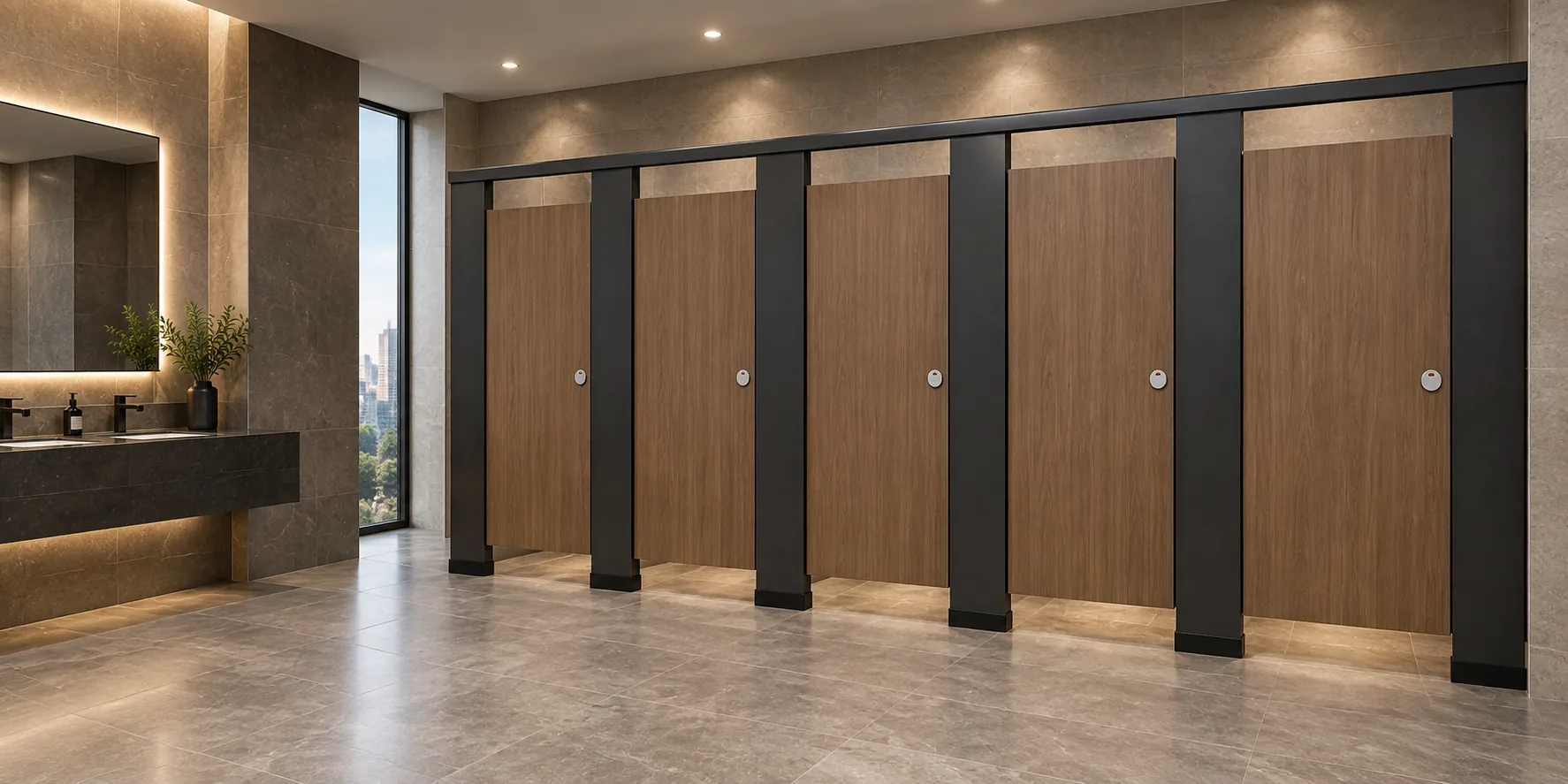
Close each gap by naming an owner, a document and a date. If the gap depends on a local requirement, describe the review step without asserting unverified compliance.
Frequently asked questions
What is a toilet cubicle circulation review?
It is a project-team review of how people approach, enter, use and leave a washroom, covering layout, privacy, door operation, support interfaces and cleaning documentation before hardware layouts are finalized.
When should the review happen?
Before hardware layouts are locked, and again whenever the room shell, services or adjacent finishes change. Early review reduces late rework.
Does the review confirm compliance?
No. It is a coordination step. Applicable local requirements must be reviewed by the responsible local professional, and compliance should not be asserted without that review.
Can a generic illustration be used as evidence?
No. Illustrations show generic design references, not completed EBUNGE customer projects. Project-specific material, hardware, dimension, finish, mounting or rating requires matching approved technical evidence.
What should be recorded after the meeting?
Open items, owners, due dates and the document that will close each item. Keep observations separate from confirmed project-specific evidence.
How does this relate to Toilet Partition coordination?
Circulation review is one part of Toilet Partition coordination. It connects layout, door operation, support interfaces and cleaning documentation so that other disciplines can respond to a single, traceable set of comments.
Conclusion and next step
A circulation review is most useful when it stays inside its evidence boundary. Review the layout, privacy, door operation, support interfaces and cleaning documentation. Record what is observed, what is assumed and what still needs project-specific evidence. Do not convert a planning observation into a performance claim.
If your team is preparing a toilet cubicle circulation review specification, share the current drawings and open items with EBUNGE so the discussion can start from maintained product context. Contact the EBUNGE team to begin that coordination conversation.