
How to Verify Toilet Partition Handover Documentation Before Sign-Off
Quick answer: toilet partition
Review focus: toilet partition.
Toilet partition handover verification is the stage where the project team checks that what was specified, reviewed and installed can be documented before final sign-off. It is not a single inspection moment. It is a structured review of drawings, interfaces, door operation, cleaning information and applicable local requirements. This article sets out an evidence-bounded framework for contractors, architects, interior designers, owners and renovation teams.
It does not replace project-specific technical evidence, and it does not confirm compliance. Every material, hardware, dimension, finish, mounting detail or rating must be matched to approved project documentation before it is accepted.
Why Handover Verification Needs a Defined Scope
Handover can drift when teams treat it as a visual walkthrough only. A defined scope helps each party know what is being checked, who holds the evidence and what remains open. For commercial toilet cubicles, the review should connect the approved layout, the installed condition and the documentation package.
The scope should state which documents are required, which interfaces are included and which items are excluded. It should also record who signs each section. This prevents a late dispute about whether a support interface, a door adjustment or a cleaning instruction was ever part of the agreed handover.
Build the Document Register Before Inspection
A document register is the backbone of toilet partition handover verification. It lists each expected record, its source, its status and the person responsible. The register should be agreed before the inspection so that missing items are visible early.
Typical register categories
- Approved layout drawings and any reviewed revisions.
- Door operation and hardware schedule, where project-specific evidence exists.
- Support interface details and fixing coordination records.
- Cleaning and maintenance documentation supplied for the installed configuration.
- Applicable local requirement references identified by the project team.
- Open items, observations and agreed actions.
Each entry should point to a controlled document, not a verbal description. If a record does not exist, the register should show it as outstanding rather than assumed.
Review Layouts, Privacy and Door Operation
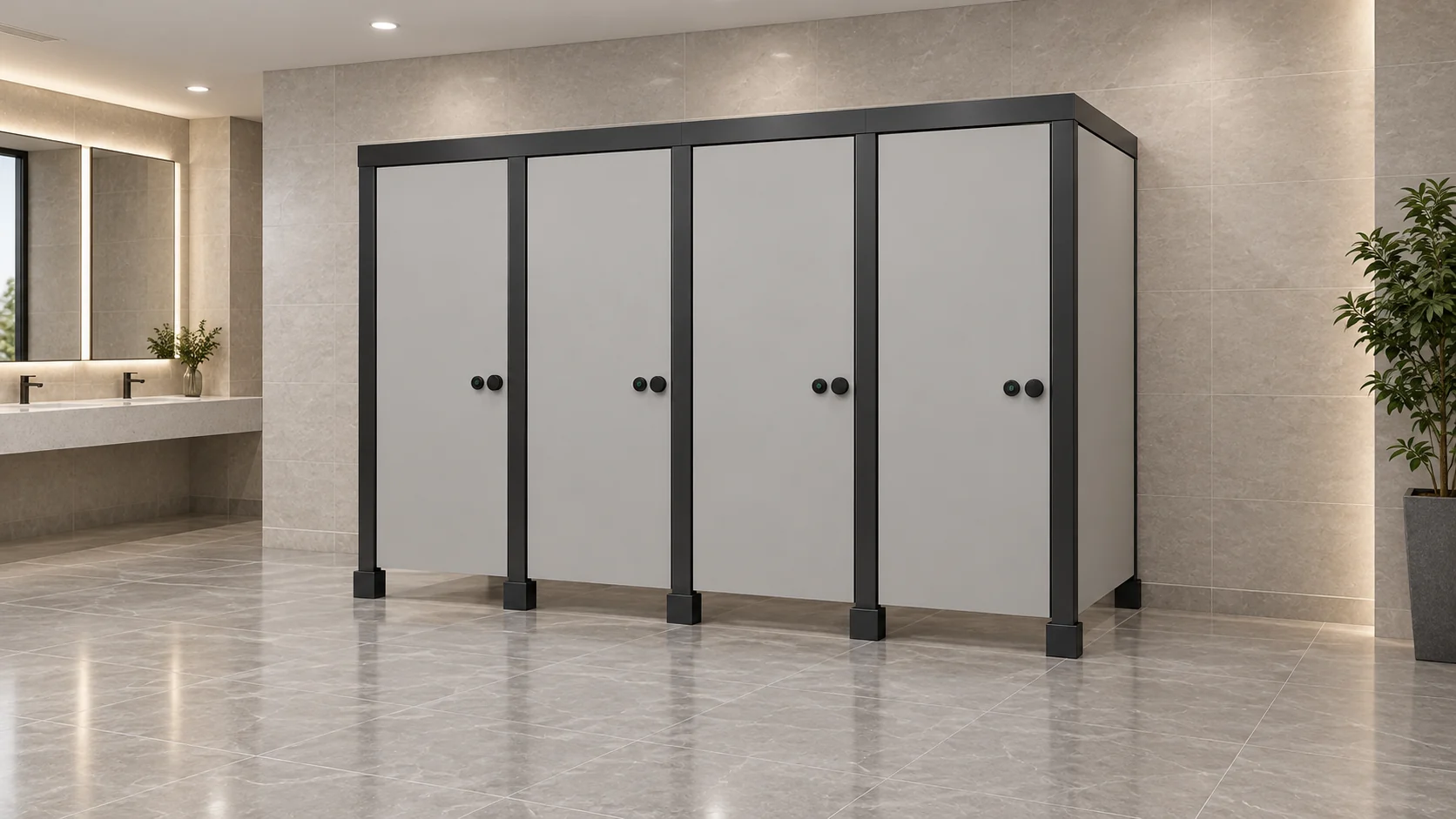
Layout review checks that the installed arrangement matches the approved drawings and that the project team has considered privacy and door operation in use. This is a coordination review, not a performance certification.
What to check in the field
- Confirm cubicle positions against the approved layout.
- Observe door swing, closing action and clearance in the installed condition.
- Check that privacy gaps and sightlines have been reviewed by the project team.
- Record any deviation with a location reference and a photograph.
- Confirm who will resolve each observation and by when.
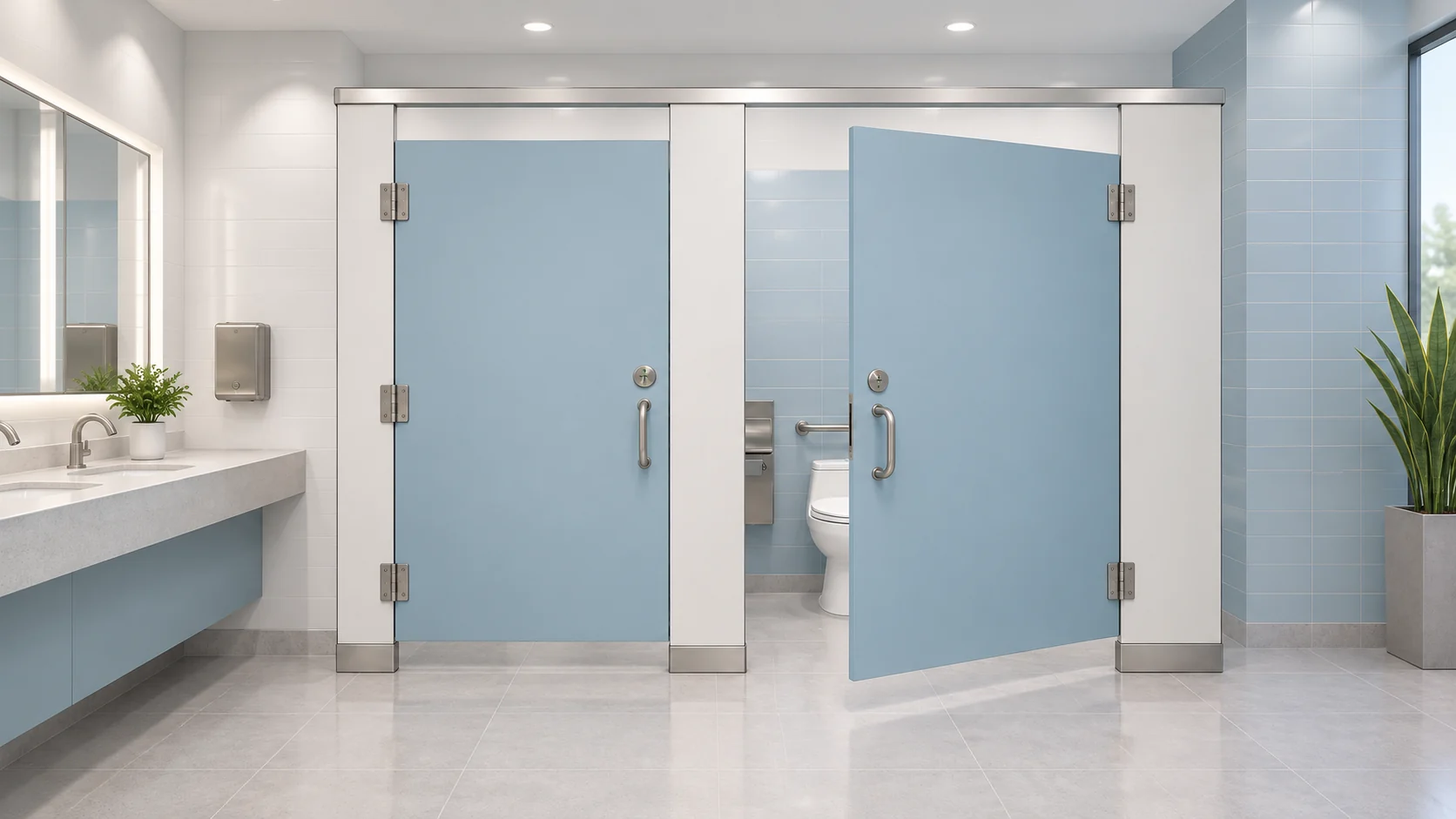
Door operation should be described in plain terms: does the door open, close and latch as the approved configuration intends? Any adjustment or replacement part must be confirmed against project-specific evidence before it is accepted.
Support Interfaces and Adjacent Trades
Toilet partitions interface with floors, walls, ceilings, services and adjacent finishes. Handover verification should confirm that these interfaces were coordinated and that responsibility for each connection is documented.
Where a support condition depends on another trade, the record should identify the trade, the agreed detail and the inspection status. The project team should not infer hidden construction from an illustration or assume that a generic reference applies to the installed condition. If a fixing, bracket or support detail is not covered by approved technical evidence, it remains an open item.
Cleaning Documentation and Local Requirements
Cleaning documentation helps the owner maintain the installed cubicles after handover. The review should confirm that the supplied instructions match the installed configuration and that the responsible party has received them.
Applicable local requirements vary by jurisdiction and project type. The project team should identify the relevant references and record how they have been addressed. This article does not assert compliance with any regulation, standard or authority requirement. Compliance conclusions belong to the project team and its appointed advisers.
Evidence Boundaries During Sign-Off
An evidence boundary is a simple rule: a statement is accepted only when a controlled document supports it. The project team should confirm project-specific requirements against the relevant approved technical evidence.
| Statement type | Acceptable support | Action if unsupported |
|---|---|---|
| Material or finish | Approved project specification | Hold as open item |
| Dimension or mounting | Approved drawing or technical evidence | Do not accept verbally |
| Rating or performance | Project-specific approved evidence | Exclude from sign-off |
| Cleaning instruction | Supplied documentation for the installed configuration | Request before close-out |
Illustrations in this article are generic design references. They are not completed EBUNGE customer projects and should not be read as construction details.
Common Coordination Gaps to Close
Most handover delays come from gaps that were visible earlier but not recorded. A short pre-sign-off review can surface them while there is still time to act.
- Layout revisions not reflected in the installed condition.
- Door operation observations without an agreed owner.
- Support interfaces left to another trade without a written status.
- Cleaning documentation not matched to the installed configuration.
- Local requirement references identified but not assigned.
For product category context, see the EBUNGE toilet partition product overview. Additional planning material is available in the resources section.
Frequently Asked Questions
What is toilet partition handover verification?
It is a structured review of documentation, installed condition and open items before sign-off. It confirms that records exist and that responsibilities are assigned. It does not certify performance or compliance.
Which documents should be in the handover pack?
The pack should include approved layout drawings, door operation records where available, support interface coordination notes, cleaning documentation and a list of applicable local requirement references identified by the project team.
Can a visual inspection replace documentation review?
No. A visual inspection is useful, but it cannot confirm material, dimension, mounting or rating statements. Those require matching approved technical evidence held by the project team.
How should privacy and door operation be checked?
The project team should review the installed arrangement against the approved layout, observe door swing and closing action, and record any deviation with a location reference. Privacy review remains a project-team judgement.
What if a support interface is incomplete?
Record it as an open item with the responsible trade and a target date. Do not infer hidden construction from an illustration or accept an unsupported fixing detail.
Does this article confirm local compliance?
No. Applicable local requirements must be identified and assessed by the project team and its appointed advisers. This article provides a review framework only.
Conclusion and Next Step
Build a document register, review layouts and door operation, confirm support interfaces, collect cleaning documentation and record applicable local requirement references. Keep every project-specific material, hardware, dimension, finish, mounting detail and rating tied to approved technical evidence. Where evidence is missing, hold the item open rather than filling the gap with assumption.
To discuss your project requirements, contact the EBUNGE team and share the documentation scope you are working to.