
How Architects Mark Up Toilet Partition Hardware for Coordination
Quick answer: toilet partition
Review focus: toilet partition.
Toilet partition hardware coordination markup is the drawing discipline that connects architectural intent with the information a contractor, fabricator or installer needs before procurement. It is not a substitute for approved technical evidence. It is a communication layer that helps project teams review layouts, privacy, door operation, support interfaces, cleaning documentation and applicable local requirements without asserting unverified compliance. EBUNGE product category includes commercial Toilet Partition / Toilet Cubicle. Every project-specific material, hardware, dimension, finish, mounting or rating still requires matching approved technical evidence.
Why Hardware Coordination Markup Matters
Hardware coordination markup reduces ambiguity between design drawings and installation drawings. The project team should confirm project-specific requirements against the relevant approved technical evidence. Contractors use it to identify missing information before ordering. Owners and facility teams use it to confirm that cleaning access and maintenance routes have been considered.
It records a coordination decision. That distinction matters because a drawing note can easily be mistaken for a verified product property. A note such as “confirm hardware set” is a request for evidence, not evidence.
What Belongs in a Coordination Markup Set
A useful markup set separates visible design intent from information that must be confirmed. The following checklist can be adapted to the project’s drawing standards and local requirements.
- Plan view showing cubicle layout, door swing and clearance zones for review.
- Elevation view indicating door, panel and pilaster interfaces without inferring hidden construction.
- Hardware schedule keyed to a project-specific specification or approved submittal.
- Cleaning and maintenance access notes for facility review.
- Open items list for information that must be confirmed before fabrication.
Each item should reference a source document. If no source exists, the item remains open. This prevents a coordination drawing from becoming an unintended performance claim.
Drawing Conventions That Reduce Rework
Use consistent hardware tags
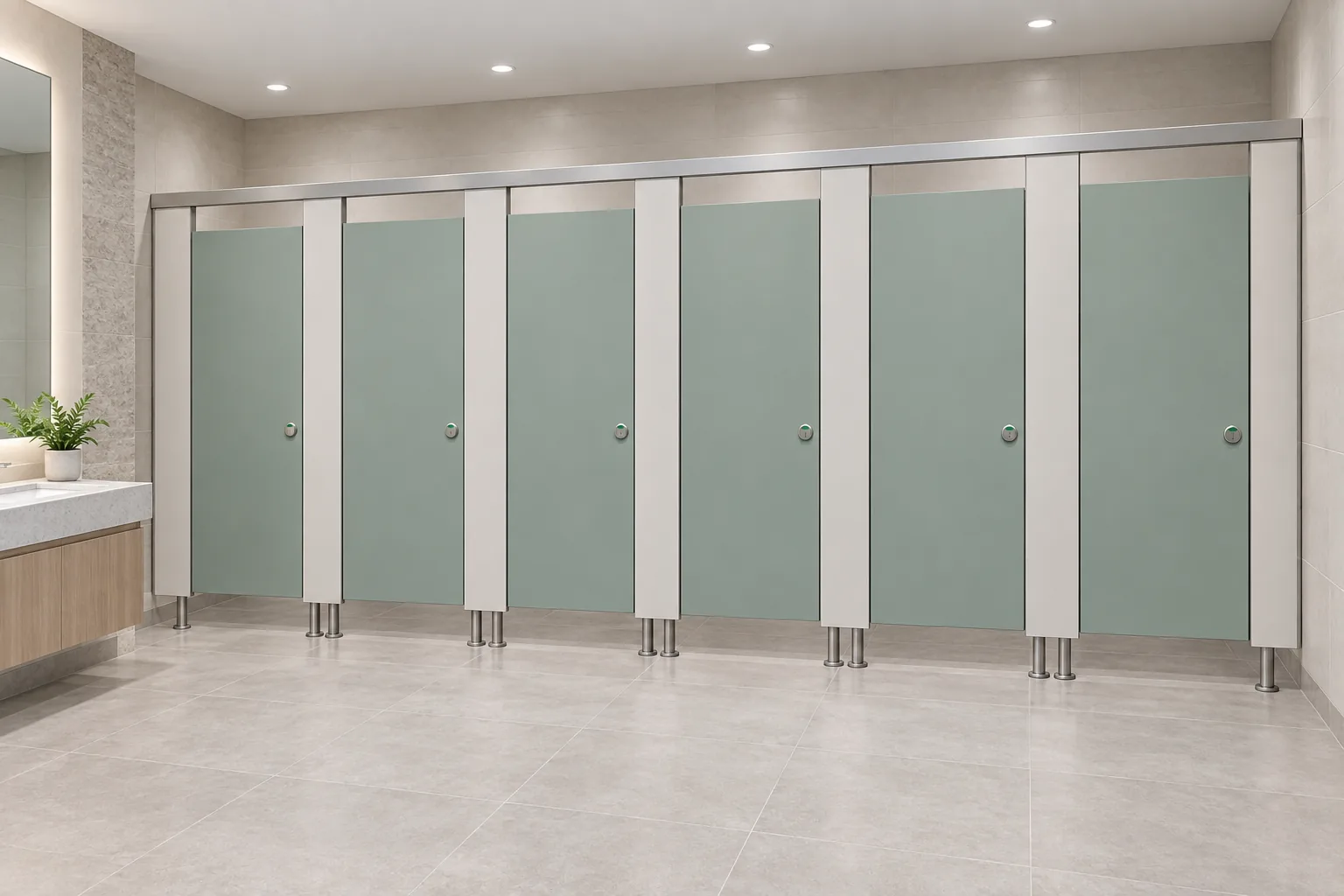
Hardware tags should match the project specification exactly. Avoid generic symbols that could be read as a specific product. If a tag refers to a hardware family, the specification must define what is included and what remains subject to approval.
Separate confirmed and pending information
Use a clear graphical convention for confirmed information, pending information and information requiring structural review. A simple cloud or dashed boundary can distinguish a coordination zone from a final condition. The convention should be explained in the drawing legend.
Do not infer hidden construction
Illustrations and generic references show design intent only. They do not reveal internal reinforcement, fixing type or material composition.
Coordination Workflow for Project Teams
A repeatable workflow helps architects, contractors and suppliers exchange information without overstepping evidence limits.
- Issue the architectural layout with door swing, privacy and access notes for review.
- Mark hardware locations and support interfaces using project-specific tags.
- List open items where material, dimension, finish, mounting or rating evidence is missing.
- Request approved technical evidence for each open item from the responsible party.
- Update the markup only after evidence is confirmed and recorded.
- Route the revised markup to the project team for sign-off before procurement.
This sequence keeps the markup as a coordination record. It does not replace submittals, structural review or local code assessment.
Evidence Boundaries and Review Notes
Project teams should treat every performance-related statement as requiring separate evidence. They require matching approved technical evidence for the specific project configuration.
Evidence note: A coordination markup is a review instrument. It does not certify compliance, performance or suitability for a project. Confirm all project-specific material, hardware, dimension, finish, mounting and rating information against approved technical evidence before proceeding.
Where local requirements apply, the project team should identify the applicable authority and review path. The markup can note that a review is required, but it should not state that compliance has been achieved.
Common Markup Mistakes to Avoid
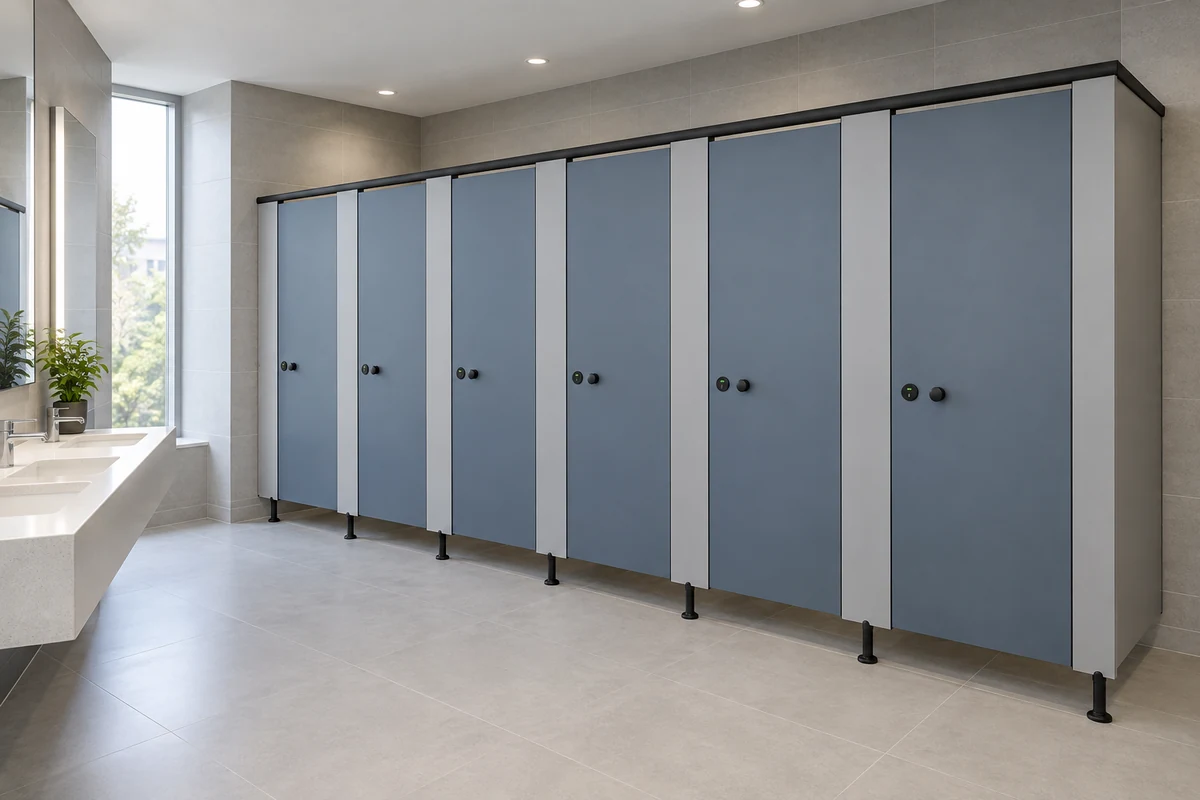
Several recurring mistakes create coordination risk. Treating HPL, compact laminate, phenolic or stainless steel as interchangeable is one example. These are different material categories and should not be substituted without project-specific evidence. Another mistake is describing toilet cubicles as movable operable walls or introducing suspended wall travel, stacking or parking mechanisms. Toilet cubicles are not movable operable walls.
A third mistake is using an illustration as proof of a application reference. Illustrations show generic design references, not completed EBUNGE customer projects.
Review Checklist Before Issuing Markup
Before issuing a coordination markup, the project team can run a short review. This checklist is a planning aid, not a compliance statement.
- Does every hardware tag link to a project specification or approved submittal?
- Are door operation, privacy and clearance zones clearly shown for review?
- Are support interfaces identified without inferring hidden construction?
- Are cleaning and maintenance access notes included for facility review?
- Are open items listed with the responsible party and required evidence?
- Are applicable local requirements identified for the project team to verify?
If any item cannot be answered, it remains open. The markup should show that status clearly rather than filling the gap with an assumption.
Frequently Asked Questions
What is toilet partition hardware coordination markup?
It is a drawing and review process that shows how hardware, doors, panels, pilasters and support interfaces are coordinated across the project team. It records coordination decisions and open items; it does not certify performance.
Can a coordination markup confirm material or finish?
No. Material and finish require matching approved technical evidence for the specific project. A markup can identify where confirmation is needed, but it should not be treated as proof of composition or finish.
How should support interfaces be documented?
Support interfaces should be identified as items requiring review by the responsible structural or project team. The markup should not infer hidden reinforcement, fixing type or substrate condition from an illustration.
Does markup replace local code review?
No. Applicable local requirements remain the responsibility of the project team and the relevant authority. The markup can note that a review is required, but it should not assert unverified compliance.
How are illustrations used in coordination?
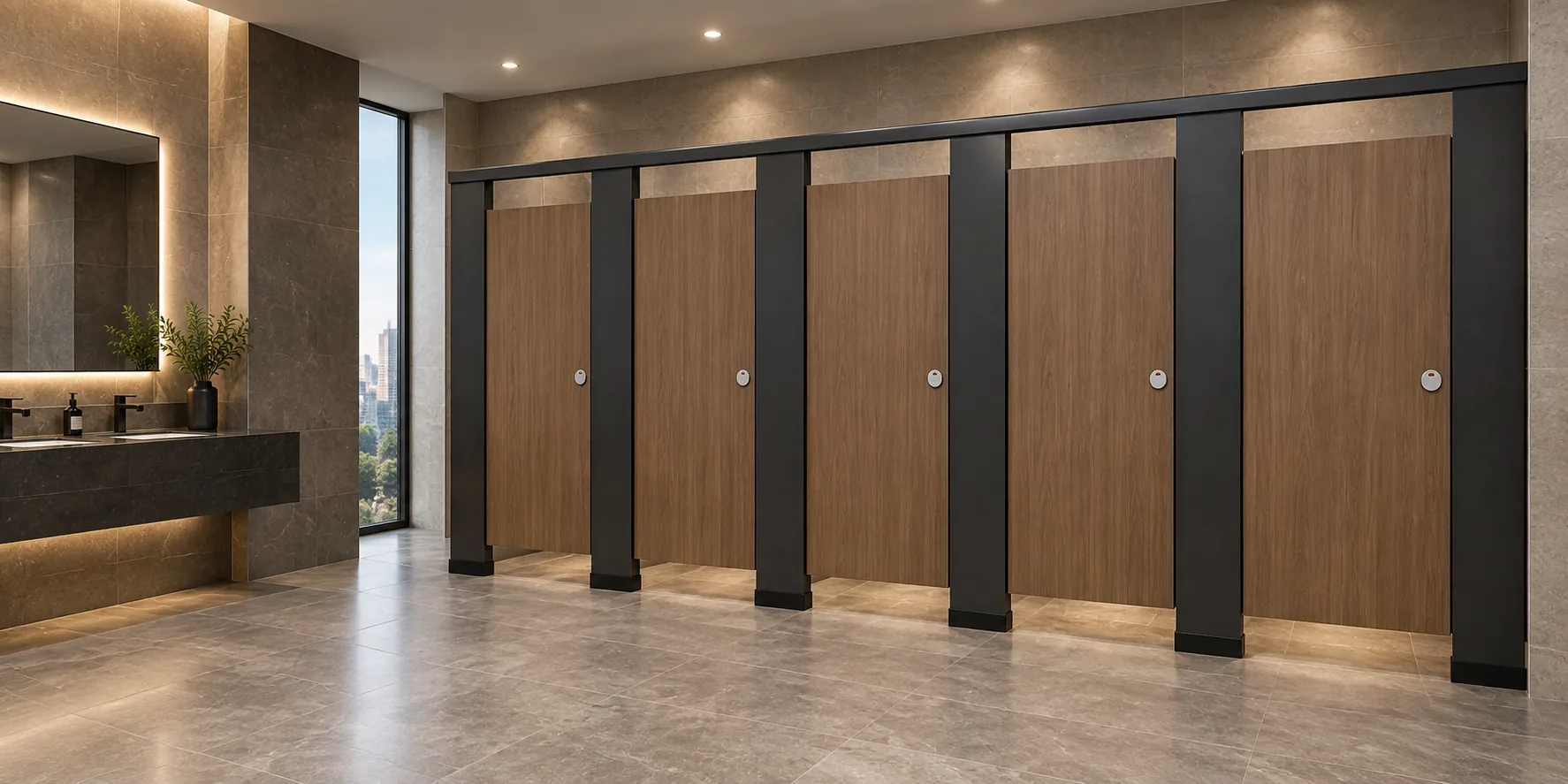
Illustrations show generic design references, not completed EBUNGE customer projects.
When should the markup be updated?
Update the markup when approved technical evidence is received, when open items are resolved, or when the project team changes the layout or support strategy. Each revision should be recorded and routed for review.
Conclusion
It helps architects, contractors, owners and facility teams review layouts, privacy, door operation, support interfaces, cleaning documentation and applicable local requirements. It does not replace approved technical evidence, structural review or local compliance assessment. Keep confirmed information separate from open items, avoid inferring hidden construction, and require project-specific evidence for every material, hardware, dimension, finish, mounting or rating decision.
For product category context, review the EBUNGE toilet partition product overview. For additional planning guidance, see the resources library. To discuss a project-specific coordination review, contact the EBUNGE team.