
Evaluating Toilet Partition Hardware Lead Times in Tender Submissions
Quick answer: toilet partition
Toilet partition hardware lead times sit at the intersection of design intent, procurement sequence and site readiness. In tender submissions, they are often compressed into one line, yet the underlying question is broader: which project decisions must be fixed before a reliable programme can be discussed? EBUNGE product category includes commercial Toilet Partition / Toilet Cubicle. That confirmed scope is the starting point, not a substitute for project-specific evidence.
This article offers an evidence-bounded framework for overseas contractors, architects, interior designers, owners, renovation companies, distributors and construction teams. It does not assert compliance, performance or commercial terms. The project team should confirm project-specific requirements against the relevant approved technical evidence.
Why lead times are a coordination topic, not a single figure
Hardware lead times depend on decisions that usually sit outside the hardware schedule itself: layout, privacy expectations, door operation, support interfaces, cleaning documentation and applicable local requirements. A tender that lists a duration without linking it to those decisions creates false certainty. The practical alternative is to treat lead time as a coordination outcome. Each unresolved item becomes a question with an owner, a required input and a review point.
That approach does not produce a number by itself, but it prevents teams from comparing unlike assumptions. It also keeps the submission honest about what still requires matching approved technical evidence.
What the tender should separate
Separate confirmed scope from open items. Confirmed scope can include the product category and the project’s own drawing set. Open items include material, hardware, dimensions, finishes, mounting and any rating. These require project-specific evidence before they can be presented as settled. Mixing the two in one schedule is a common source of later rework.
A decision checklist for tender-stage review
Use a checklist to make assumptions visible. The goal is not to answer every item at tender stage, but to record who will answer it and what evidence will close it.
- Layout: confirm cubicle arrangement, circulation and interface with adjacent construction.
- Privacy: record the project’s expectation and the drawing reference that expresses it.
- Door operation: identify the intended operation and any project-specific hardware question.
- Support interfaces: note how partitions meet floors, walls and ceilings in the project drawings.
- Cleaning documentation: list the cleaning information the project team expects to receive.
- Local requirements: identify applicable local requirements without asserting unverified compliance.
- Evidence route: state which items require matching approved technical evidence.
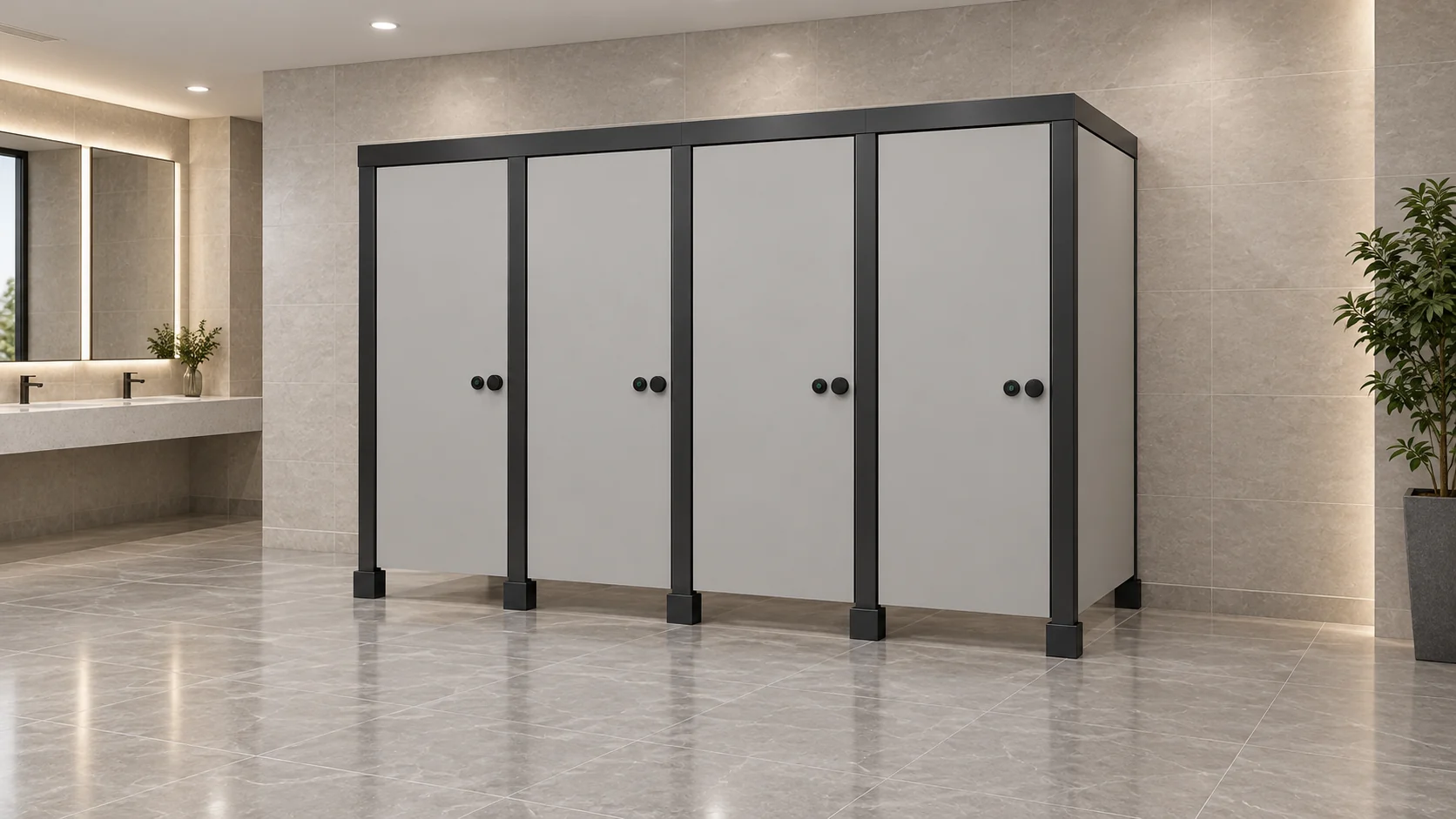
This checklist is deliberately neutral. It does not assume a material, a fixing method or a performance outcome. It simply gives the tender a structure that can survive design development.
How to phrase lead-time questions in a submission
Poorly phrased questions invite vague answers. For example, instead of asking for a generic duration, ask which project decisions must be confirmed before a programme can be reviewed. Instead of asking whether a product is suitable, ask which drawing and specification references the project team will use to assess suitability.
Questions that need project-specific evidence
Any question about material, hardware, dimensions, finishes, mounting or ratings requires matching approved technical evidence. A tender response should not infer those details from an illustration or a category name. Illustrations show generic design references, not completed EBUNGE customer projects. Where evidence is not yet available, the correct tender position is an open item with a named reviewer, not an assumed answer.
Coordination sequence for project teams
A simple sequence helps teams avoid circular discussions. It also supports Toilet Partition coordination across design, procurement and site teams.
- Collect project drawings: gather the current layout, elevations and interface details.
- List open decisions: record layout, privacy, door operation, support interfaces, cleaning documentation and local requirements.
- Assign owners: name the person or discipline responsible for each decision.
- Request evidence: ask for the specific document that will close each item.
- Review against drawings: compare submitted information with the project’s own references.
- Record assumptions: keep unresolved items visible in the tender rather than hidden in a duration.
- Revisit before commitment: confirm that evidence still matches the latest design.
This sequence does not replace professional judgement.
Evidence note: what a tender can and cannot say
Confirmed: EBUNGE product category includes commercial Toilet Partition / Toilet Cubicle. Those items require project-specific evidence before they appear in a submission.
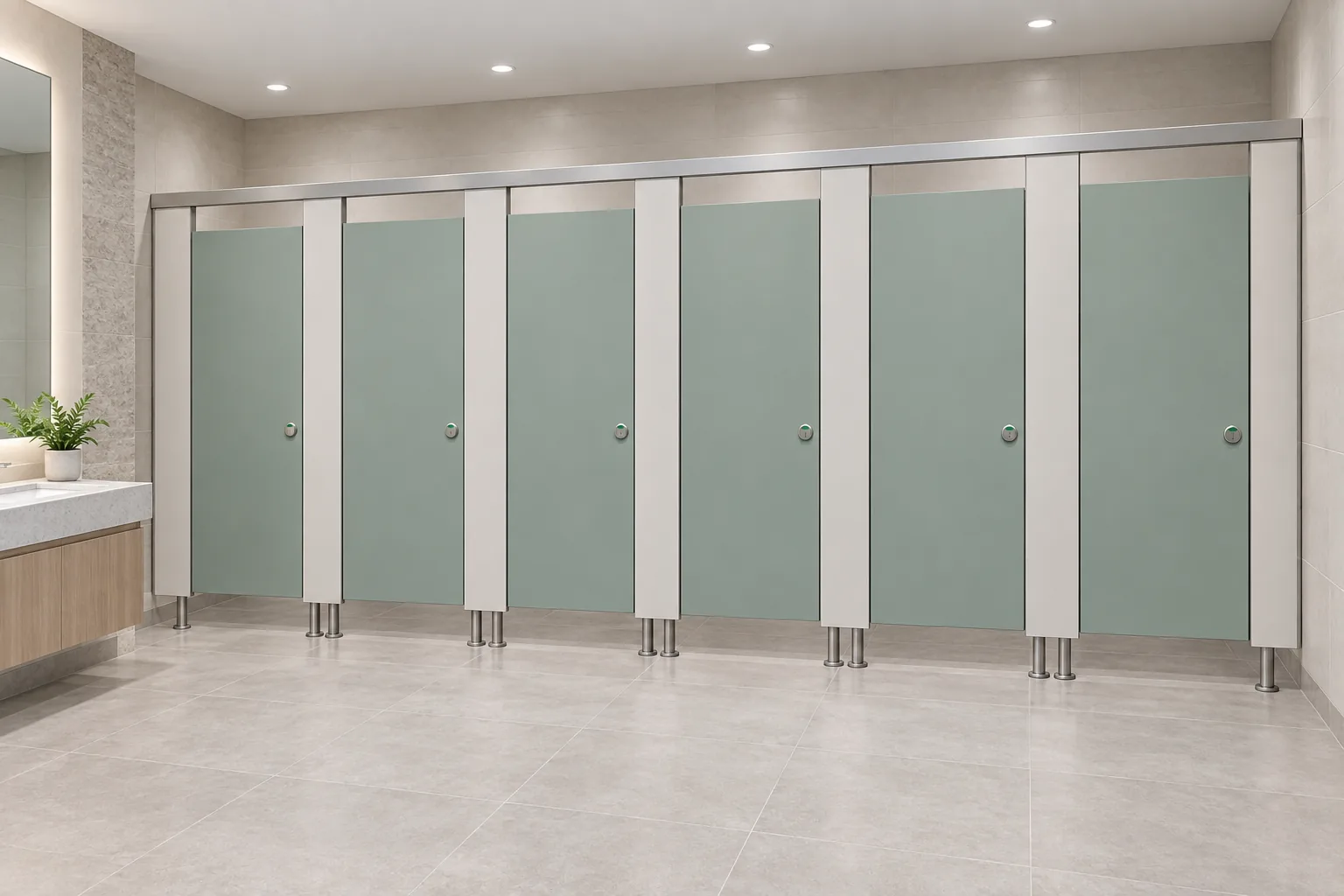
Teams should also avoid treating HPL, compact laminate, phenolic or stainless steel as interchangeable. They should not infer hidden construction from illustrations. Toilet cubicles are not movable operable walls, and tender documents should not introduce suspended wall travel, stacking or parking mechanisms. Keeping these boundaries explicit protects the submission from claims it cannot support.
Common tender-stage pitfalls
One pitfall is presenting a lead time as a general product fact. Another is copying a duration from a previous project without checking whether the underlying decisions match. A third is allowing an illustration to stand in for a specification. Each pitfall can be reduced by asking what evidence supports the statement and which drawing it refers to.
Keeping the submission reviewable
A reviewable submission separates confirmed facts, open items and required evidence. It uses consistent terminology and avoids implying compliance that has not been verified. It also points readers to the maintained product context and the project’s own documents. For general product context, see the toilet partition product range. For further guidance material, see the resources section.
When a project-specific question remains open, the project team can contact EBUNGE to route it appropriately.
FAQ: tender-stage lead-time questions
Can a tender state a single lead-time figure for toilet partition hardware?
A single figure is only meaningful when the underlying project decisions are fixed. If layout, door operation, support interfaces or local requirements remain open, the figure should be presented as an assumption with a review point, not as a general product fact.
Which items require matching approved technical evidence?
Any project-specific material, hardware, dimension, finish, mounting or rating requires matching approved technical evidence. The tender should identify the document that will close each item rather than inferring an answer from a category name or illustration.
How should illustrations be used in a submission?
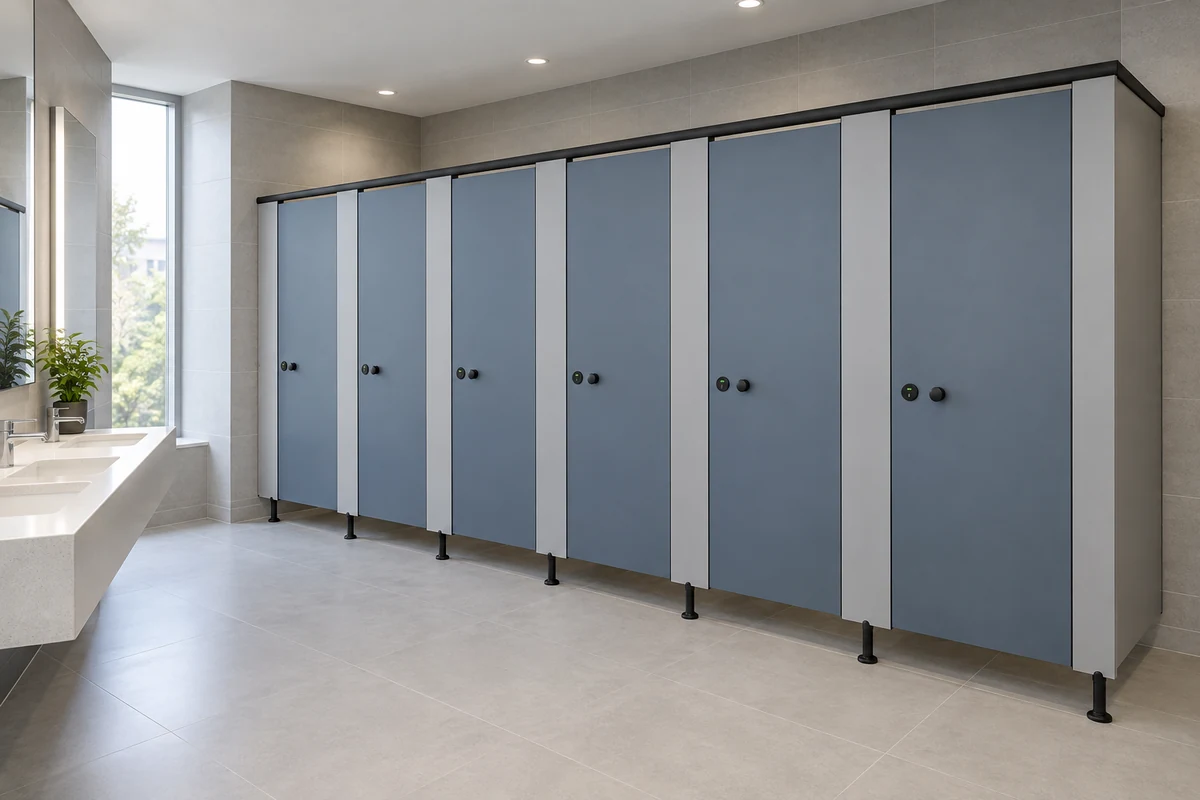
Illustrations show generic design references, not completed EBUNGE customer projects. They can support a layout discussion, but they should not be used to infer material composition, construction or performance.
What role does cleaning documentation play?
Cleaning documentation is part of the project-team review. The tender should state what information the project expects to receive and who will review it. It should not assert unverified compliance with any local requirement.
How can teams coordinate lead times across disciplines?
Use a shared list of open decisions with named owners and required evidence. Review that list against the latest drawings before any commitment. This supports Toilet Partition coordination without turning assumptions into claims.
Does EBUNGE confirm performance ratings in this article?
No. This article confirms only that EBUNGE product category includes commercial Toilet Partition / Toilet Cubicle.
Conclusion: make the basis of the lead time visible
Evaluating toilet partition hardware lead times in tender submissions is less about finding one number and more about showing the decisions behind it. Keep layout, privacy, door operation, support interfaces, cleaning documentation and applicable local requirements visible. Treat illustrations as generic references. Where a project-specific question remains, route it through the appropriate review channel rather than assuming an answer.
To discuss a project-specific enquiry, contact EBUNGE and share the relevant drawings and open items. The team can then direct the question to the right review stage.