
Tender Query Logs That Keep Toilet Partition Hardware Scope Auditable
Quick project answer
Review focus: toilet partition.
Toilet partition hardware tender queries rarely fail because a team lacks effort. They fail because answers live in email threads, marked-up drawings and meeting notes that no one can trace later. A structured query log turns those scattered exchanges into an auditable record. This guide explains how contractors, architects, interior designers, owners and distributors can build that record without overstating what the product evidence supports.
Why Tender Query Logs Matter for Toilet Partition Hardware
Project review term: toilet partition.
Hardware scope sits at the intersection of several disciplines. A door closer, hinge, latch, indicator or support fixing may be specified by the architect, priced by the contractor, installed by a fit-out team and maintained by the owner. When a query about that hardware is answered verbally, the decision disappears from the tender record.
A query log preserves the question, the reference document, the responder and the resolution status. It also shows where an answer depends on project-specific evidence rather than a general product statement. That distinction protects every party during post-tender review.
What Counts as a Hardware Tender Query
Not every question belongs in the same log. The project team should confirm project-specific requirements against the relevant approved technical evidence.
- Scope queries: which hardware items are included in the partition package and which sit with another trade.
- Interface queries: how partition elements meet floors, walls, ceilings, ducts or adjacent finishes.
- Operation queries: door swing, closing action, latch engagement and accessible use.
- Documentation queries: which drawing, schedule or approval governs a given item.
- Cleaning and maintenance queries: how specified surfaces and hardware are expected to be cleaned and serviced.
Each category should carry its own evidence requirement. A scope answer may rely on a bill of quantities, while an operation answer may need a reviewed door schedule.
A Numbered Process for Building the Query Log
- Open the log at tender stage, before questions accumulate in personal inboxes.
- Assign a unique reference to every query and link it to the drawing or specification clause that prompted it.
- Record the date raised, the party raising it and the required response date.
- State the evidence needed to close the query, such as a reviewed layout, a door schedule or a written clarification.
- Log the response and mark whether it is final, provisional or awaiting further project evidence.
- Cross-check closed items against the current tender issue before submission.
- Carry unresolved items into the construction-phase register with the same references.
This sequence keeps the log useful after tender award. A query closed with a provisional answer should remain visible until the supporting evidence arrives.
Evidence Boundaries Every Reviewer Should Apply
Project teams should treat general product information and project-specific evidence as different things. EBUNGE product category includes commercial Toilet Partition / Toilet Cubicle. That statement supports category-level discussion. It does not confirm a particular material, hardware item, dimension, finish, mounting method or rating for a given project.
Any project-specific material, hardware, dimension, finish, mounting or rating requires matching approved technical evidence. When a query touches those areas, the log should point to the approved document rather than repeat an assumption. Reviewers should also avoid treating HPL, compact laminate, phenolic or stainless steel as interchangeable, and should not infer hidden construction from an illustration.
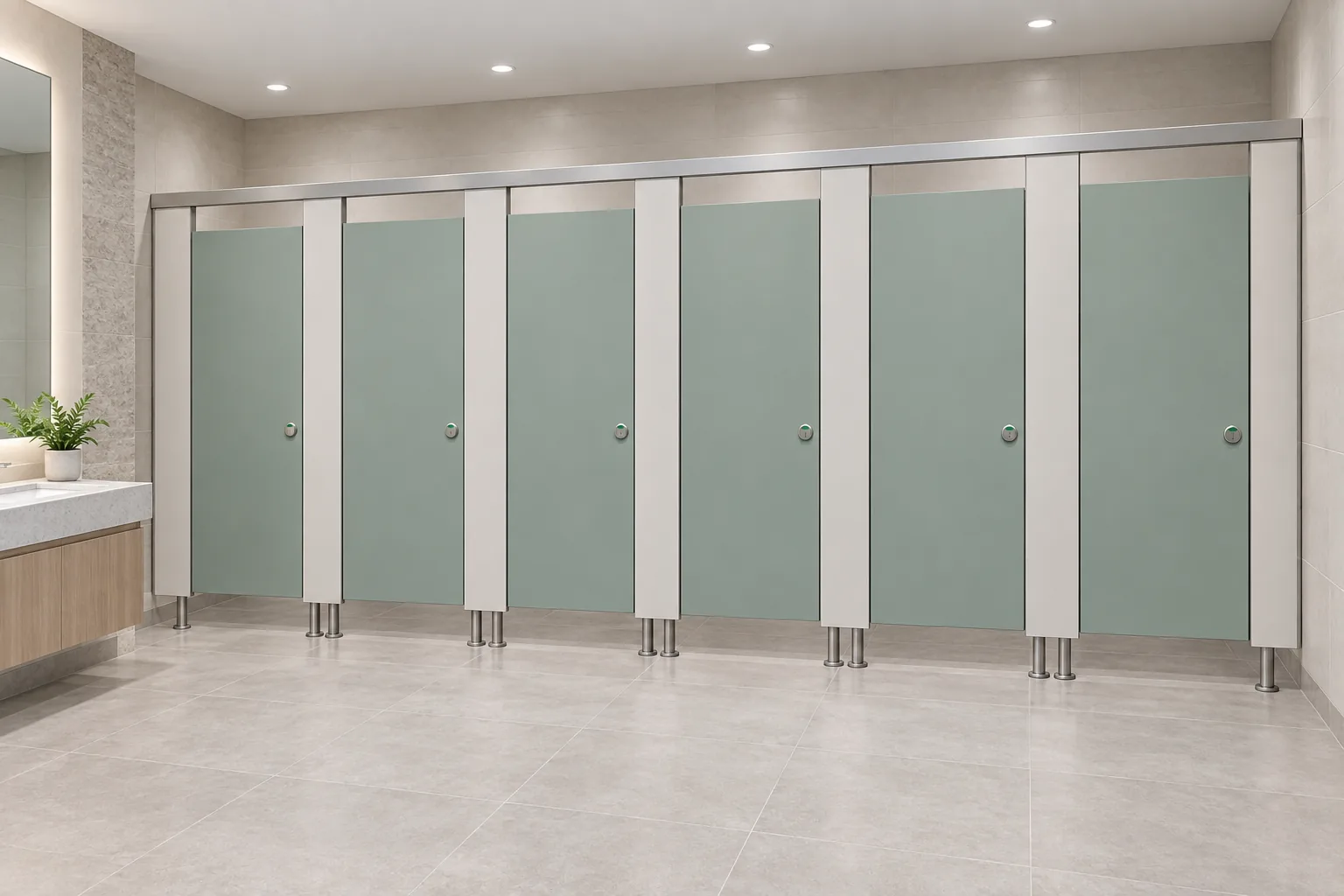
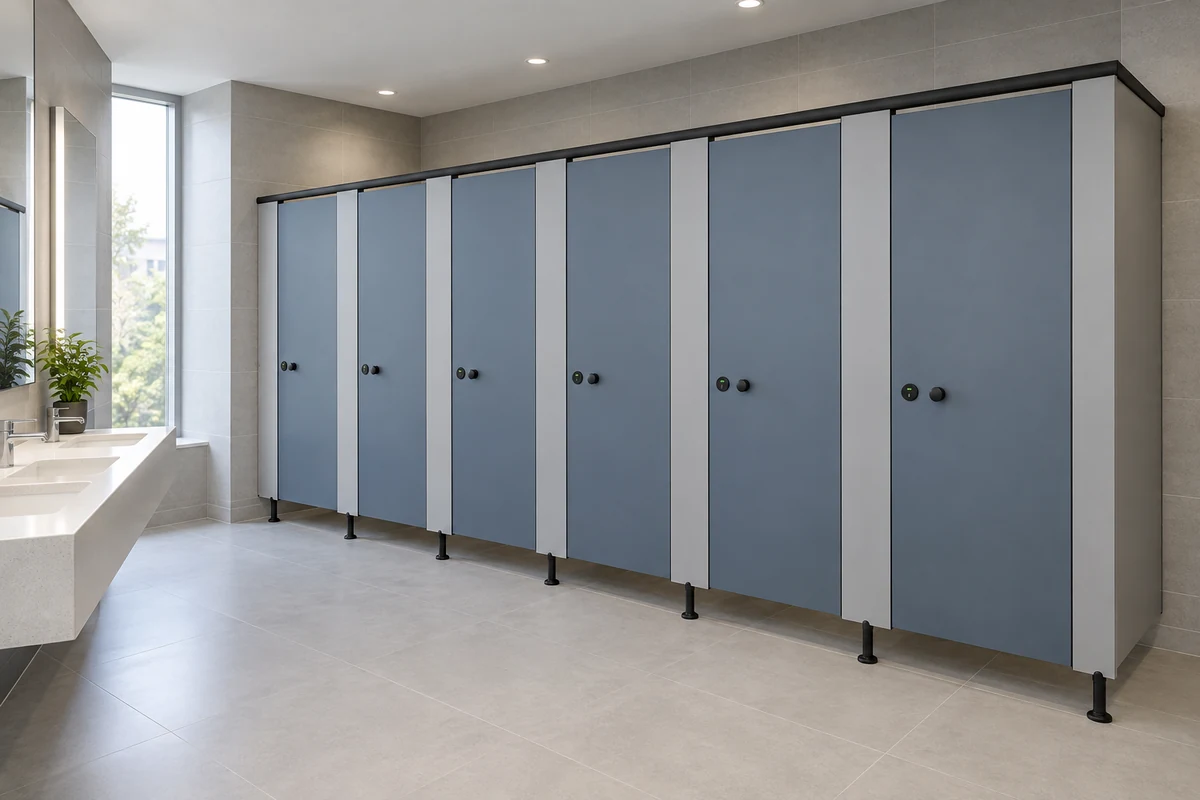
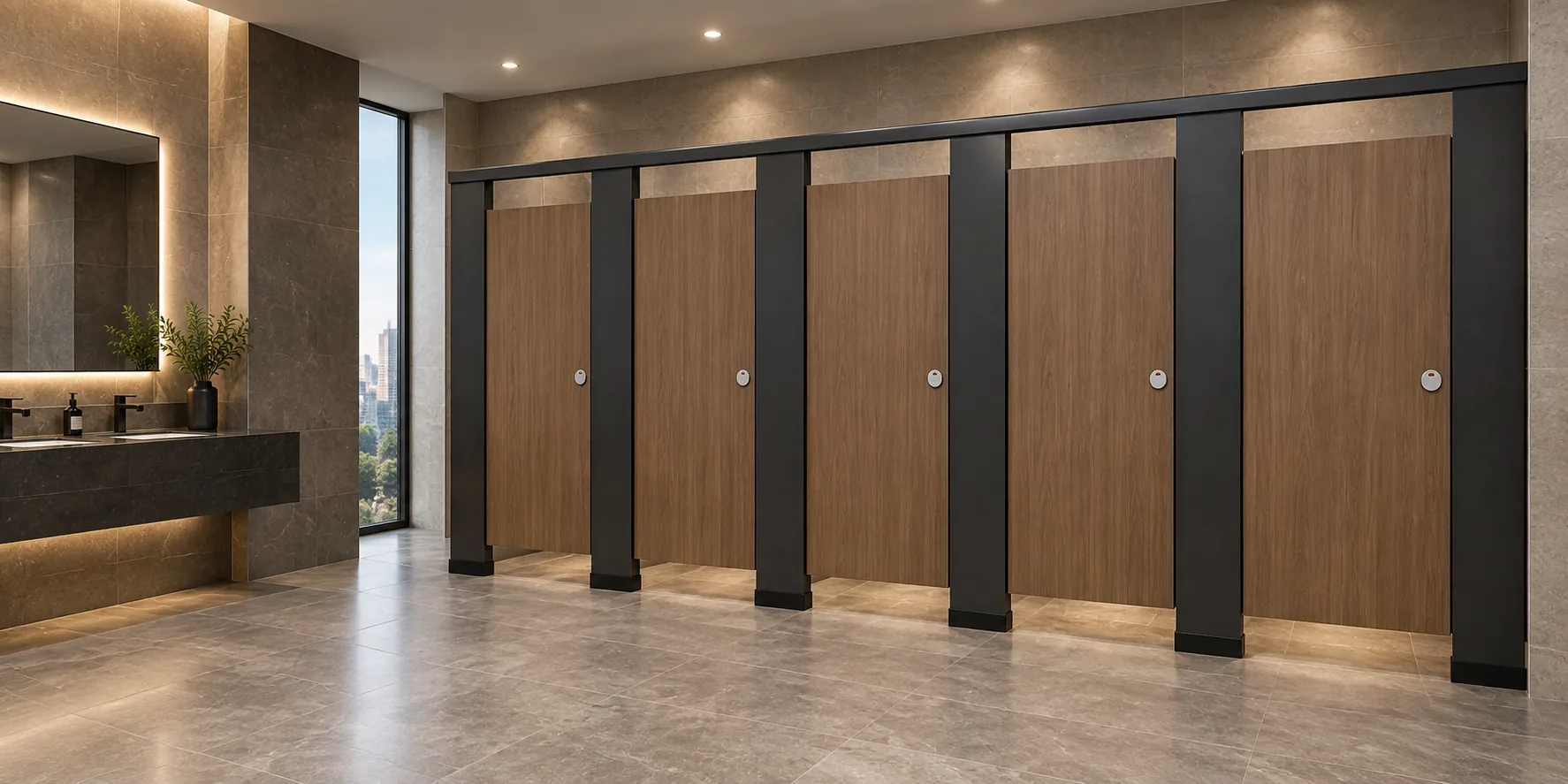
Evidence note: illustrations show generic design references, not completed EBUNGE customer projects. A query log should cite the governing project document, not a marketing image.
Coordinating Layout, Privacy and Door Operation
Layout review usually raises the most queries. Teams examine cubicle counts, circulation, sightlines and the relationship between doors and adjacent fixtures. Privacy expectations should be described in terms of the reviewed layout and applicable local requirements, without asserting unverified compliance.
Door operation deserves its own query thread. Reviewers check swing direction, clearance, latch position and the sequence of use. Support interfaces matter too: the log should record how partitions connect to structural or finished surfaces and who confirms those conditions.
Cleaning documentation is often overlooked at tender stage. A query asking how specified surfaces are expected to be cleaned can prevent later disputes about maintenance responsibility. The answer should reference the approved cleaning guidance for the selected configuration.
Compact Comparison: Query Types and Evidence Needs
| Query type | Typical trigger | Evidence needed to close |
|---|---|---|
| Scope | Overlap with another trade | Agreed scope split or bill of quantities |
| Interface | Unclear support condition | Reviewed layout or interface drawing |
| Operation | Door swing or latch question | Reviewed door schedule |
| Documentation | Conflicting drawing issues | Current approved drawing register |
| Cleaning | Maintenance responsibility | Approved cleaning guidance |
This table is a planning aid, not a substitute for project documents. Each row should be adapted to the actual tender package.
Common Pitfalls That Break Auditability
The first pitfall is answering a query in a meeting without logging it. The second is closing a query with a verbal assurance that no document supports. The third is mixing general product descriptions with project-specific commitments.
Another pitfall is letting the log drift from the drawing register. When a drawing is revised, linked queries should be reopened or rechecked. Teams should also avoid describing toilet cubicles as movable operable walls or introducing suspended wall travel, stacking or parking mechanisms, because those concepts do not describe this product category.
Finally, a log without an owner becomes stale. Assign one coordinator to maintain references, chase responses and report open items at each project meeting.
How to Review the Log Before Tender Submission
Run a final review against the current issue. Confirm that every open query has a named responder and a required date. Check that closed items cite a document rather than a conversation. Verify that any item touching material, hardware, dimension, finish, mounting or rating points to approved technical evidence.
Where an answer remains provisional, keep it visible in the submission notes. Transparency at this stage reduces the risk of later scope disputes. Teams can also use the resources section to align terminology before finalising the register.
Frequently Asked Questions
What is a toilet partition hardware tender query log?
It is a structured register that records hardware-related questions raised during tender, the documents that prompted them, the responses received and the evidence needed to close each item.
Who should maintain the log?
A single coordinator, often from the main contractor or lead designer, should maintain references, chase responses and report open items. Contributors from other disciplines supply answers but do not fragment the register.
Can a query be closed without project-specific evidence?
Only if the answer is genuinely general. Any query touching material, hardware, dimension, finish, mounting or rating requires matching approved technical evidence before it can be treated as final.
How does the log relate to the drawing register?
Each query should cite the drawing or specification clause that triggered it. When a drawing is revised, linked queries should be rechecked so the log and the drawing register stay aligned.
Should cleaning and maintenance questions be logged?
Yes.
Does a query log guarantee compliance?
No. It creates an auditable record of decisions and evidence. Compliance depends on the applicable local requirements and the approved project documents, which the project team must verify separately.
Conclusion: Keep Scope Auditable from Tender to Handover
A disciplined query log does not replace technical judgement. It makes that judgement traceable. By separating general product information from project-specific evidence, teams can answer toilet partition hardware tender queries without overstating what is confirmed.
Start the log early, link every item to a document, and keep provisional answers visible. That habit protects scope clarity through tender, construction and handover. To discuss your project requirements, contact the EBUNGE team or review the product category overview before finalising your register.