
How to Weight Toilet Partition Hardware Criteria in Tender Scoring
Quick project answer
Toilet partition hardware tender scoring is rarely a simple price comparison. It is a structured way to compare how each bidder addresses layouts, privacy, door operation, support interfaces, cleaning documentation and applicable local requirements. For overseas contractors, architects, interior designers, owners, renovation companies, distributors and construction teams, the scoring model should reward evidence, not assumption. This guide offers an evidence-bounded framework.
It does not replace project-specific technical review, and it does not confirm compliance, performance or suitability for any particular building.
Why Hardware Criteria Need Their Own Scoring Weight
Hardware sits at the intersection of daily use, maintenance access and installation coordination. If tender documents treat hardware as a minor line item, bidders may describe it vaguely or rely on generic phrases. The project team should confirm project-specific requirements against the relevant approved technical evidence.
Weighting also protects the evaluation team from comparing unlike offers. One bidder may describe a complete hardware schedule; another may list only visible items. A transparent scoring model makes those differences visible without implying that any unverified material, finish or rating is acceptable.
Define the Evidence You Will Accept Before Scoring
Before opening bids, agree what counts as acceptable evidence. This step keeps the evaluation consistent and reduces later disputes. The project team should decide which documents are mandatory, which are informative and which require clarification.
- Layout drawings showing cubicle positions, door swings and support interfaces.
- Hardware schedules that identify each item by function, not by unverified material assumptions.
- Door operation descriptions covering closing, latching and emergency access considerations.
- Cleaning and maintenance documentation describing access to hardware and surfaces.
- Statements of applicable local requirements, with the responsibility for verification clearly assigned.
Any project-specific material, hardware, dimension, finish, mounting or rating requires matching approved technical evidence. If a bidder cannot provide that evidence, the criterion should be scored as incomplete rather than assumed to be equivalent.
A Step-by-Step Tender Scoring Process
A repeatable process helps evaluators compare bids without drifting into unsupported conclusions. The following sequence keeps the focus on documented responses.
- Confirm the scope: identify which toilet partition and cubicle elements are included in the tender package.
- Issue a consistent questionnaire covering layout, privacy, door operation, support interfaces and cleaning documentation.
- Check each response against the agreed evidence list.
- Score technical completeness separately from commercial terms.
- Record clarifications and unresolved items in a tender query log.
- Review the weighted result with the project team before any award recommendation.
This process does not certify compliance. It simply makes the basis of each score visible and reviewable.
Weighting Criteria Without Inventing Performance Claims
Weights should reflect project priorities, not marketing language. A hospital, school, office renovation and hotel may value criteria differently, but the scoring logic can remain consistent. The table below shows a generic weighting approach for discussion. It is not a specification and does not confirm any product capability.
| Criterion | What to Review | Evidence Limit |
|---|---|---|
| Layout coordination | Fit with drawings, door swings and support interfaces | Requires project-specific drawings |
| Privacy and door operation | Description of closing, latching and access | No unverified performance claim |
| Hardware schedule clarity | Item-by-item functional description | No inferred hidden construction |
| Cleaning documentation | Access and maintenance instructions | No antimicrobial or waterproof claim |
| Local requirements | Responsibility and verification route | No asserted compliance |
Use the table as a discussion aid. Adjust weights only after the project team agrees on priorities and evidence expectations.
Coordinating Toilet Partition Review Across Disciplines
Toilet Partition coordination involves more than the partition supplier. The architect, interior designer, contractor, mechanical and electrical teams, cleaning staff and owner representative may all have an interest in layout, access and maintenance. A single scoring owner should collect comments and map them to the weighted criteria.
When disciplines disagree, return to the drawings and the evidence list. Do not resolve a technical question by assuming that one material or hardware type is interchangeable with another. HPL, compact laminate, phenolic and stainless steel are distinct categories and should not be treated as equivalent without approved technical evidence.
Common Scoring Mistakes and How to Avoid Them
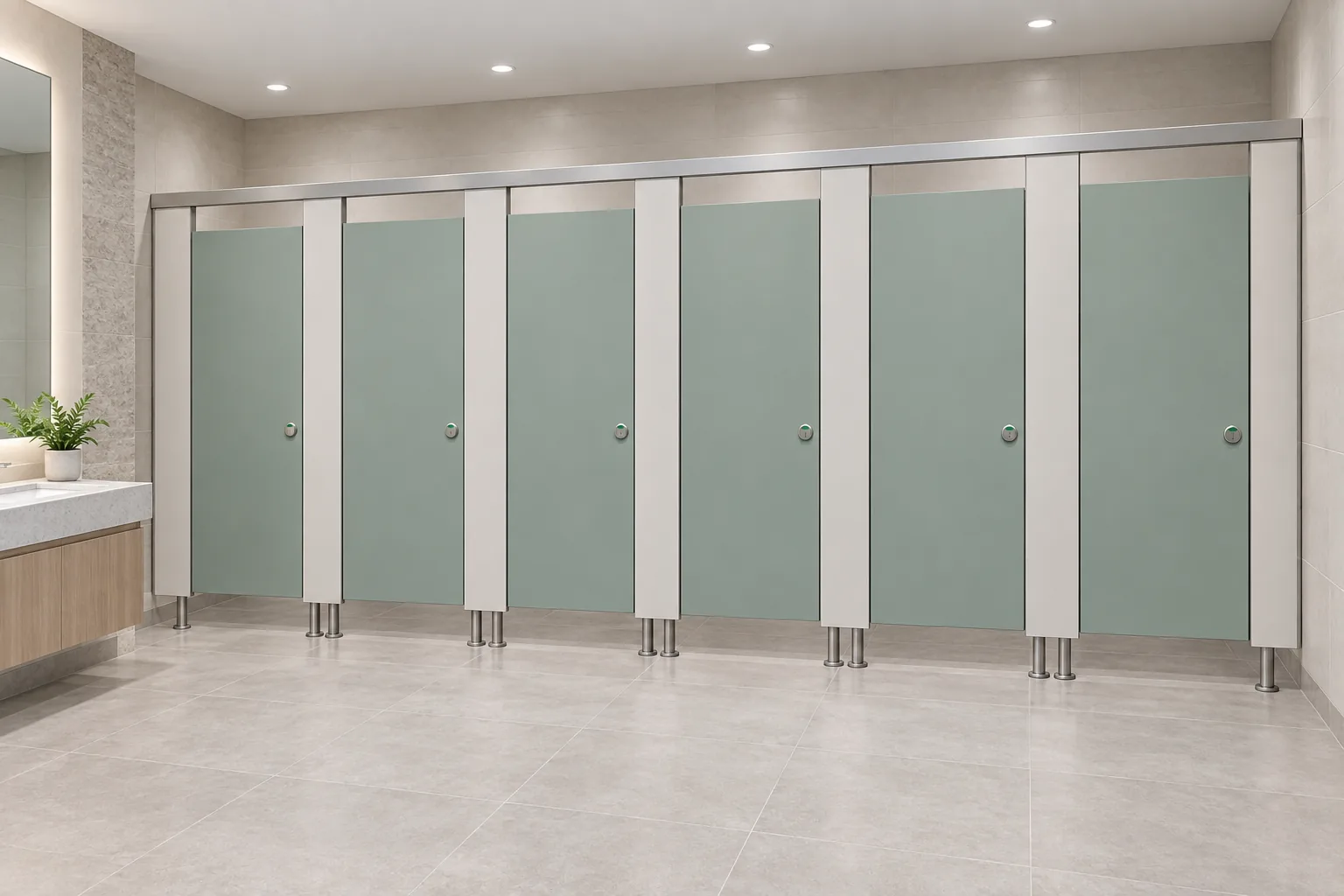
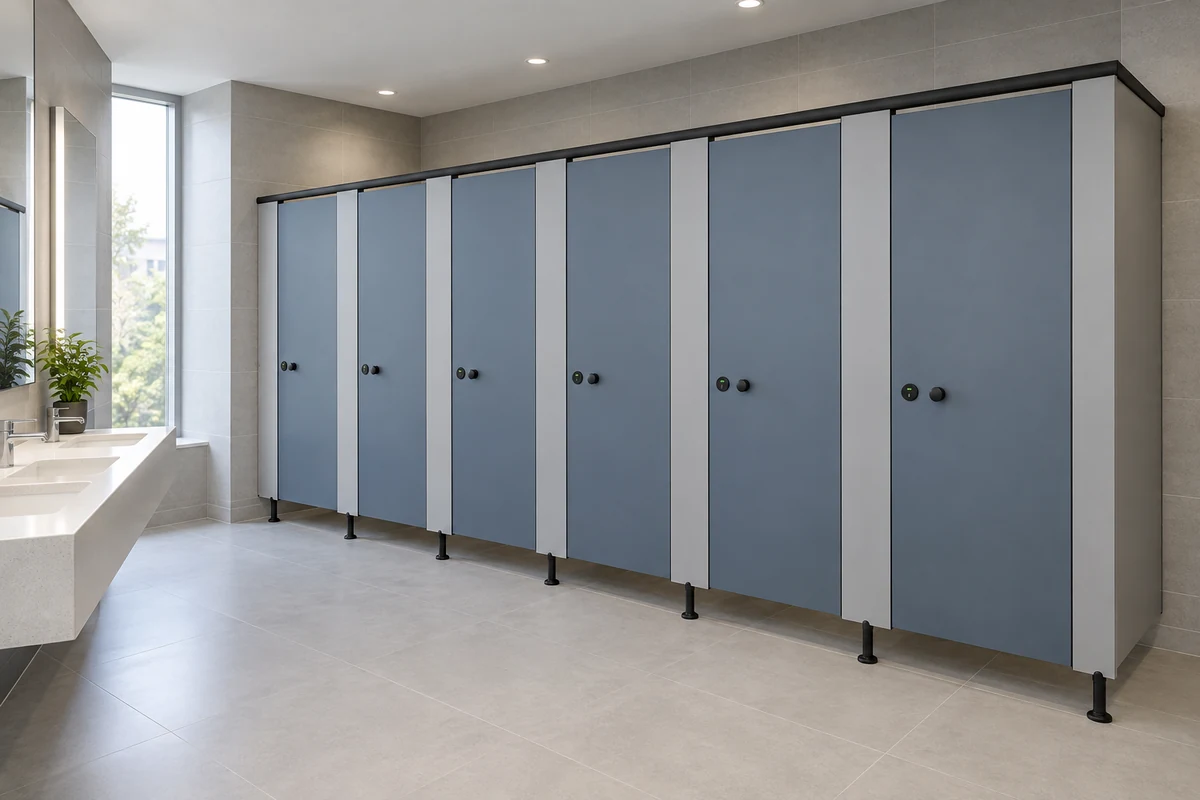
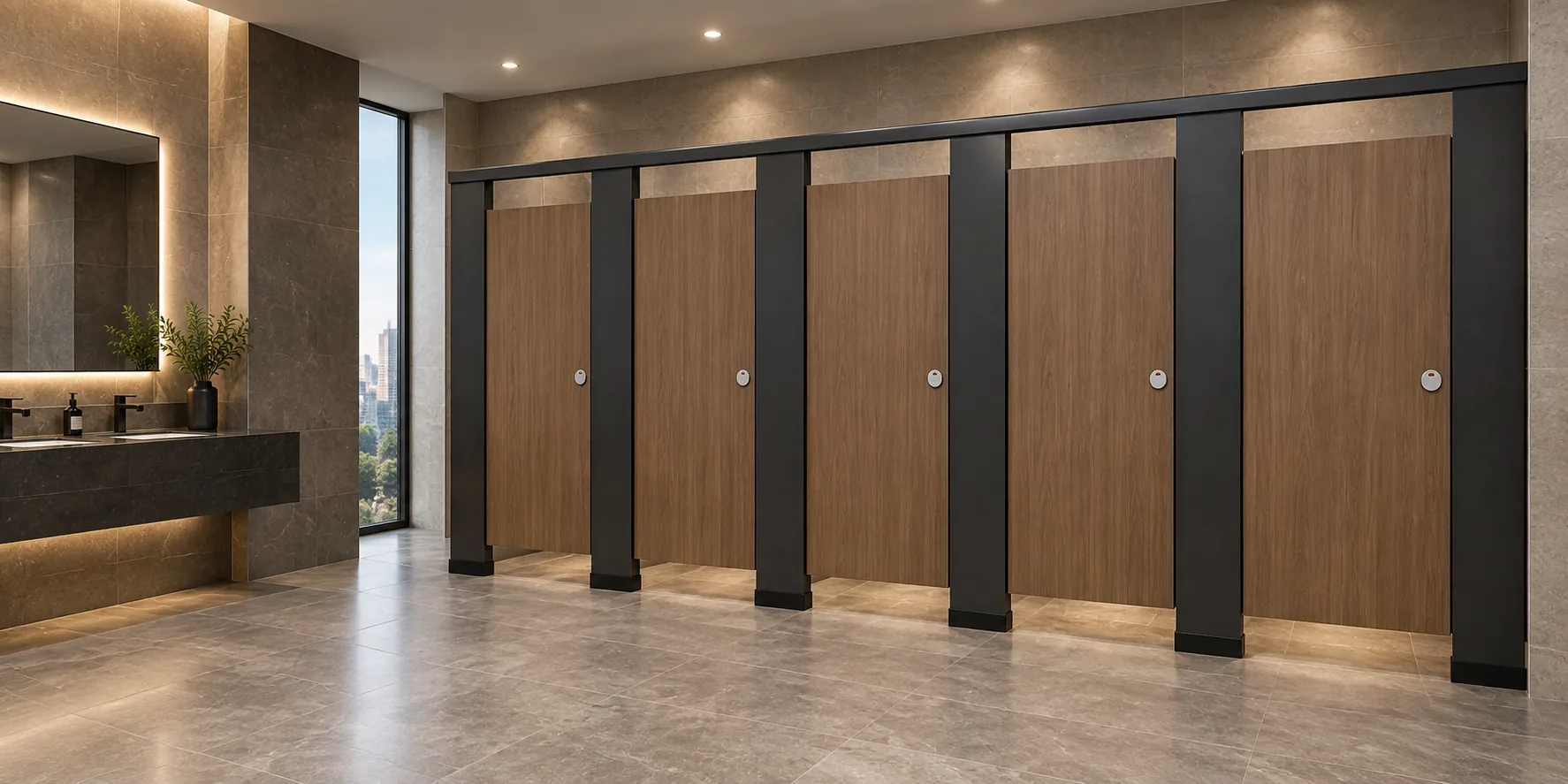
One frequent mistake is scoring a bidder highly because the proposal looks complete. Illustrations show generic design references, not completed EBUNGE customer projects. They can support discussion but cannot prove that a configuration has been delivered or that it meets a local requirement.
Another mistake is mixing commercial and technical scores. A low price should not compensate for missing layout coordination or unclear door operation. Keep the two dimensions separate, then combine them only after technical completeness is confirmed.
A third mistake is treating toilet cubicles as movable operable walls. They are not. Do not introduce suspended wall travel, stacking or parking mechanisms into the scoring model. The tender should describe fixed commercial toilet partition and cubicle elements within the defined scope.
Documentation and Clarification Questions
Clarification questions should be specific and answerable. Ask bidders to identify the drawing or schedule that supports each response. If a response refers to a standard or certificate, request the exact document and confirm that it applies to the proposed configuration.
Record every clarification in a log with dates and owners. This log becomes part of the audit trail and helps the project team explain why a criterion received a particular score. It also prevents later changes from being introduced without review.
Frequently Asked Questions
What is toilet partition hardware tender scoring?
It is not a certification of compliance.
Which documents should bidders provide?
Bidders should provide the documents listed in the tender questionnaire, typically including layout drawings, hardware schedules, door operation descriptions and cleaning documentation. The exact list depends on the project and must be confirmed by the project team.
Can we score a bidder on material type?
Only if the material is specified in the approved project documents and supported by matching technical evidence. Do not treat HPL, compact laminate, phenolic or stainless steel as interchangeable or infer hidden construction from illustrations.
How should local requirements be handled?
Describe the project-team review of applicable local requirements without asserting unverified compliance. Assign responsibility for verification and request the relevant documentation from the bidder or the responsible consultant.
What should we do if a bidder provides only illustrations?
Illustrations show generic design references, not completed EBUNGE customer projects. Treat them as discussion aids and request project-specific evidence before awarding technical scores.
How do we avoid unsupported performance claims?
Score only what the bidder documents.
Conclusion and Next Steps
A well-weighted tender scoring model helps project teams compare toilet partition hardware offers on a consistent, evidence-bounded basis. Start by defining acceptable evidence, then apply a repeatable process that separates technical completeness from commercial terms. Keep layout, privacy, door operation, support interfaces, cleaning documentation and local requirements visible throughout the review.
EBUNGE product category includes commercial Toilet Partition / Toilet Cubicle. For project-specific questions about layouts, hardware schedules or documentation, review the product range and the resource library, then contact the team to discuss your tender requirements. Any project-specific material, hardware, dimension, finish, mounting or rating requires matching approved technical evidence.