
Tender Clarification Questions to Ask Before Toilet Partition Award
Quick answer: toilet partition
Review focus: toilet partition.
Toilet partition tender clarification is the stage where assumptions become questions and questions become documented decisions. Before award, a project team should be able to explain what is being reviewed, who owns each interface, and which items still require project-specific evidence. This guide offers an evidence-bounded framework for overseas contractors, architects, interior designers, owners, renovation companies, distributors and construction teams. It does not replace approved drawings, specifications or local requirements. EBUNGE product category includes commercial Toilet Partition / Toilet Cubicle. Any project-specific material, hardware, dimension, finish, mounting or rating requires matching approved technical evidence.
Why Clarification Matters Before Award
Use the tender period to separate confirmed information from open items. Confirmed information should come from maintained product facts and approved project documents. Open items should be listed, assigned and closed before award. Illustrations show generic design references, not completed EBUNGE customer projects.
What Clarification Is Not
Clarification is not a place to infer hidden construction from a picture, treat material families as interchangeable, or assume performance that has not been documented. It is also not a substitute for applicable local requirements. The goal is a clear, traceable record of what the project team has reviewed and what still needs evidence.
Layout and Dimensional Review Questions
Layout questions should be answered against project drawings, not generic assumptions. The project team should confirm how cubicle runs meet walls, columns, services and finished floor levels. Where dimensions are not yet fixed, record them as open items rather than accepting verbal approximations.
- Which drawing revision defines the cubicle layout, and who controls it?
- How are wall, column and service interfaces shown at each end of a run?
- What finished floor and ceiling conditions affect setting out?
- Which dimensions are confirmed, and which remain provisional?
- How will site measurement tolerances be recorded before fabrication?
Privacy, Door Operation and User Experience
Door and Access Coordination
Ask how door swing, clearance and access routes are coordinated with adjacent fittings and services. Confirm who reviews the door operation sequence and how comments are closed. Where accessible or ambulant cubicle requirements apply, the project team should identify the applicable local requirement and the document that demonstrates it.
Privacy Expectations
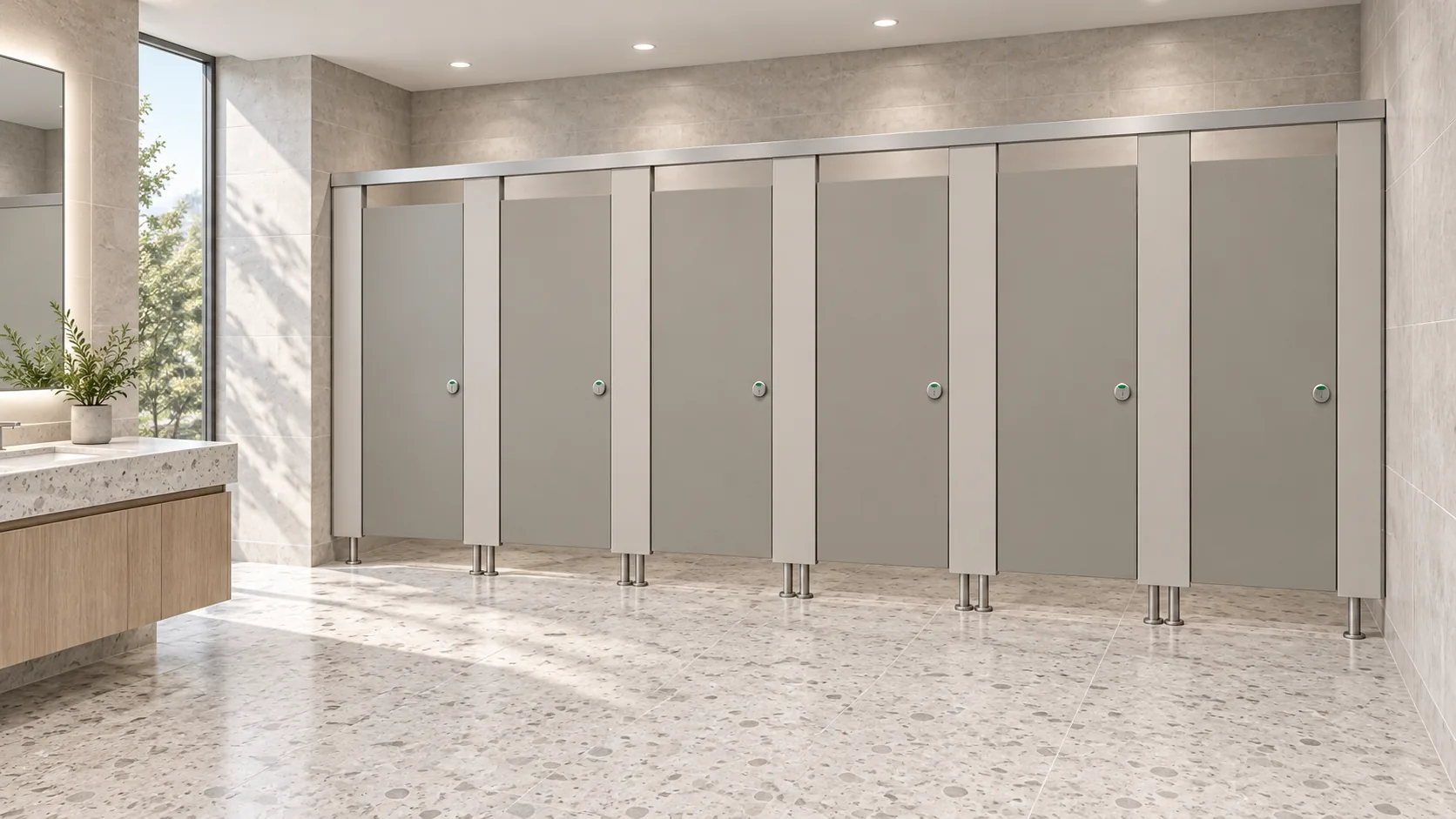
Privacy expectations vary by project type and jurisdiction. The team should record what privacy outcome is required, where it is defined, and which approved document addresses it. Do not assume a rating or performance level that has not been provided as project-specific evidence.
Support Interfaces and Fixing Coordination
Support interfaces are a common source of tender ambiguity. The project team should clarify which substrate receives the partition support, who confirms its suitability, and how fixing positions are coordinated with other trades. This is a review topic, not an instruction to infer a mounting method.
| Interface | Clarification question | Evidence owner |
|---|---|---|
| Wall or column | Which substrate is shown, and who confirms it? | Structural or architectural team |
| Floor | What finished level and build-up apply? | Main contractor |
| Services | Which services pass through or near the run? | MEP coordinator |
| Adjacent finishes | How are junctions and tolerances handled? | Interior or finishing team |
Use this table as a working checklist. It does not confirm any fixing method, load capacity or material choice. Those items require approved technical evidence for the specific project.
Cleaning Documentation and Maintenance Review
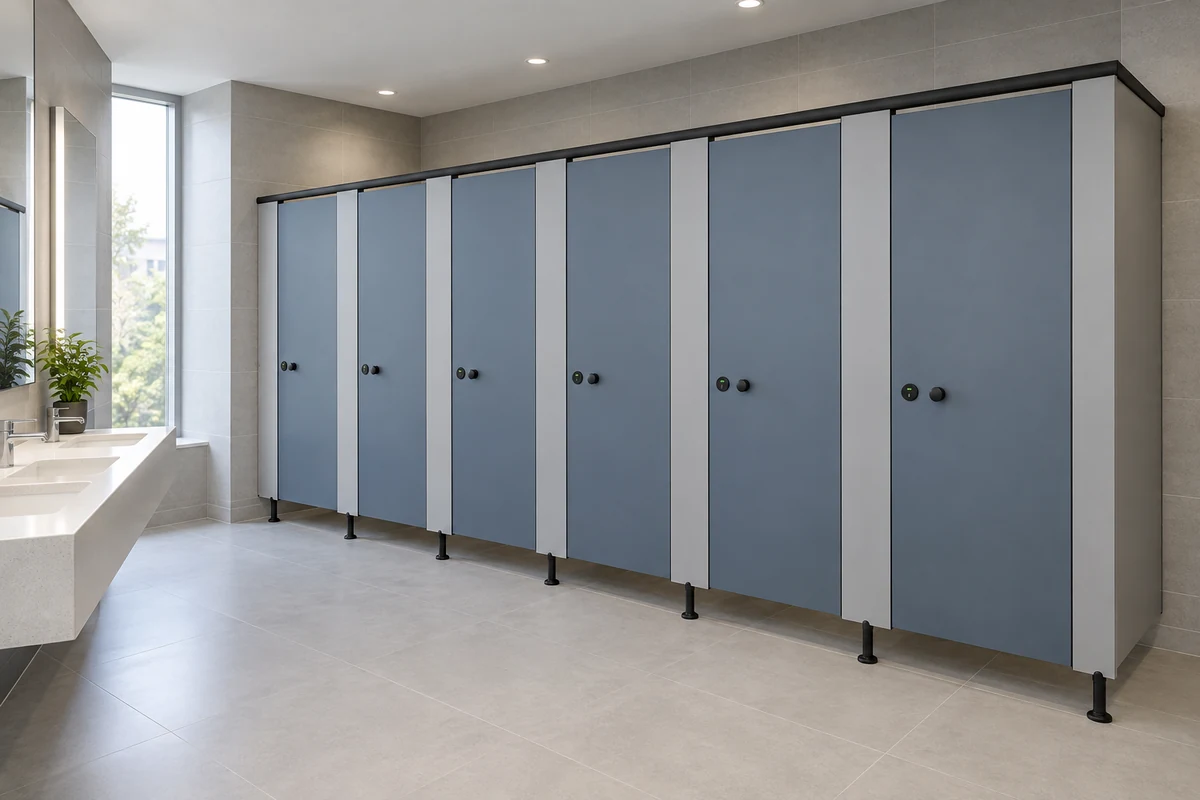
Cleaning documentation should be discussed before award so the owner understands what information will be handed over. The project team should ask what cleaning guidance is available, how it is delivered, and who is responsible for incorporating it into the operations file.
- Identify the person who will receive cleaning documentation.
- Confirm the format and language required for handover.
- List any project-specific cleaning constraints from the owner.
- Record how updates or revisions will be issued.
- Close the item before award or mark it as an agreed action.
This process does not assert compliance with any standard. It simply makes the handover expectation visible and assignable.
Applicable Local Requirements and Evidence Boundaries
Local requirements differ by country, region and building type. The project team should identify which requirements apply and which approved document demonstrates them. Do not assert unverified compliance, and do not treat a generic reference as proof of a project-specific outcome.
Where evidence is missing, record it as an open clarification item. The project team should confirm project-specific requirements against the relevant approved technical evidence. The product overview provides maintained category context, while the resources section supports further project-team review.
Building the Clarification Register
A clarification register turns scattered questions into a managed list. Each entry should state the question, the responsible party, the required evidence and the closure date. The register should be reviewed by the project team before award.
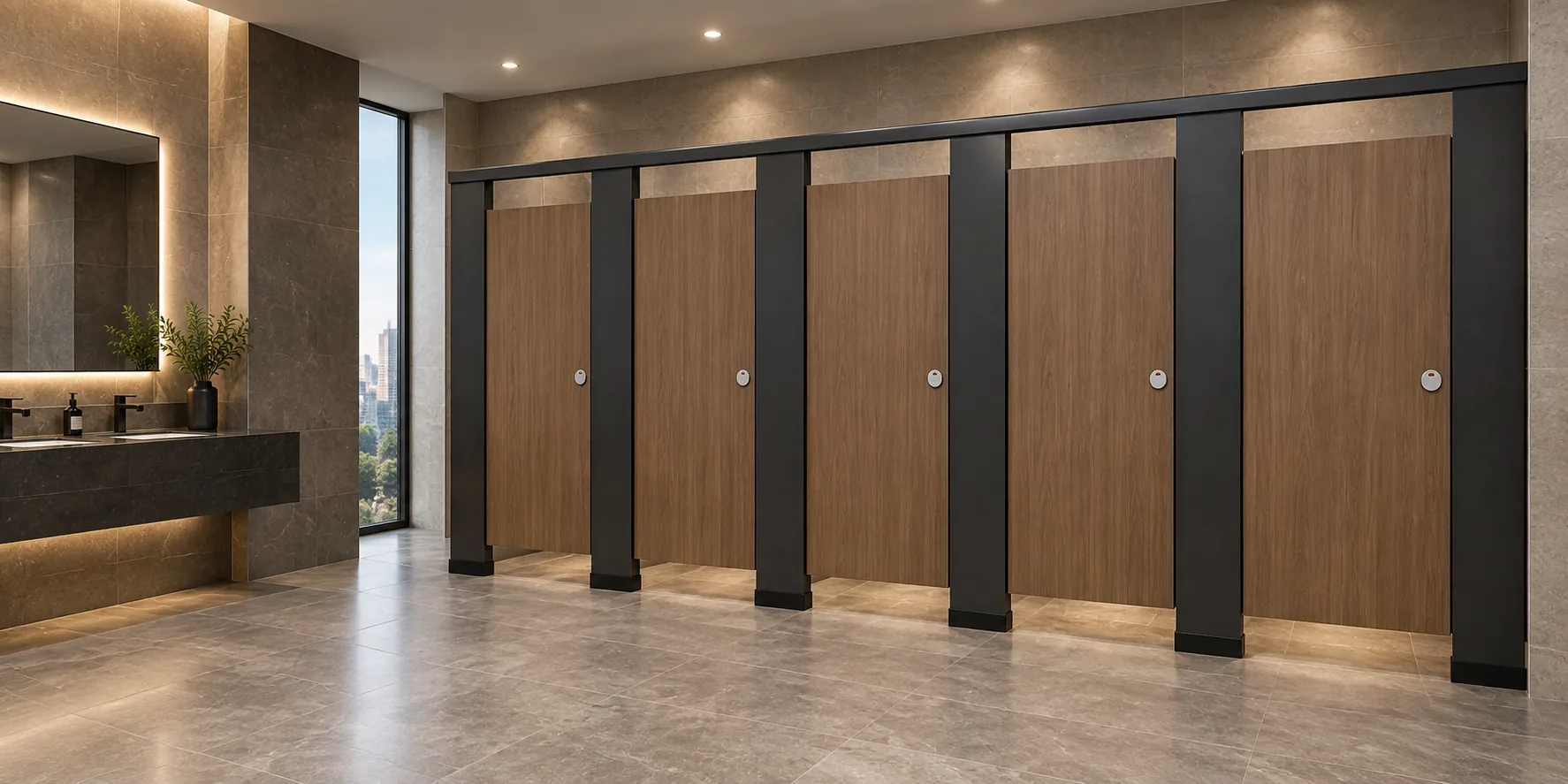
Suggested Register Fields
- Question reference and topic area
- Drawing or document reference
- Responsible party and reviewer
- Required evidence type
- Status and closure date
Keep the register focused on decisions the team can actually close. Avoid adding speculative performance questions that cannot be answered with approved evidence.
Frequently Asked Questions
What is toilet partition tender clarification?
It is the structured review of open questions before award, covering layouts, privacy, door operation, support interfaces, cleaning documentation and applicable local requirements. It should rely on approved evidence rather than assumptions.
Which items require project-specific evidence?
Any project-specific material, hardware, dimension, finish, mounting or rating requires matching approved technical evidence. Generic references and illustrations are not a substitute.
Can illustrations be used as construction drawings?
No. Illustrations show generic design references, not completed EBUNGE customer projects. Construction decisions should follow approved project documents.
How should support interfaces be clarified?
The project team should confirm the substrate, the responsible party and the coordination route. The clarification should not infer a fixing method or load capacity without approved evidence.
What should be included in cleaning documentation?
The team should agree the recipient, format, language and revision process. The content should come from maintained documentation, not from assumptions about performance.
When should the clarification register be closed?
Ideally before award, or with agreed actions and owners recorded. Open items should not be treated as resolved until the required evidence is provided.
Conclusion and Next Step
For project-specific discussions, contact the EBUNGE team with your drawing references and clarification list. The team can help route your questions to the appropriate review stage without replacing your approved project evidence.