
Who Should Lead Accessibility and Circulation Reviews for WC Cubicles
Quick answer: toilet cubicle
Review focus: toilet cubicle.
Assigning a toilet cubicle accessibility circulation lead early prevents late redesign, unclear responsibility and unsupported assumptions. The lead is not necessarily the person who designs every detail; it is the person who keeps layout, privacy, door operation, support interfaces, cleaning documentation and applicable local requirements visible to the whole project team. For overseas contractors, architects, interior designers, owners, renovation companies, distributors and construction teams, that coordination role protects both buildability and evidence discipline.
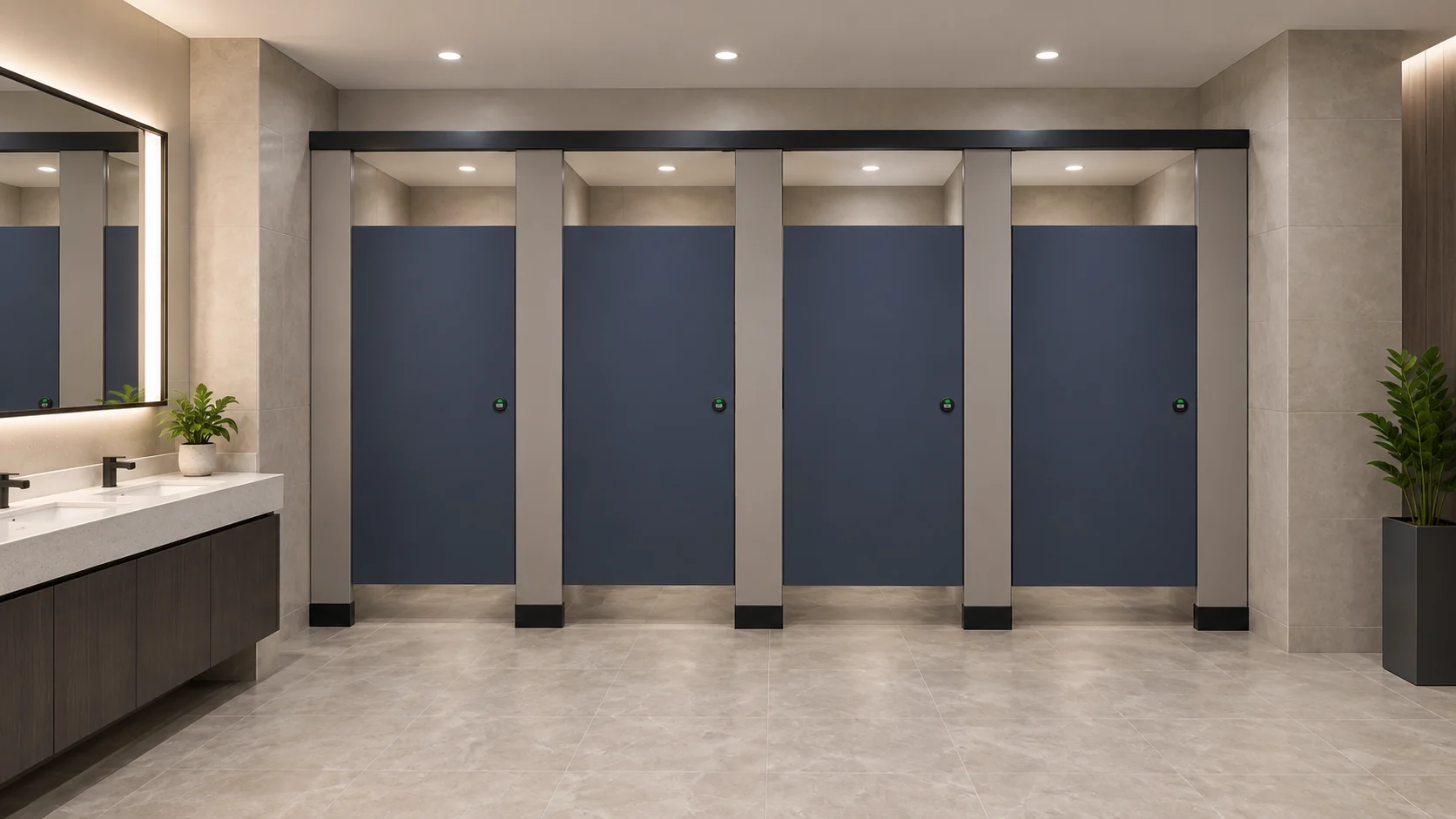
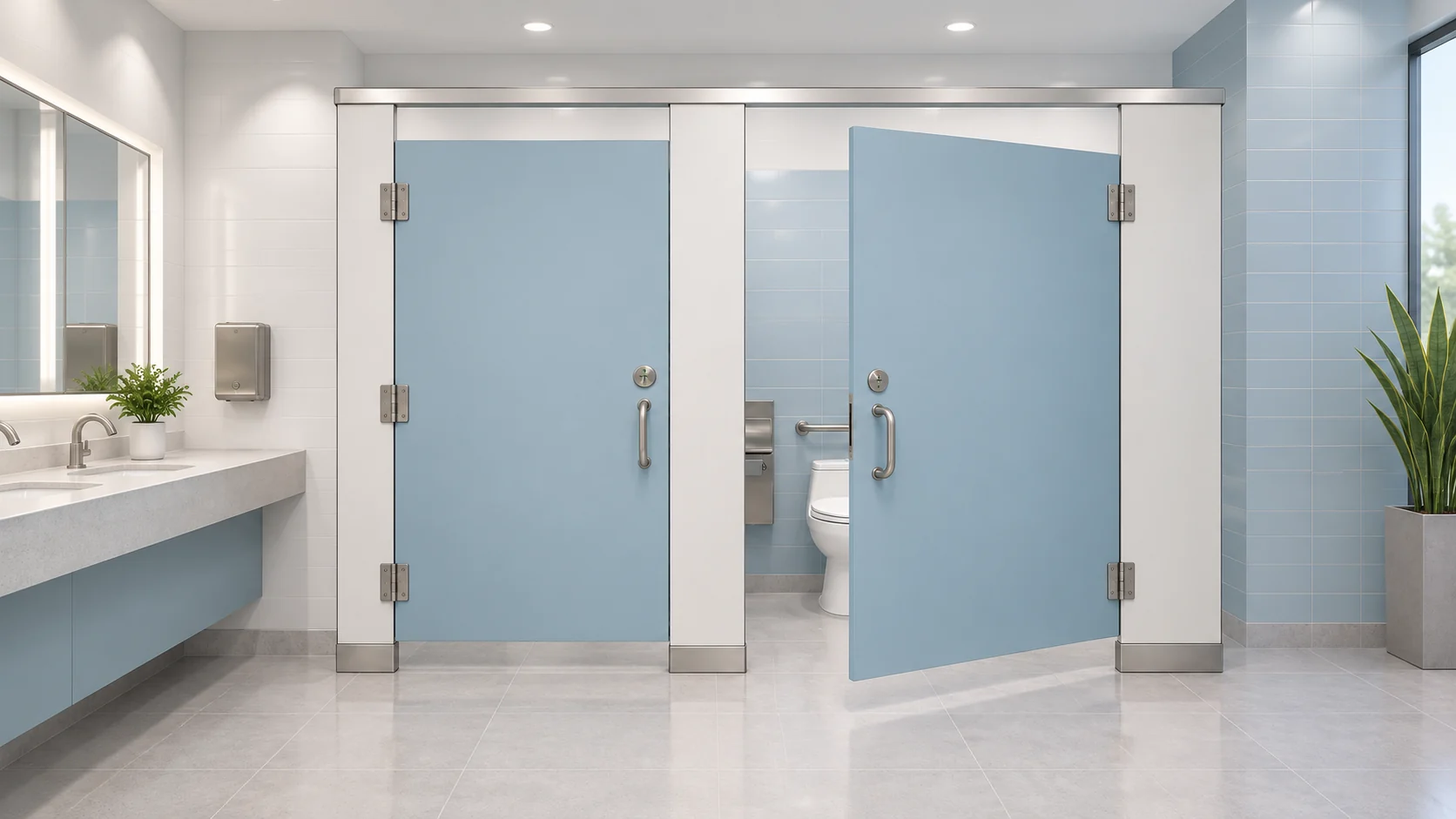
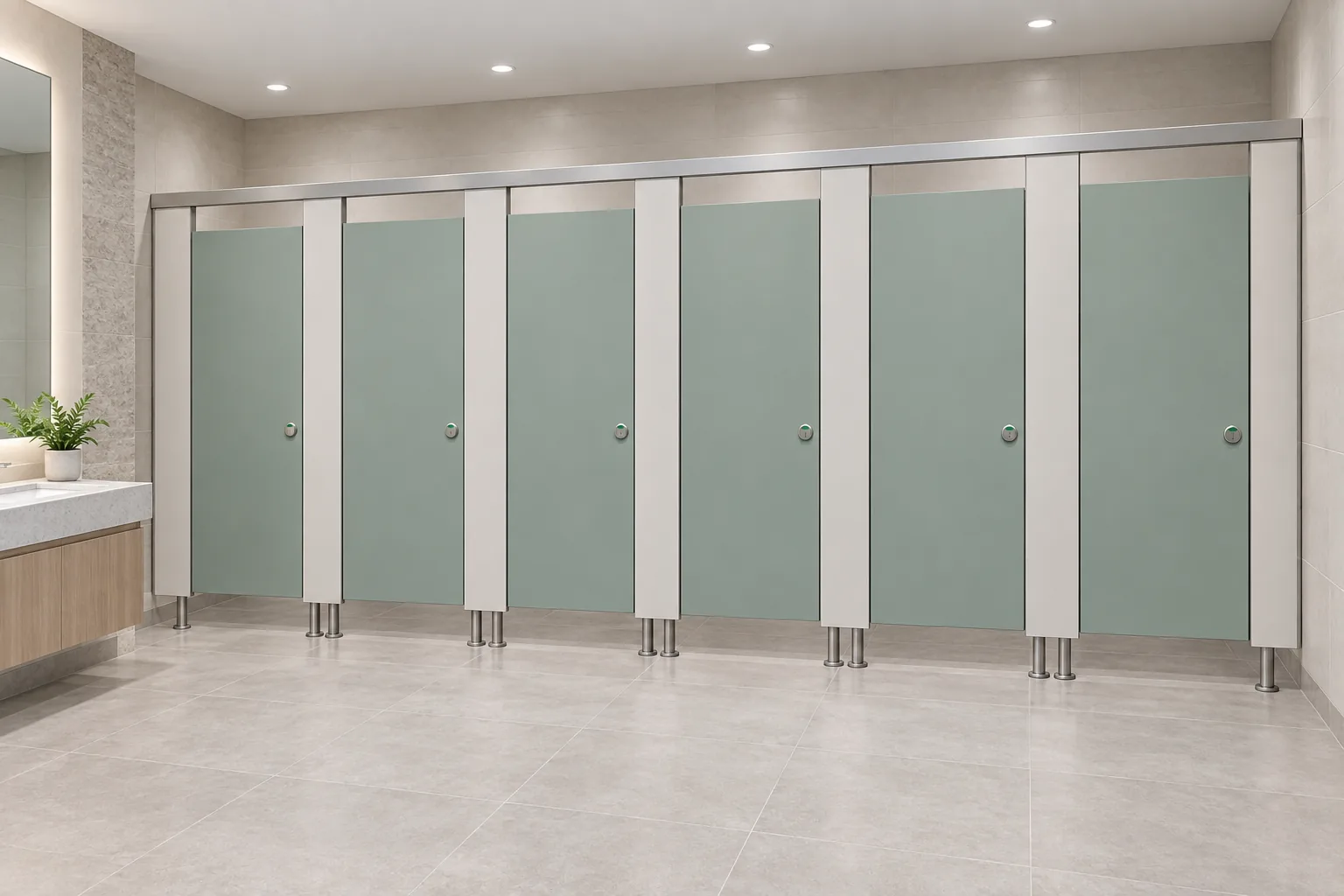
EBUNGE product category includes commercial Toilet Partition / Toilet Cubicle. This article does not confirm project-specific materials, hardware, dimensions, finishes, mounting methods or ratings. Those items require matching approved technical evidence. Illustrations referenced in this topic are generic design references, not completed EBUNGE customer projects.
Why the Lead Role Matters Before Drawings Freeze
Project review term: toilet cubicle.
Accessibility and circulation decisions cross several disciplines. The project team should confirm project-specific requirements against the relevant approved technical evidence. Without a named lead, these issues surface late and become change orders or compromises.
The lead should be a coordinator, not a single-source authority. They gather questions, route them to the right specialist and record decisions.
What the lead is accountable for
- Maintaining a single review log for layout, privacy, door operation, support interfaces and cleaning documentation.
- Confirming that every project-specific material, hardware, dimension, finish, mounting method or rating has matching approved technical evidence.
- Separating generic design references from project-specific approvals.
- Escalating unresolved items to the owner or authority having jurisdiction.
What the lead is not accountable for
The lead does not certify compliance, approve structural capacity or invent performance values. They also do not treat HPL, compact laminate, phenolic or stainless steel as interchangeable. Each material family has its own evidence path, and the project team must confirm suitability against the applicable local requirements.
Who Is Best Placed to Lead the Review?
Coordination scope: toilet cubicle.
The right lead depends on project stage, procurement route and local authority structure. In many projects, the architect or interior designer holds the design intent, while the contractor holds installation feasibility. The owner may hold operational requirements such as cleaning access and privacy expectations.
A practical approach is to name one lead and one backup. The lead should have authority to call short coordination reviews and the discipline to stop unsupported assumptions from entering the record.
Common lead candidates
| Candidate | Strength | Watch point |
|---|---|---|
| Architect or interior designer | Design intent, layout coherence, finish direction | May not control site tolerances or installation sequencing |
| General contractor | Buildability, support interfaces, trade coordination | May not own accessibility intent or operational requirements |
| Owner or facility representative | Cleaning, privacy and long-term operation | May not track drawing revisions in detail |
| Specialist subcontractor | Installation method and interface reality | Must not approve design changes without written direction |
No single candidate is universally correct. The key is a written assignment that names the lead, the backup and the decision log location.
A Staged Review Process for Project Teams
Checklist focus: toilet cubicle.
Each stage should produce a short record of decisions, open questions and evidence gaps.
- Concept stage: Confirm the room’s intended use, user groups and applicable local requirements. Identify whether the project needs an accessible cubicle, an ambulant cubicle or another configuration.
- Schematic stage: Review layout, circulation paths, door operation and privacy. Mark every dimension that still needs project-specific confirmation.
- Technical stage: Match materials, hardware, mounting methods and finishes to approved technical evidence. Do not infer hidden construction from illustrations.
- Procurement stage: Confirm that quotations and submittals reference the same evidence set. Flag any substitution for written review.
- Installation stage: Check support interfaces, fixing locations and door operation against approved drawings. Record deviations.
- Handover stage: Compile cleaning documentation, maintenance instructions and as-built records for the owner.
This sequence keeps the toilet cubicle accessibility circulation lead role tied to evidence rather than opinion.
Evidence Boundaries Every Reviewer Should Respect
Project teams often face pressure to confirm performance before evidence is available. A disciplined lead resists that pressure and documents the gap instead.
Items that always require project-specific evidence
- Material composition and finish selection.
- Hardware type, function and finish.
- Dimensions, clearances and mounting heights.
- Support interfaces and fixing methods.
- Load capacity, warranty, service life and price.
None of these can be assumed from a generic illustration or a category description. They require matching approved technical evidence for the specific project.
How to handle missing evidence
Record the missing item, assign an owner and set a review date. If the evidence cannot be obtained, the team should consider a design change rather than an unsupported assumption. This is especially important where local requirements apply.
Coordination Questions for the First Review Meeting
A focused first meeting can surface most risks. The lead should circulate these questions before the meeting so participants arrive prepared.
- Who is the named lead and backup for this review?
- Which local requirements apply, and who will confirm them?
- What is the intended user group and privacy expectation?
- How will doors operate, and what clearances do they need?
- What support interfaces exist, and who owns their design?
- What cleaning documentation will the owner require?
- Which items still lack approved technical evidence?
Answers should be recorded in the decision log. The lead should not treat a verbal answer as final evidence.
Documentation and Handover Discipline
Good documentation protects the project after installation. The lead should maintain a simple register that links each decision to its evidence source.
Suggested register columns
| Column | Purpose |
|---|---|
| Item | Layout, privacy, door, support, cleaning or local requirement |
| Decision | What the team agreed |
| Evidence | Approved technical document or drawing reference |
| Owner | Person responsible for the next action |
| Status | Open, resolved or escalated |
At handover, the register becomes a useful reference for facility teams. It also shows where project-specific evidence was required and how it was confirmed.
Frequently Asked Questions
Who should lead the accessibility and circulation review for toilet cubicles?
The lead should be a named coordinator with authority to call reviews and maintain a decision log. Depending on the project, this may be the architect, interior designer, general contractor or owner representative. The important point is a written assignment, not a job title.
Can the lead confirm compliance with local accessibility rules?
No. The lead coordinates review and records decisions, but compliance confirmation belongs to the applicable authority or a qualified local professional. The project team should identify the relevant requirements and confirm them through the proper channel.
What should be reviewed first: layout or door operation?
They are linked. Start with the room layout and intended user groups, then review door operation and circulation clearances together. Privacy and support interfaces should follow in the same review cycle.
How do we handle material or hardware substitutions?
Treat every substitution as a project-specific change. It requires matching approved technical evidence before it can be accepted. Do not assume that one material family can replace another without review.
Are illustrations enough to confirm construction details?
No. Illustrations show generic design references, not completed EBUNGE customer projects. Hidden construction, fixing methods and dimensions must be confirmed through approved project documentation.
What documentation should be ready at handover?
Prepare the decision log, approved drawings, cleaning documentation and maintenance instructions. The owner should receive a clear record of what was confirmed and what remains subject to local requirements.
Conclusion: Keep the Lead Role Evidence-Bound
The toilet cubicle accessibility circulation lead is a coordination role, not a compliance guarantee. The lead keeps layout, privacy, door operation, support interfaces, cleaning documentation and applicable local requirements visible across the project team. They also protect the project from unsupported claims by requiring matching approved technical evidence for every project-specific material, hardware, dimension, finish, mounting method or rating.
For product category context, review the EBUNGE commercial toilet partition range. For further planning guidance, see the resources library. To discuss a project-specific review, contact the EBUNGE team.