
Who Signs Off on Toilet Partition Hardware Substitution Requests?
Quick project answer
Toilet partition hardware substitution rarely fails because someone chose the wrong screw. It fails because the request moved through the project without a clear sign-off path. A contractor proposes an alternative hinge, latch or support interface; the architect sees it late; the owner assumes the original specification still applies. The result is rework, delay or a documentation gap that no one owns. This guide explains who should review a toilet partition hardware substitution request, what evidence each reviewer needs, and how to keep the decision traceable. It is written for overseas contractors, architects, interior designers, owners, renovation companies, distributors and construction teams working on commercial Toilet Partition / Toilet Cubicle projects.
Why Hardware Substitution Requests Need a Defined Sign-Off Path
Hardware substitution is a change to a project-specific interface. The project team should confirm project-specific requirements against the relevant approved technical evidence. Even when the substitution looks minor, the decision touches several disciplines. Without a defined path, the request can circulate informally and return as an approved change that no single party actually approved.
The sign-off path should match the project’s contract structure. On some projects, the architect holds design authority. On others, the contractor or a specialist subcontractor owns the interface. The owner or operator may also need to confirm operational expectations. The goal is not to create bureaucracy but to make the decision visible and reviewable.
Who Reviews a Toilet Partition Hardware Substitution Request?
Review roles vary by project, but most commercial toilet partition projects involve a similar set of participants. Each role looks at a different part of the request.
Design and specification reviewers
The architect or interior designer checks whether the substitution changes the design intent, the visible finish, the door operation or the layout coordination. They also confirm whether the substitution affects any project-specific drawing or specification item.
Construction and installation reviewers
The contractor or installation team checks whether the substitution fits the support interfaces, the fixing conditions and the sequence of work.
Owner and operator reviewers
The owner or facility operator reviews cleaning documentation, maintenance access and day-to-day use. They may not need to approve every technical detail, but they should confirm that the substitution does not conflict with operational requirements.
Supplier and distributor reviewers
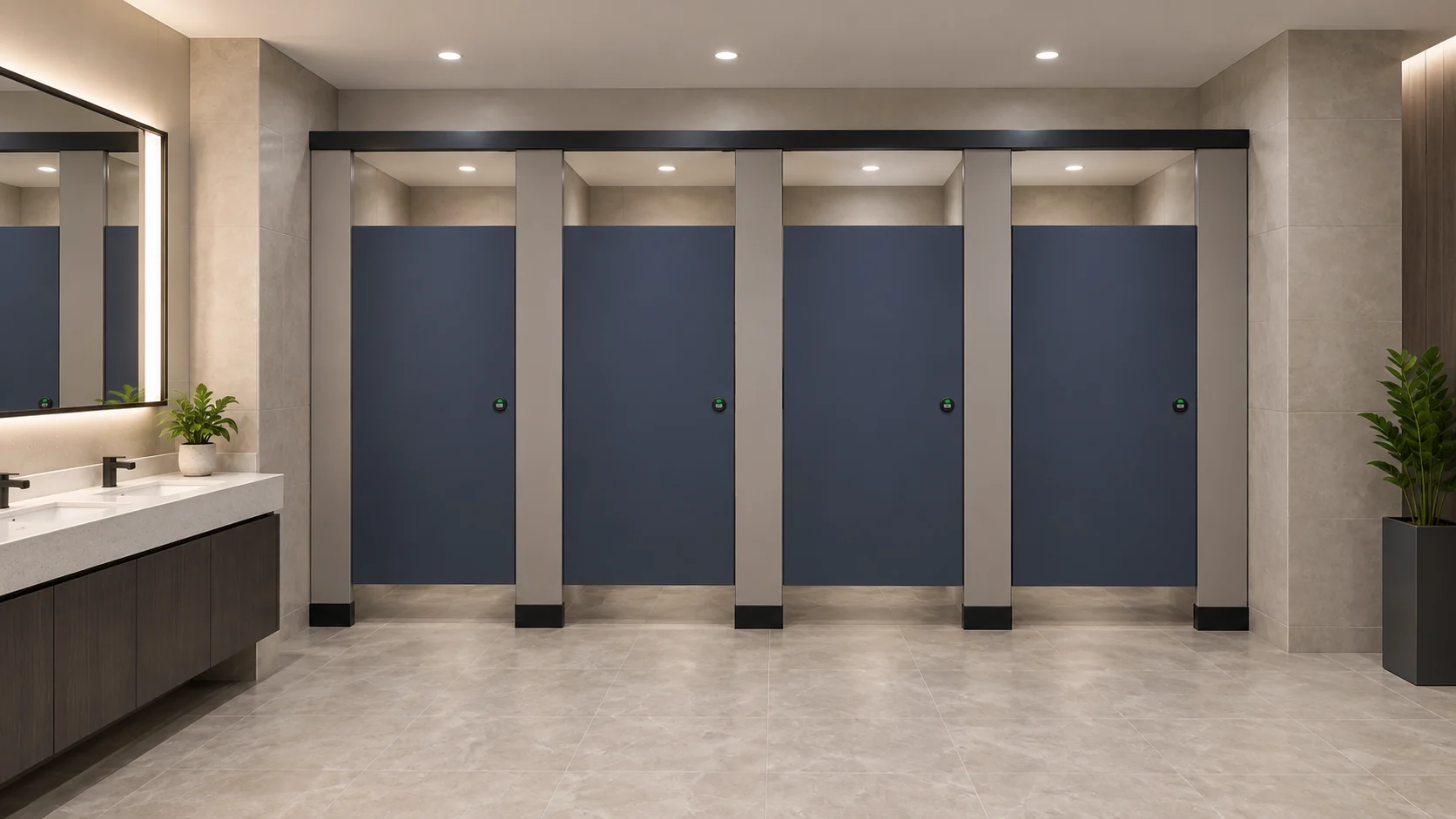
The supplier or distributor confirms what is actually available and what technical evidence can be provided. They should not be asked to confirm performance or compliance that is not supported by approved documentation.
What Evidence Should Accompany a Substitution Request?
A substitution request should be treated as a project-specific change, not a general product statement. The evidence package should be assembled before the request goes to sign-off.
- Project reference and location of the affected cubicle or group.
- Original specification item and the proposed substitution.
- Reason for the request, such as availability, coordination or site condition.
- Relevant approved technical evidence for the proposed item.
- Impact on door operation, support interfaces, cleaning and layout.
- Any applicable local requirement that the project team has identified.
- Clear statement of what remains unverified.
This list is a starting point. The project team should add any item required by the contract or by the applicable local authority. Illustrations and generic references show design intent only; they are not evidence of a completed EBUNGE application reference.
A Step-by-Step Sign-Off Process
The following sequence keeps the decision traceable without assuming a particular contract form.
- Log the request. Record the date, requester, affected area and original specification item.
- Attach evidence. Include the approved technical evidence that supports the proposed substitution.
- Review design impact. The design reviewer confirms whether layout, privacy or door operation is affected.
- Review installation impact. The construction reviewer checks support interfaces, fixing conditions and sequence.
- Review operational impact. The owner or operator confirms cleaning and maintenance expectations.
- Confirm evidence limits. Any unverified performance, rating or compliance item is stated explicitly.
- Record the decision. The authorized signatory approves, rejects or requests more information.
- Issue the updated documentation. The approved substitution is reflected in the project record.
Coordination Points That Often Get Missed
Substitution requests frequently stall because a coordination point was not checked early. Door operation is a common example: a change to a hinge or latch can affect clearance, swing or privacy. Support interfaces are another: the connection between a panel and the building structure may depend on conditions that are only visible on site.
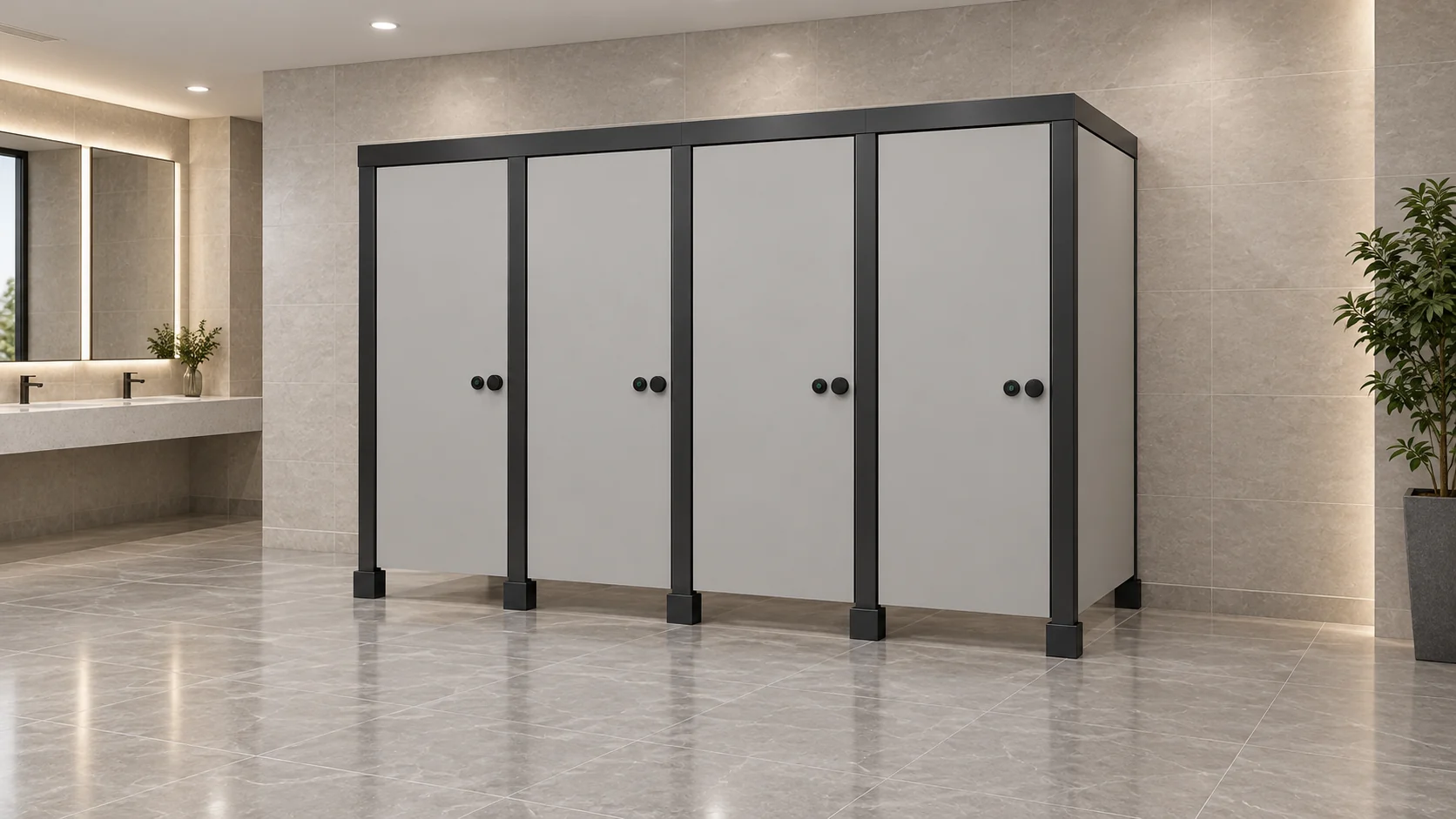
Cleaning documentation is also easy to overlook. If the substitution changes how a surface or joint is cleaned, the operator should know before handover. Applicable local requirements may add further review steps. The project team should identify those requirements and confirm them with the relevant authority rather than assuming compliance.
Evidence Boundaries: What a Substitution Request Cannot Claim
A substitution request should not be used to introduce unverified claims. Do not treat HPL, compact laminate, phenolic or stainless steel as interchangeable, and do not infer hidden construction from an illustration.
Dimensions, load capacities, finishes, mounting details and ratings are project-specific. They require matching approved technical evidence. If that evidence is not available, the correct action is to mark the item as unverified and request more information. This protects every party in the sign-off chain.
How to Document the Final Decision
The final record should be short enough to read and complete enough to audit. It should identify the affected area, the original item, the approved substitution, the evidence reviewed, the reviewers consulted and the date of approval. It should also state any condition attached to the approval, such as a requirement for site verification or a limitation on where the substitution may be used.
Where a substitution is rejected, the record should explain why. This prevents the same request from returning later without new information. Where more information is needed, the record should name the missing item and the party responsible for providing it.
Frequently Asked Questions
Who has final authority to approve a toilet partition hardware substitution?
Final authority depends on the project contract and the applicable local requirements. The project team should identify the authorized signatory before the request is submitted, not after.
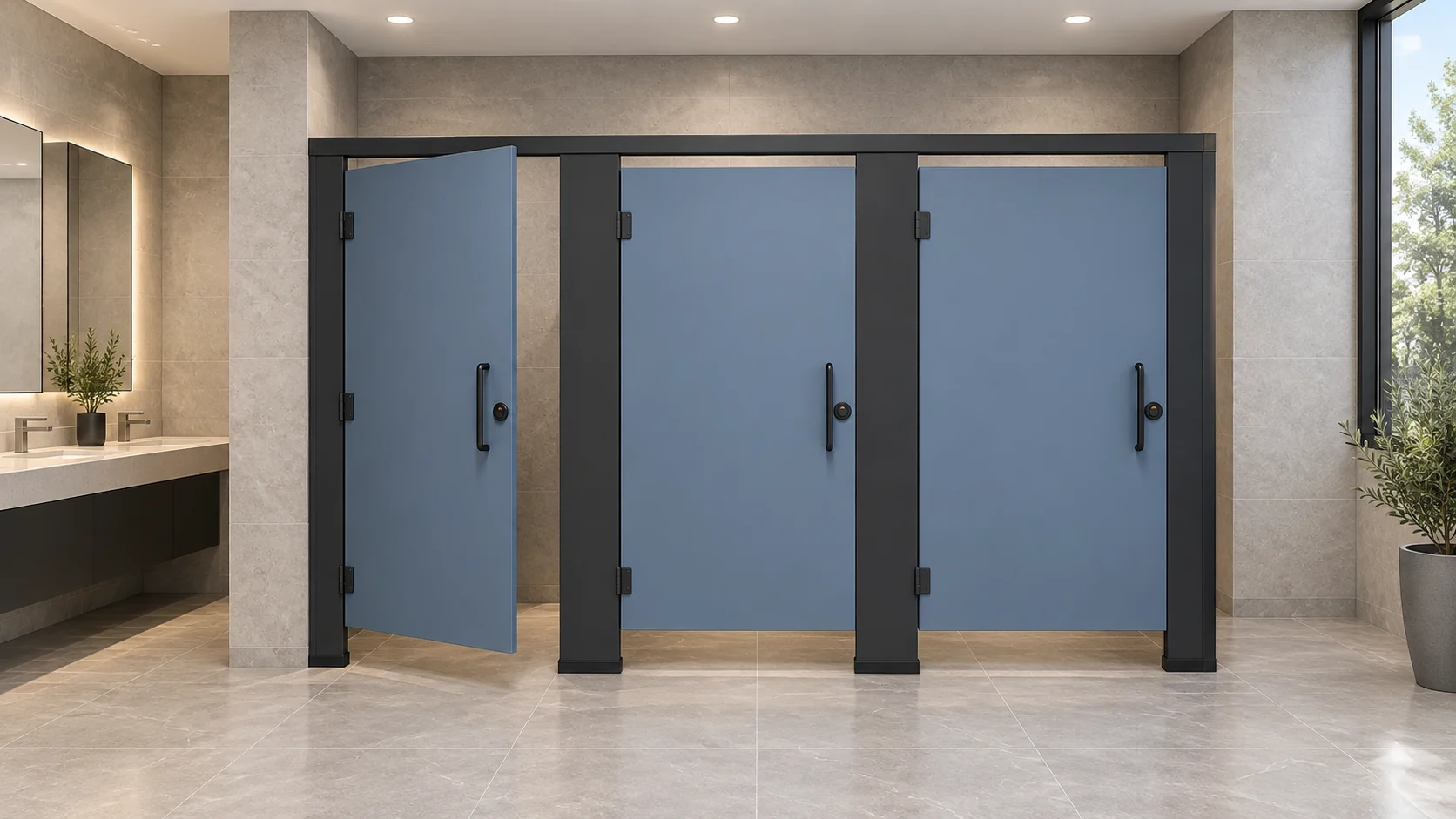
Can a contractor approve a substitution without the architect?
Only if the contract gives the contractor that authority. In many projects, design-related changes require the architect or designer to review the request first.
What evidence is needed for a hardware substitution request?
The request should include approved technical evidence for the proposed item, a description of the affected area, and a clear statement of any item that remains unverified.
Does a substitution request need to address cleaning documentation?
Yes, where the substitution affects cleaning or maintenance. The owner or operator should confirm that operational expectations are still met.
How should unverified performance claims be handled?
They should be stated as unverified and not presented as approved facts. The project team should request matching technical evidence before relying on them.
Where can I find more guidance on toilet partition project planning?
Review the EBUNGE resources for general planning guidance, and check the product overview for category context. Project-specific questions should go through the contact route.
Conclusion: Keep the Sign-Off Path Visible
A toilet partition hardware substitution is a project decision, not a product claim. The sign-off path should be defined early, the evidence should be attached before review, and the final decision should be recorded clearly. This approach helps contractors, architects, designers, owners and distributors coordinate without relying on assumptions.
EBUNGE product category includes commercial Toilet Partition / Toilet Cubicle. For project-specific material, hardware, dimension, finish, mounting or rating questions, the project team should match the request to approved technical evidence. Illustrations show generic design references, not completed EBUNGE customer projects.
To discuss a project requirement or request documentation, contact the EBUNGE team.