
How to Audit a Toilet Partition Handover Pack Before Final Acceptance
Quick project answer
Review focus: handover pack.
A toilet partition handover pack audit is the final structured review that helps a project team confirm what has been supplied, installed and documented before acceptance. It is not a substitute for inspection by qualified professionals, nor does it create compliance. The audit simply organises evidence so that gaps are visible and can be resolved. EBUNGE product category includes commercial Toilet Partition / Toilet Cubicle.
Every project-specific material, hardware, dimension, finish, mounting or rating still requires matching approved technical evidence. This guide sets out a repeatable review sequence for contractors, architects, interior designers, owners and renovation teams working across different markets.
What a Handover Pack Should Contain
Project review term: handover pack.
A handover pack is a document set, not a single file. Its contents depend on the contract, the project team and applicable local requirements. The audit should first confirm that the pack is complete enough for the receiving party to understand what was installed and how it should be maintained.
Typical sections include approved layouts, door operation information, support interface details, cleaning documentation and any project-specific approvals. Where a section is missing, record it as an open item rather than assuming a default. Do not infer hidden construction from illustrations or generic references.
Step-by-Step Audit Sequence
- Register the pack. List every document, revision number and date. Note who issued it and who approved it.
- Check scope alignment. Compare the pack against the agreed project scope and drawing set. Flag any area not covered.
- Review layouts. Confirm that cubicle positions, circulation and access routes match approved drawings.
- Review privacy and door operation. Check that door swing, latch behaviour and privacy provisions are described consistently.
- Review support interfaces. Confirm that the interface between partitions and surrounding construction is documented.
- Review cleaning documentation. Confirm that cleaning instructions are present and refer to the specified finish.
- Review local requirements. Identify which local requirements apply and whether evidence is referenced. Do not assert compliance without verification.
- Close out open items. Assign owners and dates for every gap before final acceptance.
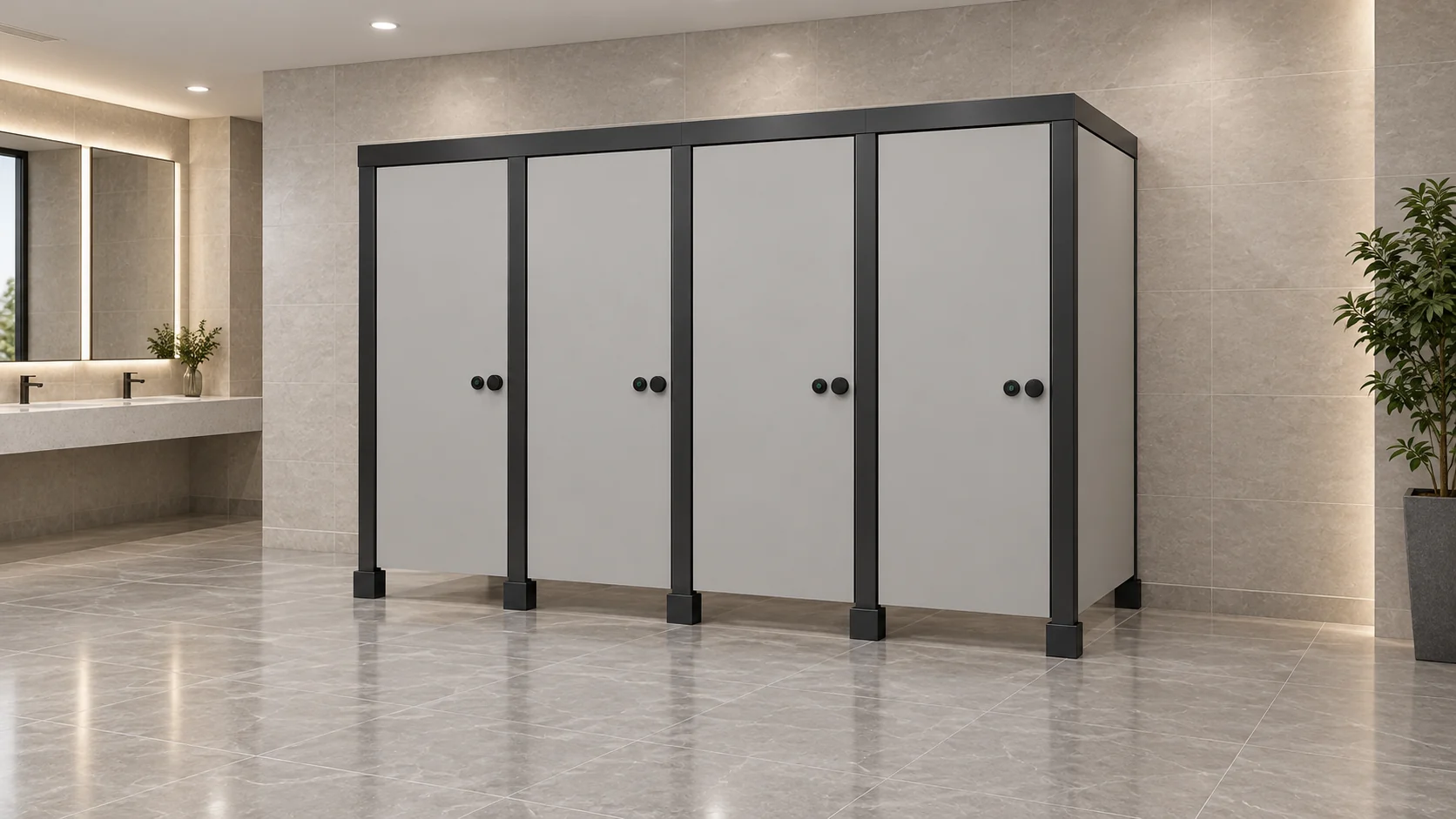
Layout and Privacy Review
Layout review is about coordination, not preference. The team should confirm that the approved layout reflects the actual site conditions and that any deviation is documented. Privacy provisions should be described in the pack in a way that matches the approved specification.
Where the pack refers to a material or finish, that reference must match approved technical evidence. HPL, compact laminate, phenolic and stainless steel are not interchangeable, and the audit should not treat them as such. If the pack is silent on a material, record it as an information request.
Door Operation and Support Interfaces
Door operation is a frequent source of handover queries. The pack should describe how doors are intended to operate, including any hardware references that have been approved for the project. The audit should not assume that a generic illustration represents the installed condition.
Support interfaces matter because partitions connect to floors, walls and sometimes ceilings. The pack should show how those connections are intended to be formed and who is responsible for each interface. Where responsibility is unclear, the audit should raise it before acceptance.
Cleaning Documentation and Local Requirements
Cleaning documentation helps the receiving team maintain the installation. The audit should confirm that instructions are present, that they refer to the approved finish, and that they do not conflict with other project documents.
Local requirements vary by jurisdiction. The audit should identify which requirements the project team believes apply and whether the pack references evidence for them. It should not state that a project complies unless that has been separately verified by the responsible party.
Evidence Boundaries and Common Pitfalls
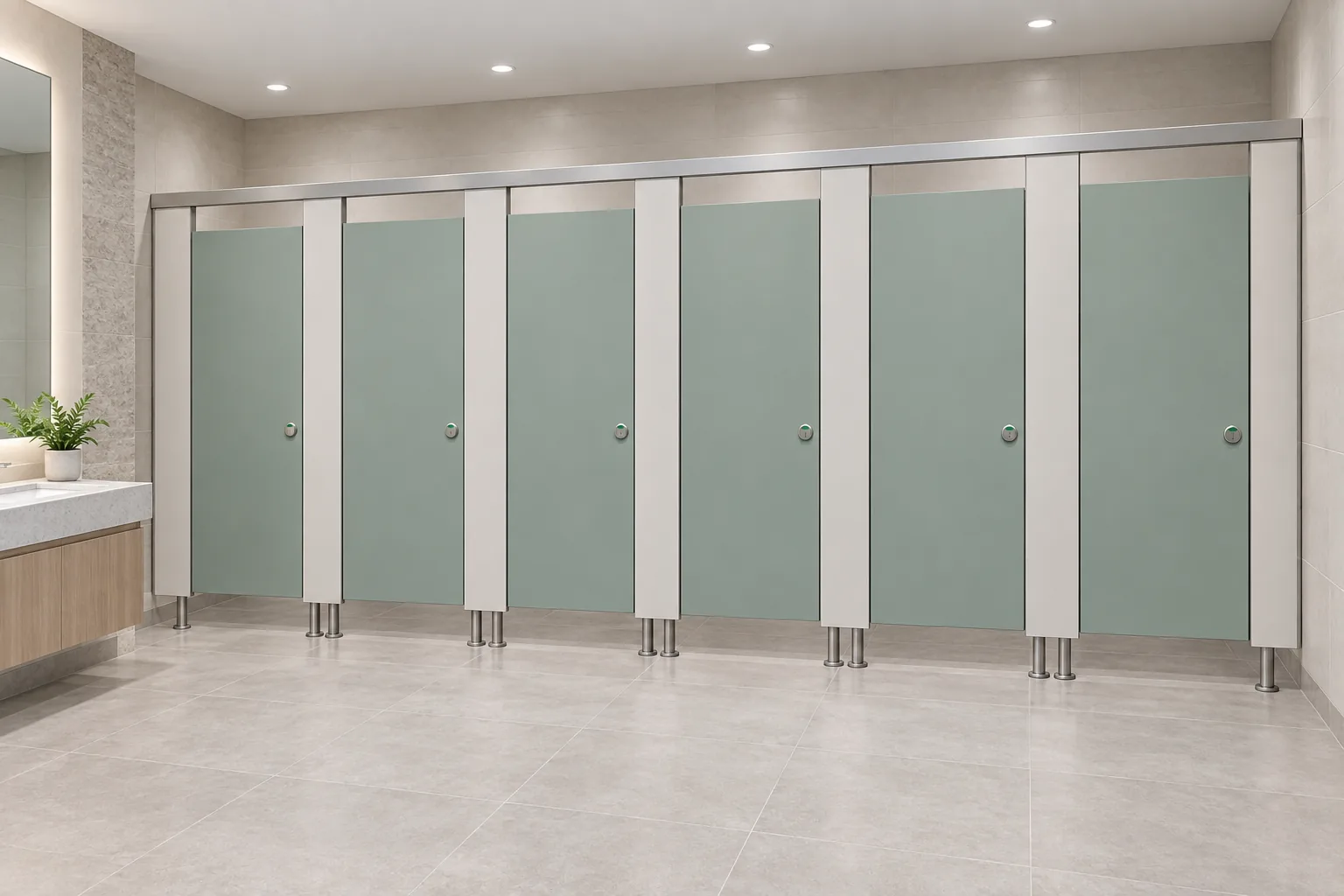
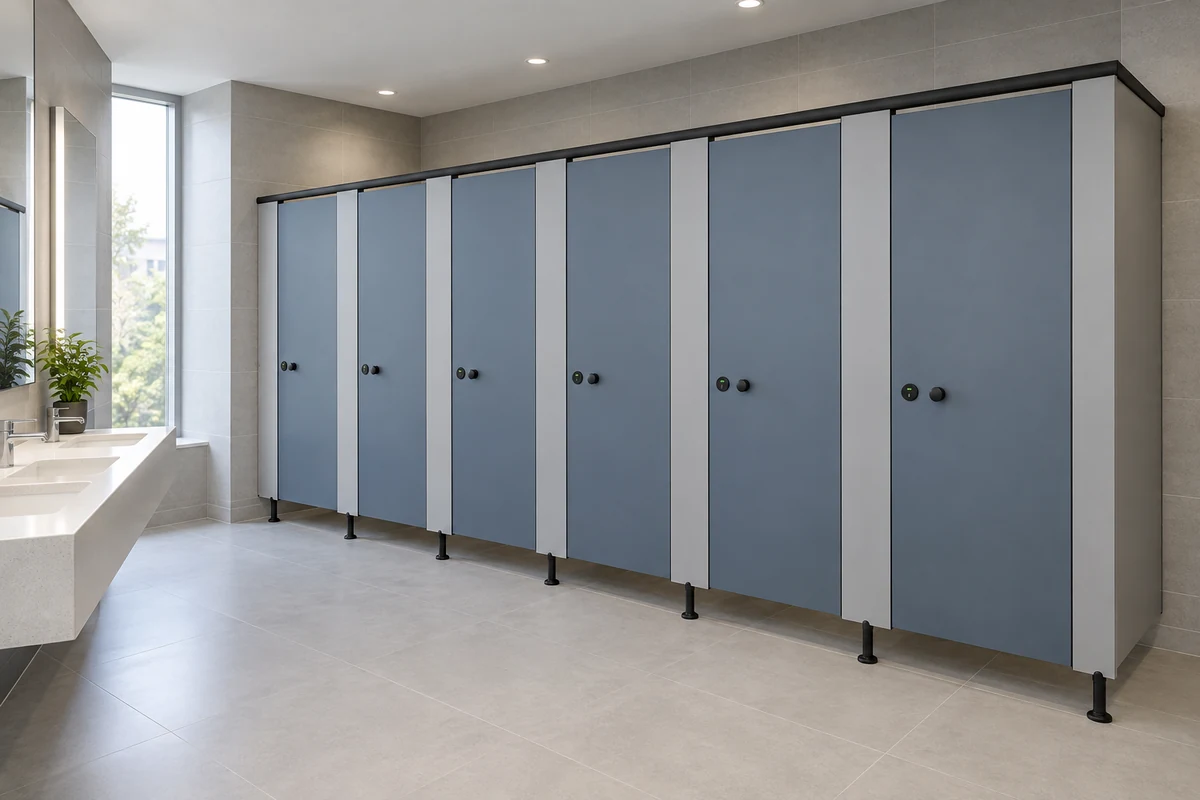
Illustrations show generic design references, not completed EBUNGE customer projects. Any project-specific material, hardware, dimension, finish, mounting or rating requires matching approved technical evidence.
Common pitfalls include treating a generic drawing as a project record, assuming a material from a photograph, and accepting a pack that lacks revision control. Another pitfall is describing toilet cubicles as movable operable walls; they are not, and the audit should not introduce suspended wall travel, stacking or parking mechanisms.
Decision Checklist for Final Acceptance
- Is every document in the pack listed with a revision and date?
- Does the pack cover the full agreed scope?
- Are layouts consistent with approved drawings?
- Is door operation described without relying on assumptions?
- Are support interfaces and responsibilities documented?
- Is cleaning documentation present and finish-specific?
- Are applicable local requirements identified and evidenced?
- Are all open items assigned to an owner with a due date?
Frequently Asked Questions
What is a toilet partition handover pack audit?
It is a structured review of the documents supplied before final acceptance. It helps the project team confirm that layouts, door operation, support interfaces, cleaning documentation and applicable local requirements are addressed, without asserting unverified compliance.
Who should carry out the audit?
The audit is usually led by the project team responsible for acceptance, with input from the contractor, designer and owner. It does not replace inspection by qualified professionals or any statutory sign-off.
Can the audit confirm product performance?
No. The audit reviews documentation. The project team should confirm project-specific requirements against the relevant approved technical evidence.
How should material references be handled?
Material references must match approved technical evidence. HPL, compact laminate, phenolic and stainless steel should not be treated as interchangeable, and hidden construction should not be inferred from illustrations.
What if the pack is incomplete?
Record each gap as an open item with an owner and a due date. Final acceptance should not proceed until the responsible parties have resolved the items or agreed a documented way forward.
Does the audit create compliance?
No. It organises evidence. Compliance with local requirements must be verified separately by the parties responsible for those requirements.
Conclusion and Next Steps
Keep the review evidence-bounded, record every gap, and avoid inferring performance or construction from generic references. For product context, visit the EBUNGE product range or explore further project resources. When your team is ready to discuss a specific project, contact EBUNGE to confirm the technical evidence required for your configuration.