
How to Benchmark Toilet Partition Hardware Lead Times in Tender Reviews
Quick project answer
Toilet partition hardware lead time benchmarking helps tender teams compare what each bidder actually controls, what depends on project drawings, and what must be confirmed before award. It is not a single number pulled from a catalogue. It is a structured review of scope, interfaces and evidence. The project team should confirm project-specific requirements against the relevant approved technical evidence.
Every project-specific material, hardware, dimension, finish, mounting or rating still requires matching approved technical evidence.
Why lead time benchmarking belongs in tender review
Tender reviews often compare partition packages on headline scope while leaving hardware sequencing vague. That gap creates risk when door operation, support interfaces and cleaning documentation are reviewed later. Benchmarking is a comparison discipline: it asks each bidder to state assumptions, dependencies and confirmation steps in the same format.
For commercial toilet partition and toilet cubicle projects, the review should stay within confirmed product facts. EBUNGE product category includes commercial Toilet Partition / Toilet Cubicle. Beyond that, project teams should treat material, hardware, dimensions, finishes, mounting and ratings as items requiring approved technical evidence.
Define the benchmark scope before comparing numbers
A lead time number without scope is not comparable. Two bids may use the same phrase while covering different responsibilities. The tender review should first agree on what is being timed: submittal review, fabrication release, delivery to site, or installation readiness.
Scope items to align
- Partition layout and cubicle count as shown in project drawings.
- Door operation and hardware interfaces identified by the design team.
- Support interfaces with walls, floors and adjacent construction.
- Cleaning documentation and maintenance access expectations.
- Applicable local requirements identified by the project team.
These items are review topics, not automatic compliance statements. The project team remains responsible for confirming applicable local requirements with qualified advisers.
A seven-step benchmarking process for tender teams
Use a numbered process so every bidder answers the same questions.
- Issue a scope sheet that lists layout, door operation, support interfaces and cleaning documentation.
- Ask each bidder to separate lead time into submittal, approval, production release and delivery stages.
- Require a named assumption list for any item not yet shown on approved drawings.
- Request a confirmation path for project-specific material, hardware, dimensions, finishes and mounting.
- Compare responses in a single table rather than in separate narrative documents.
- Flag any bid that treats HPL, compact laminate, phenolic or stainless steel as interchangeable without project evidence.
- Record open items for clarification before award, not after purchase order release.
This process does not create a guaranteed schedule. It creates a fair comparison and a clear list of what still needs evidence.
Build a compact comparison table for bid responses
A simple table keeps the review focused. The example below uses neutral categories; project teams should adapt the rows to their own tender requirements.
| Review item | What to ask | Evidence needed |
|---|---|---|
| Layout and cubicle count | Which drawing revision is priced? | Approved drawing reference |
| Door operation | What hardware interface is assumed? | Project-specific hardware confirmation |
| Support interfaces | What wall or floor conditions are assumed? | Coordinated structural or setting-out information |
| Cleaning documentation | What maintenance information is provided? | Documentation list agreed at submittal |
| Local requirements | Which requirements apply? | Project team confirmation with qualified advisers |
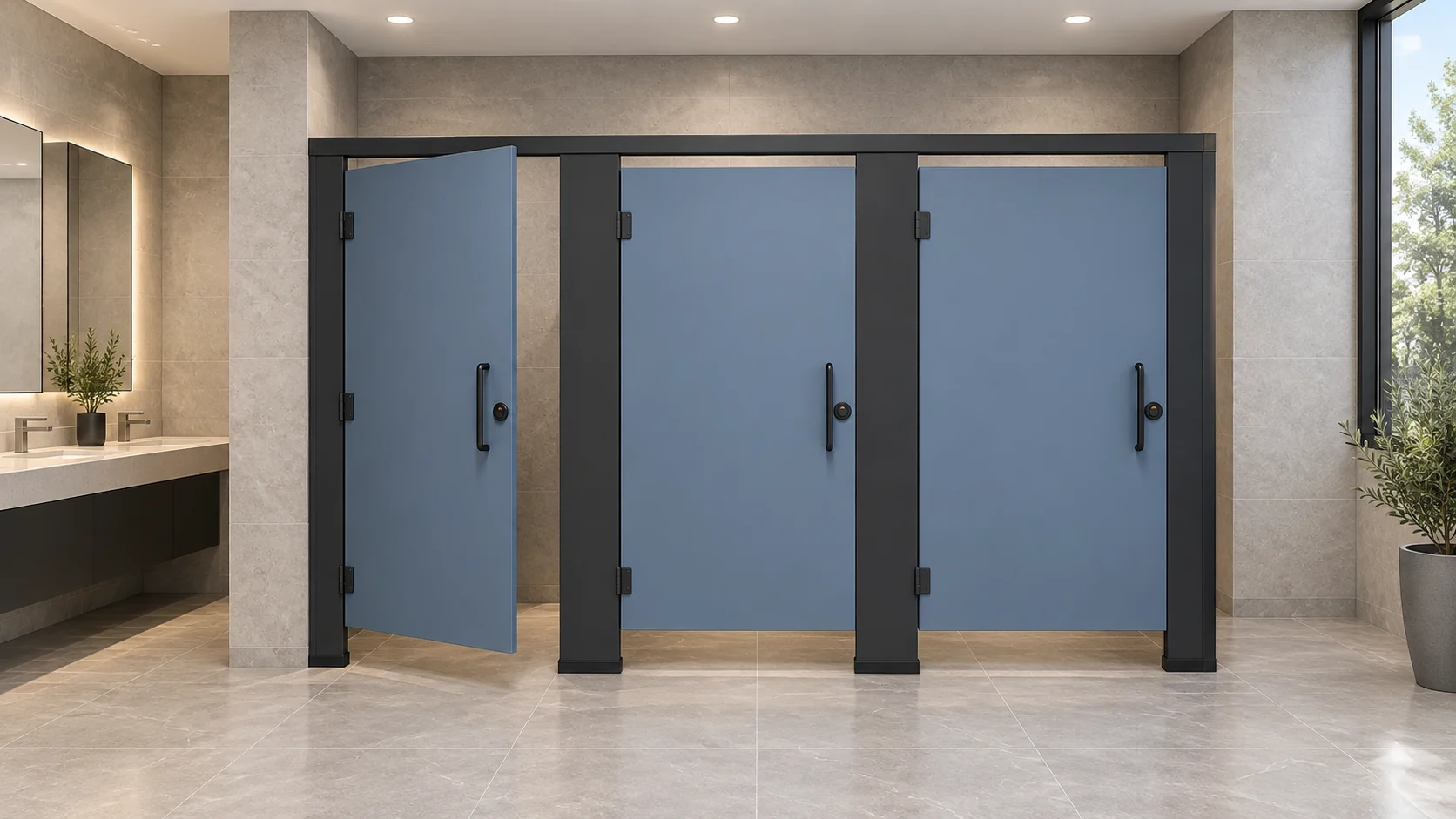
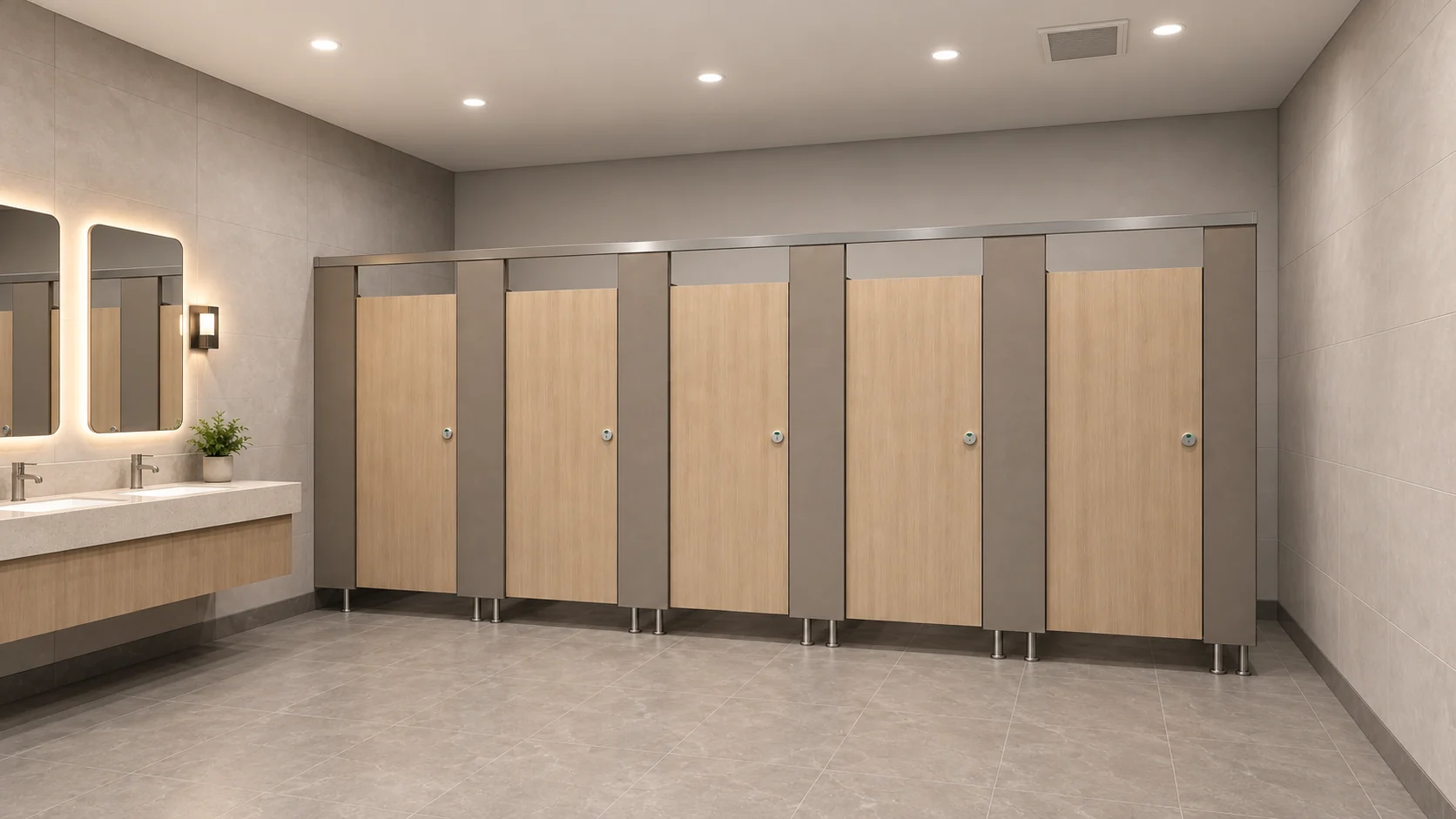
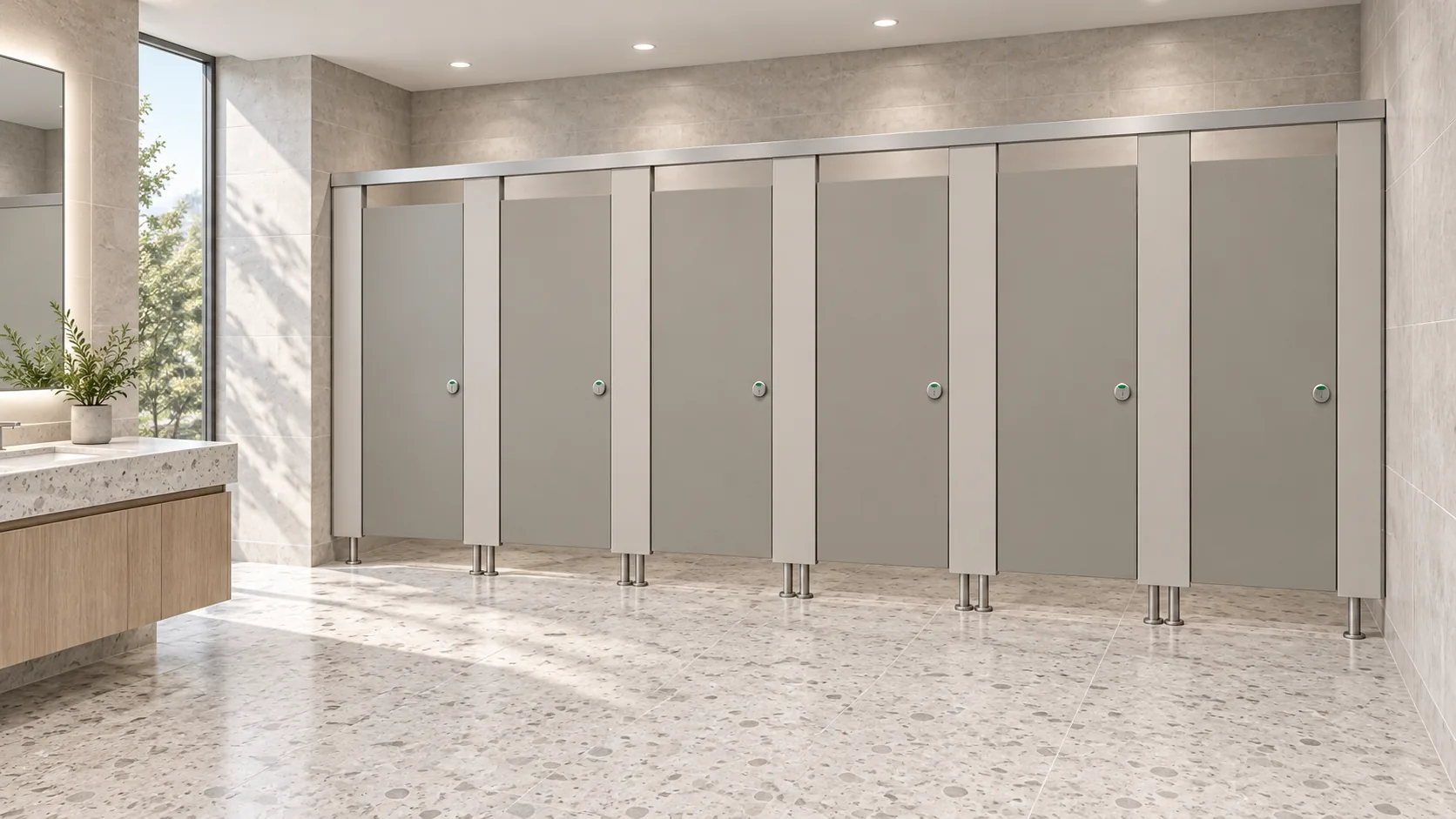
Do not fill gaps with inferred construction details from illustrations. Illustrations show generic design references, not completed EBUNGE customer projects.
Evidence boundaries that keep the benchmark honest
Lead time benchmarking fails when assumptions are presented as facts. The following boundaries should be written into the tender review notes.
Any project-specific material, hardware, dimension, finish, mounting or rating requires matching approved technical evidence. Do not invent customers, projects, certifications, ratings, material composition, dimensions, load capacities, fire, acoustic, waterproof or antimicrobial performance, prices, warranties or service life.
Also avoid treating HPL, compact laminate, phenolic or stainless steel as interchangeable. They are different material categories, and the tender should not infer hidden construction from an illustration. Toilet cubicles are not movable operable walls, and the review should not introduce suspended wall travel, stacking or parking mechanisms.
Coordinate across design, procurement and site teams
Toilet partition hardware lead time benchmarking is a coordination activity. The design team confirms layout and door operation. Procurement compares bid assumptions. The site team reviews support interfaces and delivery access. The owner or operator reviews cleaning documentation and maintenance expectations.
Use the product overview to align on the commercial toilet partition category, and use the resources section for general planning references. Neither replaces project-specific technical evidence. When a bidder cannot confirm a project-specific item, record it as an open clarification rather than assuming a default.
Common tender-review mistakes to avoid
One common mistake is comparing a lead time that includes submittal review with one that starts only after approval. Another is accepting a bid that lists hardware without identifying the door operation interface. A third is treating a generic illustration as a construction drawing.
Keep the review evidence-bounded. If a statement about material, hardware, dimension, finish, mounting or rating is not supported by approved technical evidence, it should not become a benchmark assumption. This protects the project team from making unsupported performance, engineering or commercial conclusions.
FAQ: benchmarking toilet partition hardware lead times
What is toilet partition hardware lead time benchmarking?
It is a tender-review method that compares lead time assumptions across bidders using the same scope, dependencies and evidence requirements. It is not a guaranteed delivery promise.
Which project information is required before comparing lead times?
Project teams should align on layout, cubicle count, door operation, support interfaces, cleaning documentation and applicable local requirements. Any project-specific material, hardware, dimension, finish or mounting needs matching approved technical evidence.
Can a bidder quote a lead time before drawings are approved?
A bidder may provide a preliminary indication, but it should be labelled as conditional. The review should separate submittal, approval, production release and delivery stages so the comparison remains fair.
How should material differences affect the benchmark?
Do not treat HPL, compact laminate, phenolic or stainless steel as interchangeable. Each material category requires its own project-specific evidence and should not be inferred from an illustration.
Do illustrations prove a application reference or a performance rating?
No. Illustrations show generic design references, not completed EBUNGE customer projects. They do not establish certifications, ratings, dimensions, load capacities or compliance.
When should the project team involve local advisers?
Local requirements should be reviewed by qualified advisers for the specific jurisdiction. The tender review can list applicable requirements as open items, but it should not assert unverified compliance.
Conclusion: benchmark with evidence, not assumptions
Toilet partition hardware lead time benchmarking works when every bidder answers the same scope questions and every project-specific claim is tied to approved technical evidence. Use a numbered process, a compact comparison table and explicit evidence boundaries. Keep layout, privacy, door operation, support interfaces, cleaning documentation and applicable local requirements visible in the review. Do not invent customers, projects, certifications, ratings, prices, warranties or performance results.
When a detail is not yet confirmed, record it as an open item rather than filling the gap with an assumption.
To discuss a commercial toilet partition or toilet cubicle requirement, contact the EBUNGE team with your project context. The team can help you identify which items need project-specific confirmation before tender comparison.