
Toilet Partition Hardware Tender Risk Review
Quick answer: toilet partition
A toilet partition hardware tender risk review is a structured check of what the tender documents actually commit a project team to supply, install and maintain. It is not a product selection exercise and it is not a compliance certificate. EBUNGE product category includes commercial Toilet Partition / Toilet Cubicle, and that category fact is the starting point, not a substitute for project-specific evidence.
The review should separate confirmed information from assumptions, then assign each open item to a responsible party before pricing or scheduling is fixed.
Why a Tender Risk Review Matters Before Pricing
Toilet partition packages sit at the intersection of architectural intent, structural interfaces, plumbing coordination and cleaning operations. When any of those inputs is missing, tenderers either price a guess or exclude scope. Both outcomes create commercial risk. A disciplined review converts vague requirements into a list of questions with owners and deadlines.
The review also protects the design team. If a tender assumes a material, mounting method or hardware set that has not been confirmed against approved technical evidence, the resulting comparison between bids is not like-for-like. The goal is not to eliminate every unknown, but to make every unknown visible.
Step One: Assemble the Evidence Pack
Before reviewing risk, collect the documents that define the scope. Typical inputs include architectural layouts, reflected ceiling and services drawings, door schedules, finish schedules, cleaning specifications and any client standards. Where a document is missing, record it as a gap rather than filling it with an assumption.
Documents to request from the design team
- Dimensioned cubicle layouts and elevation references.
- Door operation intent, including swing direction and access requirements.
- Support interface details at floor, wall and ceiling conditions.
- Cleaning and maintenance documentation expectations.
- Applicable local requirements identified by the project team.
Each item should be logged with a source, a date and a status. This log becomes the backbone of the risk review and the audit trail for later clarifications.
Step Two: Separate Confirmed Facts from Assumptions
The most common tender risk is not a missing product; it is an unlabelled assumption. Reviewers should mark every statement in the tender that depends on material composition, dimensions, mounting, finish or ratings. If the statement is not supported by approved technical evidence for that project, it stays open.
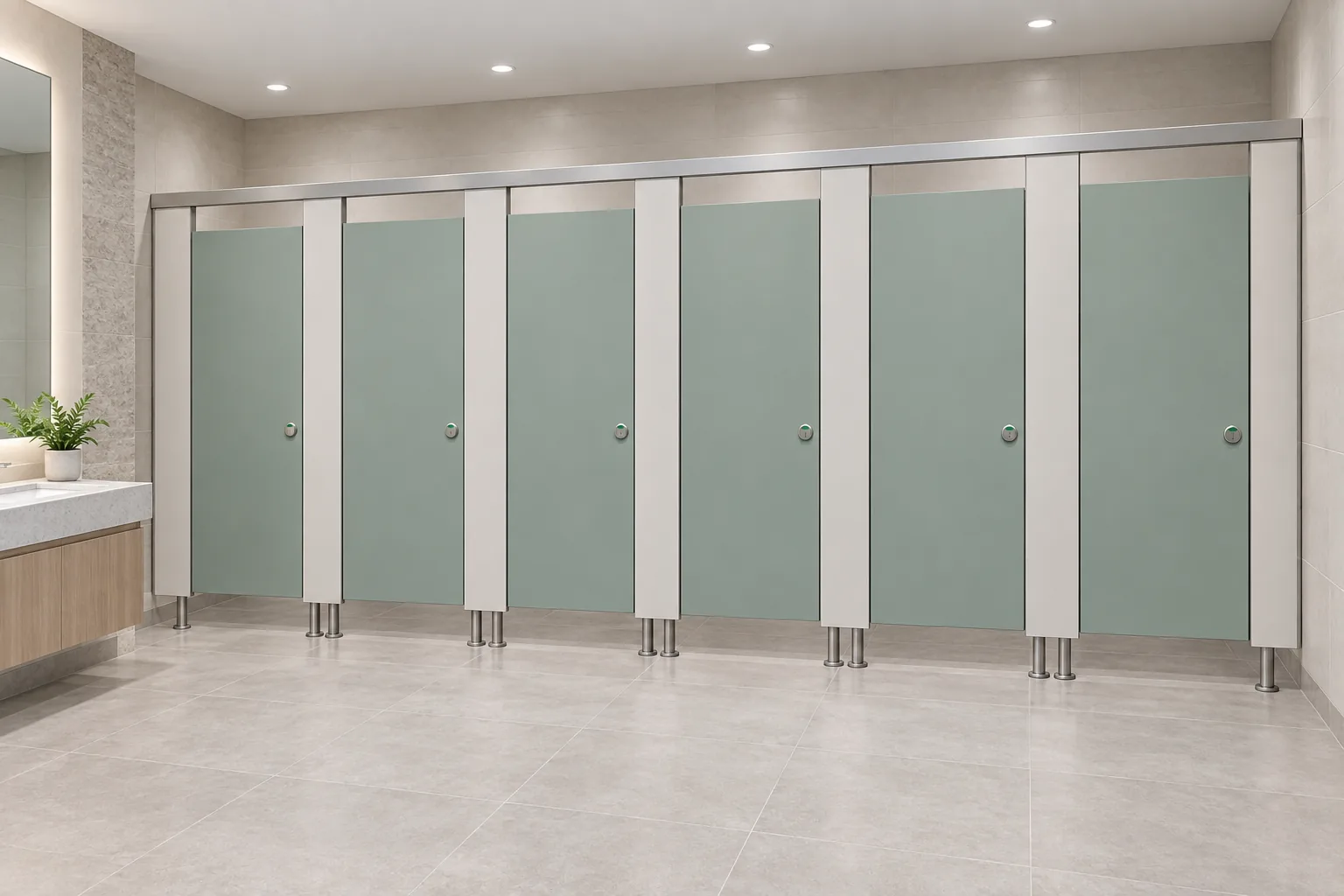
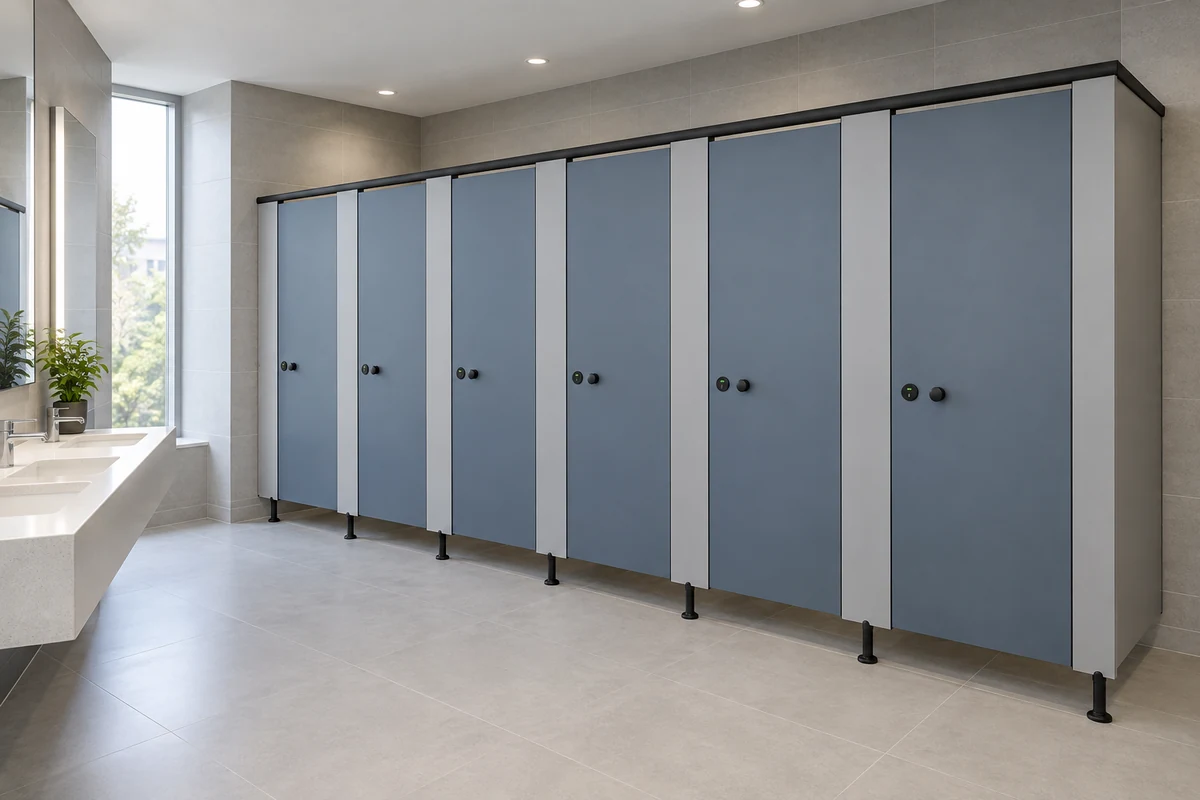
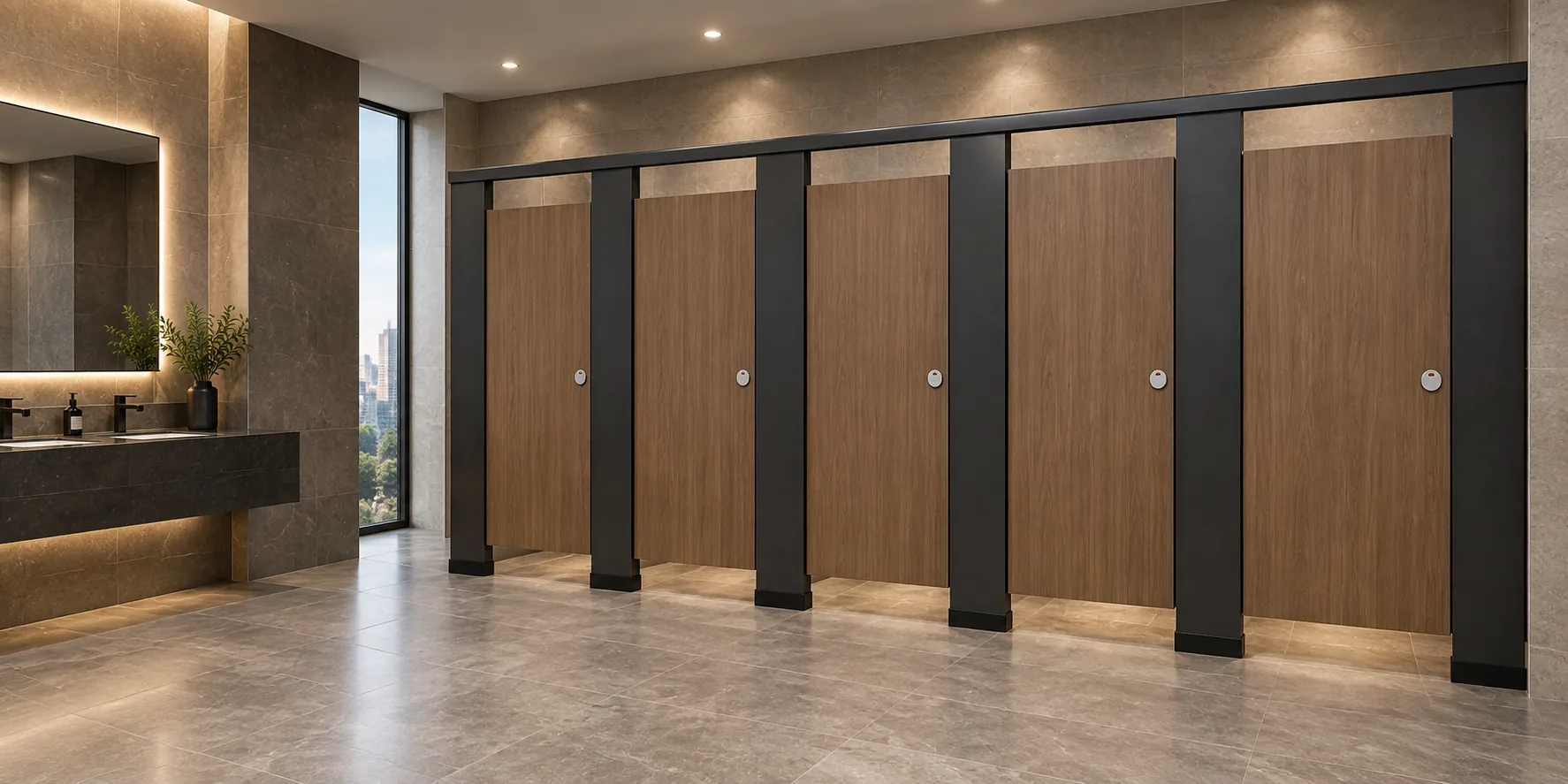
Evidence note: illustrations and generic references show design intent only. They are not completed EBUNGE customer projects and must not be read as confirmation of material, hardware, dimension, finish, mounting or rating.
This discipline prevents two frequent errors. The first is treating HPL, compact laminate, phenolic and stainless steel as interchangeable. The second is inferring hidden construction from a drawing or photograph. Neither is acceptable in a tender review.
Step Three: Review Layouts, Privacy and Door Operation
Layout review checks whether the cubicle arrangement fits the room geometry and the intended user flow. Privacy review checks sightlines, gaps and door closure intent. Door operation review checks swing, clearance and the sequence of use. These are design-coordination topics, and the project team must confirm them against the actual drawings.
Questions to resolve with the design team
- Does the layout match the latest architectural issue?
- Are privacy expectations described in the client brief?
- Does door operation conflict with any adjacent fixture or service?
- Are support interfaces shown clearly enough to price?
- Is cleaning access documented for the specified arrangement?
Where answers are unavailable, the tender should carry a clearly worded qualification rather than a silent assumption.
Step Four: Check Support Interfaces and Coordination
Support interfaces are where toilet partition packages most often meet other trades. Floor build-up, wall substrate, ceiling structure and concealed services all affect how a cubicle system can be coordinated. The review should confirm that interface responsibilities are assigned and that no party is expected to design another party’s scope.
Toilet Partition coordination also includes sequencing. If the partition installation depends on finishes or services being complete, that dependency belongs in the programme. A tender that ignores sequencing risk will usually surface it as a variation later.
Step Five: Document Cleaning and Maintenance Expectations
Cleaning documentation is frequently overlooked at tender stage. The review should confirm who will clean the cubicles, with what methods, and what information the operator needs. This is not a performance claim about any material; it is a scope question about handover documentation.
If the client has a cleaning standard, it should be referenced in the tender. If not, the project team should record the gap and decide whether a clarification is required before award.
Step Six: Map Applicable Local Requirements
Local requirements vary by jurisdiction and by building type. The review should identify which requirements the project team has confirmed as applicable, and which still need verification. The tender must not assert compliance that has not been evidenced.
Risk register extract
| Risk area | Evidence needed | Owner |
|---|---|---|
| Layout coordination | Latest architectural drawings | Design team |
| Door operation | Confirmed swing and clearance intent | Architect |
| Support interfaces | Interface responsibility matrix | Main contractor |
| Cleaning documentation | Client cleaning standard | Owner representative |
| Local requirements | Jurisdiction-specific confirmation | Project team |
This table is a planning tool, not a compliance record. Each row closes only when the named evidence is received and accepted.
Step Seven: Close the Review Before Award
A tender risk review is complete when every open item has an owner, a due date and a stated consequence if unresolved. Reviewers should re-check that no project-specific material, hardware, dimension, finish, mounting or rating has been presented as a general product fact. Anything project-specific requires matching approved technical evidence.
Teams that follow this sequence can compare bids on a consistent basis and reduce the chance of post-award disputes. For product category context, see the commercial toilet partition range. For further planning guidance, visit the resources library.
Frequently Asked Questions
What is the purpose of a toilet partition hardware tender risk review?
It identifies what the tender actually commits to, separates confirmed information from assumptions, and assigns open items to responsible parties before pricing or award.
Which documents should be collected first?
Start with dimensioned layouts, door schedules, finish schedules, support interface details, cleaning specifications and any client standards. Missing documents should be logged as gaps.
Can a tender rely on generic illustrations?
No. Illustrations show generic design references, not completed EBUNGE customer projects, and must not be used to confirm material, hardware, dimension, finish, mounting or rating.
How should materials such as HPL and stainless steel be treated?
They must not be treated as interchangeable. Each material requires its own approved technical evidence for the specific project before it can be specified or priced.
When should local requirements be checked?
They should be identified during the review and confirmed by the project team. The tender must not assert compliance that has not been evidenced.
What closes an open risk item?
An item closes when the named evidence is received, reviewed and accepted by the responsible party, and the tender wording is updated to match.
Conclusion and Next Step
A toilet partition hardware tender risk review succeeds when it makes uncertainty visible instead of hiding it. Assemble the evidence pack, separate facts from assumptions, review layouts, privacy, door operation, support interfaces, cleaning documentation and applicable local requirements, then close every item before award. Keep all project-specific material, hardware, dimension, finish, mounting and rating decisions tied to approved technical evidence.
To discuss your project requirements with the EBUNGE team, contact us and share your drawings, schedules and open questions.