
How to Review Toilet Partition Hardware Tender Clarifications
Quick answer: toilet partition
Review focus: toilet partition.
A toilet partition hardware tender clarifications review helps project teams turn ambiguous bid language into a traceable set of questions, assumptions and required evidence. The goal is not to win an argument with a supplier, but to align drawings, specifications and site interfaces before fabrication or installation. This guide sets out a practical review method for overseas contractors, architects, interior designers, owners, renovation companies, distributors and construction teams.
It stays within confirmed product scope: EBUNGE product category includes commercial Toilet Partition / Toilet Cubicle. Every project-specific material, hardware, dimension, finish, mounting or rating still requires matching approved technical evidence.
Why Clarifications Matter Before Award
Tender documents often describe toilet cubicle requirements in broad terms. A contractor may read a phrase such as “heavy-duty hardware” and assume one interpretation, while an architect expects another. The project team should confirm project-specific requirements against the relevant approved technical evidence.
A clarification review creates a written record of what is known, what is assumed and what must be confirmed. It also separates product-category statements from project-specific commitments. For example, knowing that EBUNGE supplies commercial toilet partitions does not confirm a particular panel thickness, hinge type, fixing method or finish for a given building.
Use the product overview as a starting point for category context, then move to project drawings and schedules for configuration decisions. The review should be documented so that all parties can see which items remain open.
Build a Clarification Register
A clarification register is a simple table that lists each open item, its source, the responsible party and the evidence needed to close it. It prevents questions from being lost in email threads and gives the project team a single reference during coordination meetings.
| Register field | Purpose | Typical source |
|---|---|---|
| Clarification ID | Tracks each question through to closure | Project team |
| Drawing or specification reference | Links the question to a controlled document | Architectural drawings |
| Description of ambiguity | States what is unclear without assuming an answer | Tender documents |
| Required evidence | Defines what must be supplied to close the item | Supplier or project team |
| Status | Open, pending, closed or escalated | Project team |
Keep the register factual. If evidence is not yet available, mark the item as open.
Review Layouts, Privacy and Door Operation
Layout review starts with the room geometry, cubicle count, circulation and accessible compartment requirements. The project team should confirm how the partition layout interacts with walls, floors, ceilings and adjacent services. These are project-specific decisions and cannot be inferred from a generic illustration.
Privacy considerations
Privacy expectations vary by building type and local practice. The review should identify where the design intent requires specific attention, such as sightline control at door edges or panel joints.
Door operation
Door swing, closing action and hardware interfaces should be reviewed against the layout. The team should confirm whether the specified door operation suits the available clearance and whether the hardware set is compatible with the intended partition construction. Do not treat different material families as interchangeable; each requires its own confirmed specification.
Support Interfaces and Site Coordination
Support interfaces are where toilet partitions meet the building structure. Because fixing methods and load capacities are project-specific, they require approved technical evidence rather than general assumptions.
- Confirm the supporting wall, floor and ceiling conditions shown on current drawings.
- Identify any embedded or post-fixed support requirements and who is responsible for them.
- Check that service routes, access panels and drainage do not conflict with partition supports.
- Record any interface that remains unresolved and assign an owner.
- Re-check the register after each coordination meeting.
This process keeps the review grounded in visible project information. It also prevents the tender clarification review from drifting into unverified engineering conclusions.
Cleaning Documentation and Maintenance Questions
Cleaning and maintenance requirements should be raised early because they affect material selection, surface finish and hardware choice. The project team should ask what cleaning documentation will be provided and whether the specified cleaning agents are compatible with the proposed surfaces.
Do not assume antimicrobial, waterproof or chemical-resistance performance unless it is supported by approved technical evidence for the specific product. Instead, list the cleaning regime as a clarification item and request the relevant documentation. This is also a good place to confirm who will maintain the partitions after handover and how spare parts will be identified.
Evidence Boundaries and Local Requirements
Every tender clarification review should state its evidence boundaries. Confirmed product-category facts are useful for orientation, but they do not confirm a project-specific configuration. The following evidence note summarises the boundary.
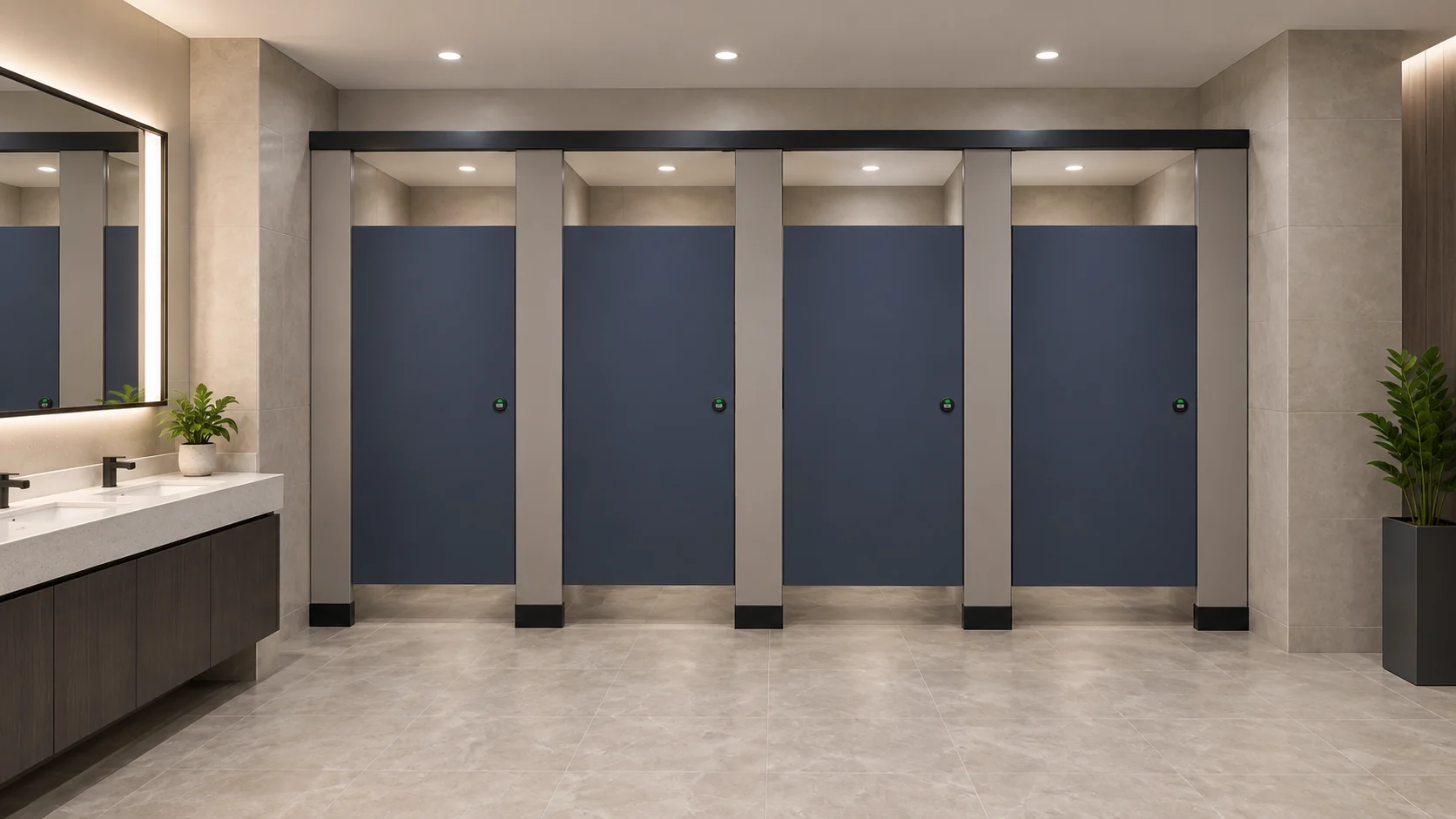
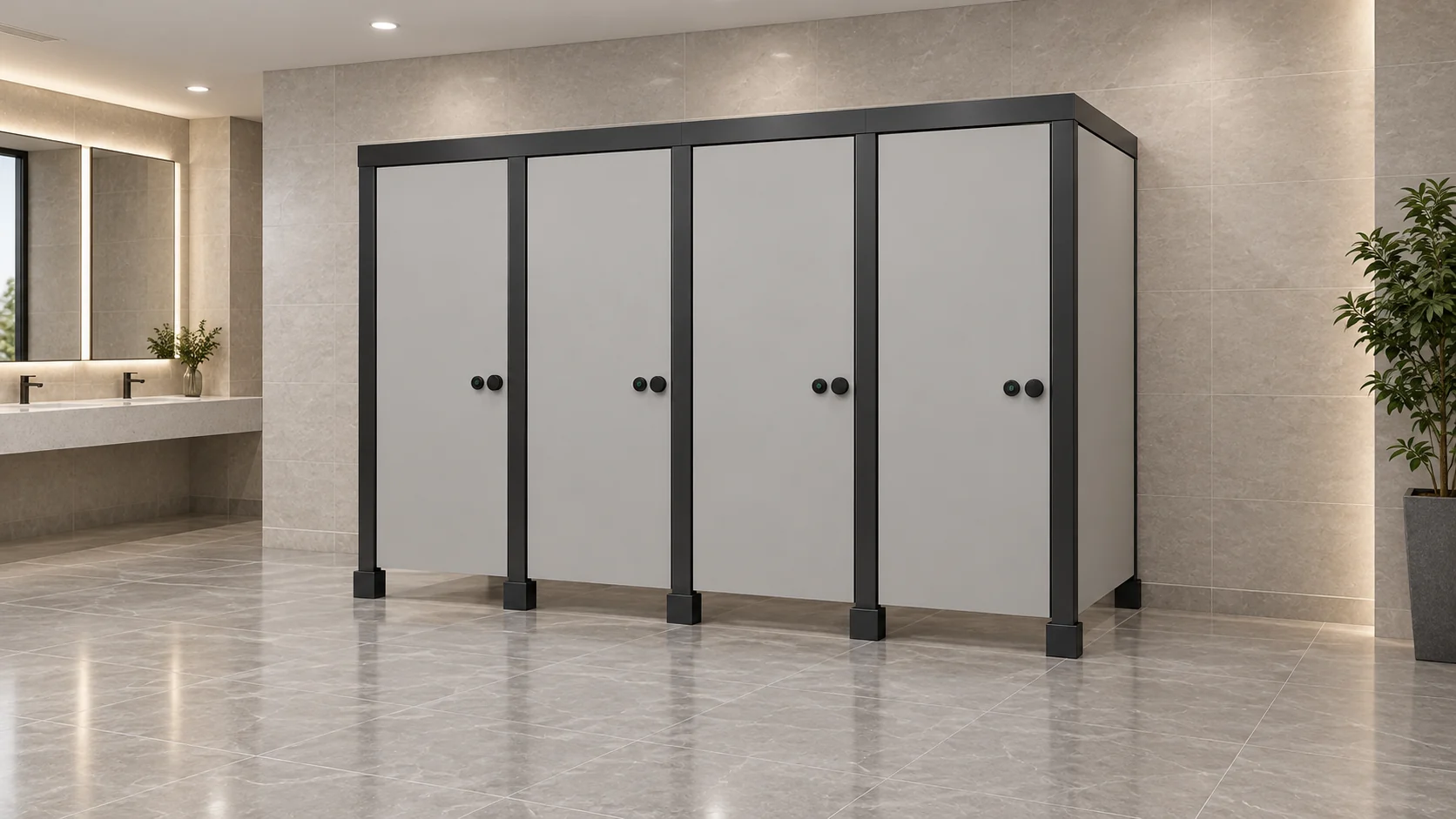
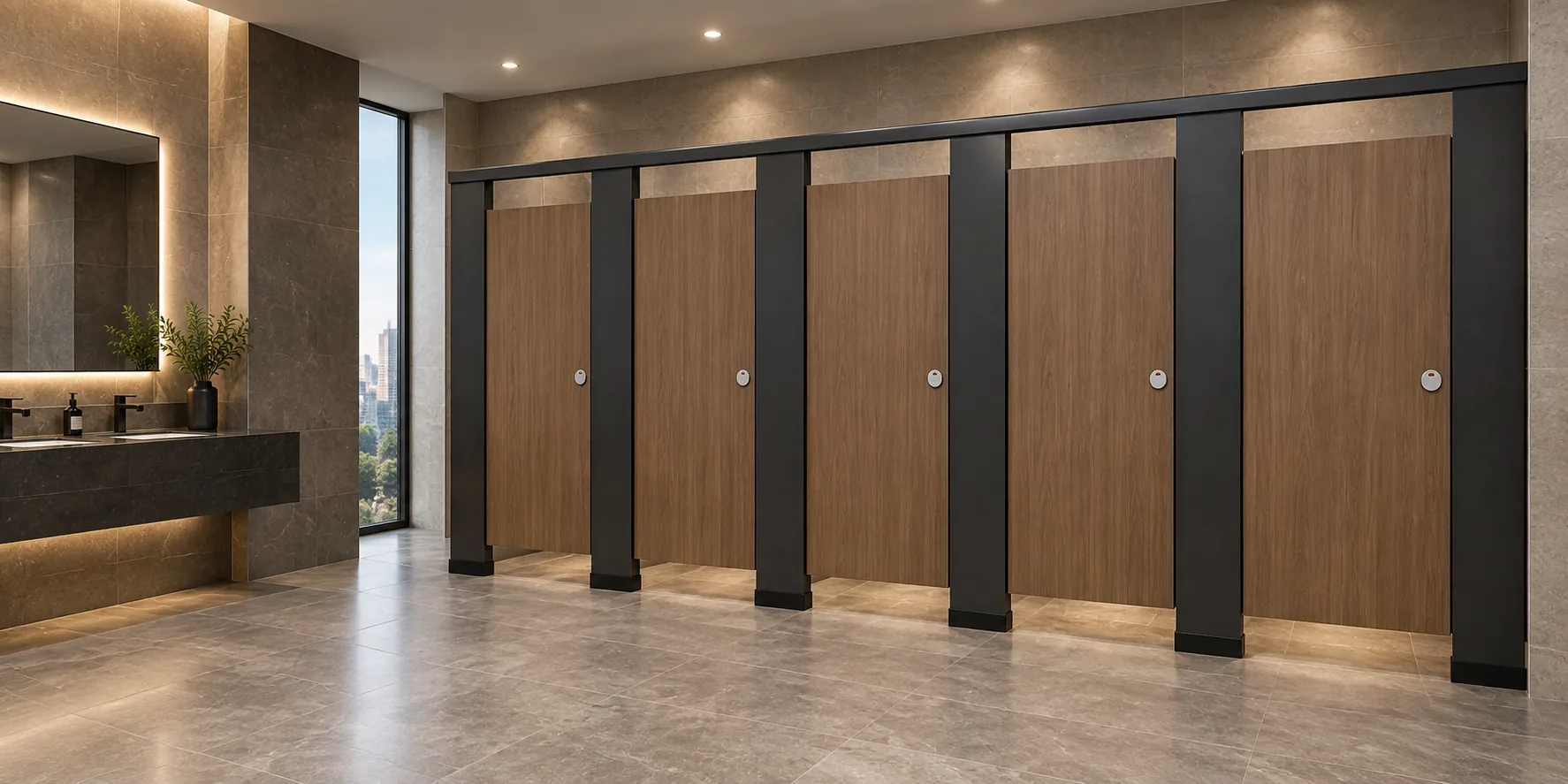
Project-specific material, hardware, dimension, finish, mounting or rating requires matching approved technical evidence. Illustrations show generic design references, not completed EBUNGE customer projects. Applicable local requirements should be reviewed by the project team without asserting unverified compliance.
The project team should identify which requirements apply and obtain the necessary confirmations from qualified local professionals. A supplier’s general product information is not a substitute for project-specific compliance verification.
For further guidance on documentation and coordination, see the resources section.
Running the Clarification Meeting
A structured meeting helps close items efficiently. The chair should work through the register in order, confirm the evidence required for each item and record decisions. Avoid broad statements that cannot be verified; instead, capture the exact question and the exact response.
After the meeting, circulate the updated register and highlight any items that remain open. If a supplier response relies on a drawing or test document, attach it to the register so the evidence trail is complete. This practice supports smoother coordination between the contractor, architect, owner and distributor.
Frequently Asked Questions
What is the first step in a toilet partition hardware tender clarifications review?
Start by building a clarification register that links each open question to a drawing or specification reference. This creates a traceable record before any assumptions are made.
Can I rely on a product category statement for project-specific dimensions?
No. A category statement confirms the product family only. Project-specific dimensions, materials, hardware and finishes require matching approved technical evidence.
How should privacy and door operation be reviewed?
Review them against the actual room layout and design intent. Confirm sightlines, clearances and hardware compatibility using project drawings, and record any item that needs further evidence.
What should be included in cleaning documentation questions?
Ask what cleaning guidance will be provided and whether the proposed cleaning agents are compatible with the specified surfaces. Do not assume performance characteristics without approved evidence.
How do local requirements affect the review?
Local codes and accessibility rules vary. The project team should identify applicable requirements and obtain confirmation from qualified local professionals rather than assuming compliance.
Are illustrations a substitute for project drawings?
No. Illustrations show generic design references, not completed EBUNGE customer projects.
Conclusion and Next Steps
A disciplined toilet partition hardware tender clarifications review protects the project from avoidable assumptions. By maintaining a clarification register, checking layouts, privacy, door operation, support interfaces and cleaning documentation, and stating evidence boundaries clearly, project teams can coordinate with confidence. Remember that any project-specific material, hardware, dimension, finish, mounting or rating requires matching approved technical evidence.
To discuss your project requirements or request product information, contact the EBUNGE team. We can help you identify the right questions to ask and the documentation you need for your next review.