
Setting the Toilet Partition Datum From Ceiling Grid Tolerances
Quick answer: toilet partition
Setting the toilet partition ceiling datum from ceiling grid tolerances is a coordination decision, not a single field measurement. The toilet partition ceiling datum is the reference level or line from which partition-related vertical coordination is reviewed against the ceiling grid. Because ceiling grids can vary across a room, project teams need a documented review process rather than an assumed constant.
This article provides an evidence-bounded framework for contractors, architects, interior designers, owners and renovation teams. It does not confirm any project-specific material, hardware, dimension, finish, mounting or rating. Those items require matching approved technical evidence and project-specific drawing review.
Why Ceiling Grid Tolerances Affect the Partition Datum
Ceiling grids are installed to project tolerances that may differ from the partition layout’s assumed reference. When the grid is not level or consistent, the relationship between the ceiling plane and the partition head condition can change across a run. That does not automatically mean the partition datum must move; it means the project team should review the interface rather than assume a single fixed offset.
For commercial toilet partition and toilet cubicle projects, the datum discussion usually belongs to the wider coordination of layouts, privacy, door operation, support interfaces and cleaning documentation. Applicable local requirements also belong in that review, but this article does not assert compliance with any specific code or standard.
What the datum does and does not control
The datum can help teams align review drawings, survey notes and installation sequencing. The project team should confirm project-specific requirements against the relevant approved technical evidence. Those claims require separate evidence.
Information the Project Team Should Collect First
Before adjusting any datum assumption, gather the current ceiling grid survey, reflected ceiling plan, partition layout, door swing information and any approved interface details. Confirm which documents are current and which are superseded. Record who measured the grid and when.
Also collect cleaning documentation requirements and maintenance access expectations, because these can influence how the partition head and ceiling interface are reviewed. If the project has local requirements, identify the applicable documents without treating this article as a compliance statement.
Evidence note
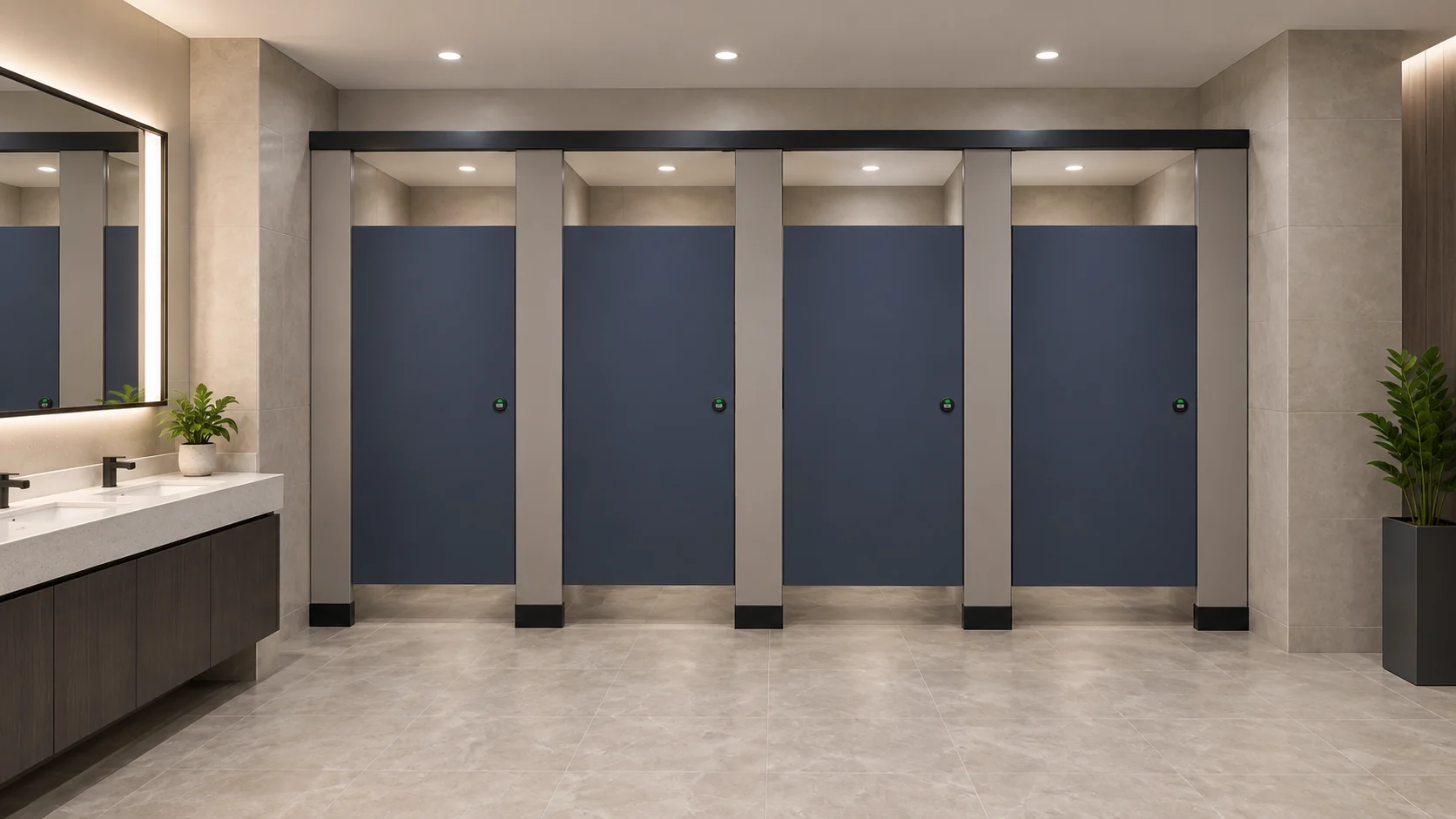
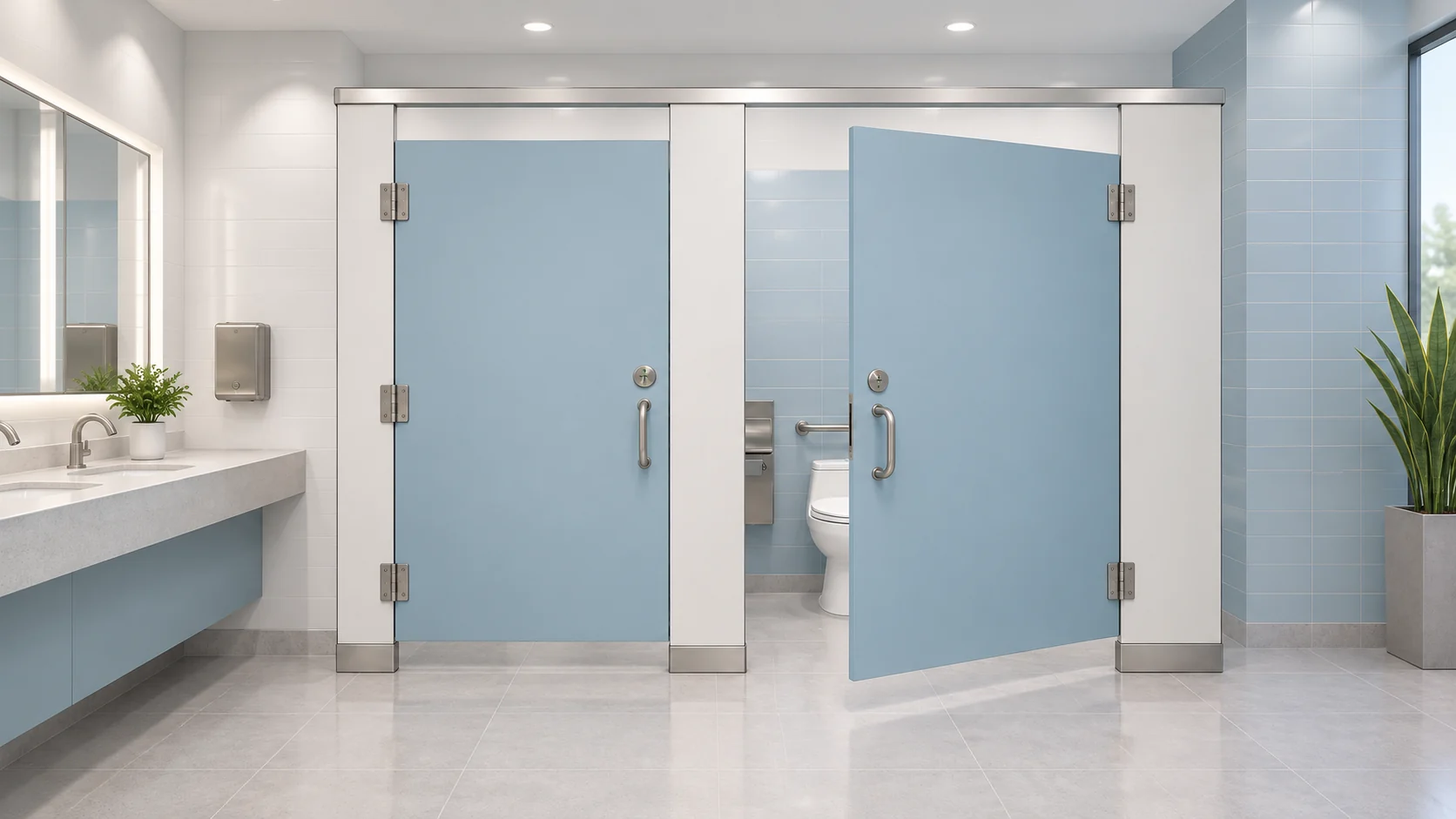
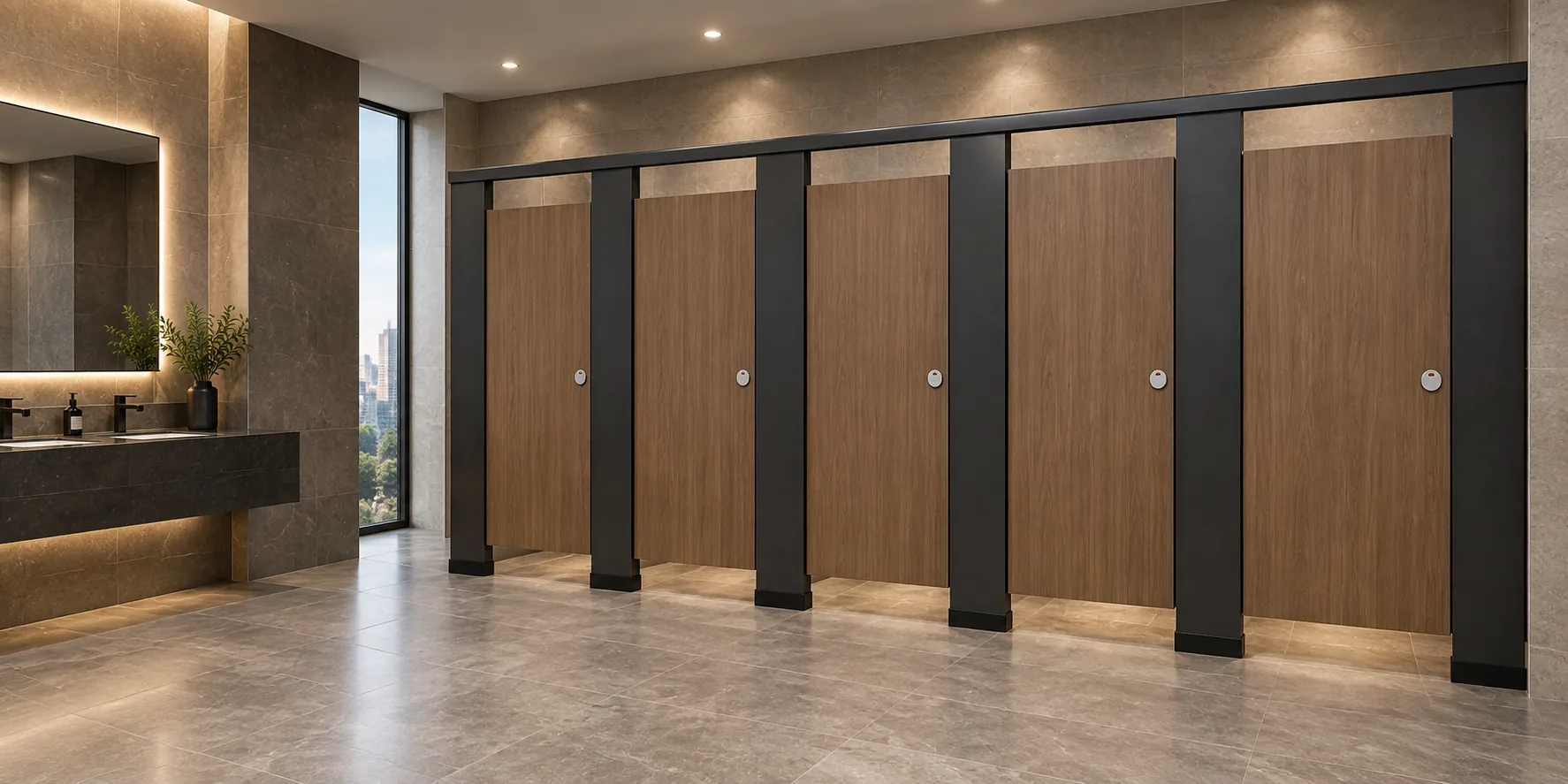
Any project-specific material, hardware, dimension, finish, mounting or rating requires matching approved technical evidence. Illustrations show generic design references, not completed EBUNGE customer projects.
A Step-by-Step Coordination Process
- Confirm the current ceiling grid survey. Use the latest measured information and note the survey date and source.
- Compare grid data with the partition layout. Identify where the grid plane and the partition run may interact.
- Review privacy and door operation. Check whether any proposed datum shift affects sightlines, door swing or clearance review.
- Review support interfaces. Confirm that the project team has identified the interface conditions that require approved details.
- Check cleaning and maintenance documentation. Confirm that the reviewed datum does not conflict with documented access needs.
- Record the decision and its evidence. Note which documents support the chosen datum and which items remain open.
- Route open items to the responsible party. Material, hardware, dimension, finish, mounting and rating questions require approved technical evidence before they are treated as resolved.
Decision Checklist for Datum Review
- Is the ceiling grid survey current and traceable?
- Does the partition layout show the intended head condition without implying unconfirmed construction?
- Have privacy and door operation been reviewed against the proposed datum?
- Are support interfaces identified with approved details where required?
- Is cleaning documentation available for the reviewed condition?
- Are applicable local requirements listed without asserting unverified compliance?
- Are all project-specific material, hardware, dimension, finish, mounting and rating items backed by approved evidence?
Common Coordination Gaps and How to Avoid Them
One common gap is treating a ceiling grid tolerance as a partition specification. The grid survey informs coordination; it does not define partition material, hardware or performance. Another gap is using an illustration as a construction detail. Illustrations show generic design references, not completed EBUNGE customer projects.
A third gap is leaving the datum decision undocumented. When the datum changes, the project team should record the reason, the supporting survey and the reviewer. This helps later trades understand why the interface was set as shown.
Comparison of review inputs
| Input | Use in datum review | Evidence boundary |
|---|---|---|
| Ceiling grid survey | Shows measured grid condition | Does not confirm partition performance |
| Partition layout | Shows intended cubicle arrangement | Does not confirm hidden construction |
| Door operation review | Checks swing and clearance coordination | Requires project-specific approval |
| Support interface notes | Identifies coordination points | Requires approved technical evidence |
| Cleaning documentation | Supports maintenance review | Does not assert compliance |
How to Document the Datum Decision
Documentation should state the datum reference, the ceiling grid survey used, the date of review and the responsible reviewer. It should also list open items that require approved technical evidence. Avoid stating that a condition is compliant unless the project has verified it against the applicable local requirements.
Where the project team needs product context, refer to the maintained EBUNGE product category for commercial toilet partition and toilet cubicle information. For broader guidance, the resources section can support project planning. Project-specific questions should go through the contact route so the team can match the inquiry to approved evidence.
Frequently Asked Questions
What is the toilet partition ceiling datum?
It is the reference level or line used to coordinate partition-related vertical review against the ceiling grid. It is a project coordination concept, not a universal fixed dimension.
Can ceiling grid tolerances change the partition datum?
They can affect how the interface is reviewed. Whether the datum changes is a project-specific decision that requires the current survey, layout and approved details.
Does this article confirm any material or performance rating?
No. Material, hardware, dimension, finish, mounting and rating items require matching approved technical evidence.
How should privacy and door operation be reviewed?
Review them against the proposed datum using the project layout and door information. Confirm that any change does not create an unresolved coordination issue.
What should be done if the grid survey is incomplete?
Treat the datum as open. Obtain a current survey and route the item to the responsible reviewer before proceeding with a fixed assumption.
Are illustrations completed EBUNGE projects?
No. Illustrations show generic design references, not completed EBUNGE customer projects.
Conclusion and Contact CTA
Confirm the current grid survey, compare it with the partition layout, review privacy, door operation, support interfaces and cleaning documentation, and record the decision with its evidence. Do not treat project-specific material, hardware, dimension, finish, mounting or rating items as resolved without approved technical evidence.
For project-specific coordination, contact EBUNGE with your current drawings and survey information so the team can review the inquiry against approved evidence.