
Toilet Partition Hardware Post-tender Review
Quick project answer
A toilet partition hardware post-tender review is a structured clarification step after tender return but before fabrication release. It helps contractors, architects, interior designers, owners and distributors confirm that the proposed toilet cubicle scope matches approved drawings, maintained product facts and applicable local requirements. The review does not replace technical evidence; it identifies where project-specific material, hardware, dimension, finish, mounting or rating information still needs matching approved documentation.
EBUNGE product category includes commercial Toilet Partition / Toilet Cubicle. That confirmed category fact is the starting point. It does not confirm any project-specific configuration, performance value or compliance outcome. The goal is to close information gaps, not to infer hidden construction from illustrations or assume that different partition materials are interchangeable.
Why a Post-Tender Hardware Review Matters
Tender documents often describe intent, while fabrication requires resolved interfaces. A post-tender review brings the project team together to compare the tender return with the latest architectural layouts, structural openings and service coordination drawings. It is especially useful when multiple trades share the same washroom zone.
The review should remain evidence-bounded. If a drawing shows a support condition but no approved fixing detail, the team records an open item. If a finish is named in a schedule but not confirmed in maintained product documentation, the team requests matching evidence. This discipline prevents assumptions from becoming instructions.
Core Review Areas for Toilet Partition Coordination
Toilet Partition coordination depends on clear ownership of each interface. The review team should examine layouts, privacy, door operation, support interfaces, cleaning documentation and applicable local requirements. Each area produces either a confirmed item or a clarification request.
Layouts and Dimensional Coordination
Compare cubicle footprints with finished floor levels, wall set-outs and service penetrations. Do not treat a scaled drawing as a fabrication dimension. Any project-specific dimension requires matching approved technical evidence before it is used for production.
Privacy and Door Operation
Review sightlines, door swing, latch position and emergency access provisions against the project brief. Door operation must be described in functional terms, not inferred from a generic illustration. Where privacy expectations are stated, the team should identify the drawing or specification clause that supports them.
Support Interfaces and Mounting
Support interfaces include the substrate, embedded items, brackets and adjacent construction. The review should confirm who supplies and who installs each element. Mounting details are project-specific and require approved evidence; they should not be copied from another project or assumed from a catalogue image.
Cleaning Documentation and Local Requirements
Cleaning teams need access to surfaces, fixings and drainage zones. The review should identify the cleaning documentation expected at handover. Applicable local requirements must be checked by the responsible project professional; this article does not assert compliance with any code or standard.
Evidence Note: What the Review Can and Cannot Confirm
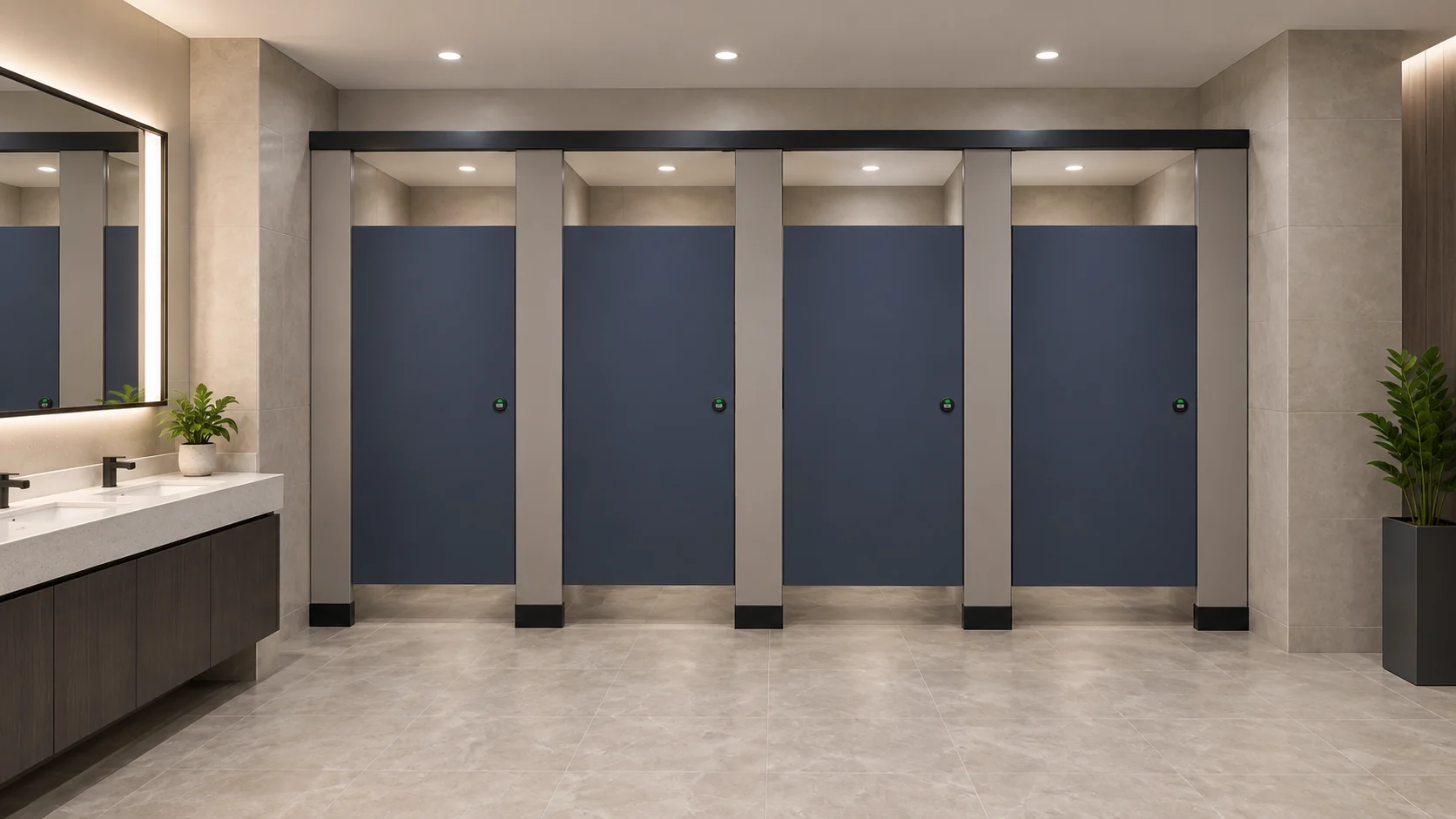
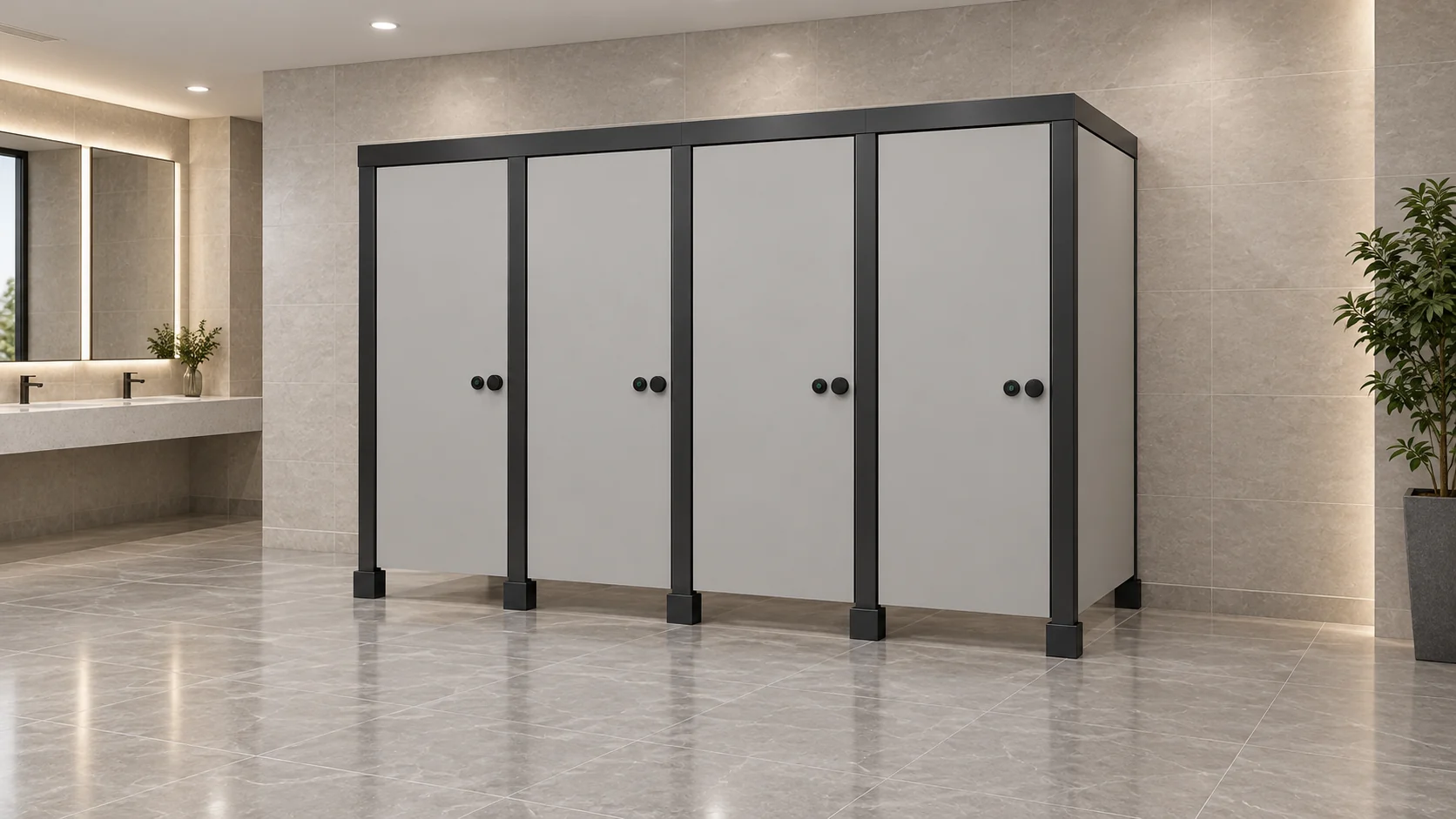
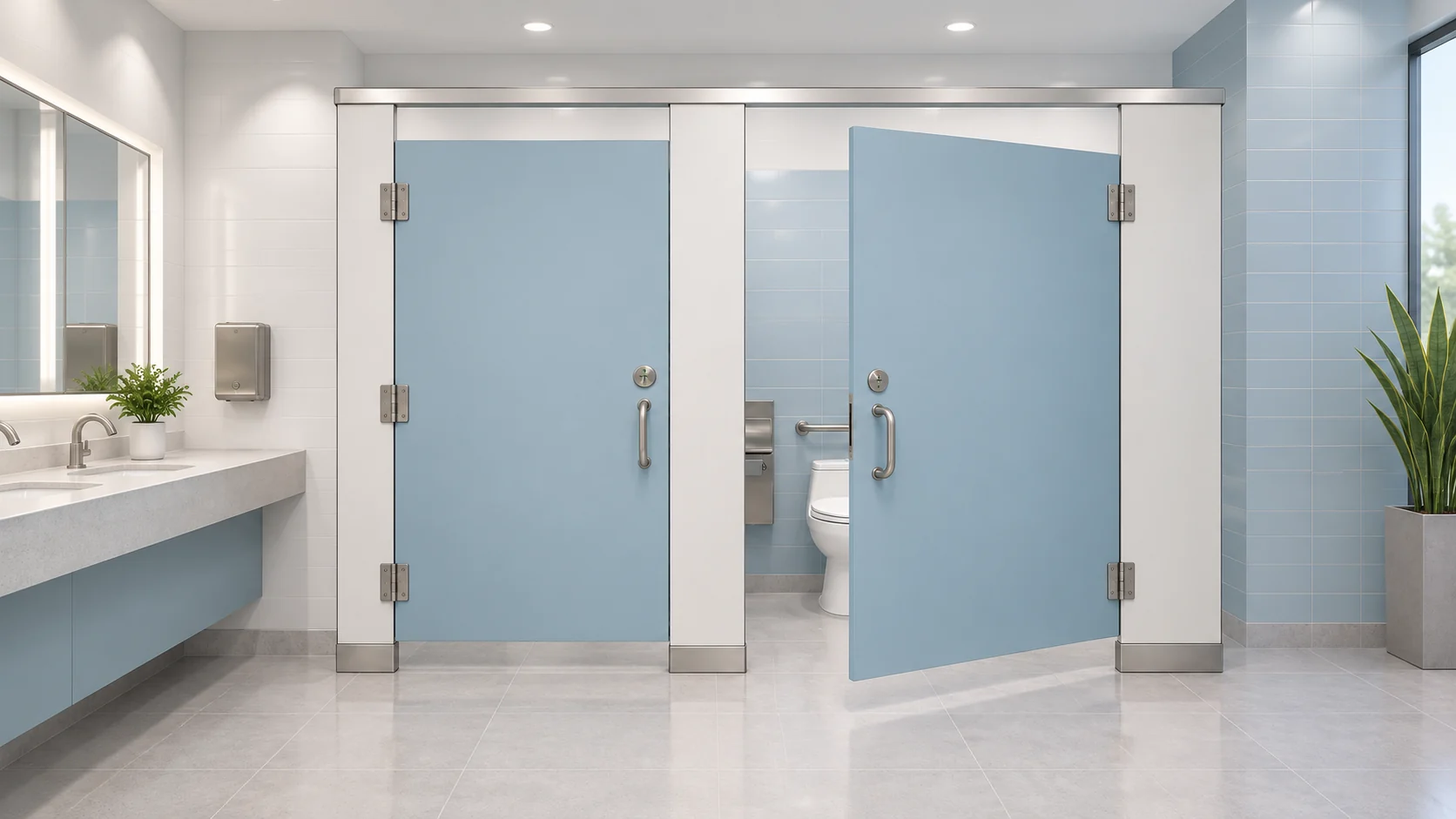
Evidence note: The only confirmed product fact in this guide is that EBUNGE product category includes commercial Toilet Partition / Toilet Cubicle. Any project-specific material, hardware, dimension, finish, mounting or rating requires matching approved technical evidence. Illustrations show generic design references, not completed EBUNGE customer projects.
Use this note as a filter. If a statement cannot be traced to maintained product documentation or an approved project drawing, it belongs in the clarification log rather than the fabrication release.
A Step-by-Step Clarification Process
- Collect the current document set. Gather the tender return, latest layouts, specifications, schedules and correspondence.
- Map each cubicle zone. Identify every toilet cubicle location and its adjacent construction.
- List open hardware items. Record hinges, latches, indicators, support fixings and any item not fully described.
- Check evidence status. Mark each item as confirmed by approved evidence, pending clarification or not applicable.
- Issue clarification requests. Send specific questions to the responsible party with a response deadline.
- Review responses. Confirm that answers reference approved drawings or maintained product facts.
- Freeze the reviewed scope. Release only items that have matching approved evidence.
Decision Checklist for Project Teams
- Are all cubicle layouts coordinated with finished floor and wall set-outs?
- Is door operation described without relying on generic illustrations?
- Are support interfaces assigned to a responsible trade?
- Is cleaning documentation identified for handover?
- Have applicable local requirements been checked by the responsible professional?
- Does every project-specific material, hardware, dimension, finish, mounting or rating have matching approved evidence?
- Are unresolved items clearly logged rather than assumed?
Common Pitfalls and How to Avoid Them
One common pitfall is treating HPL, compact laminate, phenolic or stainless steel as interchangeable. They are not interchangeable in this guide, and hidden construction should not be inferred from illustrations. Another pitfall is describing toilet cubicles as movable operable walls; they are not, and suspended wall travel, stacking or parking mechanisms are outside this scope.
A third pitfall is allowing a quotation term to become a general product fact. Quotation terms are project-specific. The review should keep commercial terms separate from technical evidence and avoid presenting either as a universal specification.
Documenting the Review Outcome
The outcome should be a concise register: confirmed items, pending items, responsible parties and required evidence. This register supports the next design or procurement stage without overstating what has been verified. It also gives the project team a clear basis for reviewing the commercial toilet partition product range and for requesting further documentation through the resources section.
Where a clarification cannot be resolved from available evidence, the team should escalate it to the appropriate design or engineering authority. The review is a coordination tool, not a substitute for professional judgement or local approval.
Frequently Asked Questions
What is the purpose of a toilet partition hardware post-tender review?
It clarifies open hardware and interface items after tender return so that fabrication and installation proceed only with matching approved evidence.
Which documents should be included?
Include the tender return, latest architectural layouts, specifications, schedules, structural coordination drawings and relevant correspondence.
Can the review confirm compliance with local codes?
No. Applicable local requirements must be checked by the responsible project professional. This guide does not assert unverified compliance.
How should material differences be handled?
Do not treat HPL, compact laminate, phenolic or stainless steel as interchangeable. Each project-specific material requires matching approved technical evidence.
What should happen if evidence is missing?
Log the item as pending clarification, assign a responsible party and avoid releasing it for fabrication until approved evidence is provided.
Do illustrations represent completed projects?
No. Illustrations show generic design references, not completed EBUNGE customer projects.
Conclusion and Next Steps
A disciplined toilet partition hardware post-tender review protects the project from assumptions. By focusing on layouts, privacy, door operation, support interfaces, cleaning documentation and applicable local requirements, the team can separate confirmed information from open items. Keep every project-specific material, hardware, dimension, finish, mounting and rating tied to matching approved evidence.
To discuss your project requirements or request documentation, contact the EBUNGE team. The local publisher will place approved reference images and CTA cards in the early, middle and closing regions of this article.