
Circulation Review for Accessible Toilet Cubicle Door Approaches
Quick project answer
Review focus: toilet cubicle.
An accessible toilet cubicle circulation review helps project teams examine how people approach, enter, use and leave a cubicle before construction or renovation is finalized. For overseas contractors, architects, interior designers, owners and distributors, the review is a coordination exercise, not a compliance certificate. EBUNGE product category includes commercial Toilet Partition / Toilet Cubicle.
This article sets out a practical, evidence-bounded framework for reviewing door approaches, layout, privacy, support interfaces and cleaning documentation. It does not replace applicable local requirements or project-specific technical evidence. Any material, hardware, dimension, finish, mounting or rating must be confirmed against approved project documents.
Why an Accessible Toilet Cubicle Circulation Review Matters
Circulation affects how a cubicle performs in daily use. The project team should confirm project-specific requirements against the relevant approved technical evidence. The review should therefore begin with the user journey: approach, transfer or entry, internal use, exit and cleaning access. Each stage needs a clear owner and a documented decision.
Because accessible design requirements vary by jurisdiction and building type, the project team should treat the review as a structured conversation. The goal is to identify constraints early, record assumptions and route unresolved items to the appropriate specialist. This is also where project resources can help teams organize questions before a design freeze.
What the review can and cannot confirm
The review can confirm that the project team has examined layouts, privacy, door operation, support interfaces, cleaning documentation and applicable local requirements. It cannot confirm compliance unless that conclusion is supported by the relevant local authority, approved drawings and project-specific evidence. Illustrations show generic design references, not completed EBUNGE customer projects.
Information to Gather Before the Review
A productive review starts with a complete information pack. Record missing inputs and ask the project team to verify dimensions and hardware against approved evidence. Use the checklist below to prepare.
- Current architectural layout showing the cubicle, adjacent fixtures and approach route.
- Door swing, opening direction and any conflict with nearby walls or fittings.
- Privacy expectations and sightline considerations from the approach.
- Support interface locations and coordination responsibilities.
- Cleaning access routes, equipment storage and maintenance procedures.
- Applicable local requirements and the authority responsible for confirmation.
- Any project-specific material, hardware, dimension, finish or mounting evidence already approved.
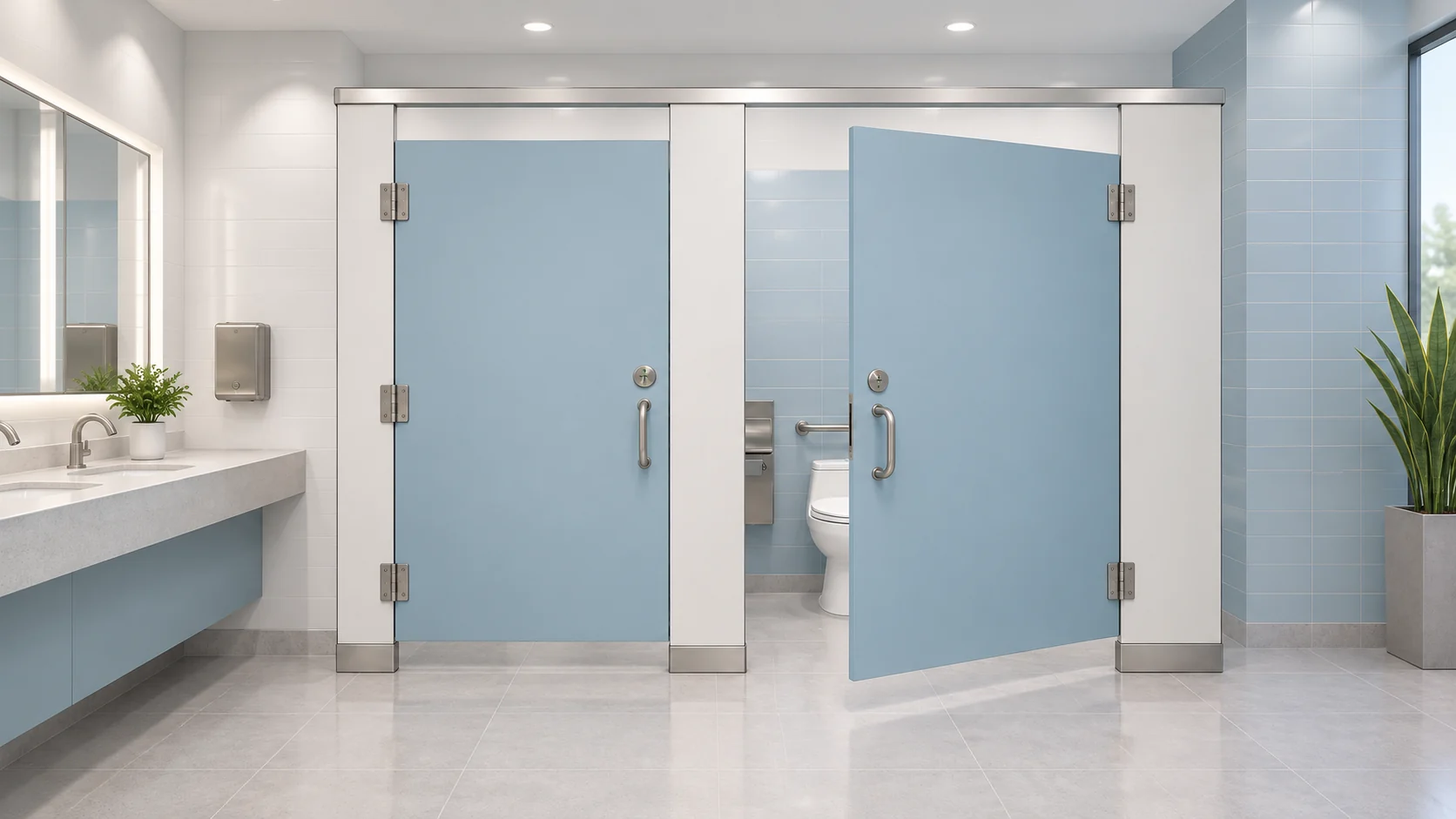
If an item is not available, record it as an open point rather than filling the gap with an assumption.
Door Approach and Operation Review
Door approaches deserve separate attention because they connect the circulation route to the cubicle interior. The team should review the approach path, the door opening sequence and the space available during entry and exit. Where the door operation depends on hardware, that hardware must be confirmed by approved technical evidence.
Questions for the door operation review
- Does the approach allow a user to reach the door without obstruction?
- Does the door swing conflict with adjacent fixtures, walls or circulation routes?
- Is the opening direction consistent with the project’s privacy and use strategy?
- Are hardware interfaces coordinated with the partition and support structure?
- Has the cleaning team confirmed access for routine maintenance?
These questions do not establish compliance. They help the project team surface coordination issues before they become site changes.
Privacy, Layout and Support Interfaces
Privacy is influenced by layout, sightlines and the relationship between the cubicle and the surrounding space. The review should consider what a person can see from the approach and how the door position affects perceived privacy. Layout decisions should be documented alongside the circulation route.
The project team should identify who is responsible for each interface and what evidence is needed to confirm it. Do not treat HPL, compact laminate, phenolic or stainless steel as interchangeable, and do not infer hidden construction from illustrations. Any project-specific material, hardware, dimension, finish, mounting or rating requires matching approved technical evidence.
Coordination roles to confirm
| Interface | Typical coordination owner | Evidence needed |
|---|---|---|
| Door approach and swing | Architect or interior designer | Approved layout and door schedule |
| Support interface | Project engineer or specialist | Coordinated detail and approved submittal |
| Cleaning access | Facilities or operations team | Maintenance procedure and access route |
| Local requirements | Local authority or code consultant | Written confirmation for the project |
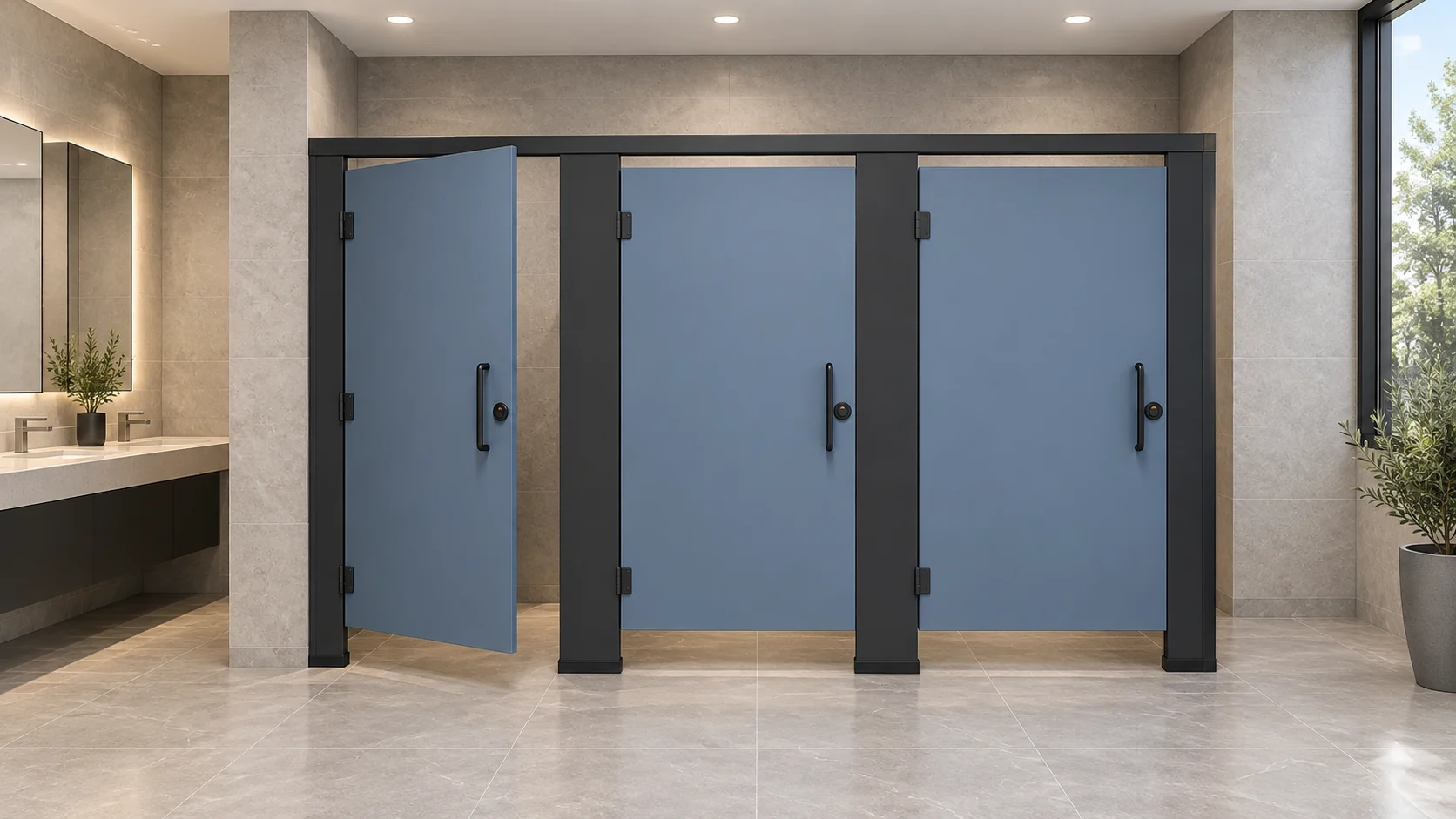
This table is a planning aid. It does not assign contractual responsibility or confirm compliance.
Cleaning Documentation and Maintenance Access
Cleaning documentation should be reviewed alongside circulation. Teams need to know how the cubicle is cleaned, what equipment is used and whether the door approach allows safe access. If the cleaning method depends on specific products or tools, those details should be confirmed by the operations team.
The review should also consider how maintenance access affects adjacent cubicles and circulation routes. A door that is easy to clean in isolation may still create a bottleneck when equipment is moved through the space. Record these observations and route them to the appropriate decision-maker.
Evidence Boundaries and Project-Specific Confirmation
Every recommendation in this article is bounded by evidence. The confirmed product fact is that EBUNGE product category includes commercial Toilet Partition / Toilet Cubicle.
Project-specific material, hardware, dimension, finish, mounting or rating requires matching approved technical evidence. Illustrations show generic design references, not completed EBUNGE customer projects.
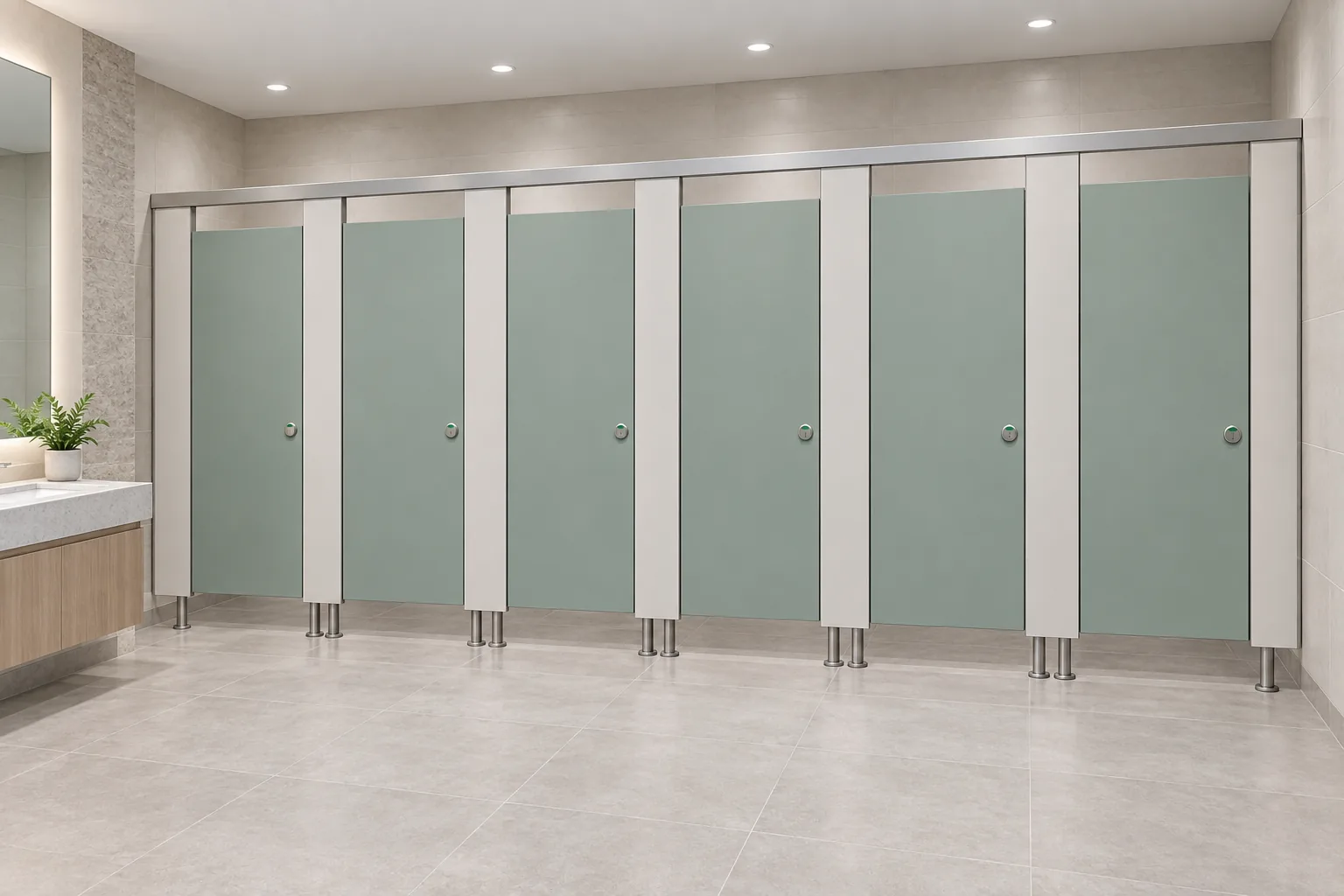
When a project team needs product information, the correct route is to request maintained documentation through the product pages and confirm it against the project specification.
Frequently Asked Questions
What is an accessible toilet cubicle circulation review?
It is a project-team exercise that examines how users approach, enter, use and leave a cubicle, together with privacy, door operation, support interfaces and cleaning access. It is not a compliance certificate.
Who should attend the review?
Typical participants include the architect, interior designer, contractor, project engineer, owner representative and facilities or cleaning lead. The exact attendees depend on the project’s scope and local requirements.
Can the review confirm compliance with local accessibility rules?
No. Compliance can only be confirmed by the relevant local authority or a qualified specialist using the applicable requirements and approved project evidence.
What information is needed for door approach review?
Approved layouts, door swing information, adjacent fixture locations, circulation routes and any confirmed hardware or mounting evidence. Missing items should be recorded as open points.
How should material and hardware questions be handled?
They should be routed to the project specification and confirmed with approved technical evidence. Do not treat different partition materials as interchangeable or infer construction from illustrations.
Does EBUNGE provide project-specific drawings or ratings in this article?
No. This article provides an evidence-bounded planning framework. Project-specific drawings, ratings and configurations require separate confirmation through the appropriate channels.
Conclusion and Next Steps
An accessible toilet cubicle circulation review is most useful when it is structured, documented and honest about evidence limits. Start with the user journey, gather the right inputs, review door operation and support interfaces, and record every open point. Keep local requirements in the hands of the responsible authority and confirm all project-specific details against approved technical evidence.
To discuss your project’s circulation review or request product information, contact the EBUNGE team. The team can help you identify the documentation needed for your next coordination meeting.