
How to Compare Toilet Partition Hardware Warranties in Tender Reviews
Quick answer: toilet partition
Toilet partition hardware warranties sit at the intersection of specification, procurement and long-term maintenance. In a tender review, the wording can look similar across submissions, yet the supporting evidence behind each statement may differ. This guide offers an evidence-bounded framework for comparing toilet partition hardware warranties without assuming hidden performance, material equivalence or project compliance.
EBUNGE product category includes commercial Toilet Partition / Toilet Cubicle. That confirmed scope is the starting point. Any project-specific material, hardware, dimension, finish, mounting or rating requires matching approved technical evidence before it can be treated as a project fact.
Why Warranty Language Needs an Evidence Check
A warranty clause is a commercial and technical commitment. In tender documents, it may appear as a short line inside a hardware schedule or a general conditions section. The risk is that reviewers compare the length of a warranty statement rather than the evidence behind it.
The project team should confirm project-specific requirements against the relevant approved technical evidence. None of these layers should be inferred from an illustration or a generic catalogue page.
What the confirmed product scope allows
The confirmed fact is that EBUNGE product category includes commercial Toilet Partition / Toilet Cubicle. Those items require separate approved evidence.
What reviewers should not assume
Do not treat HPL, compact laminate, phenolic or stainless steel as interchangeable. Do not infer hidden construction from an illustration. Do not describe toilet cubicles as movable operable walls or introduce suspended wall travel, stacking or parking mechanisms. These boundaries keep the tender comparison grounded.
A Tender Review Process for Hardware Warranty Submissions
A repeatable process helps reviewers compare submissions without drifting into unsupported conclusions. The steps below focus on documentation, coordination and project-specific confirmation.
- List every hardware item referenced in the tender. Identify hinges, latches, indicators, support interfaces and any other item named in the drawings or schedules. Do not add items that are not shown.
- Map each warranty statement to its source document. Note whether the statement comes from a maintained product page, a project-specific technical submittal or a general commercial condition.
- Check the project requirement against the submitted evidence. If the tender asks for a specific rating, finish or mounting condition, confirm that matching approved technical evidence exists.
- Record open questions for the project team. Layout, privacy, door operation, support interfaces, cleaning documentation and applicable local requirements should be reviewed together.
- Separate confirmed facts from assumptions. Mark any statement that depends on an unverified material, dimension, finish or rating.
- Issue a clarification request where evidence is missing. A tender review should not fill gaps with inference.
Comparing Submissions Without Inventing Performance Claims
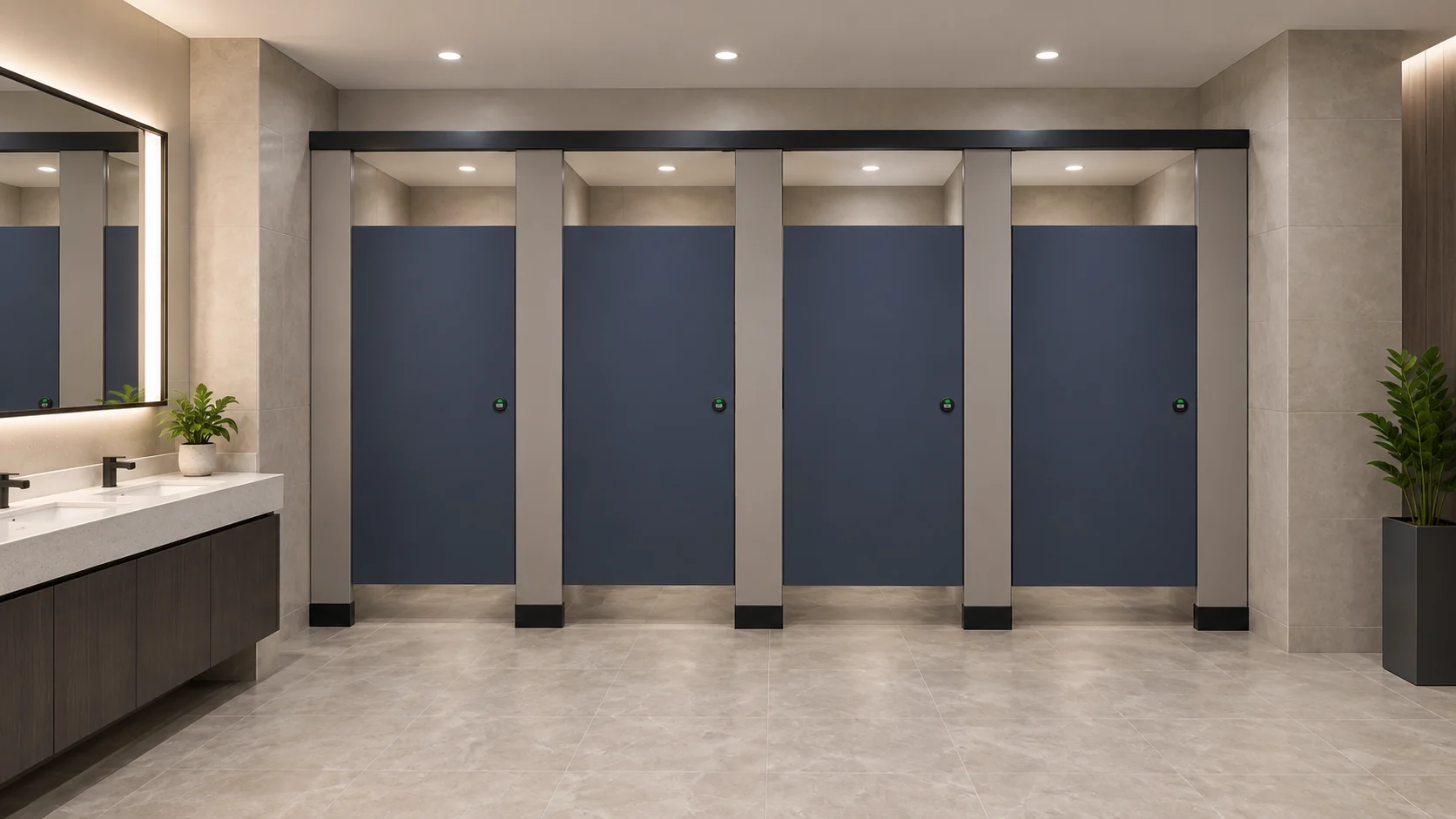
Comparison tables are useful when they compare evidence status rather than invented performance. The table below is a review aid, not a product specification. It shows how a project team might organise what is known and what still needs confirmation.
| Review item | Evidence to request | Status in review |
|---|---|---|
| Hardware item list | Schedule or drawing reference | Confirm against project documents |
| Warranty statement | Maintained product or project submittal | Confirm source and scope |
| Material and finish | Approved technical evidence | Do not infer from illustration |
| Mounting and support interface | Project-specific drawing review | Confirm with project team |
| Cleaning documentation | Maintained guidance | Confirm applicability |
| Local requirements | Applicable project or authority reference | Do not assert compliance without evidence |
This structure keeps the review focused on what can be demonstrated. It also prevents a common error: treating a generic design reference as a completed EBUNGE application reference.
Coordination Points That Affect Warranty Review
Hardware warranty review does not happen in isolation. It connects to layout, privacy, door operation, support interfaces, cleaning documentation and applicable local requirements. Each of these areas may generate questions that belong in the tender clarification log.
Layout and privacy
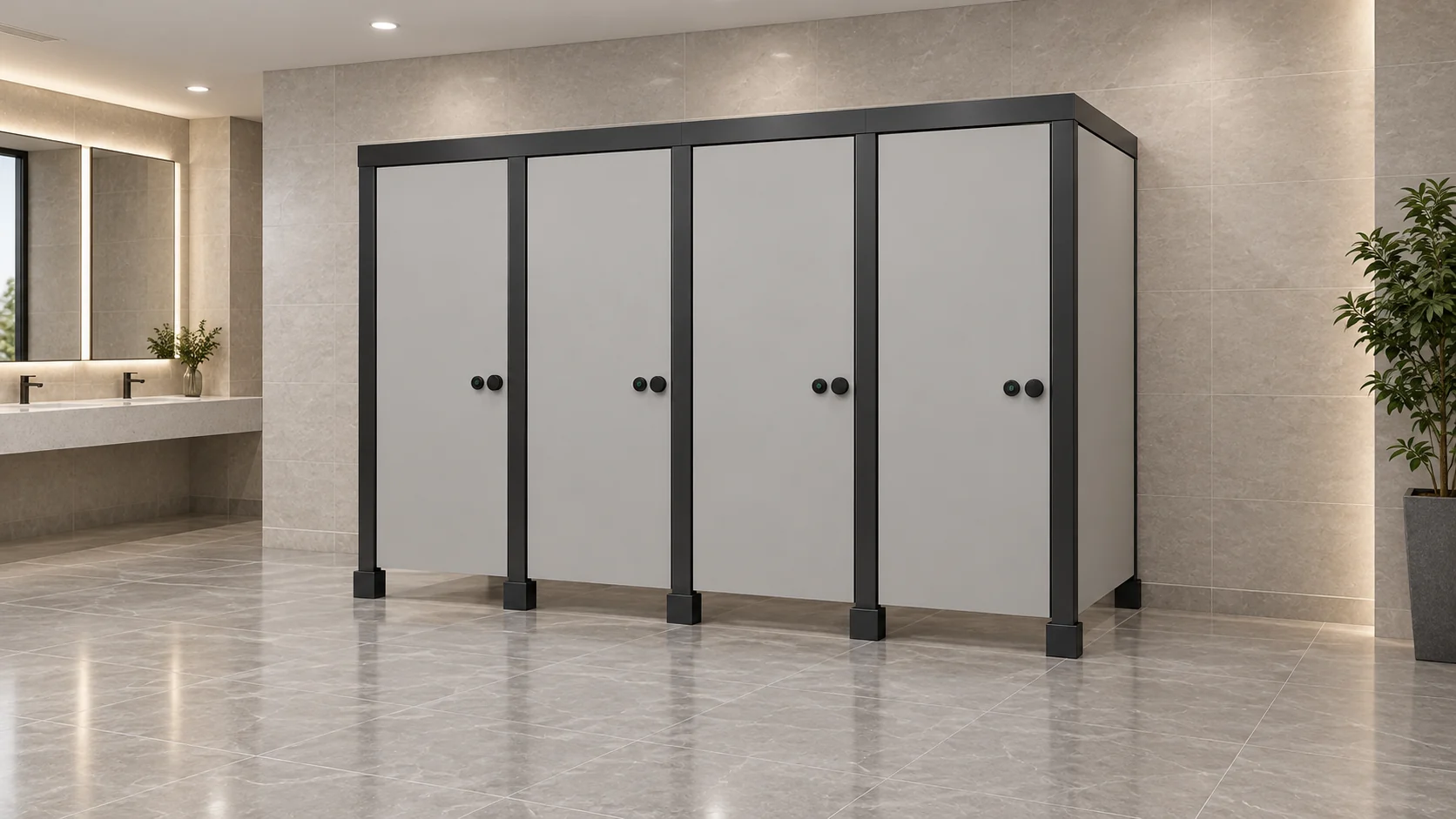
Reviewers should confirm that the proposed cubicle layout matches the project drawings. Privacy expectations should be described in project terms, not converted into unverified performance claims. Any project-specific dimension requires matching approved technical evidence.
Door operation and support interfaces
Door operation and support interfaces should be reviewed against the project drawings and the submitted hardware list. If a tender submission refers to a mounting condition that is not shown, the project team should request clarification rather than assume a standard arrangement.
Cleaning documentation and local requirements
Cleaning documentation should be reviewed for applicability to the specified finish and hardware. Applicable local requirements should be identified by the project team. This article does not assert compliance with any regulation or standard.
Evidence Notes for Tender Clarification Logs
An evidence note is a short record of what is confirmed, what is missing and what must be resolved before award. It helps reviewers avoid turning a planning assumption into a project fact.
Evidence note: The only confirmed product fact in this article is that EBUNGE product category includes commercial Toilet Partition / Toilet Cubicle. All other project-specific items, including material, hardware, dimension, finish, mounting and rating, require matching approved technical evidence.
Project teams can use the product overview as a starting reference and the resources section for maintained documentation. Where a tender requires a project-specific confirmation, the contact route should be used to request the relevant evidence.
Common Pitfalls in Warranty Comparison
Several recurring mistakes make warranty comparison less reliable. Reviewers can reduce risk by naming these pitfalls in the tender review checklist.
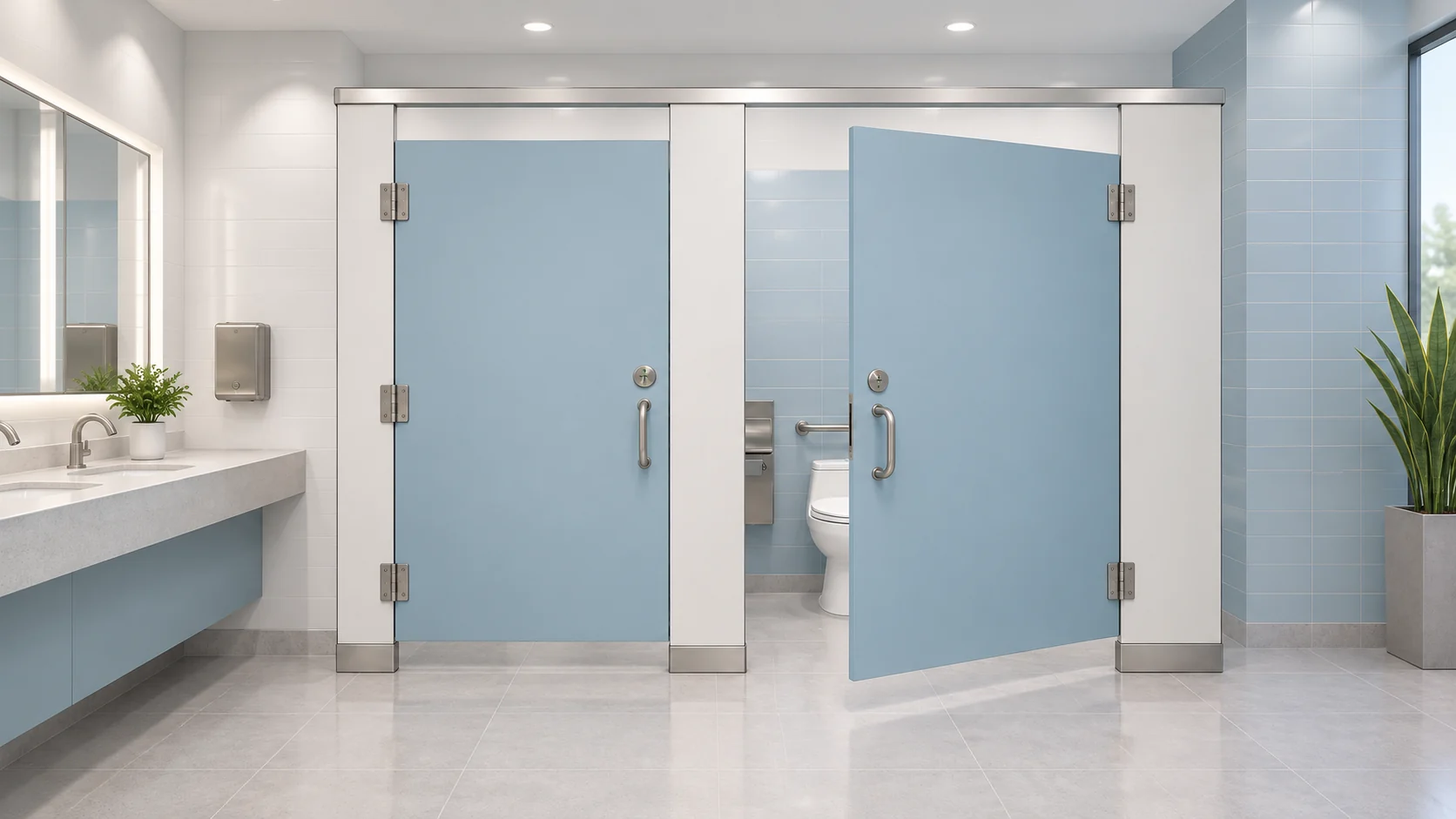
- Treating a warranty statement as a substitute for technical evidence.
- Assuming that similar-looking cubicle illustrations share the same construction.
- Comparing hardware items that are not listed in the project drawings.
- Using a generic reference as proof of a application reference.
- Leaving local requirement checks to the post-award stage.
- Recording a clarification answer without linking it to the relevant drawing or schedule.
Each pitfall points back to the same discipline: compare what is documented, and mark what is not.
Frequently Asked Questions
What is the first step in comparing toilet partition hardware warranties?
Start by listing every hardware item referenced in the tender drawings and schedules. Then map each warranty statement to its source document. This prevents reviewers from comparing statements that do not apply to the same scope.
Can a warranty statement confirm material or finish?
No. A warranty statement alone does not confirm material composition, finish or construction. Those items require matching approved technical evidence for the specific project.
How should a project team handle missing evidence?
The team should issue a clarification request and record the response in the tender log. Missing evidence should not be replaced by an assumption or by inference from an illustration.
Do illustrations show completed EBUNGE projects?
No. Illustrations show generic design references, not completed EBUNGE customer projects. They should not be used as proof of a specific configuration or performance result.
Which project areas should be reviewed alongside hardware warranties?
Review layout, privacy, door operation, support interfaces, cleaning documentation and applicable local requirements. These areas often generate the clarifications that affect warranty scope.
Does this article confirm compliance with local regulations?
No. Applicable local requirements must be identified and verified by the project team. This article provides a review framework and does not assert compliance with any regulation or standard.
Conclusion and Next Steps
Comparing toilet partition hardware warranties in tender reviews is a documentation exercise before it is a commercial one. The confirmed product scope is that EBUNGE product category includes commercial Toilet Partition / Toilet Cubicle. Every project-specific material, hardware, dimension, finish, mounting or rating still requires matching approved technical evidence.
Use the process, table and evidence note above to keep the review grounded. Where a submission leaves a gap, record it as an open item rather than filling it with inference.
To discuss a specific project requirement or request the relevant documentation, contact the EBUNGE team.