
How to Run a Post-Tender Value Review for Toilet Partition Hardware
Quick answer: toilet partition
A post-tender toilet partition hardware value review is a structured check of what the tender actually commits to before fabrication, procurement or site installation moves ahead. It is not a second negotiation for its own sake. It is the point where the project team confirms that layouts, privacy expectations, door operation, support interfaces, cleaning documentation and applicable local requirements have been reviewed against maintained product facts and approved technical evidence.
EBUNGE product category includes commercial Toilet Partition / Toilet Cubicle. Everything beyond that category statement remains project-specific until matching evidence is supplied.
Why a Post-Tender Review Matters
Tender documents often describe intent more clearly than they describe interfaces. A cubicle schedule may show a room outline, but the review team still needs to confirm how the partition relates to adjacent finishes, how doors are expected to operate, and how cleaning teams will access the space. These are coordination questions, not performance claims.
The value review protects the project from two common failures: assuming that a generic illustration proves a specific configuration, and assuming that one material family can substitute for another without documented approval. The project team should confirm project-specific requirements against the relevant approved technical evidence.
What the Review Team Should Confirm
Bring the people who will live with the decision: the contractor, architect, interior designer, owner representative, renovation lead and cleaning or facilities contact. Each brings a different evidence need.
Layout and privacy
Review cubicle counts, circulation, sightlines and privacy expectations against the approved drawings. Where privacy is a stated requirement, the team should identify which document or sample confirms it rather than relying on a rendered view.
Door operation
Confirm the intended direction of travel, closing behaviour and clearance expectations. Door operation is a coordination item that touches accessibility routes, cleaning routines and user experience, so it deserves a named reviewer.
Support interfaces
Identify how the partition system meets floors, walls, ceilings or adjacent construction. Interface responsibility should be written down, because a gap between trades is where post-tender surprises appear.
A Step-by-Step Review Process
- Collect the tender baseline. Gather the specification, drawings, schedules and any approved samples or submittals.
- List every project-specific item. Mark material, hardware, dimensions, finishes, mounting and any rating as requiring matching approved technical evidence.
- Separate confirmed facts from assumptions. Keep the confirmed category statement visible and flag anything that is only an illustration.
- Run the interface check. Walk through support points, door operation, cleaning access and adjacent finishes with the responsible trades.
- Review local requirements. Ask the local authority or appointed consultant to confirm applicable rules; do not assert compliance without that confirmation.
- Record decisions and open items. Issue a short log showing what is approved, what is pending and who owns each action.
- Freeze the reviewed scope. Only then release the package for the next stage.
Evidence Boundaries You Should Not Cross
A value review is only useful if it stays inside its evidence. The following boundaries apply to every discussion, drawing note and quotation term.
Do not treat HPL, compact laminate, phenolic or stainless steel as interchangeable. Do not describe toilet cubicles as movable operable walls or introduce suspended wall travel, stacking or parking mechanisms.
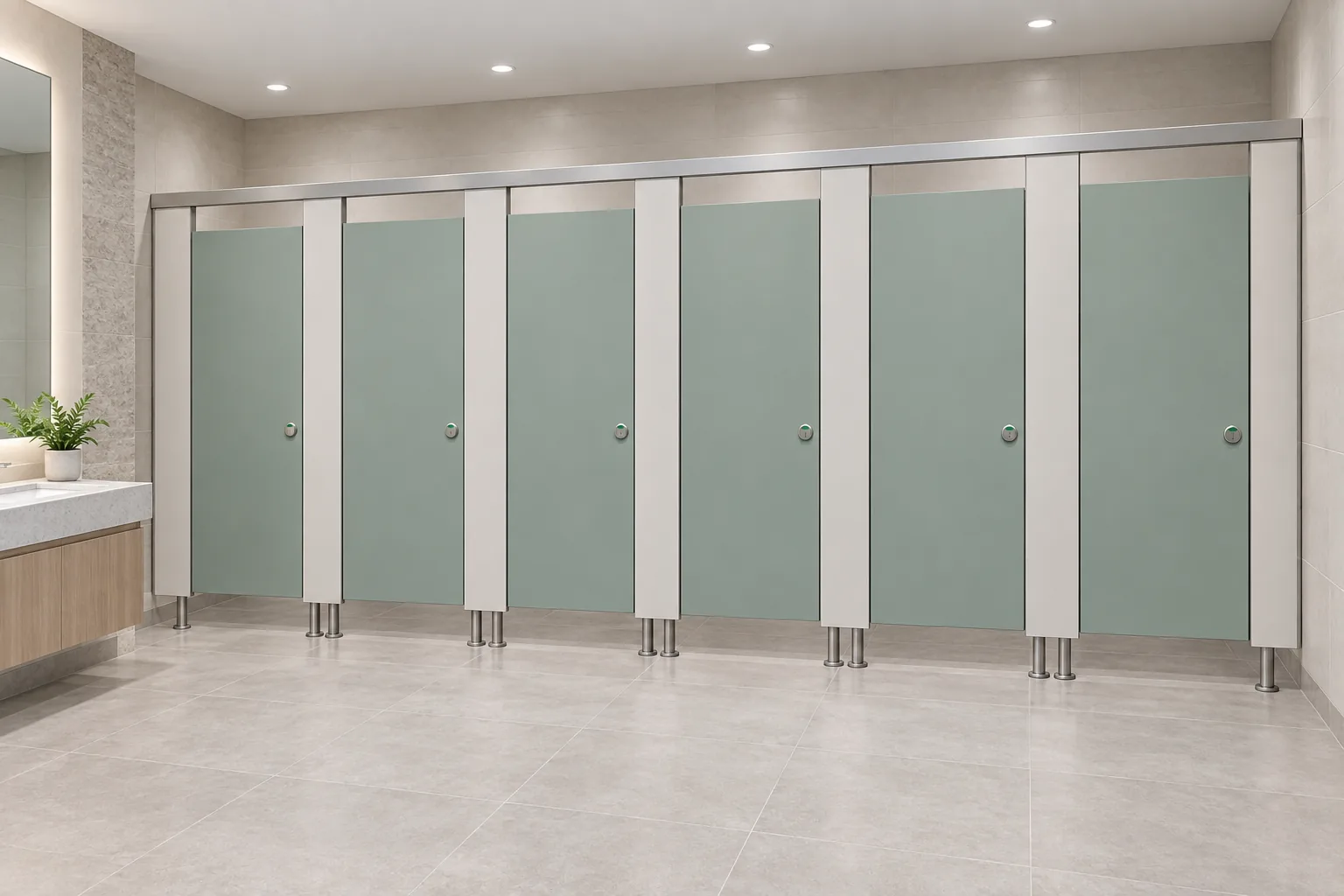
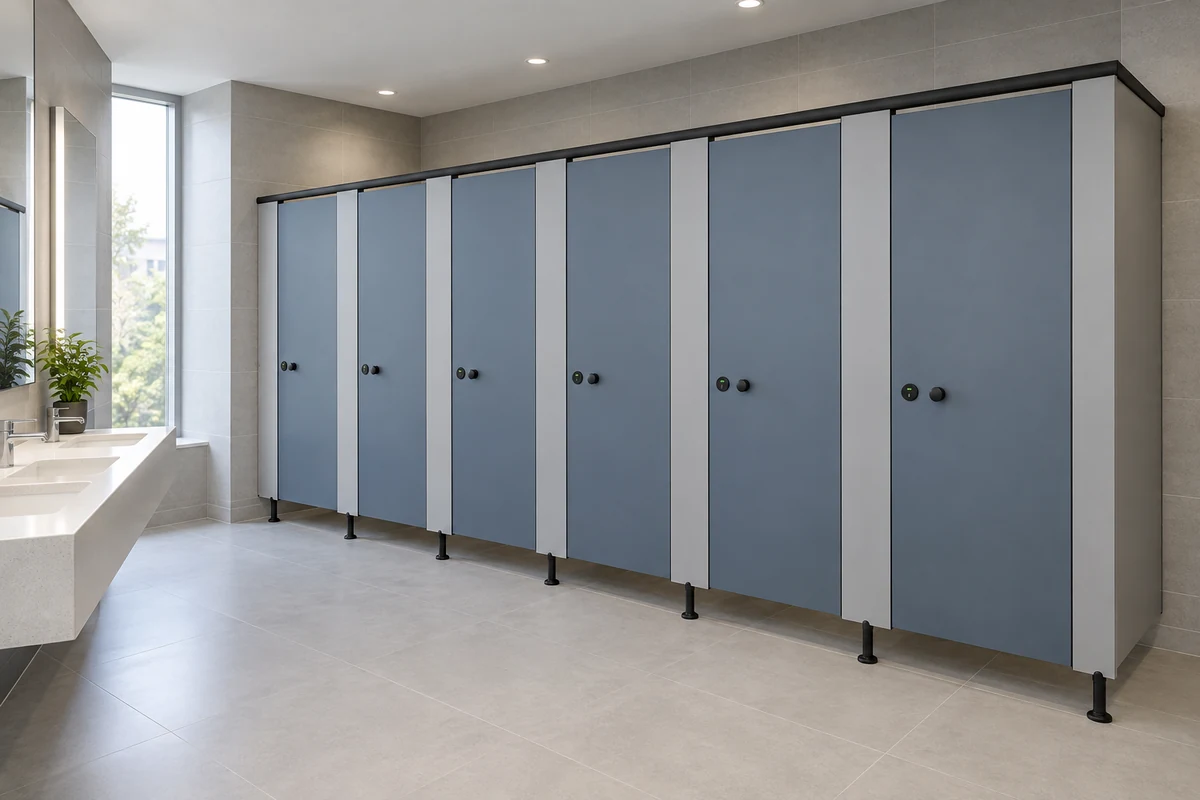
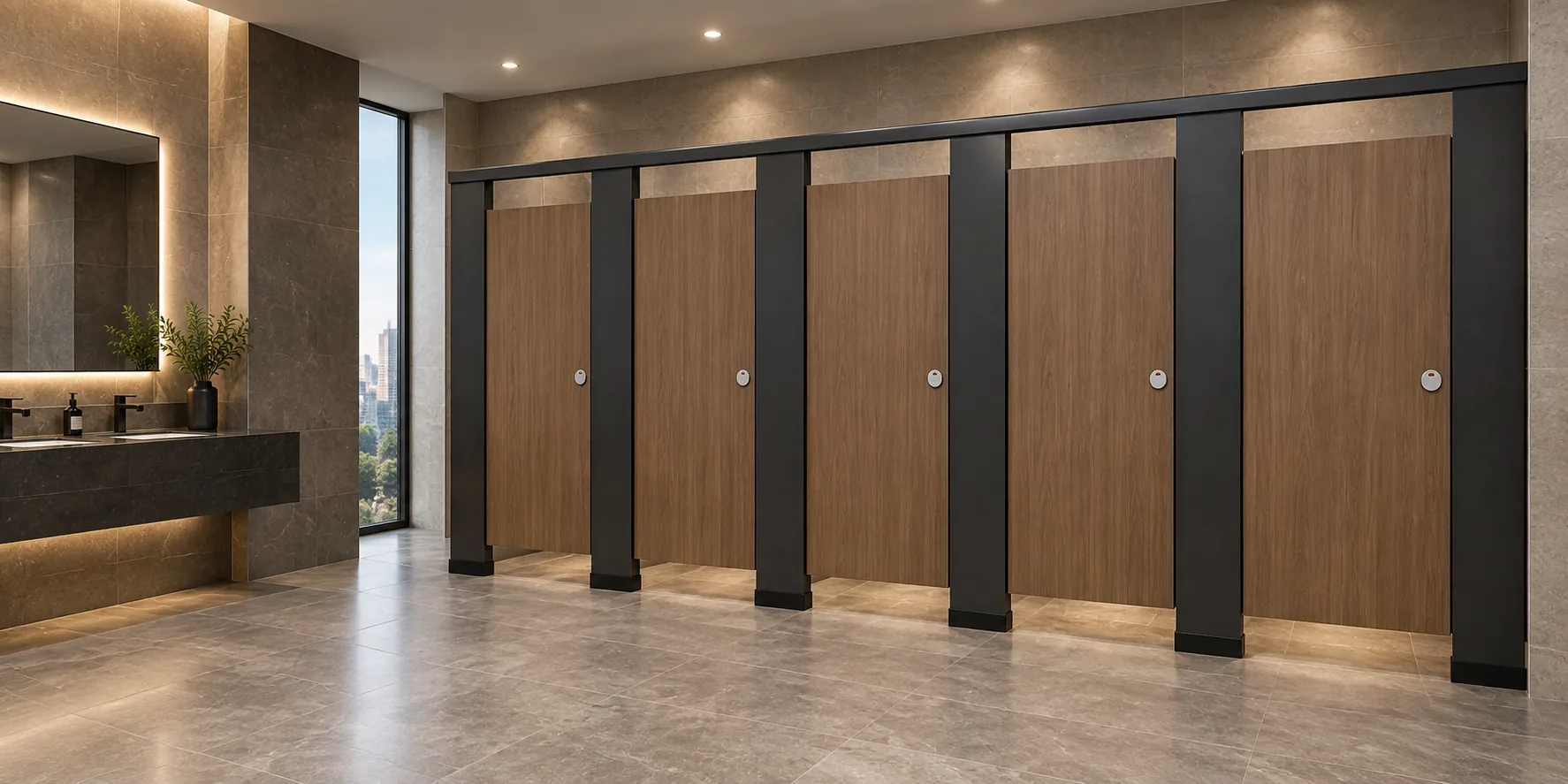
Illustrations show generic design references, not completed EBUNGE customer projects. When a reviewer sees a drawing or photograph, the correct question is: what approved document confirms this for our project?
Decision Checklist for the Review Meeting
- Is the tender baseline complete and version-controlled?
- Has every project-specific material, hardware, dimension, finish, mounting and rating been matched to approved technical evidence?
- Have layouts, privacy, door operation and support interfaces been reviewed by the responsible parties?
- Is cleaning documentation available for the intended maintenance routine?
- Have applicable local requirements been confirmed by the appropriate authority or consultant?
- Are open items assigned to named owners with dates?
- Is the reviewed scope clearly separated from unverified assumptions?
Common Coordination Gaps
Most post-tender disputes trace back to a small number of gaps. One is treating a generic illustration as a construction drawing. Another is letting a material name stand in for a full specification. A third is leaving the cleaning team out of the conversation until after installation.
Project teams can reduce these gaps by keeping a single evidence register. Each line should state the item, the document that confirms it, the reviewer and the date. If a line has no confirming document, it stays open. This approach keeps the toilet partition product range discussion grounded in what can actually be verified.
Teams that want a broader planning reference can review the partition planning resources before the meeting, then bring specific questions to the supplier through the contact route.
Frequently Asked Questions
What is a post-tender toilet partition hardware value review?
It is a structured check after tender award that confirms layouts, privacy, door operation, support interfaces, cleaning documentation and applicable local requirements before the package moves to the next stage.
Which items always need project-specific evidence?
Material, hardware, dimensions, finishes, mounting and any rating require matching approved technical evidence. A generic illustration or a category statement is not enough.
Can one partition material substitute for another during the review?
No. HPL, compact laminate, phenolic and stainless steel should not be treated as interchangeable, and hidden construction should not be inferred from images.
Who should attend the review meeting?
Include the contractor, architect, interior designer, owner representative, renovation lead and a cleaning or facilities contact. Each role confirms a different interface.
How should local requirements be handled?
Ask the appointed local authority or consultant to confirm applicable rules. The review team should record the confirmation rather than assert compliance independently.
What should the review output look like?
A short decision log works well: item, confirming document, reviewer, status and owner. Open items remain visible until evidence is supplied.
Conclusion and Next Step
A disciplined toilet partition hardware value review keeps the project honest. It separates confirmed category facts from project-specific requirements, gives every interface a named owner, and prevents illustrations from being read as construction evidence. Run the review early, document every decision, and keep unverified items open until approved evidence arrives.
To discuss a specific project, send the tender baseline, drawings and open questions through the EBUNGE contact page. The team can then respond within the boundaries of confirmed product facts and the evidence your project supplies.