
How to Run a Tender Clarification Log for Toilet Partition Hardware
Quick project answer
Review focus: toilet partition.
A toilet partition hardware tender clarification log is a controlled record of questions, answers and evidence references that arise during tendering. It helps contractors, architects, interior designers, owners and distributors keep commercial toilet cubicle decisions traceable. This guide explains how to run that log without turning assumptions into specifications. EBUNGE product category includes commercial Toilet Partition / Toilet Cubicle.
Project-specific material, hardware, dimension, finish, mounting or rating requires matching approved technical evidence.
Why a Clarification Log Matters for Toilet Partition Hardware
Tender documents often describe layouts, privacy expectations, door operation and support interfaces in general terms. A clarification log captures the gaps between what is drawn, what is specified and what still needs confirmation. It prevents verbal answers from disappearing and reduces the risk of a supplier pricing an unverified configuration.
The log is not a substitute for approved drawings or technical submittals. It is a coordination tool that points to them. Each entry should state the question, the answer, the evidence source and the responsible party. When an answer depends on a project-specific test, certificate or dimension, the log should say so rather than imply compliance.
Setting Up the Log Before Tender Questions Arrive
Start with a simple register that can be sorted by package, drawing number, date and status. Agree on a numbering format and a review rhythm. The project team should decide who may close an item and what counts as acceptable evidence.
Core fields to include
- Clarification number and date raised
- Related drawing, schedule or specification section
- Question in plain language
- Answer with a clear scope limit
- Evidence reference or note that evidence is pending
- Responsible party and required action
- Status: open, answered, closed or superseded
Keep the language neutral. Avoid words such as approved, certified or guaranteed unless the supporting document is attached and current. If an answer changes a layout or interface, issue a revised drawing reference rather than relying on the log alone.
Reviewing Layouts, Privacy and Door Operation
Layout review should confirm cubicle counts, circulation, accessible compartment provisions and the relationship between partitions and adjacent walls or services. Privacy expectations may be described in the brief, but they must be matched to approved evidence before they become a tender commitment.
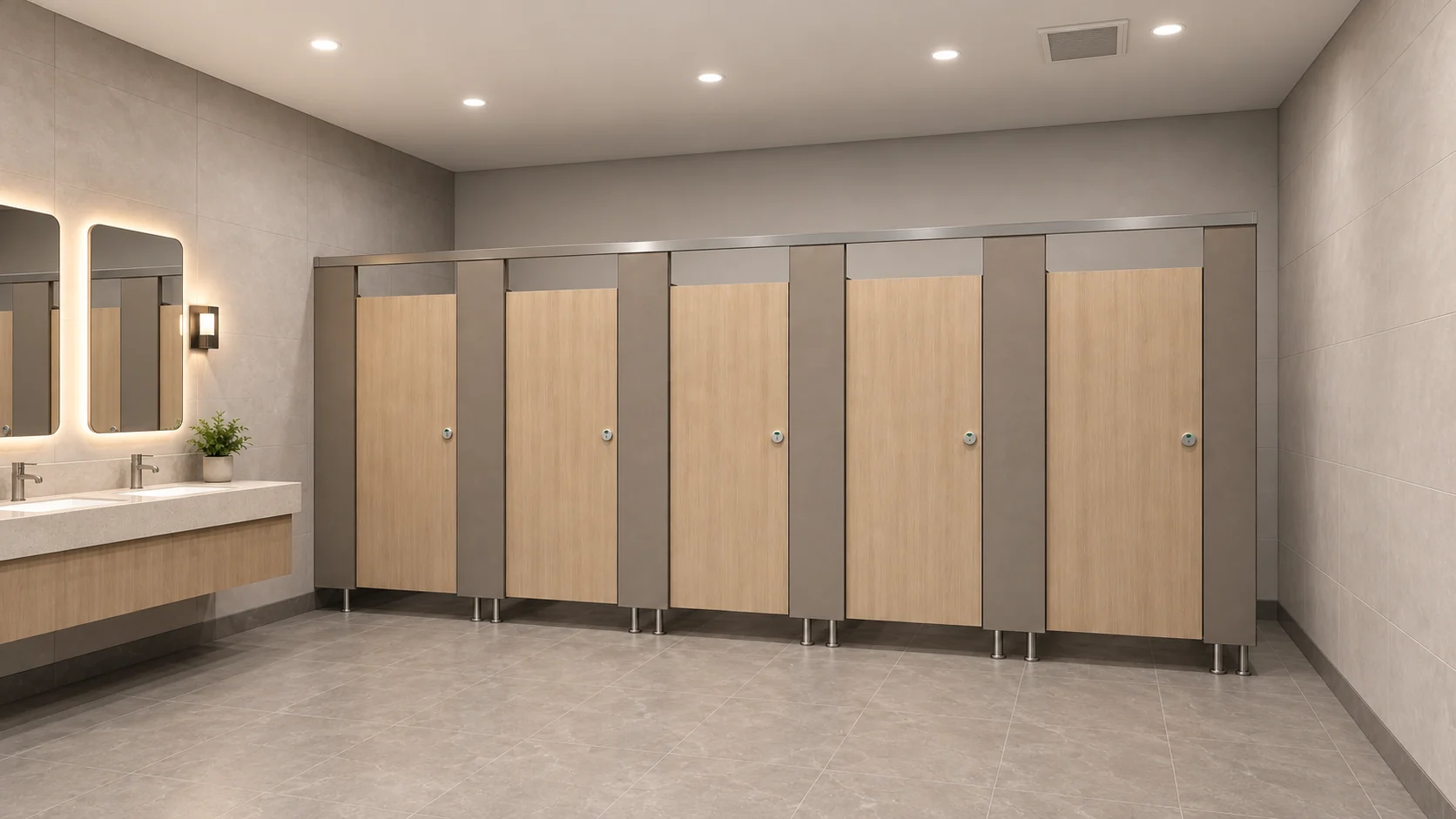
Door operation needs its own review. The team should check swing direction, clearance, latch side, hinge side and how the door interacts with the frame and support structure. These are project-specific decisions. The log should record who confirms them and which drawing or technical document supports the answer.
Questions that belong in the log
- Which drawing governs the cubicle layout and door swing?
- What support interface is available at each partition run?
- Which cleaning documentation is required by the owner?
- Which local requirements apply, and who confirms them?
- What evidence is still missing before a hardware item can be priced?
Support Interfaces and Cleaning Documentation
Support interfaces include the floor, ceiling, walls and any structural or service elements that affect partition stability and alignment. The tender log should identify who is responsible for each interface and what information is needed from other trades. Do not assume a support condition from a generic illustration.
Cleaning documentation is often requested by owners and facility teams. The log can record the required cleaning method, frequency and product restrictions, but only if the project team has confirmed them. Where documentation is not yet available, mark the item as pending rather than describing a cleaning outcome.
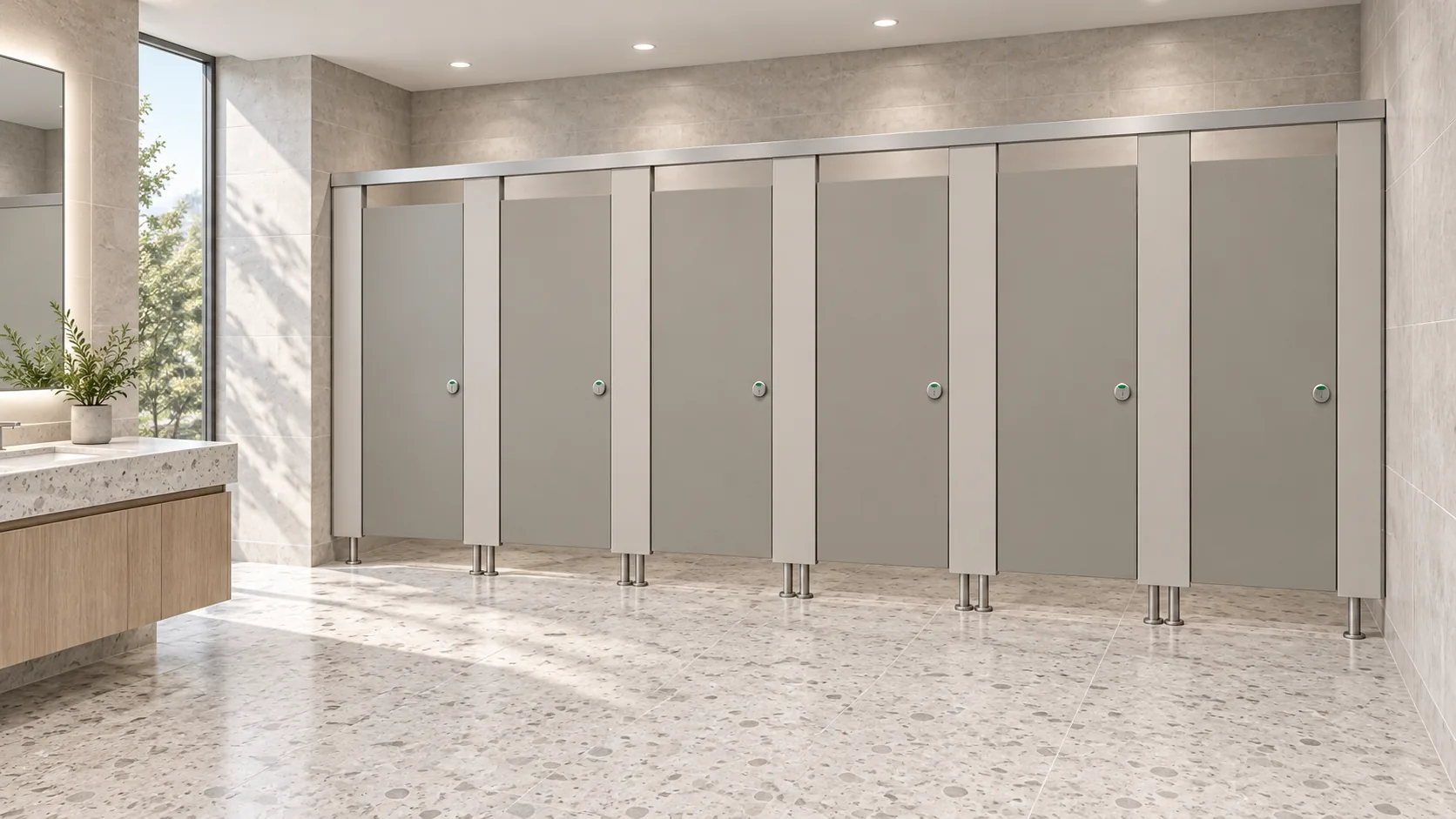
Evidence note: Illustrations show generic design references, not completed EBUNGE customer projects. Any project-specific material, hardware, dimension, finish, mounting or rating requires matching approved technical evidence.
Coordinating with Suppliers and Project Teams
Suppliers should receive the same clarification log format used internally. The project team should confirm project-specific requirements against the relevant approved technical evidence. When a supplier responds, the project team should check whether the answer introduces a new assumption or depends on a document not yet issued.
Use the log to separate commercial questions from technical ones. A question about lead time, payment terms or warranty belongs in a commercial schedule, not in a technical clarification that could be mistaken for a product fact. The product overview can help teams identify the relevant category before they raise detailed questions.
Roles and responsibilities
| Role | Typical responsibility |
|---|---|
| Contractor | Raises site and interface questions, maintains the log |
| Architect | Confirms design intent and drawing references |
| Owner or facility team | Confirms cleaning and operational requirements |
| Supplier | Provides product-specific evidence when available |
Regular review meetings keep the log current. A short weekly check is often enough to close simple items and escalate those that need design or owner input. The resources section can support general planning, but it does not replace project-specific evidence.
Closing Items Without Overstating Compliance
An item should only be closed when the answer is supported by an approved document or a clear project decision. If the answer depends on a local requirement, record who confirmed it and when. Do not state that a product complies with a regulation unless the relevant evidence is attached and current.
When a clarification changes the scope, issue a revised tender addendum or drawing. The log should reference that revision so later readers can trace the decision. Avoid using the log to introduce new performance claims that were not part of the original evidence set.
Common Pitfalls in Tender Clarification Logs
One common pitfall is treating HPL, compact laminate, phenolic or stainless steel as interchangeable. They are not, and the log should not imply hidden construction from an illustration. Another pitfall is describing toilet cubicles as movable operable walls or introducing suspended wall travel, stacking or parking mechanisms. These descriptions are outside the scope of commercial toilet partitions.
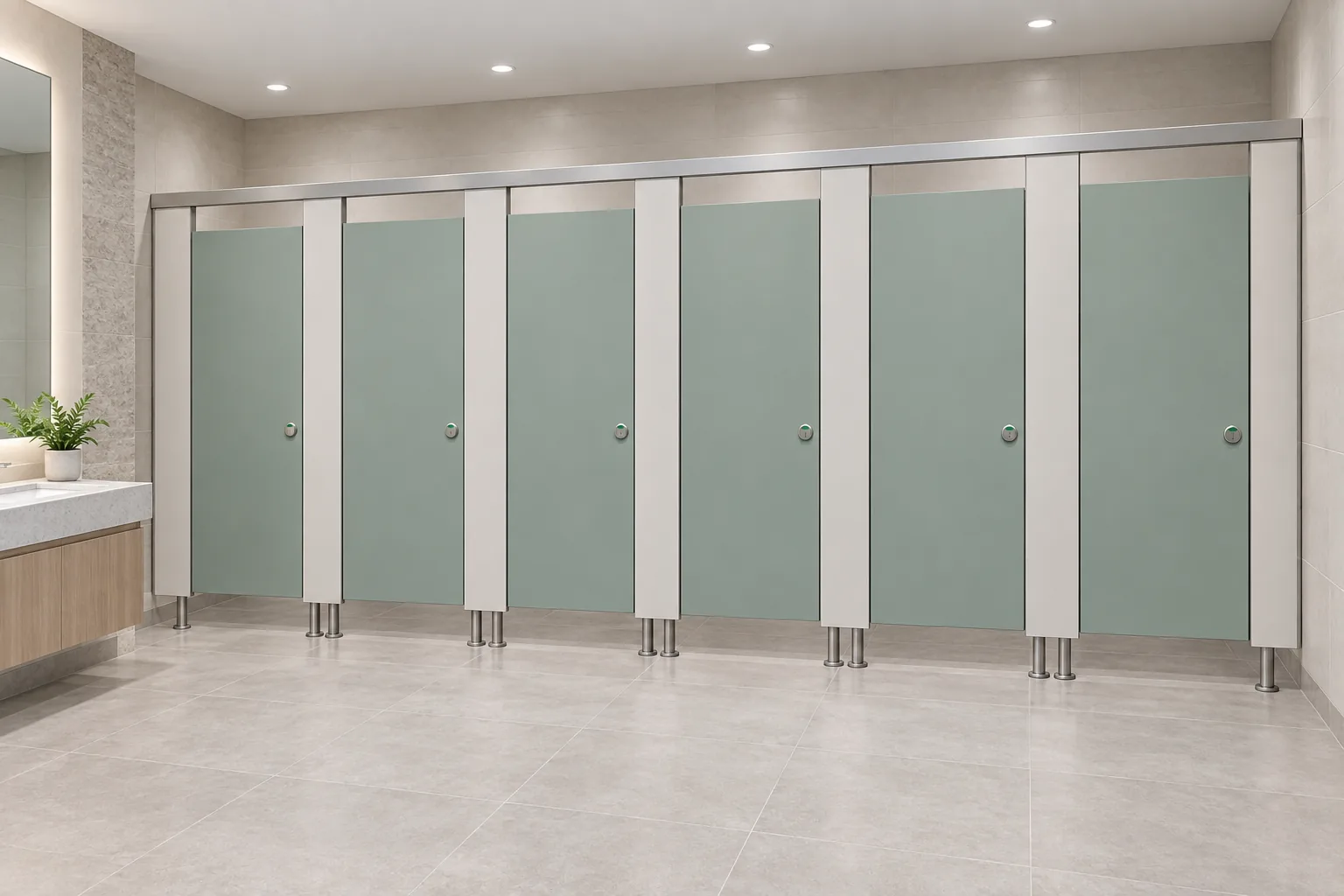
A third pitfall is leaving answers vague. An answer such as “standard hardware” is not useful unless the standard is defined in an approved document. The log should ask for the specific reference or mark the item as unresolved.
Frequently Asked Questions
What is a toilet partition hardware tender clarification log?
It is a controlled register of questions and answers about toilet partition hardware during tendering. It records evidence references, responsibilities and status so decisions remain traceable.
Who should maintain the log?
The contractor or a nominated project coordinator usually maintains it. Architects, owners and suppliers contribute answers and evidence within their responsibilities.
Can the log confirm product performance?
No. The log can point to approved evidence, but it should not invent or imply ratings, certifications or performance results. Project-specific claims require matching approved technical evidence.
How should the log handle local requirements?
Record the requirement, the responsible party and the evidence source. Do not assert compliance unless the project team has confirmed it with current documentation.
What should be excluded from the log?
Exclude unverified assumptions, generic marketing language and commercial terms that belong in a separate schedule. Also exclude descriptions of toilet cubicles as movable operable walls.
How often should the log be reviewed?
A weekly review during active tendering is practical. The frequency should match the project schedule and the number of open items.
Conclusion and Next Steps
A well-run clarification log keeps toilet partition hardware decisions tied to drawings, evidence and clear responsibilities. It helps project teams avoid unsupported claims and reduces confusion during tender evaluation. Start with a simple register, agree on evidence rules and review it regularly.
For product category information, visit the EBUNGE products page. To discuss a specific project, contact the EBUNGE team with your drawing references and clarification questions.