
Renovation Phasing When Only One Toilet Cubicle Bank Can Close
Quick answer: toilet cubicle
Toilet cubicle bank renovation phasing becomes a coordination problem when only one bank can close at a time. The project team must keep the remaining bank usable while reviewing layouts, privacy, door operation, support interfaces, cleaning documentation and applicable local requirements. This article offers an evidence-bounded planning framework. It does not confirm compliance, performance or product configuration. EBUNGE product category includes commercial Toilet Partition / Toilet Cubicle.
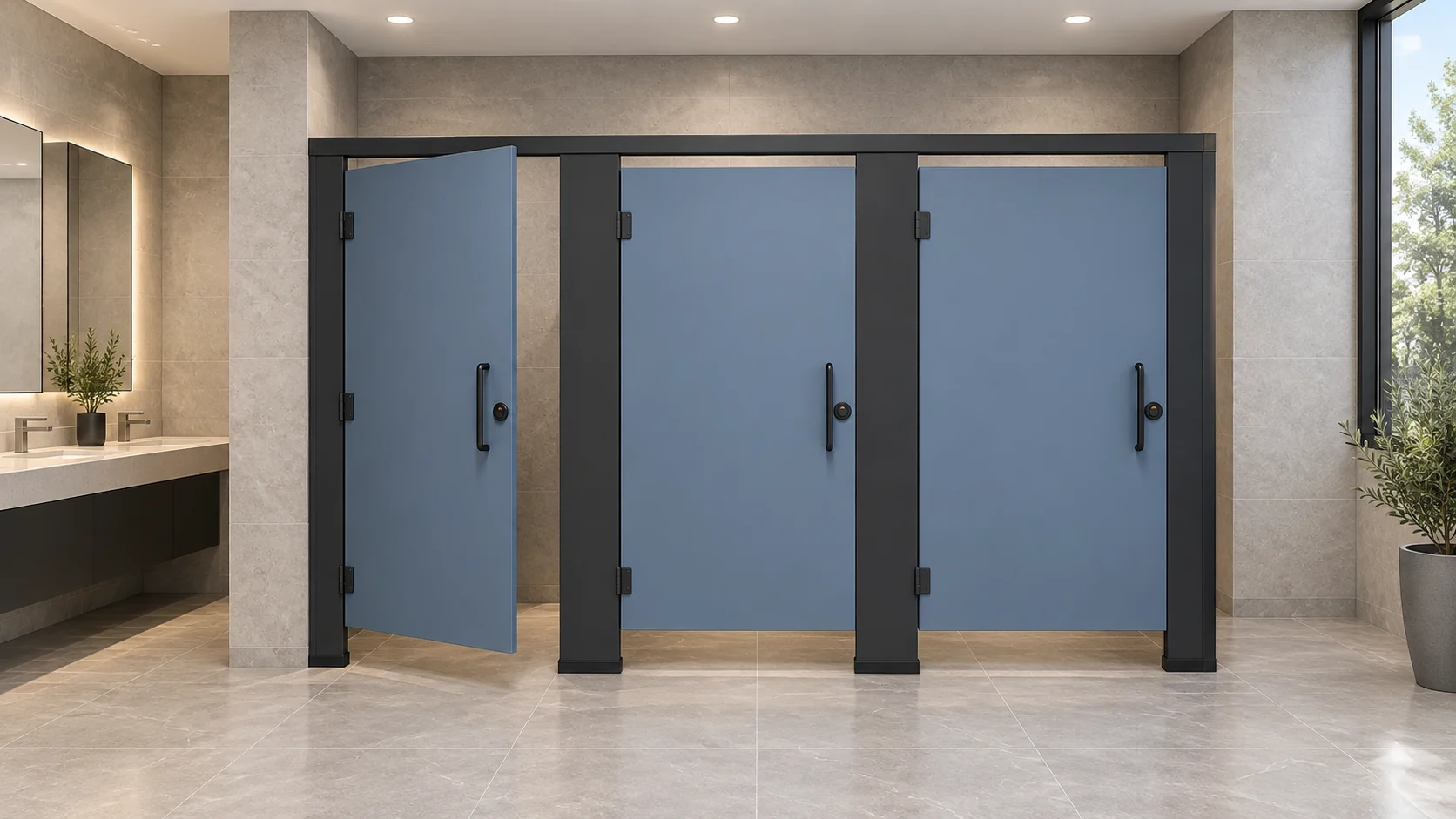
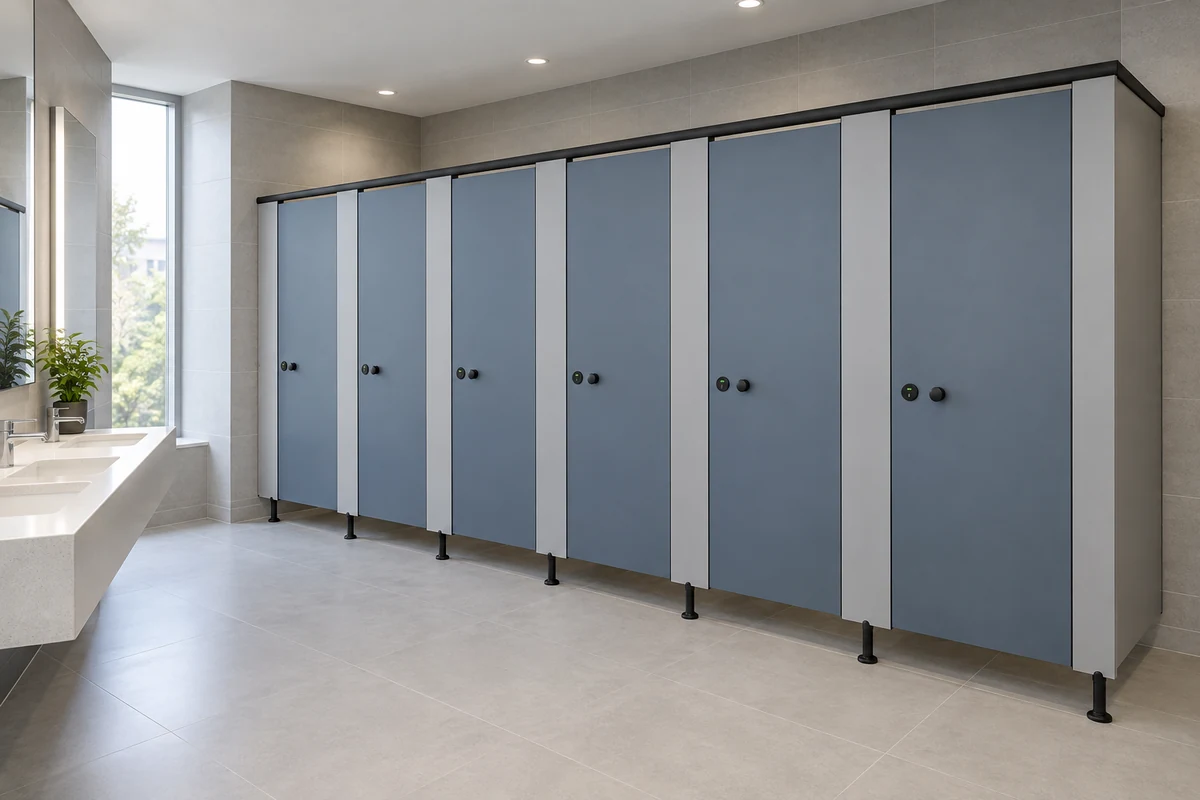
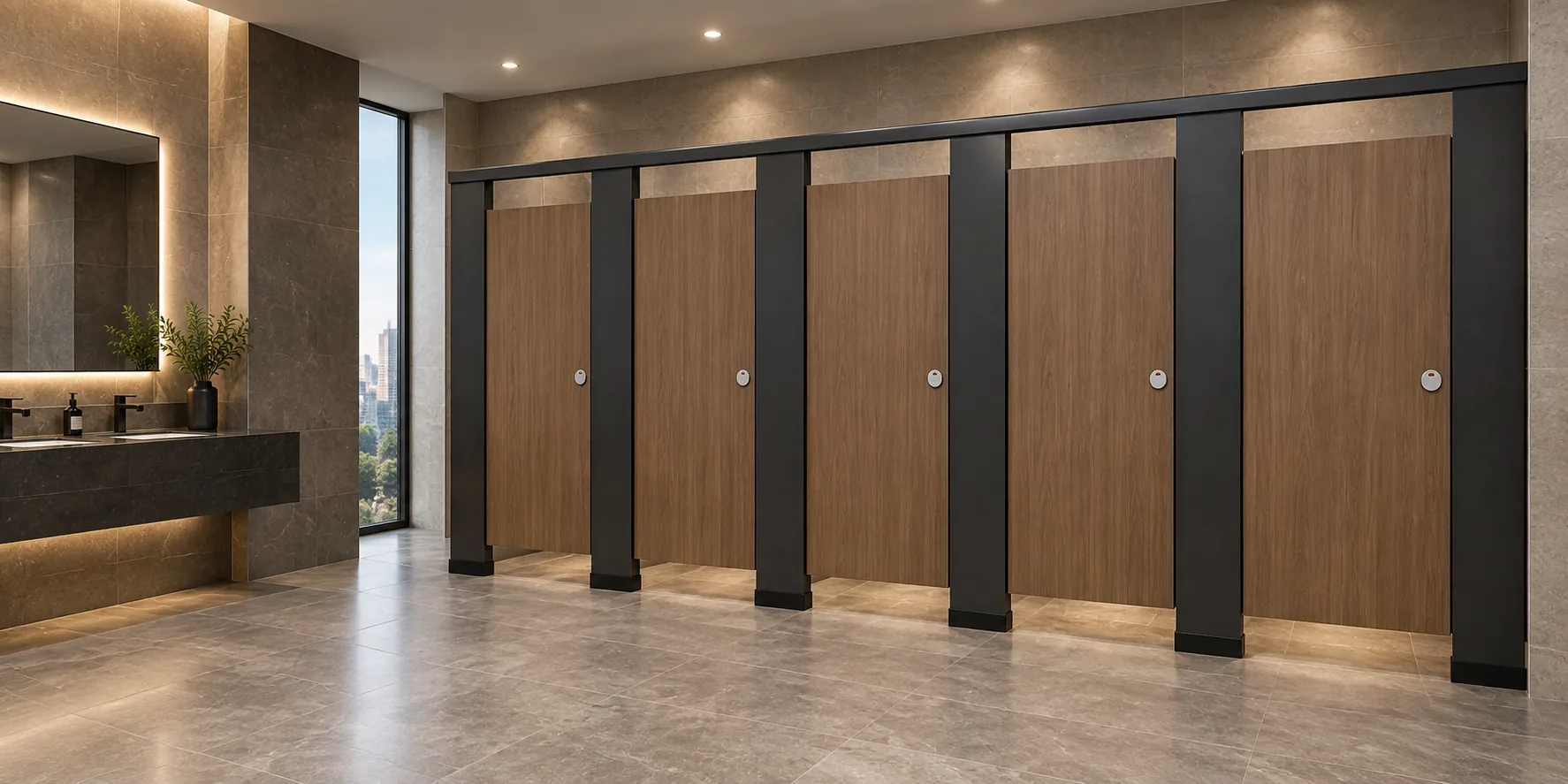
Any project-specific material, hardware, dimension, finish, mounting or rating requires matching approved technical evidence. Illustrations show generic design references, not completed EBUNGE customer projects.
Why Single-Bank Closure Changes the Planning Sequence
When only one toilet cubicle bank can close, the renovation sequence is constrained by the continued operation of the other bank. The project team should treat the closure as a temporary condition that affects access, deliveries, waste removal and cleaning routines. The planning question is not simply which bank closes first, but how the open bank absorbs demand during each phase.
Start by mapping the daily use pattern of both banks. Record peak periods, cleaning windows and any known accessibility needs. This information helps the team decide whether work can proceed in one continuous phase or must be split into smaller closures. Do not assume that a single closure period will suit every stakeholder. The owner, facility manager and cleaning contractor should review the sequence together.
Layout and Privacy Review Before Any Closure
Layout and privacy are project-specific. The team should review sightlines, circulation, door swing and the relationship between the closed bank and the open bank. A temporary screen or signage may be needed, but its design and fixing method require project-specific evidence. Do not infer privacy performance from a generic illustration.
Questions for the Layout Review
- Does the open bank provide enough circulation space during the closure?
- Are there any sightlines from public areas into the work zone?
- Will temporary signage or screening obstruct fire exits or accessible routes?
- Does the closed bank share a support interface with the open bank?
These questions are planning prompts, not compliance statements. Applicable local requirements must be checked separately by the responsible project team.
Door Operation and Hardware Coordination
Door operation is a frequent source of rework during phased renovation. The team should confirm the direction of door swing, the position of hinges and the interface with any adjacent panel or pilaster. Because hardware details are project-specific, they require matching approved technical evidence before procurement or installation.
If the open bank and closed bank share a common door type, do not assume the same hardware will suit both. The project team should review each bank separately and record any differences in the approved documents. This avoids ordering errors and reduces the risk of a closure extension.
Support Interfaces and Existing Structure
The project team should confirm project-specific requirements against the relevant approved technical evidence. The team should review existing conditions before demolition begins. If the existing support interface is unknown, a site inspection is needed. Do not infer hidden construction from illustrations or from a previous project.
Where the closed bank shares a wall or floor with the open bank, the sequence should account for vibration, dust and access. The project team may need to isolate the work zone. The method of isolation and its fixing details require project-specific evidence.
Cleaning Documentation and Temporary Routines
Cleaning documentation should be updated for each phase. The team should agree who is responsible for temporary cleaning, where supplies are stored and how waste is removed without crossing the work zone.
Documentation should also record any changes to the cleaning schedule during the closure. This is a planning record, not a compliance certificate. The project team remains responsible for verifying applicable local requirements.
Decision Checklist for Phased Closure
| Decision Area | Planning Question | Evidence Needed |
|---|---|---|
| Sequence | Which bank closes first and for how long? | Approved programme and site access plan |
| Layout | Does the open bank support circulation and privacy? | Project-specific layout review |
| Door operation | Are swing, hinge and hardware interfaces confirmed? | Approved technical evidence |
| Support interfaces | Are existing conditions known? | Site inspection and approved drawings |
| Cleaning | Who maintains the open bank during closure? | Updated cleaning documentation |
Use this checklist as a discussion tool. It does not replace project-specific engineering or compliance review.
Evidence Boundaries for Specification and Procurement
Specification and procurement must be tied to approved technical evidence. Do not treat HPL, compact laminate, phenolic or stainless steel as interchangeable.
Any project-specific material, hardware, dimension, finish, mounting or rating requires matching approved technical evidence. Illustrations show generic design references, not completed EBUNGE customer projects.
When a supplier or contractor provides a submittal, the project team should check it against the approved documents. If a detail is missing, request clarification before installation. This is especially important when only one bank can close, because a single unresolved interface can delay the entire sequence.
Coordination Roles and Communication Rhythm
Phased renovation depends on clear communication. The owner, architect, contractor, cleaning manager and facility operator should agree on a regular coordination rhythm. Short, frequent updates are often more useful than a single long meeting. The team should record decisions and distribute them to all affected parties.
For product category context, the commercial toilet partition product overview provides a starting point. For broader planning resources, see the project resources. When the team is ready to discuss a specific scope, contact EBUNGE to request the evidence needed for review.
Frequently Asked Questions
What is toilet cubicle bank renovation phasing?
It is the planned sequence of work when a toilet cubicle bank is renovated while another bank remains open. The sequence should be based on project-specific layouts, access, cleaning and approved technical evidence.
Can one bank remain open during the entire renovation?
That depends on the project. The team must review circulation, privacy, door operation, support interfaces and local requirements. This article does not confirm that any specific arrangement is compliant or suitable.
What information is needed before closing a bank?
The team should have approved drawings, a site access plan, a cleaning plan and confirmed support interfaces. Any material, hardware, dimension, finish or mounting detail requires matching approved technical evidence.
How should door operation be coordinated?
Door swing, hinge position and adjacent panel interfaces should be reviewed for each bank. Do not assume hardware is interchangeable between banks without approved evidence.
Does EBUNGE provide project-specific compliance certification?
No compliance claim is made in this article. Applicable local requirements must be verified by the responsible project team. EBUNGE product category includes commercial Toilet Partition / Toilet Cubicle.
Are illustrations completed EBUNGE projects?
No. Illustrations show generic design references, not completed EBUNGE customer projects. They should not be used to infer hidden construction or performance.
Conclusion and Next Step
Review layouts, privacy, door operation, support interfaces, cleaning documentation and applicable local requirements. Keep every project-specific material, hardware, dimension, finish, mounting and rating tied to approved technical evidence. Do not infer compliance or performance from generic references.
If your team is planning a single-bank closure, contact EBUNGE to discuss the evidence required for your review. The local publisher will place approved images and CTA cards in the early, middle and closing regions.