
Circulation Review Before Relocating Toilet Cubicle Hardware
Quick answer: toilet cubicle
Review focus: toilet cubicle.
A toilet cubicle hardware relocation review is a planning exercise, not a product selection shortcut. The project team should confirm project-specific requirements against the relevant approved technical evidence. EBUNGE product category includes commercial Toilet Partition / Toilet Cubicle. That confirmed category fact is the starting point; every project-specific material, hardware, dimension, finish, mounting or rating still requires matching approved technical evidence.
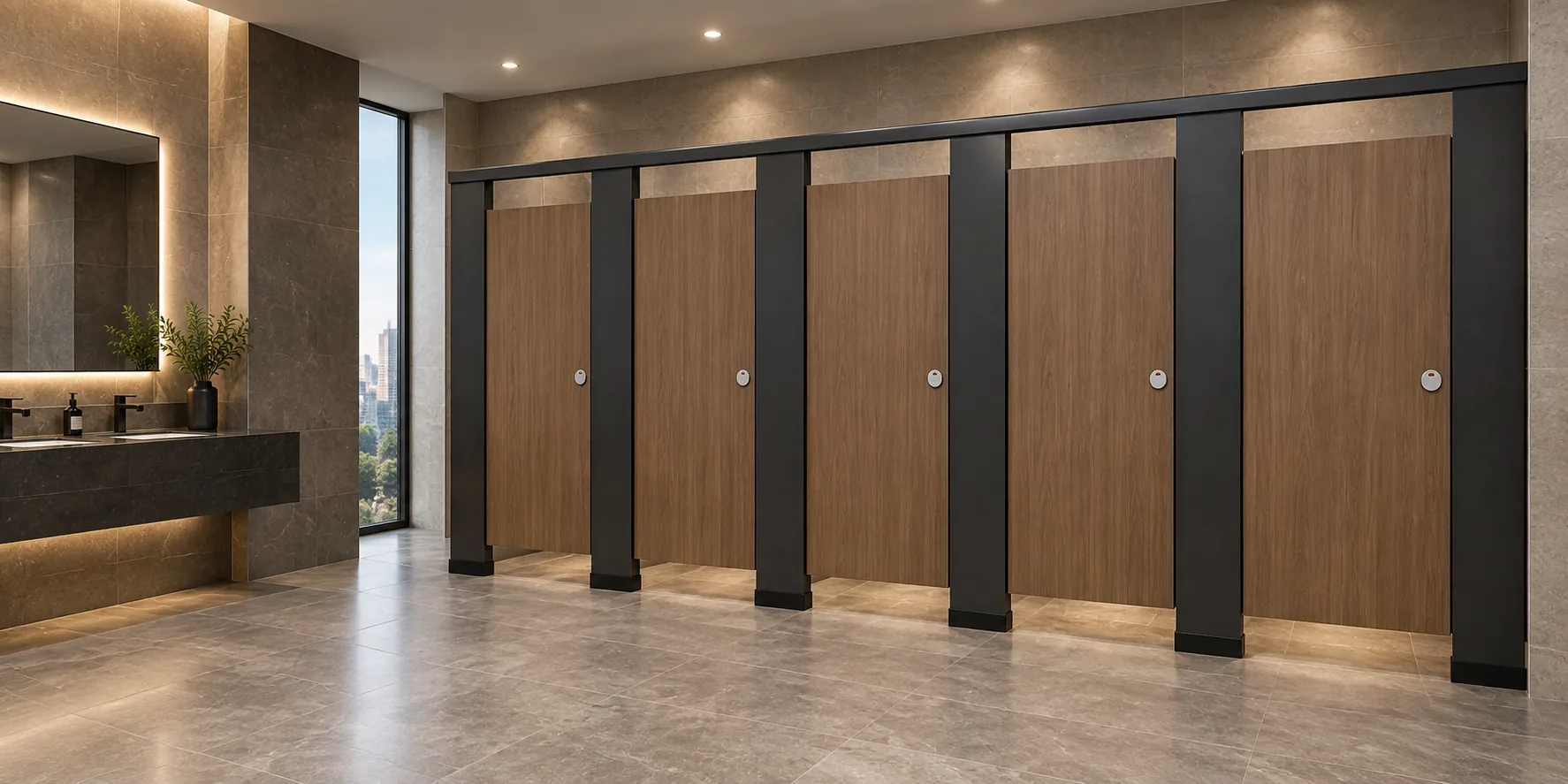
This guide is written for overseas contractors, architects, interior designers, owners, renovation companies, distributors and construction teams. It sets out a review sequence that keeps layout, privacy, door operation, support interfaces, cleaning documentation and applicable local requirements visible without asserting unverified compliance. Illustrations in this article are generic design references, not completed EBUNGE customer projects.
Why Circulation Comes Before Hardware Decisions
Project review term: toilet cubicle.
Hardware relocation is often treated as a like-for-like swap. In practice, moving a hinge, latch or support point can change how a door opens, how a user enters, and how cleaning staff move through the room. A circulation review should therefore happen before the hardware schedule is fixed.
The review does not need to resolve every detail. It needs to expose the interfaces that other disciplines must confirm: the door swing envelope, the approach to each cubicle, the position of support interfaces, and the route used for cleaning. Where a proposed change touches these items, the team should record the question and route it to the responsible party.
What the review is not
It is not a compliance sign-off, a structural assessment or a performance rating. It is a coordination step that identifies what must be verified against project-specific evidence. Do not treat HPL, compact laminate, phenolic or stainless steel as interchangeable, and do not infer hidden construction from an illustration.
Information the Project Team Should Gather
A useful review starts with a small, shared information set. The aim is to avoid decisions being made from partial drawings or verbal assumptions.
- Current layout drawings showing cubicle positions, door swings and circulation routes.
- Any proposed layout change and the reason for relocating hardware.
- Door operation notes, including how each door is intended to open and close.
- Support interface locations as shown on the approved project drawings.
- Cleaning documentation and the route cleaning staff are expected to use.
- Applicable local requirements identified by the project team for the relevant jurisdiction.
Where any item is missing, mark it as an open question rather than filling the gap with an assumption. The review output is stronger when it states what is known and what still needs confirmation.
A Step-by-Step Relocation Review Sequence
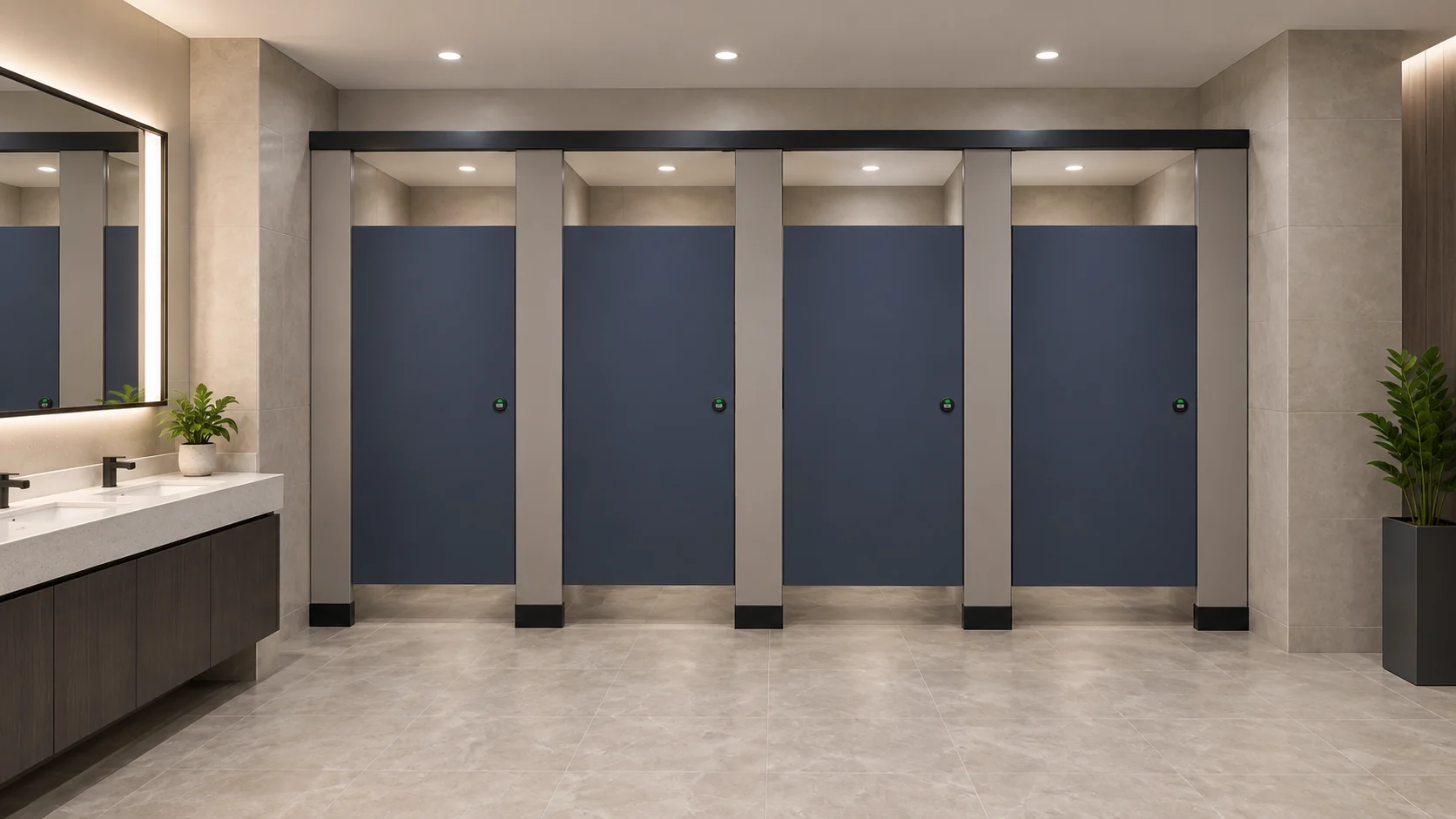
The following sequence keeps the discussion ordered. It can be run as a short workshop or as a drawing review with comments returned to the design team.
- Confirm the approved layout and the proposed change in writing.
- Walk the circulation route from entry to each cubicle and back.
- Check door operation, including the swing envelope and approach space.
- Review privacy considerations at the cubicle line and door edges.
- Identify support interfaces that the relocation may affect.
- Confirm the cleaning route and any documentation the team relies on.
- List applicable local requirements for the project team to verify.
- Record open items and assign each to a responsible discipline.
Steps three to five are where most coordination issues appear. If a door swing or support interface cannot be confirmed from the drawings, the item should stay open until matching approved technical evidence is available.
Door Operation and Privacy Checks
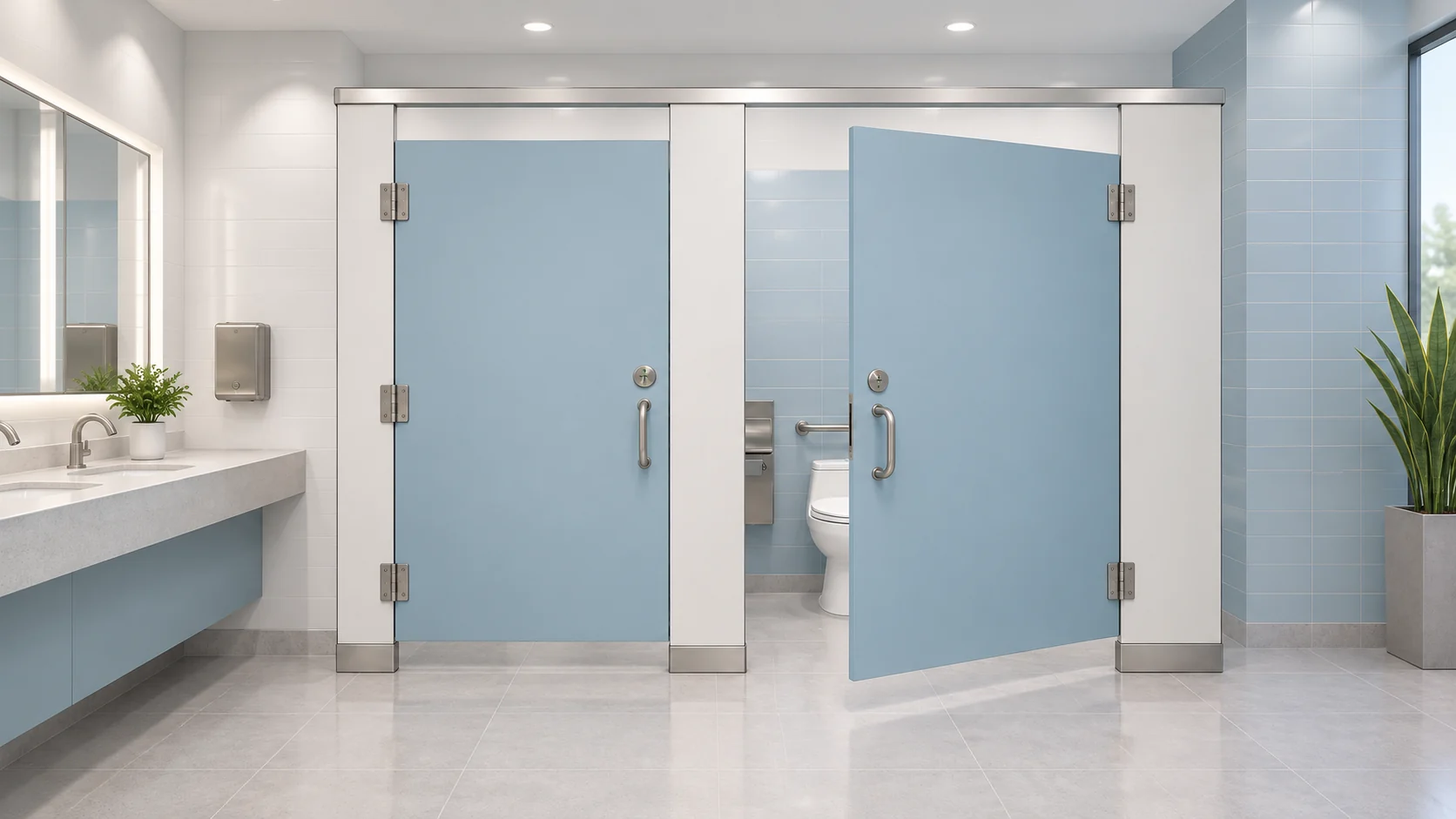
Door operation is a practical test of the proposed relocation. The team should ask whether a user can approach, enter and exit without conflict with an adjacent door or a circulation route. Privacy should be reviewed at the same time, because a change in door position or cubicle line can alter how the enclosure reads from the room.
These checks are qualitative planning observations. Where a project needs a rating or a specific performance statement, that statement must come from matching approved technical evidence for the actual configuration.
Support interfaces
Support interfaces connect the cubicle system to the building or to adjacent components. A relocation review should identify which interfaces are affected and who is responsible for confirming them. The review should not assume a mounting method, dimension or fixing detail that is not shown on approved project drawings.
Evidence Boundaries and Documentation
Clear evidence boundaries protect the project from unsupported conclusions. The table below shows how to separate confirmed information from items that still need project-specific evidence.
| Item | Status in this guide | Action |
|---|---|---|
| Product category | Confirmed: EBUNGE product category includes commercial Toilet Partition / Toilet Cubicle. | Use as context only. |
| Material, finish or hardware detail | Not confirmed here. | Match to approved technical evidence. |
| Dimension, mounting or rating | Not confirmed here. | Confirm against project drawings and evidence. |
| Local compliance | Not asserted here. | Project team verifies applicable requirements. |
Documentation should record the review date, the drawings used, the open items and the responsible parties. This record helps later reviewers understand why a decision was made and what evidence was still outstanding.
Coordination With Other Disciplines
Hardware relocation rarely sits with one trade. The review should connect the partition scope with the teams responsible for the room layout, the cleaning regime and the applicable local requirements. A short coordination note is often enough: it lists the affected interfaces and the questions each discipline must answer.
For product context, the commercial toilet partition range provides the category reference. For planning material, the project resources section can support the review record. When a question cannot be resolved from the drawings, the project team should use the contact route to confirm the correct evidence path rather than inferring a detail.
Questions to route to the supplier
Route only questions that require product-specific evidence, such as a requested material, finish, hardware item, dimension or mounting condition. General layout and circulation questions usually stay with the design team. Keeping this split clear reduces delay and avoids unsupported assumptions entering the specification.
Frequently Asked Questions
What is a toilet cubicle hardware relocation review?
It is a planning review that checks circulation, door operation, privacy, support interfaces and cleaning routes before hardware is relocated. It identifies what must be confirmed against project-specific evidence.
Does this review confirm compliance with local requirements?
No. The review helps the project team identify applicable local requirements, but compliance must be verified by the responsible parties for the specific project and jurisdiction.
Can I use an illustration to select a material or finish?
No. Illustrations are generic design references, not completed EBUNGE customer projects. Material, finish, hardware, dimension and mounting choices require matching approved technical evidence.
Which items should stay open after the review?
Any item that cannot be confirmed from approved drawings or evidence should stay open. This includes support interfaces, door operation details and any requested rating or performance statement.
Who should attend the review workshop?
The project team should include the parties responsible for layout, door operation, cleaning documentation and local requirements. The exact attendees depend on the project structure and the stage of the renovation.
How should the review be recorded?
Record the drawings used, the date, the open items and the responsible discipline for each item. This creates a traceable planning record without turning the review into a compliance certificate.
Conclusion and Next Step
A circulation review before relocating toilet cubicle hardware keeps the project focused on what can be confirmed and what still needs evidence. Start with the approved layout, walk the route, check door operation and privacy, identify support interfaces, and record every open item. Use the confirmed category context, keep project-specific claims tied to approved technical evidence, and treat illustrations as generic references only.
When the review raises a product-specific question, contact the EBUNGE team through the contact page so the correct evidence path can be confirmed before the specification is finalised.