
How to Request Acoustic Evidence for Toilet Partition Hardware
Quick project answer
When a project team needs to issue a toilet partition acoustic evidence request, the goal is not to collect marketing statements. The goal is to define what must be demonstrated, by whom, and against which approved project documents. EBUNGE product category includes commercial Toilet Partition / Toilet Cubicle. That confirmed category fact is the starting point, not a performance claim. Acoustic behavior depends on project-specific assemblies, interfaces, and local requirements.
This guide explains how to structure a request so that every answer can be traced to maintained evidence and reviewed drawings.
Why Acoustic Evidence Requests Need a Defined Scope
Acoustic evidence is often requested late, after layouts and door swings are fixed. That timing creates pressure to accept vague statements. The project team should confirm project-specific requirements against the relevant approved technical evidence. The scope should identify the room, the cubicle run, the support interfaces, and the applicable local requirements that the project team intends to review.
Without a defined scope, suppliers may respond with generic descriptions that cannot be compared. The project team then cannot tell whether a document applies to the proposed layout, the door operation, or the cleaning regime. The request should therefore separate confirmed product facts from project-specific evidence that still needs to be produced.
What to Include in a Toilet Partition Acoustic Evidence Request
A complete request helps the project team compare responses without inferring hidden construction. It should ask for documents, not assurances. The following checklist can be adapted to the project’s own review process.
- Project location and applicable local requirements the team intends to review.
- Layout drawings showing cubicle runs, door positions, and support interfaces.
- Door operation details, including closing and latching expectations.
- Cleaning documentation requirements and maintenance access needs.
- Requested evidence format, such as test reports, declarations, or drawing notes.
- Identification of any project-specific material, hardware, dimension, finish, or mounting that requires matching approved technical evidence.
Each item should be tied to a drawing or specification section. This prevents the request from becoming a general questionnaire. It also gives the supplier a clear basis for a response that the project team can verify.
How to Coordinate the Request Across the Project Team
Acoustic evidence touches architecture, interiors, mechanical services, and facilities cleaning. A single point of contact should collect questions and issue one consolidated request. This reduces contradictory instructions and duplicated answers.
Roles and Review Sequence
The design lead can confirm layout and privacy expectations. The contractor can confirm support interfaces and installation sequence. The owner or operator can confirm cleaning documentation and maintenance access. The project team should then review the combined response against the approved drawings before accepting any statement.
Drawing and Interface Review
Review should cover how cubicles meet walls, floors, and adjacent finishes. It should also cover door operation and any service penetrations. These interfaces are project-specific. The request should ask for evidence that matches the actual interface, not a generic illustration.
Evidence Boundaries: What Can and Cannot Be Claimed
Project teams should avoid treating HPL, compact laminate, phenolic, or stainless steel as interchangeable. They should also avoid inferring hidden construction from illustrations. A drawing may show a generic design reference, but it does not prove a material, rating, or performance result.
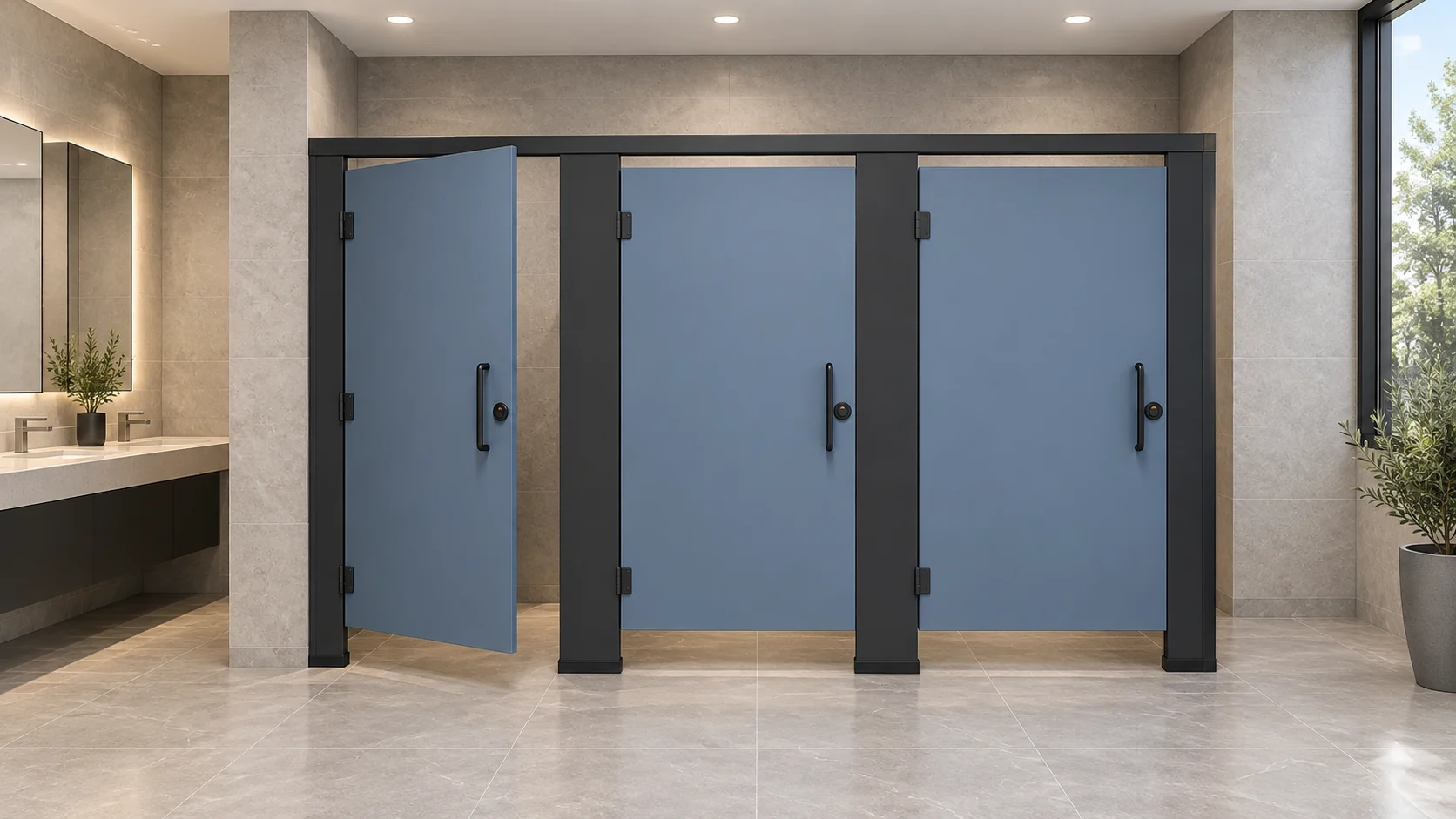
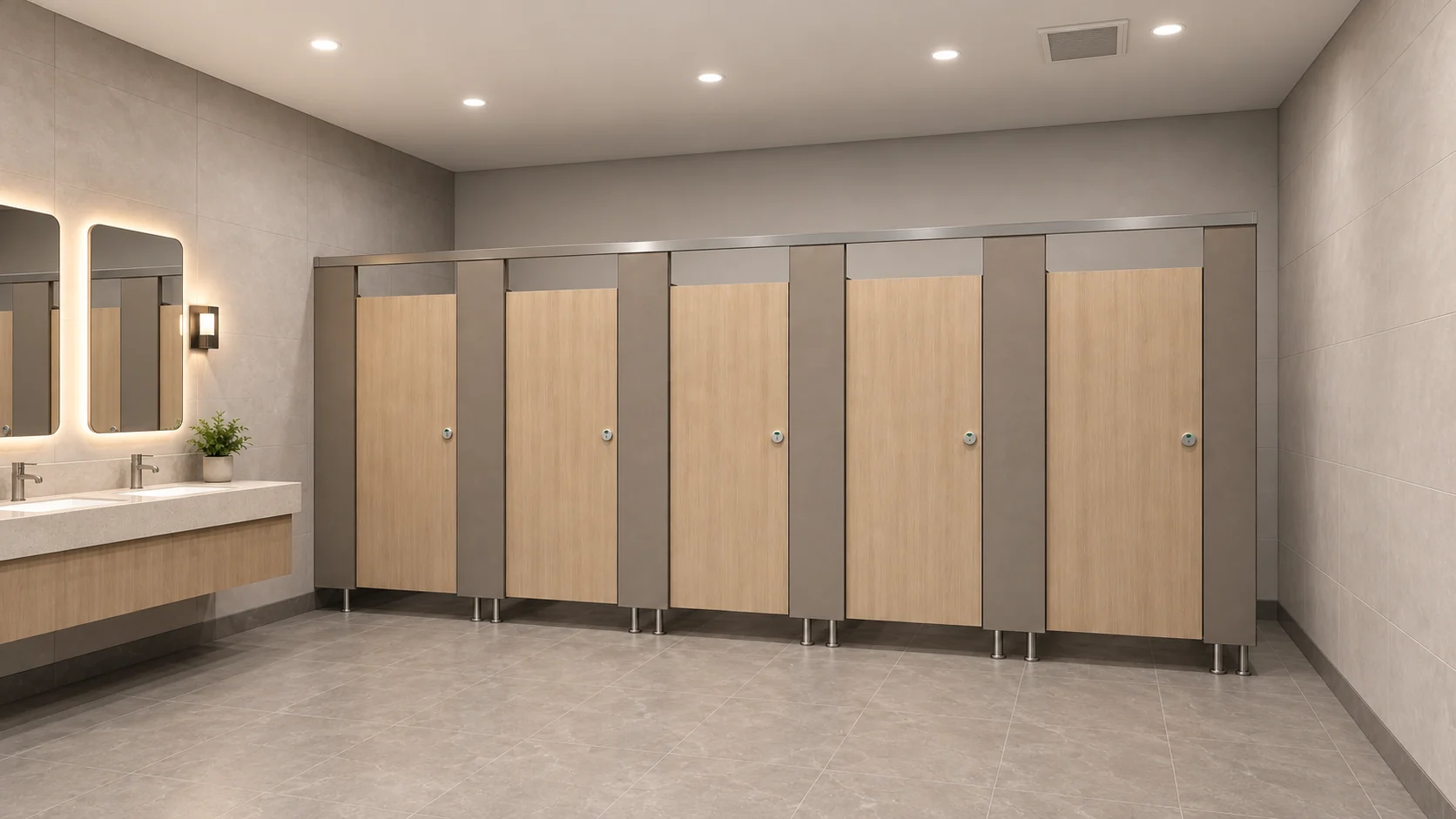
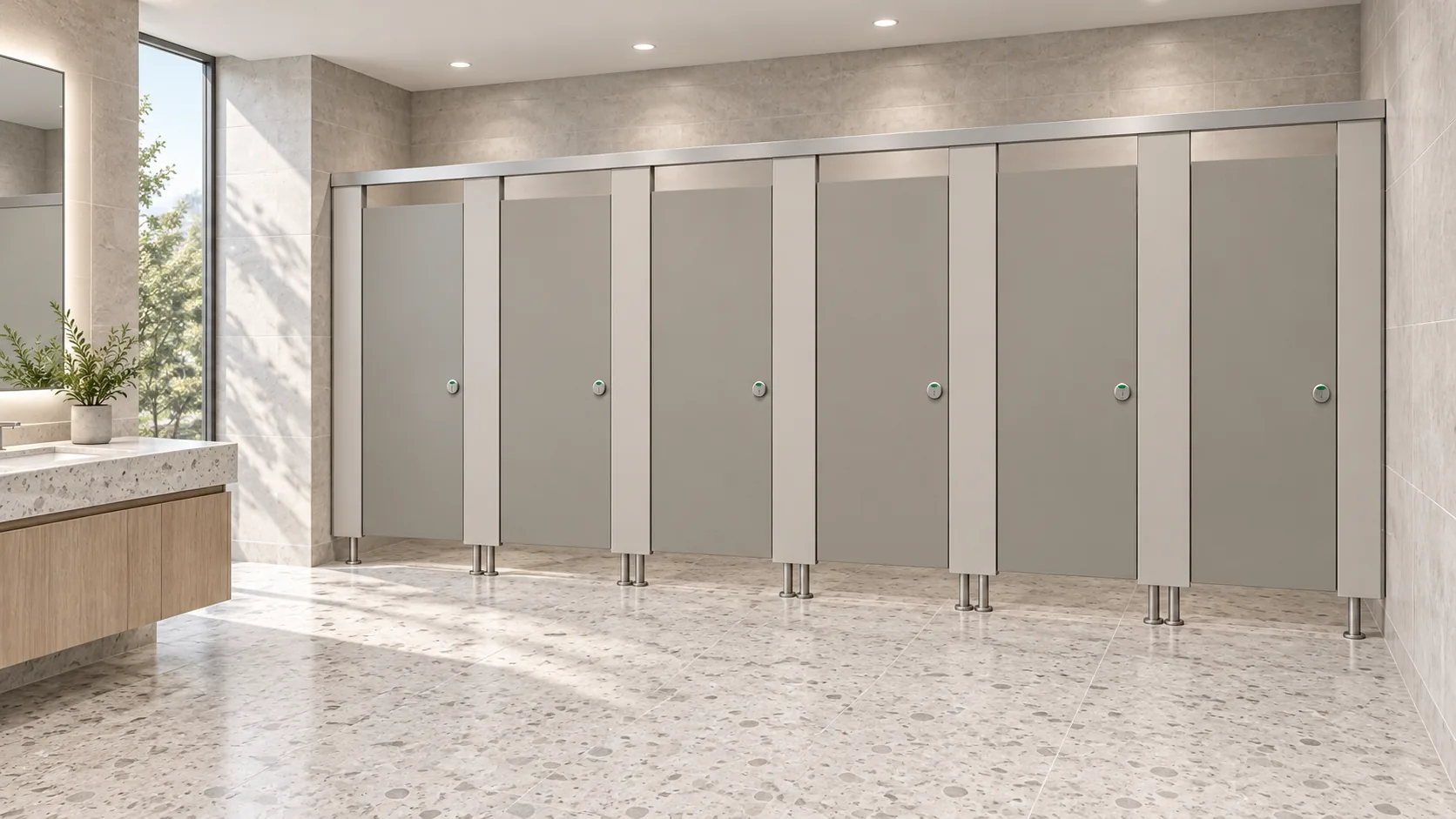
Any project-specific material, hardware, dimension, finish, mounting, or rating requires matching approved technical evidence. Illustrations show generic design references, not completed EBUNGE customer projects.
This boundary protects both the buyer and the supplier. It keeps the review focused on documents that can be checked. It also prevents acoustic evidence from being confused with unrelated performance claims.
A Step-by-Step Process for Issuing the Request
A numbered process helps the team move from internal alignment to a documented response. The steps below are generic and should be adapted to local procurement rules.
- Confirm the project’s applicable local requirements and the review authority.
- Collect approved layout, door operation, and support interface drawings.
- List the specific acoustic evidence items the team needs to review.
- Identify any project-specific material, hardware, dimension, finish, or mounting that requires matching approved technical evidence.
- Issue one consolidated request through the project’s official channel.
- Log the response and compare it against the approved drawings.
- Record any gaps and request clarification before approval.
This process does not assert compliance. It simply creates a traceable record of what was requested and what was provided.
Common Pitfalls in Acoustic Evidence Requests
One common pitfall is asking for a single acoustic number without describing the assembly. Another is accepting a certificate that does not match the proposed layout. A third is allowing a supplier to substitute a different material or hardware detail without a new evidence review.
Project teams should also avoid describing toilet cubicles as movable operable walls. Toilet cubicles are not suspended wall systems, and they do not travel, stack, or park. Keeping this distinction clear prevents the request from drifting into unrelated product categories.
Documentation and Cleaning Review
Cleaning documentation is part of the operational review. The project team should confirm that cleaning methods and maintenance access align with the approved layout and finishes. This review should not assume antimicrobial or waterproof performance unless matching approved technical evidence is provided.
The same discipline applies to door operation. The team should review how doors close, latch, and interact with adjacent cubicles. Any project-specific hardware detail requires matching approved technical evidence before it is accepted.
Frequently Asked Questions
What is a toilet partition acoustic evidence request?
It is a formal request for documents that describe acoustic behavior for a specific toilet partition layout. It should identify the project, the drawings, and the evidence format required.
Can EBUNGE provide acoustic ratings for every project?
Any project-specific rating requires matching approved technical evidence for that configuration.
Which project details should be included?
Include layout drawings, door operation details, support interfaces, cleaning documentation requirements, and applicable local requirements the team intends to review.
Are HPL, compact laminate, phenolic, and stainless steel interchangeable?
They should not be treated as interchangeable. Each material has its own characteristics, and any project-specific claim requires matching approved technical evidence.
How should the project team handle missing evidence?
The team should record the gap, request clarification, and avoid approving the item until the required evidence is provided and reviewed against the approved drawings.
Do illustrations prove acoustic performance?
No. Illustrations show generic design references, not completed EBUNGE customer projects.
Conclusion and Next Steps
A well-structured toilet partition acoustic evidence request helps project teams avoid unsupported claims and compare responses on a like-for-like basis. Start with approved drawings, define the evidence items, and keep every project-specific material, hardware, dimension, finish, and mounting tied to matching approved technical evidence. Review layouts, privacy, door operation, support interfaces, cleaning documentation, and applicable local requirements without asserting unverified compliance.
To discuss your project’s evidence needs, contact EBUNGE. You can also review the product category and explore additional resources for project planning.