
How Architects Set Toilet Partition Hardware Review Gates
Quick project answer
Toilet partition hardware review gates help architects and project teams pause at defined moments before a design decision becomes a procurement or installation commitment. The goal is not to slow the programme, but to confirm that layouts, door operation, support interfaces and cleaning documentation have been reviewed against maintained project evidence. EBUNGE product category includes commercial Toilet Partition / Toilet Cubicle.
This article offers an evidence-bounded framework for setting those gates without assuming unverified performance, dimensions or compliance.
Why Hardware Review Gates Matter in Toilet Partition Projects
Toilet cubicle hardware sits at the intersection of several trades: architectural layout, structural or blocking interfaces, door operation, cleaning routines and local requirements. When these are reviewed only at the end, changes can cascade into procurement delays and site rework. A review gate is a scheduled checkpoint where the project team confirms that the information needed for the next stage is present and approved.
Gates are not product approvals by themselves. They are coordination moments. Each gate should state what must be reviewed, who provides evidence and what remains open. The project team should confirm project-specific requirements against the relevant approved technical evidence.
What Counts as Approved Evidence at Each Gate
Approved evidence means maintained product facts, project drawings, schedules and written confirmations that match the exact configuration being considered. It does not include inferred material composition, hidden construction or performance values taken from unrelated projects. If a material, hardware item, dimension, finish, mounting method or rating is not covered by approved technical evidence, it remains an open item.
Evidence note: what to record
Record the document reference, revision date, reviewer and the specific question answered. If the evidence does not cover the question, mark it as unresolved rather than filling the gap with an assumption.
This discipline protects the project from treating HPL, compact laminate, phenolic or stainless steel as interchangeable. Each material family has its own documentation path, and none should be substituted without matching approved evidence.
A Six-Gate Review Process for Project Teams
- Gate 1 — Brief and layout intent: Confirm cubicle count, room geometry, privacy expectations and door swing direction as design intent, not as a product claim.
- Gate 2 — Support interface review: Identify where partitions meet walls, floors, ceilings or blocking, and confirm who owns each interface.
- Gate 3 — Door operation and hardware coordination: Review door operation, access strategy and hardware interfaces against approved project evidence.
- Gate 4 — Cleaning and maintenance documentation: Confirm that cleaning routines and maintenance access have been considered by the relevant team.
- Gate 5 — Local requirements review: Check applicable local requirements with the responsible professional without asserting unverified compliance.
- Gate 6 — Procurement readiness: Confirm that every project-specific material, hardware, dimension, finish and mounting detail has matching approved technical evidence before release.
Each gate should produce a short written outcome: approved, approved with conditions, or held for information. This prevents silent assumptions from moving downstream.
Decision Checklist for Toilet Partition Hardware Review Gates
Use this checklist to test whether a gate is genuinely ready to close. It is a coordination tool, not a compliance certificate.
- Are the reviewed drawings the current revision, and is the revision recorded?
- Has door operation been reviewed by the team responsible for access and egress planning?
- Are support interfaces assigned to a specific trade or package?
- Is cleaning documentation available to the facilities or operations reviewer?
- Have applicable local requirements been reviewed by the responsible professional?
- Does every project-specific material, hardware, dimension, finish and mounting detail have matching approved evidence?
- Are open items listed with an owner and a due date?
If any answer is no, the gate should remain open. Closing a gate early creates false confidence and often shifts unresolved questions into installation.
Coordination Between Architects, Contractors and Suppliers
Architects typically define layout intent, privacy expectations and interface locations. Contractors confirm site conditions and installation sequencing. Suppliers provide maintained product information and respond to project-specific questions. Owners or operators confirm cleaning and maintenance expectations.
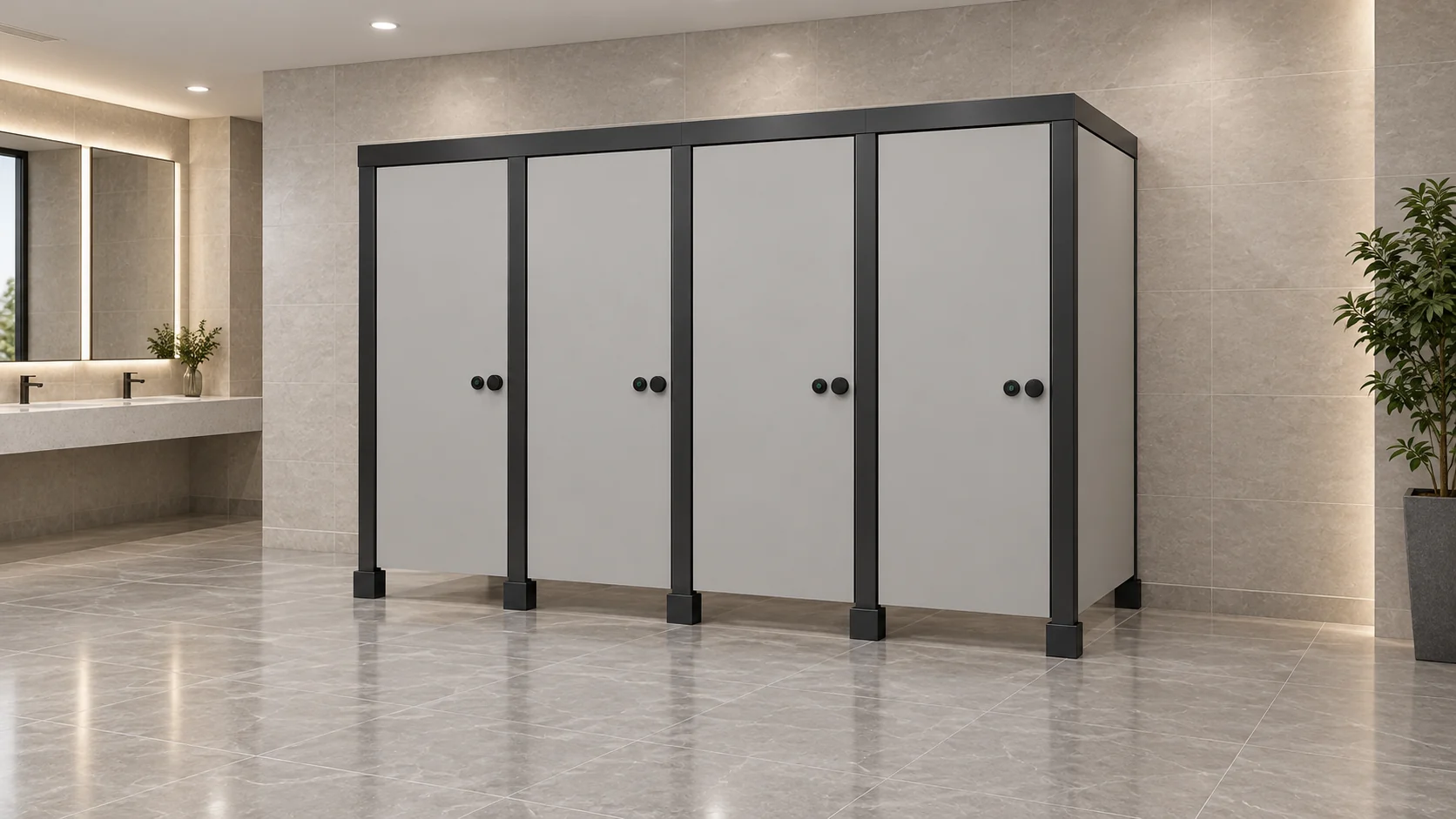
The review gate should not become a substitute for specialist advice. Where local requirements apply, the responsible professional confirms them. Where a project-specific rating or dimension is needed, it must be supported by approved technical evidence rather than inferred from a generic image.
Common Mistakes That Weaken Review Gates
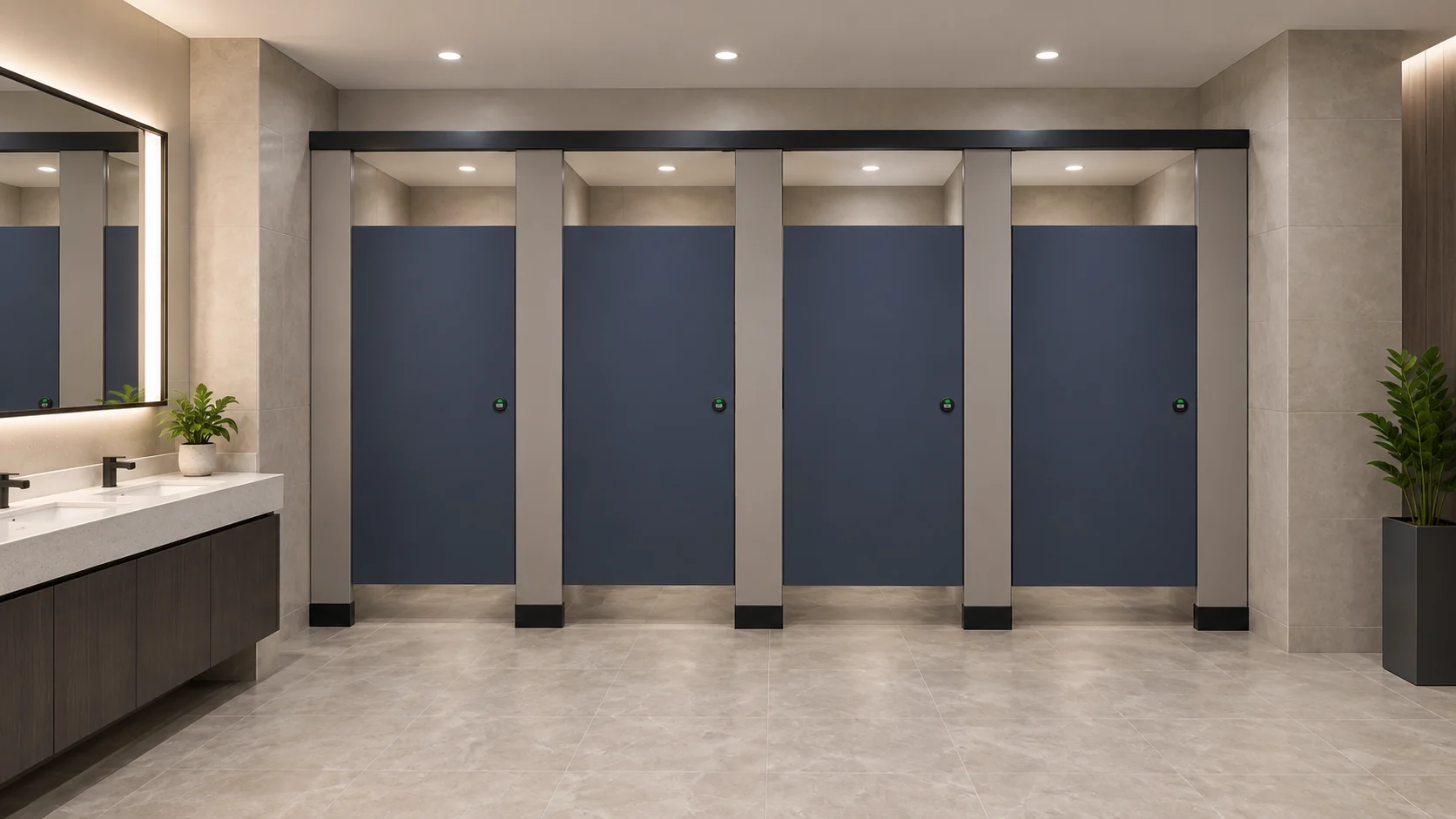
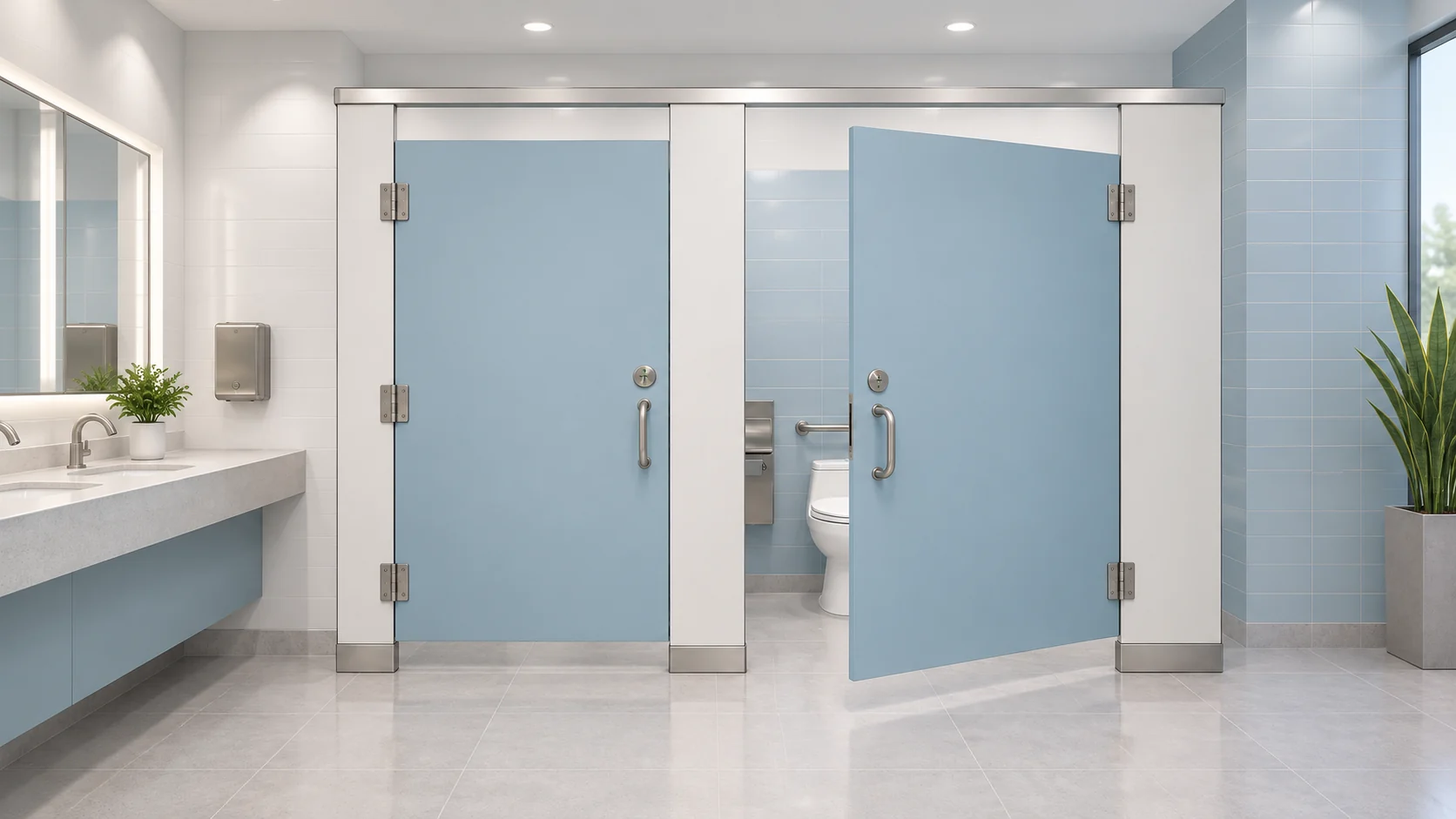
One common mistake is treating a visual reference as a construction document. Illustrations show generic design references, not completed EBUNGE customer projects. Another mistake is assuming that similar-looking materials behave the same way.
A third mistake is describing toilet cubicles as movable operable walls. They are not. Review gates should focus on fixed cubicle coordination, door operation, support interfaces and cleaning documentation. Introducing suspended wall travel, stacking or parking mechanisms into the discussion distorts the scope and creates unsupported expectations.
How to Document Gate Outcomes Without Overclaiming
Gate documentation should be factual and bounded. State what was reviewed, which evidence was used, what remains open and who owns the next action. Avoid language that implies certification, rating or performance unless that exact claim is supported by approved evidence for the project.
A simple gate log can include: gate number, date, attendees, documents reviewed, decisions, open items and next review date. This log becomes a useful handover record and helps future teams understand why a decision was made.
Frequently Asked Questions
What is a toilet partition hardware review gate?
It is a scheduled checkpoint where the project team confirms that layouts, door operation, support interfaces, cleaning documentation and applicable local requirements have been reviewed before the next project stage proceeds.
Can a review gate confirm compliance with local regulations?
No. A review gate is a coordination tool. Applicable local requirements must be reviewed and confirmed by the responsible professional for the specific project.
Are HPL, compact laminate, phenolic and stainless steel interchangeable?
No. They should not be treated as interchangeable. Any project-specific material choice requires matching approved technical evidence.
Do illustrations show completed EBUNGE customer projects?
No. Illustrations show generic design references, not completed EBUNGE customer projects. They should not be used to infer hidden construction or project-specific details.
When should a gate remain open?
A gate should remain open when required evidence is missing, when a project-specific dimension, material, hardware, finish or mounting detail is unresolved, or when the responsible reviewer has not confirmed applicable local requirements.
How does this support toilet partition hardware review gates specification?
It helps teams separate confirmed product facts from project-specific requirements, so the specification process can request the right evidence at the right time.
Conclusion and Next Steps
Toilet partition hardware review gates give architects and project teams a structured way to coordinate layout, privacy, door operation, support interfaces, cleaning documentation and applicable local requirements. The framework works only when every project-specific material, hardware, dimension, finish, mounting detail and rating is matched to approved technical evidence. Generic illustrations remain design references, not construction documents.
To discuss your project requirements or request maintained product information, contact the EBUNGE team. You can also review the product category and browse additional resources for project planning.