
How Changeover Policies Reshape Toilet Partition Room Scheduling
Quick project answer
A toilet partition changeover policy is often treated as a cleaning or maintenance note. In practice, it is a scheduling and coordination instrument that shapes how a washroom block is planned, handed over and kept usable. For overseas contractors, architects, interior designers, owners and renovation teams, the policy question is not simply when cubicles are cleaned.
It is how changeover timing interacts with layout, privacy, door operation, support interfaces, cleaning documentation and applicable local requirements. This article offers an evidence-bounded framework. It does not confirm compliance, performance or any project-specific configuration. Every material, hardware, dimension, finish, mounting detail and rating must be matched to approved technical evidence before it is relied upon.
What a Changeover Policy Actually Controls
A changeover policy defines the sequence in which a toilet partition room is taken out of service, cleaned, inspected and returned to use. That sequence affects more than housekeeping. It determines which cubicles can remain available, how users are routed, where cleaning equipment is staged and how faults are recorded.
For project teams, the policy is therefore a planning input. It should be reviewed alongside the layout, not after the layout is fixed. A policy that assumes full-room closure may conflict with a building that needs partial availability. A policy that assumes partial closure may require circulation space that the room does not have.
Why Scheduling and Partition Layout Interact
Layout and scheduling are linked because both depend on access. The project team should confirm project-specific requirements against the relevant approved technical evidence. If the policy requires equipment to pass through the room, the route must be checked against the approved drawings.
Project teams should treat the following as review items, not assumptions:
- Which cubicles, if any, can remain available during a changeover.
- How users are directed away from the work area.
- Where cleaning materials and equipment are staged.
- How completed work and outstanding faults are recorded.
- Which local requirements apply to the building type and occupancy.
None of these items can be resolved by a generic product statement. They require the project’s own drawings, operational brief and approved evidence.
A Review Sequence for Project Teams
The sequence below is a coordination aid. It does not replace the project’s own procedures or any applicable local requirement.
- Confirm the operational brief. Establish how the washroom must function during changeover, including any partial-availability requirement.
- Review the layout against that brief. Check circulation, approach space and the position of each cubicle relative to the entrance.
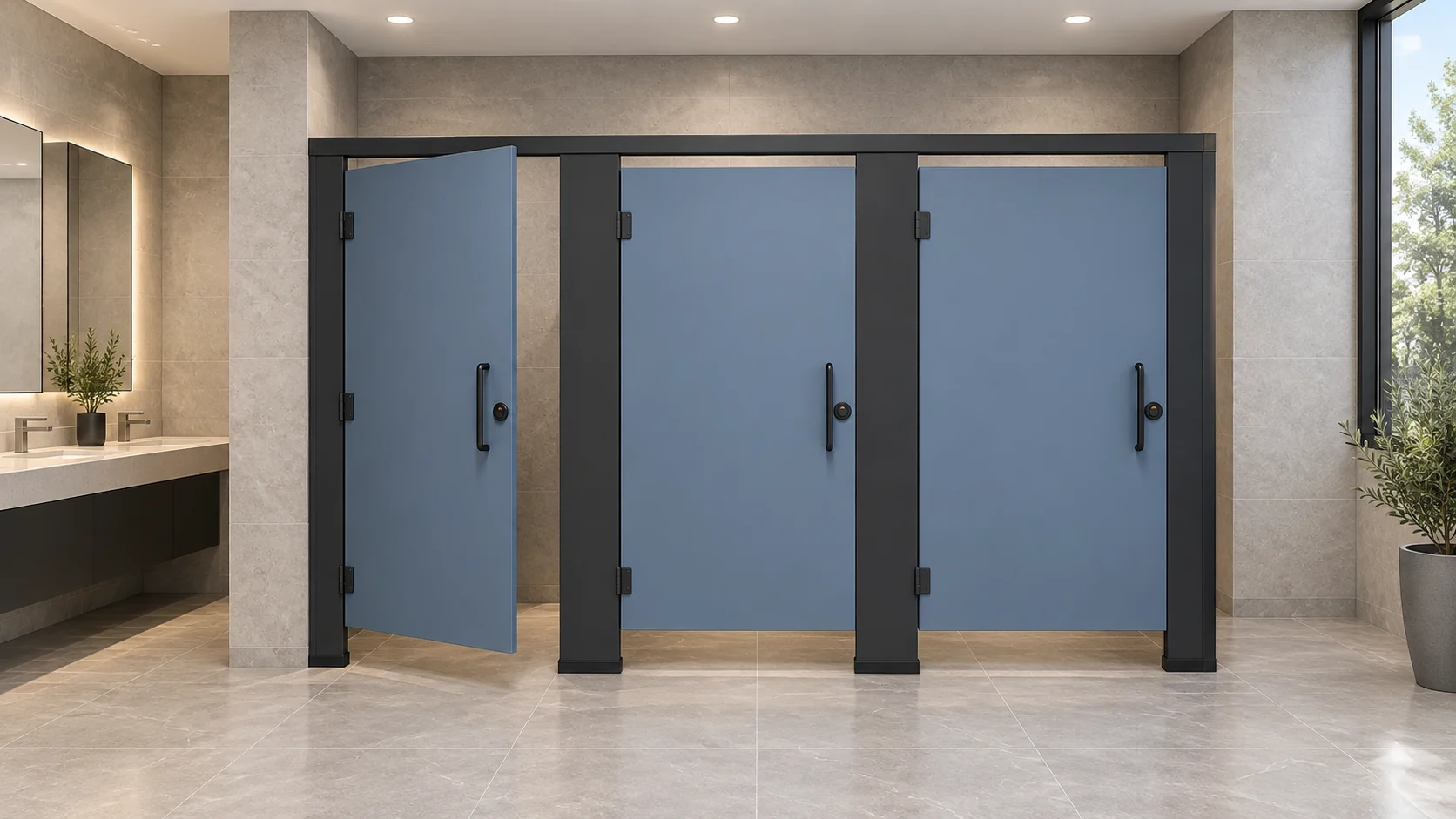
- Review door operation. Confirm how doors are intended to open, close and be held during cleaning or inspection, using approved project evidence.
- Review support interfaces.
- Review cleaning documentation. Agree what is recorded, by whom, and how records are handed over.
- Review applicable local requirements. Confirm which requirements apply and who is responsible for demonstrating compliance.
- Freeze the policy before handover. Issue the agreed sequence so that operations, cleaning and maintenance teams work from one document.
Privacy, Door Operation and User Experience
Privacy is a design and operational outcome, not a single product attribute. It depends on the layout, the enclosure arrangement, the door operation and the way gaps or sightlines are treated in the approved design. A changeover policy can affect privacy temporarily if cubicles are left open, screened or partially closed during cleaning.
Project teams should therefore ask how the room is presented during changeover, not only after it. Door operation should be reviewed with the same discipline. The direction of opening, the position of hardware and the way a door is secured during cleaning all belong to the project-specific evidence set.
Support Interfaces and Cleaning Documentation
Support interfaces are where partition planning most often meets structural reality. A changeover policy that requires access behind or above a partition may conflict with the intended interface.
Cleaning documentation should be practical. It should record what was cleaned, when, by whom and what faults were observed. It should also record any item that could not be completed. This creates a traceable handover without asserting performance or compliance that has not been verified.
Evidence Boundaries: What a Policy Cannot Prove
A changeover policy is an operational document. Those matters require separate approved evidence.
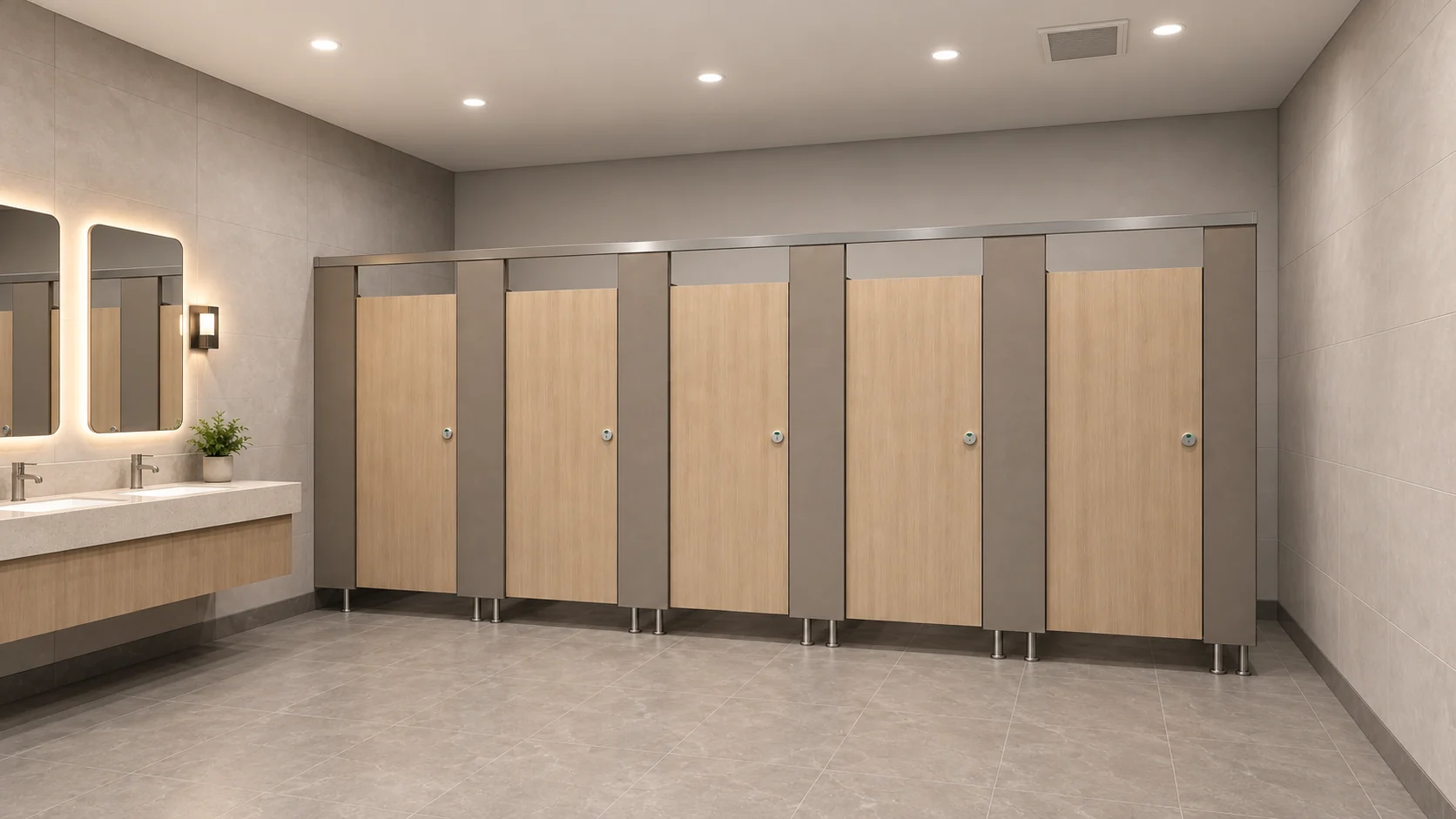
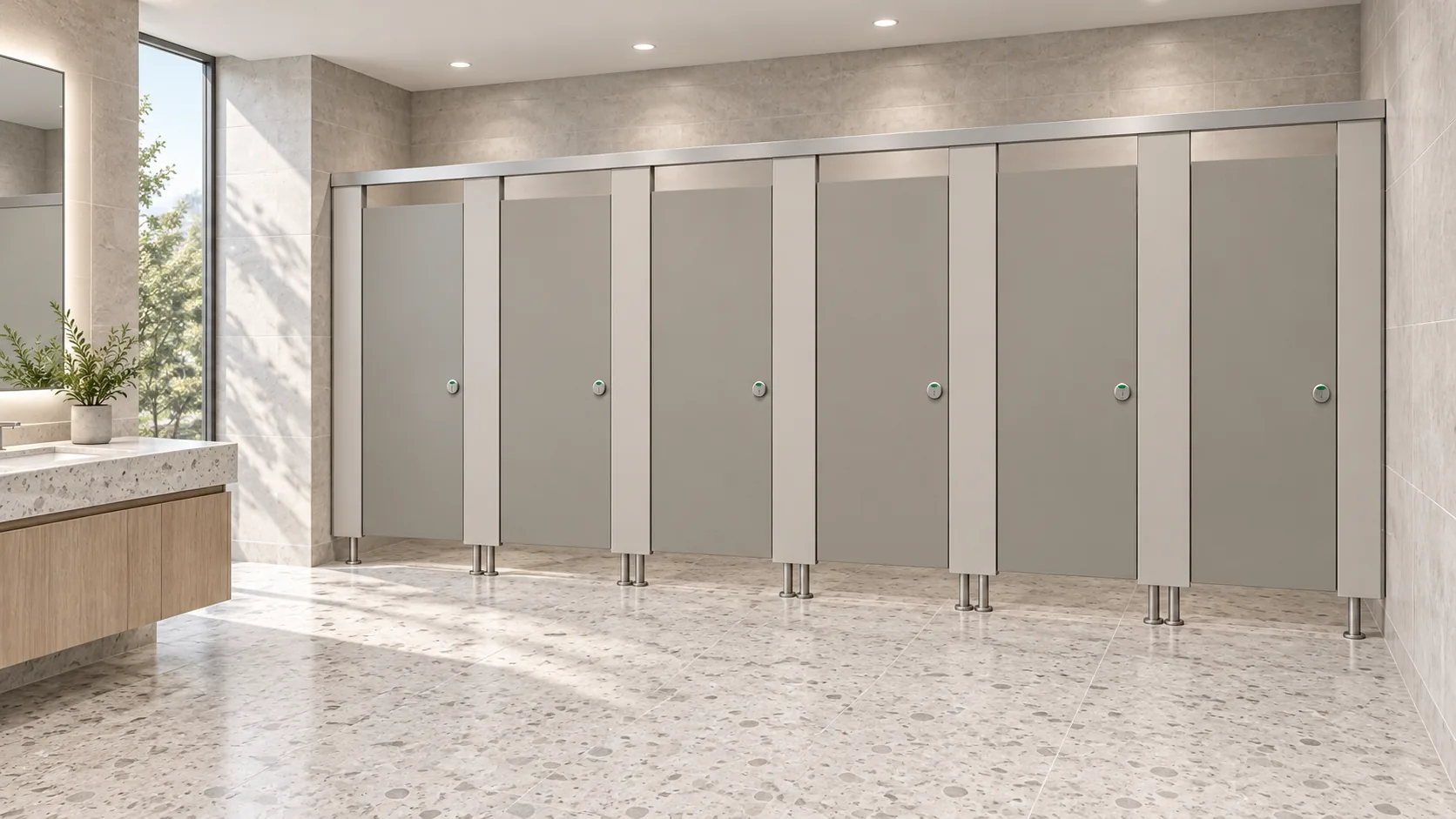
Illustrations and generic references show design intent only. They are not completed EBUNGE customer projects and must not be read as confirmation of a specific configuration.
Equally, HPL, compact laminate, phenolic and stainless steel are not interchangeable terms. A policy should not be used to infer hidden construction or to substitute one material family for another. Where a project requires a specific material, hardware, dimension, finish, mounting detail or rating, that requirement must be matched to approved technical evidence.
Coordination Across the Project Team
Changeover policy sits at the intersection of design, construction, operations and cleaning. Architects and interior designers need to know how the room will be used. Contractors need to know what access is required. Owners need to know how availability is protected. Distributors and construction teams need a clear route for questions.
Useful coordination questions include:
- Who owns the changeover sequence after handover?
- How are layout changes communicated to the cleaning team?
- How are door operation and support interfaces confirmed before installation?
- Where are cleaning records stored and reviewed?
- Which local requirements have been identified, and by whom?
These questions keep the policy connected to the project rather than to a generic template. They also help teams avoid treating a scheduling document as a substitute for technical evidence.
FAQ: Toilet Partition Changeover Policy
What is a toilet partition changeover policy?
It is an operational sequence describing how a toilet partition room is taken out of service, cleaned, inspected and returned to use. It is a scheduling and coordination document, not a product specification.
Does a changeover policy confirm product performance?
No. Those matters require separate approved evidence.
How does changeover policy affect layout?
It affects access, circulation and the way users are routed during cleaning. Layout and policy should be reviewed together so that partial availability, if required, is planned rather than assumed.
What should be reviewed for door operation?
Review the intended direction of opening, the position of hardware and how doors are secured during cleaning or inspection. Confirm these details against approved project evidence.
What are support interfaces?
They are the connections between partitions and walls, floors, ceilings or supporting structure. Each interface must be confirmed against approved drawings for the specific project.
Can illustrations be used as project evidence?
No. Illustrations show generic design references, not completed EBUNGE customer projects. Project-specific material, hardware, dimension, finish, mounting and rating decisions require matching approved technical evidence.
Conclusion and Next Step
A toilet partition changeover policy reshapes room scheduling because it forces the project team to agree how the washroom will operate, not only how it will look. The most reliable approach is to review layout, privacy, door operation, support interfaces, cleaning documentation and applicable local requirements together, and to keep every project-specific claim tied to approved evidence.
EBUNGE product category includes commercial Toilet Partition / Toilet Cubicle. To discuss your project’s review process, contact the EBUNGE team. You can also review the product range and browse further planning resources before your next coordination meeting.