
Circulation Review Before Toilet Partition Hardware Is Ordered
Quick project answer
A toilet partition circulation review is a project-team exercise that happens before hardware is ordered. It tests whether the proposed cubicle layout, door operation, support interfaces and cleaning routines can be coordinated with the surrounding building conditions. The review does not certify compliance, performance or suitability. It produces a documented set of questions and decisions that the project team can carry into specification and procurement.
EBUNGE product category includes commercial Toilet Partition / Toilet Cubicle. That confirmed category fact is the starting point. Every project-specific material, hardware, dimension, finish, mounting or rating still requires matching approved technical evidence. Illustrations show generic design references, not completed EBUNGE customer projects.
Why Circulation Review Comes Before Hardware Ordering
Hardware ordering is difficult to reverse. The project team should confirm project-specific requirements against the relevant approved technical evidence. A circulation review reduces that risk by forcing the project team to examine the route people take into, through and out of the toilet area.
The review is not a substitute for engineering. It is a structured conversation. Participants should include the architect, contractor, interior designer, owner representative and the party responsible for cleaning and maintenance. Each brings a different view of the same layout.
What the review can and cannot decide
The review can decide whether the layout has been drawn clearly enough for coordination. It can decide who will confirm support interfaces and who will maintain the cleaning documentation. It cannot decide compliance with local requirements unless the applicable evidence has been checked by the responsible professional.
Layout and Approach Coordination
Start with the approach route. Review how users reach the cubicle area, how they queue, and how they move away from the entrance. The goal is to identify conflicts between door swings, adjacent fixtures and circulation paths before hardware is selected.
Check the relationship between the cubicle layout and any nearby doors, corridors or service access. A layout that looks acceptable on a small drawing can become congested when full-scale door operation is considered. The project team should mark any area where the drawing does not show enough information.
Questions for the layout review
- Does the drawing show the full extent of each cubicle and the surrounding circulation?
- Are door swings shown in relation to adjacent cubicles and fixtures?
- Are support interfaces indicated, or are they left to be confirmed later?
- Has the cleaning route been considered alongside the user route?
Privacy, Door Operation and User Experience
Privacy is a design intention, not a performance rating. The project team should discuss what level of visual and acoustic separation the owner expects, then confirm whether the proposed configuration can be supported by approved technical evidence. Do not assume that a material name or illustration implies a particular privacy outcome.
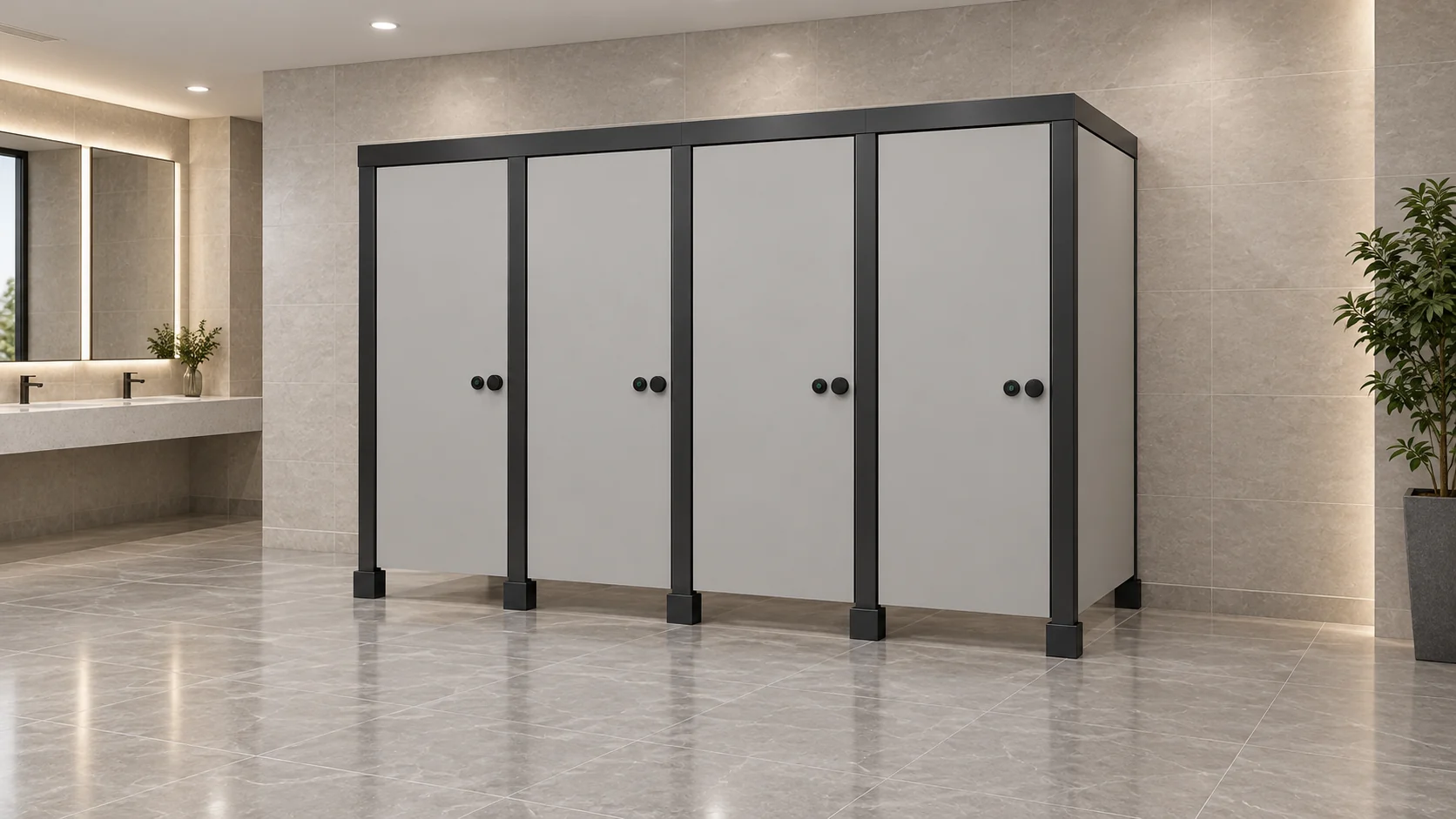
Door operation should be reviewed in the open and closed positions. Consider how the door is used by people carrying bags, by people with limited mobility, and by cleaning staff. The review should record any question about door handing, clearance or hardware type that needs a project-specific answer.
Door operation checklist
- Confirm the door swing direction shown on the drawing.
- Check that the open door does not obstruct the circulation route.
- Identify whether the door operation has been coordinated with the support interface.
- Record any hardware question that requires approved technical evidence.
- Confirm who will verify the final door operation before ordering.
Support Interfaces and Adjacent Trades
Support interfaces are the connections between the partition system and the building structure, floor or adjacent elements. The circulation review should identify who is responsible for each interface and what information is still missing. This is a coordination task, not a structural calculation.
Adjacent trades may include flooring, ceiling, lighting, plumbing and electrical work. If the partition layout changes, those trades may need to adjust their own drawings. The review should produce a short list of interface questions for the next coordination meeting.
Evidence note
Any project-specific material, hardware, dimension, finish, mounting or rating requires matching approved technical evidence. A circulation review does not create that evidence; it identifies where evidence is needed.
Cleaning Documentation and Maintenance Access
Cleaning teams need to understand how the cubicles are accessed, what surfaces are present, and which parts require routine attention. The review should confirm that cleaning documentation will be provided by the responsible party and that it matches the final configuration.
Maintenance access is closely related. If a hardware item needs adjustment or replacement, the maintenance team should be able to reach it without dismantling unrelated elements. The project team should discuss this before ordering, because access requirements can influence layout and hardware selection.
Cleaning and maintenance questions
- Who will provide the cleaning documentation for the installed configuration?
- Does the documentation match the materials and finishes that will actually be used?
- Are maintenance access points shown or described in the project drawings?
- Has the cleaning team had an opportunity to review the layout?
Local Requirements and Project-Specific Evidence
Applicable local requirements vary by jurisdiction, building type and occupancy. The circulation review should identify which requirements the project team believes apply, then route those questions to the responsible professional. The review itself should not assert compliance.
Where a requirement depends on a rating, dimension or material property, the project team must obtain matching approved technical evidence. If that evidence is not available, the item remains an open question rather than a confirmed decision.
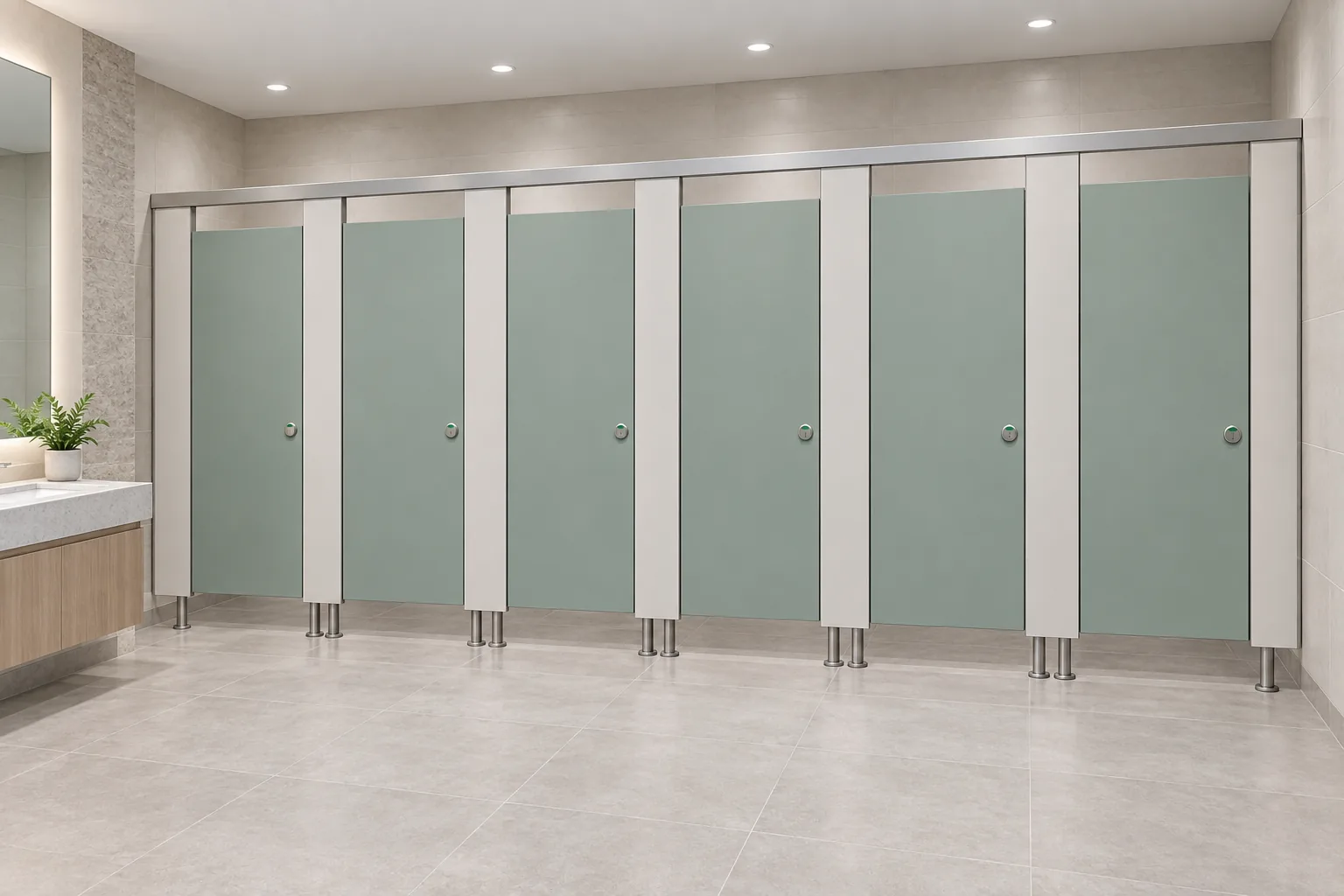
Compact comparison: review stage vs. evidence stage
| Review stage | Evidence stage |
|---|---|
| Layout and circulation questions | Approved drawings and project-specific dimensions |
| Privacy and door operation intentions | Approved technical evidence for the selected configuration |
| Support interface responsibilities | Confirmed interface details from the responsible trade |
| Cleaning and maintenance access | Maintained documentation for the final installation |
Documenting the Review for the Project Team
A useful review produces a written record. The record should list decisions, open questions, responsible parties and dates. It should distinguish between items that are confirmed by approved evidence and items that still need confirmation.
The record can then be attached to the specification or procurement package. This helps the contractor and supplier understand which items are fixed and which remain subject to project-specific confirmation. It also reduces the chance that an assumption from the review is treated as a product fact.
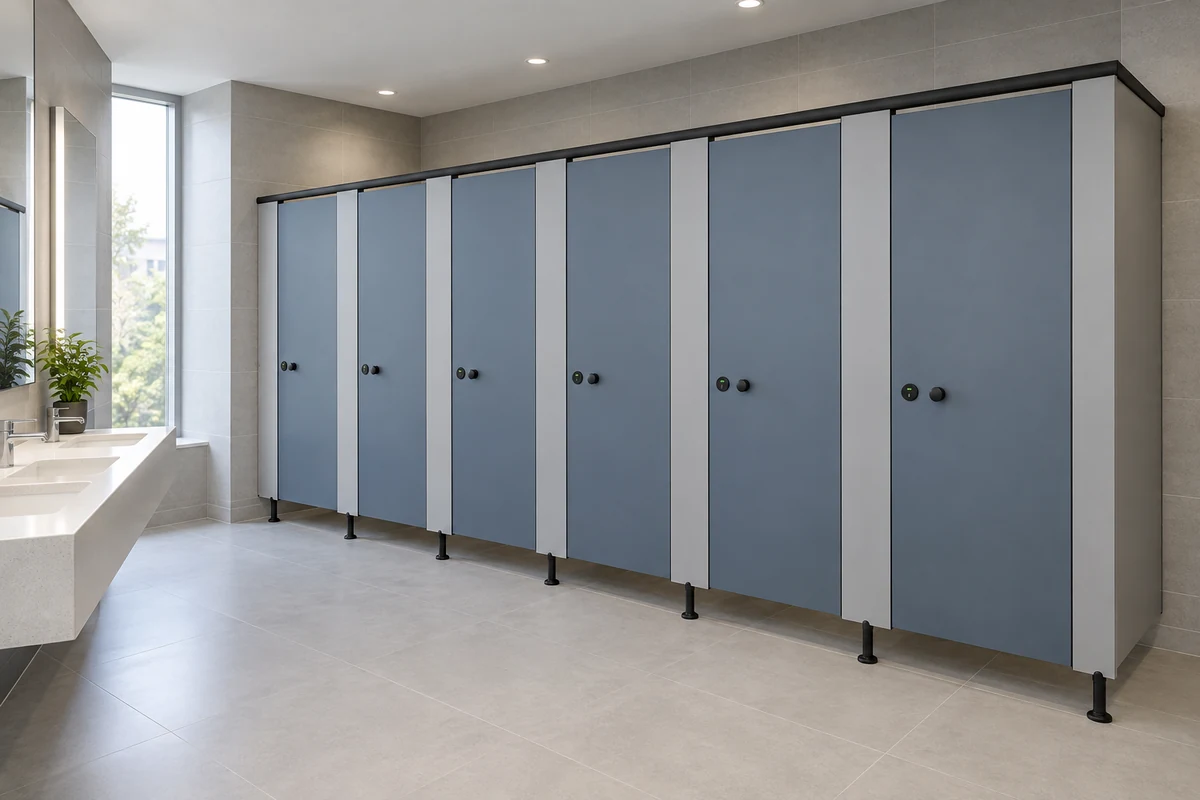
For maintained product context, the EBUNGE product category provides a starting reference. Additional guidance is available in the resources section. When the review is complete, the project team can use the contact route to raise specific coordination questions.
Frequently Asked Questions
What is a toilet partition circulation review?
It is a project-team review of layouts, privacy, door operation, support interfaces, cleaning documentation and applicable local requirements. It happens before hardware is ordered and produces a documented set of decisions and open questions.
Does the review confirm compliance with local building requirements?
No. The review identifies which requirements may apply and routes them to the responsible professional. It does not assert compliance unless the applicable evidence has been checked and confirmed for the project.
Can the review decide the material or finish?
No. Material, finish, hardware, dimension and mounting choices require matching approved technical evidence. The review can record the intention, but the final selection must be supported by project-specific confirmation.
Who should attend the circulation review?
The architect, contractor, interior designer, owner representative and the party responsible for cleaning and maintenance should attend. The exact list depends on the project structure and the trades involved.
How does the review relate to hardware ordering?
The review should be completed before hardware is ordered so that door handing, support interfaces and layout questions are resolved or clearly flagged. This reduces the risk of ordering items that later need to change.
Are illustrations in this article project examples?
No. Illustrations show generic design references, not completed EBUNGE customer projects.
Conclusion
A toilet partition circulation review is a practical coordination step. It helps the project team examine layouts, privacy, door operation, support interfaces, cleaning documentation and applicable local requirements before hardware is ordered. It does not replace approved technical evidence, and it does not certify compliance.
Keep the review evidence-bounded. Record what is confirmed, what remains open, and who is responsible for each item. This gives the contractor, architect, designer and owner a shared basis for the next stage of specification and procurement.
To discuss a specific project coordination question, contact EBUNGE and provide the relevant drawings and project requirements for review.