
How to Audit Toilet Partition Hardware Quantities in Tender Returns
Quick project answer
A toilet partition hardware tender audit helps project teams compare what a tender return promises against what the drawings, specifications and approved technical evidence actually support. For contractors, architects, interior designers, owners and distributors, the goal is not to guess hidden performance or invent missing details. It is to create a traceable review trail. EBUNGE product category includes commercial Toilet Partition / Toilet Cubicle.
This article sets out an evidence-bounded method for reviewing hardware quantities without treating unconfirmed material, dimension, finish, mounting or rating information as fact.
Why Hardware Quantity Audits Matter in Tender Returns
Hardware quantities are easy to overlook because they sit between the visible cubicle layout and the commercial tender summary. A return may list doors, panels and pilasters, yet leave hinge sets, latches, keepers, foot or support interfaces and fixing accessories unclear. That gap creates coordination risk rather than a confirmed defect.
An audit should therefore ask whether each line item can be traced to a drawing, a specification clause or an approved technical submittal. Where evidence is missing, the correct output is a clarification request, not an assumed quantity. The project team should confirm project-specific requirements against the relevant approved technical evidence.
Prepare the Evidence Set Before Opening the Tender
Start by assembling the documents that define the scope. Typical items include architectural layout drawings, toilet room elevations, door schedules, hardware schedules, specification sections, finish schedules and any approved technical submittals. The audit team should also hold the tender return, bill of quantities and any clarifications already issued.
Label each document with a revision date and source. If two drawings show different cubicle counts, the audit should record the conflict rather than choose one silently. This step protects the later quantity comparison from being built on an unstable baseline.
Evidence note: what the drawings can and cannot prove
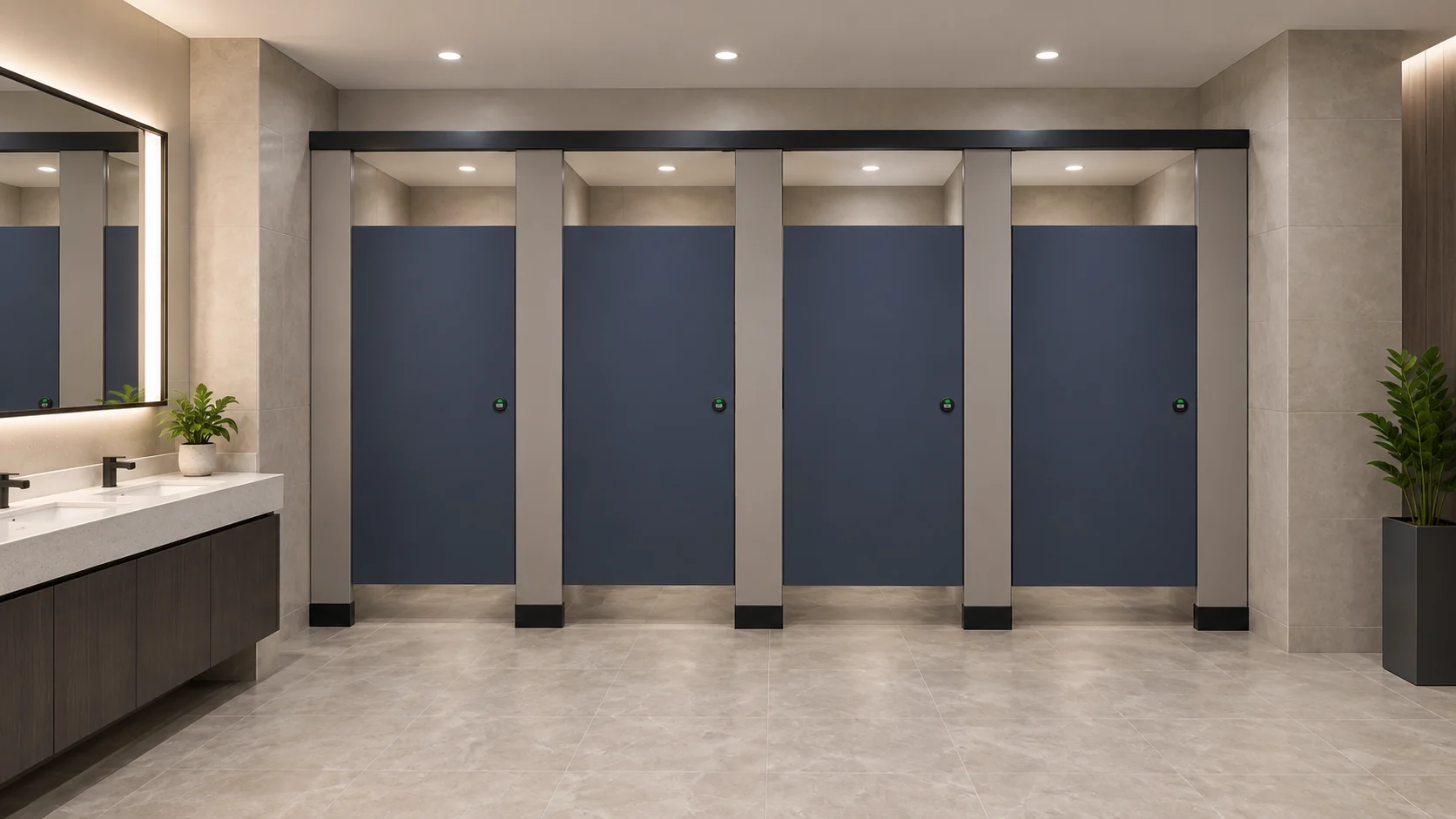
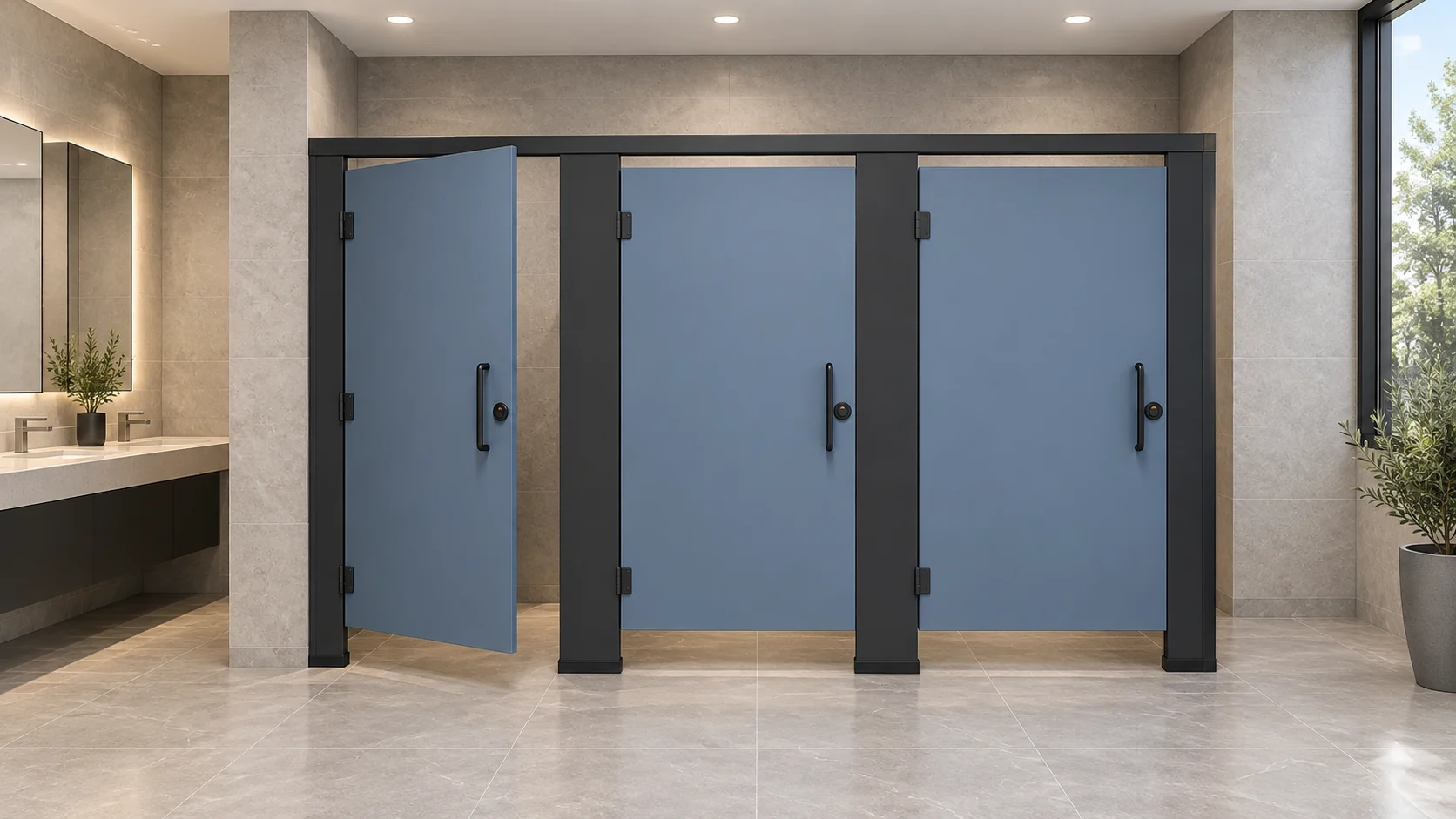
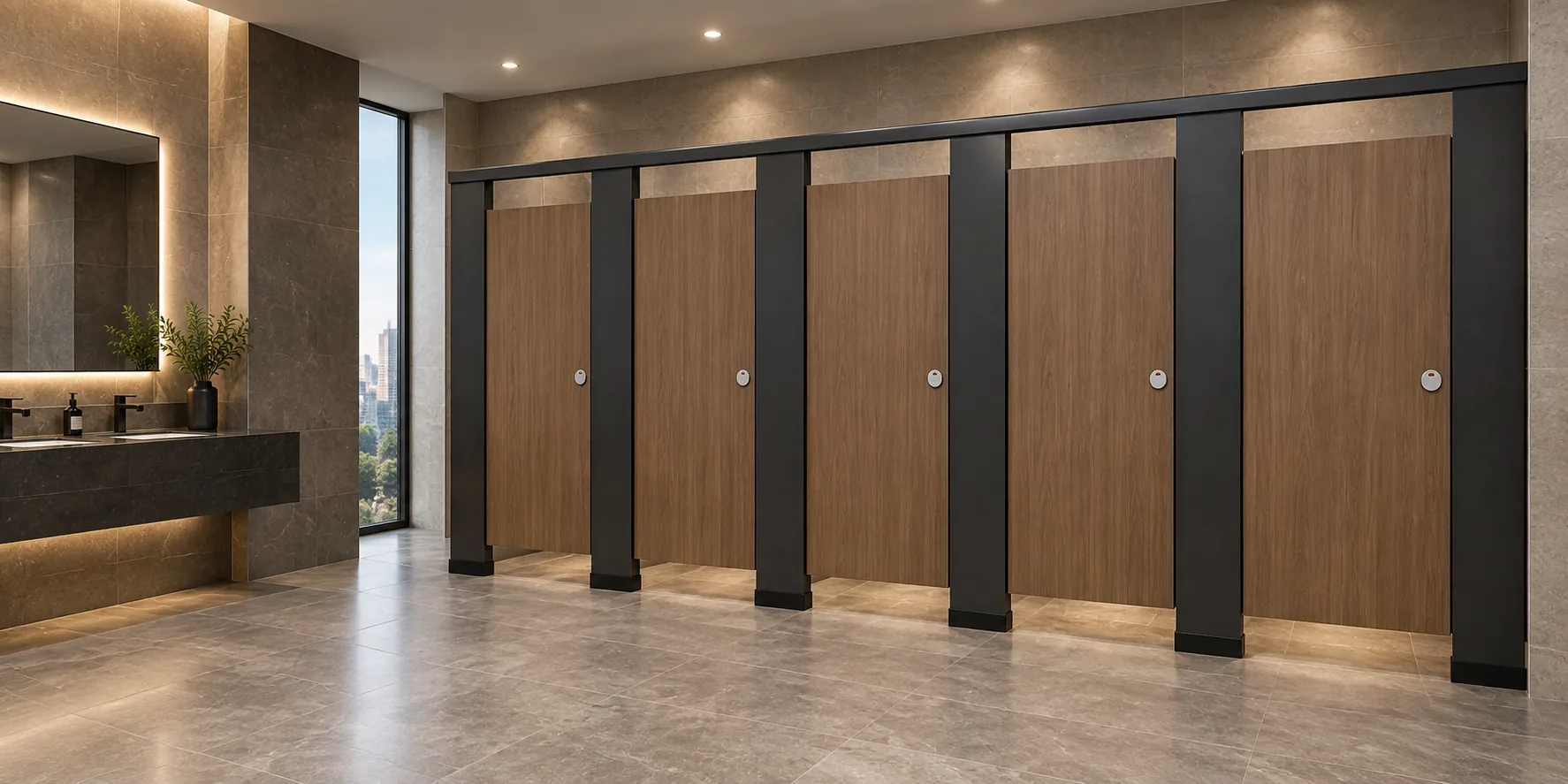
Illustrations show generic design references, not completed EBUNGE customer projects. A drawing can indicate a layout intent, but it does not by itself confirm a project-specific material, hardware, dimension, finish, mounting method or rating. Those items require matching approved technical evidence.
Build a Line-by-Line Quantity Review
Convert the tender return into a structured comparison. For each hardware item, record the quantity stated, the drawing or schedule reference, the specification reference and the reviewer’s note. This turns a broad question about toilet partition hardware tender audit project planning into a set of specific, answerable checks.
Where a quantity is repeated across several rooms, verify whether the repetition is intentional. Identical room types may share a typical layout, but door handing, support conditions and cleaning access can still differ. The audit should flag those differences for the project team rather than average them away.
Decision checklist for each hardware line
- Is the item named in the specification or hardware schedule?
- Does the stated quantity match the latest drawing revision?
- Is the door operation described consistently across documents?
- Are support interfaces shown or left to a separate package?
- Is cleaning access considered in the layout review?
- Does the item require project-specific approved technical evidence?
- Is a clarification needed before the quantity can be accepted?
Review Layout, Privacy and Door Operation Together
Hardware quantities cannot be audited in isolation from the cubicle layout. Door swing, latch position, hinge side and the relationship between doors and partitions all affect what hardware is counted. The project team should review these items against the drawings and the specification, then note any unresolved points.
Privacy is a design consideration that should be discussed with the responsible designer. The audit can record whether privacy-related items appear in the specification, but it should not assert a performance level unless that level is supported by approved technical evidence. The same discipline applies to door operation and support interfaces.
Check Support Interfaces and Cleaning Documentation
Support interfaces often sit at the boundary between the toilet partition package and the building structure. The audit should identify where the drawings show a support condition and where they do not. Missing information becomes a coordination question for the structural or architectural team, not an assumed fixing detail.
Cleaning documentation is another practical review area. The project team can ask whether the tender return identifies cleaning access, removable components or maintenance routes. The audit should describe what is documented and what remains open, without claiming a maintenance outcome that has not been verified.
Compact comparison table for audit findings
| Finding type | What it means | Suggested action |
|---|---|---|
| Traceable | Quantity matches a drawing or schedule reference | Record and close |
| Conflicting | Two documents show different quantities or layouts | Issue a clarification request |
| Missing evidence | Item appears in the return without a supporting reference | Request approved technical evidence |
| Interface gap | Support or fixing condition is not shown | Coordinate with the responsible discipline |
Coordinate the Toilet Partition Hardware Tender Audit Specification
A toilet partition hardware tender audit specification should define how quantities are described, referenced and clarified. It can require each hardware line to carry a drawing or schedule reference, a revision date and a note on any project-specific evidence still needed.
The specification should also state that project-specific material, hardware, dimension, finish, mounting or rating requires matching approved technical evidence. That sentence prevents the audit from drifting into assumptions. It also gives the project team a consistent basis for reviewing substitutions or value-engineering proposals.
Numbered process for the audit meeting
- Confirm the latest drawing and specification revisions.
- Walk through each room type and count the cubicles shown.
- Compare the tender hardware quantities against the schedules.
- Mark every line as traceable, conflicting, missing evidence or interface gap.
- Assign an owner and due date to each clarification.
- Record the audit outcome in the project coordination log.
Common Pitfalls and How to Avoid Them
One common pitfall is treating similar-looking materials as interchangeable. HPL, compact laminate, phenolic and stainless steel are different material categories, and the audit should not infer hidden construction from an illustration or a generic reference. Each project-specific material requires its own approved technical evidence.
Another pitfall is describing toilet cubicles as movable operable walls. They are not. The audit should keep the scope focused on commercial Toilet Partition / Toilet Cubicle and avoid introducing suspended wall travel, stacking or parking mechanisms that do not belong to this product category.
A third pitfall is accepting a quantity because it appears in a spreadsheet. The audit should trace the number back to a drawing, schedule or approved submittal. If the trail stops, the item stays open.
Frequently Asked Questions
What is a toilet partition hardware tender audit?
It is a structured review that compares the hardware quantities stated in a tender return against the drawings, specifications and approved technical evidence for a commercial Toilet Partition / Toilet Cubicle project.
Which documents should be included in the audit?
Typical documents include layout drawings, elevations, door and hardware schedules, specification sections, finish schedules, approved technical submittals, the tender return and any issued clarifications.
Can the audit confirm a project-specific material or rating?
No. Any project-specific material, hardware, dimension, finish, mounting or rating requires matching approved technical evidence. The audit can only record whether that evidence is present or still needed.
How should the team handle conflicting quantities?
Record the conflict, identify the documents involved and issue a clarification request.
Does the audit need to cover cleaning and maintenance access?
Yes, as a documentation review. The team can check whether cleaning access and maintenance routes are described in the tender return, while avoiding claims about performance or service life that are not supported by approved evidence.
Where can project teams find product context?
Review the EBUNGE product range for category context, use the resources area for general guidance, and contact the team with project-specific questions.
Conclusion: Keep the Audit Evidence-Bounded
A reliable toilet partition hardware tender audit does not rely on assumptions. It relies on a clear evidence set, a line-by-line comparison and a disciplined clarification process. By reviewing layouts, privacy, door operation, support interfaces, cleaning documentation and applicable local requirements, project teams can identify what is confirmed and what still needs approved technical evidence.
Use the checklist and process above to keep the review consistent across rooms, bidders and revisions. Where a project-specific material, hardware, dimension, finish, mounting or rating is proposed, request the matching approved technical evidence before accepting the quantity.
To discuss a commercial Toilet Partition / Toilet Cubicle requirement, contact EBUNGE and share the drawings, schedules and specification sections your team is working from.