
How to Assemble a Toilet Partition Handover Documentation Binder
Quick answer: toilet partition
A toilet partition handover documentation binder is a working project record, not a marketing file. It should let a contractor, architect, owner or facility team trace what was reviewed, what was approved and what still needs project-specific evidence. EBUNGE product category includes commercial Toilet Partition / Toilet Cubicle.
That single confirmed fact anchors the binder: the product family is commercial toilet partitions, while every material, hardware, dimension, finish, mounting and rating must come from approved project evidence. This guide explains how to structure the binder, which reviews to document and where to stop before an unsupported claim enters the record.
Start with the binder’s purpose and evidence boundary
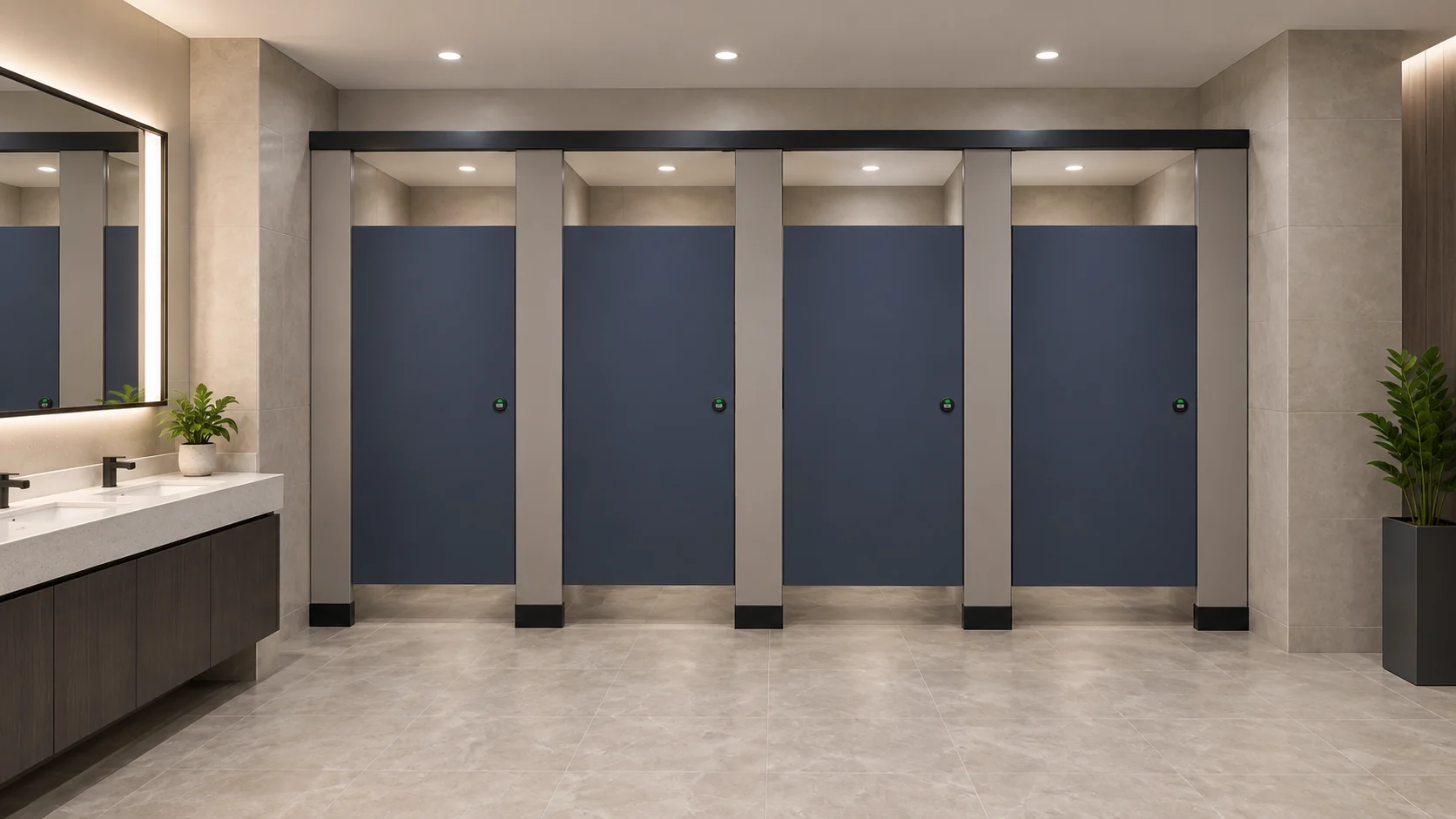
A handover binder supports coordination and future maintenance. It is not a substitute for approved technical submittals, local code review or a signed contract. Before adding a single page, agree on the binder’s scope with the project team. The scope should state that illustrations are generic design references, not completed EBUNGE customer projects.
It should also state that any project-specific material, hardware, dimension, finish, mounting or rating requires matching approved technical evidence.
This boundary protects everyone. It prevents a reader from treating a generic drawing as a construction instruction. It also prevents a supplier’s category description from being read as a performance guarantee. Keep the boundary visible on the cover sheet and repeat it in the drawing index.
Collect the core project documents
The binder should hold documents that already exist in the project workflow. Do not create new technical claims to fill gaps. Instead, list what is available and mark what is pending.
- Approved layout drawings showing cubicle positions and room boundaries.
- Door operation notes, including swing direction and access clearances as reviewed by the project team.
- Support interface sketches or schedules that show how partitions relate to walls, floors and adjacent services.
- Cleaning and maintenance documentation supplied for the specified configuration.
- Local requirement references identified by the project team, without asserting compliance.
- Inquiry and approval correspondence, including any open questions.
Each item should carry a status: approved, pending or not applicable. A pending item is not a failure; it is a signal that the binder is still a live document.
Use a numbered assembly process
A repeatable process keeps the binder consistent across projects. The steps below are administrative, not technical approvals.
- Confirm the binder owner and the project team members who will review it.
- Create a cover sheet with the project name, date, revision and evidence boundary statement.
- Insert the drawing index and mark each drawing as generic reference or project-specific.
- Add the layout, privacy and door operation review notes.
- Add support interface records and any coordination comments.
- Add cleaning documentation and local requirement references.
- Record open items and assign a reviewer for each.
- Issue the binder for review and log the returned comments.
This sequence prevents the binder from becoming a random collection. The project team should confirm project-specific requirements against the relevant approved technical evidence.
Document layout, privacy and door operation reviews
Layout, privacy and door operation are common discussion points in commercial toilet partition projects. The binder should record what the project team reviewed, not assert a performance result. For example, a note might say that the team reviewed sightline conditions at a specific cubicle row. It should not claim a privacy rating unless that rating is supported by approved technical evidence.
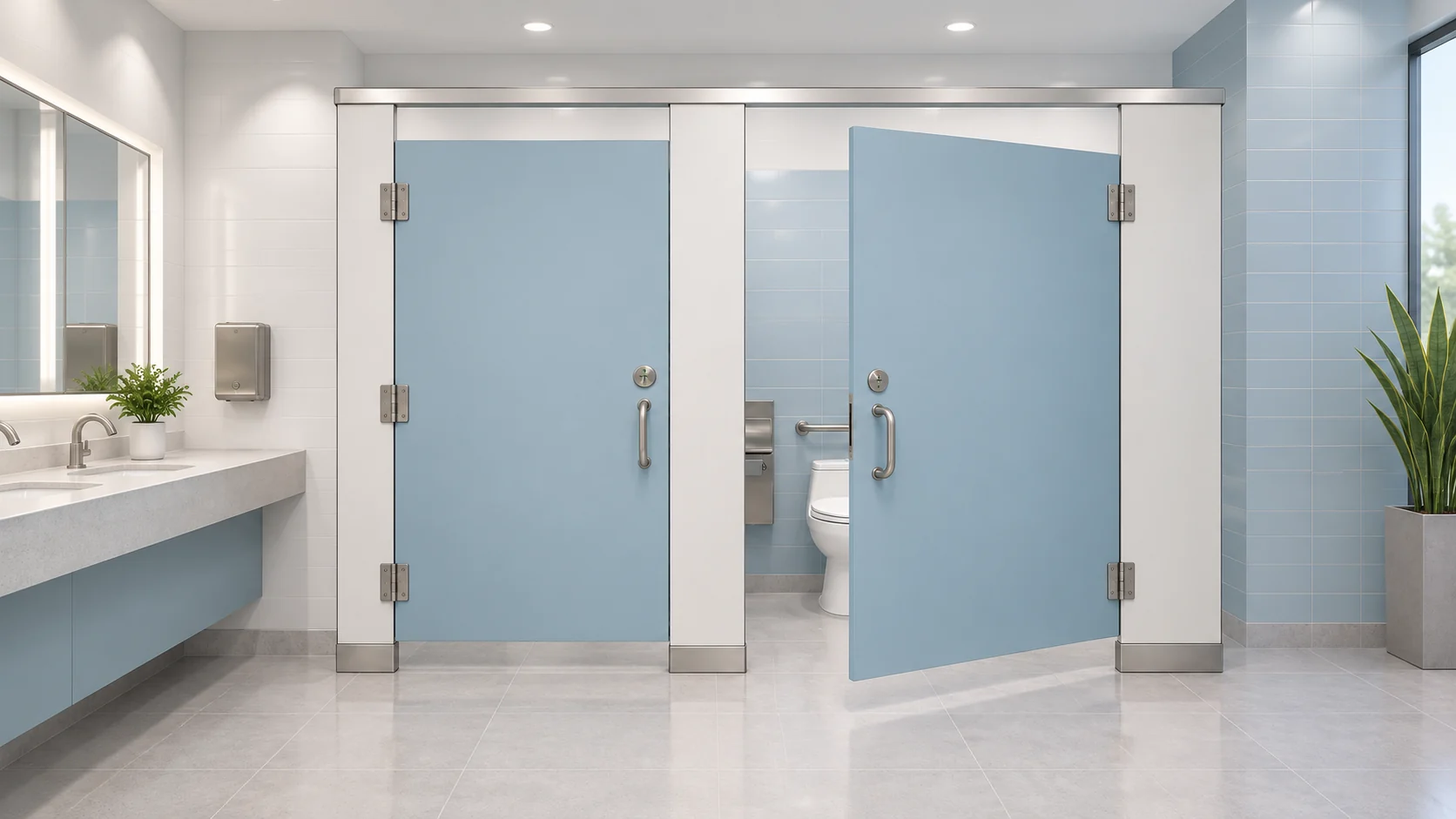
Door operation notes should describe the reviewed swing, latch and access sequence. If the project team identified a conflict with a nearby fixture or service, record the conflict and the proposed resolution. Do not infer hidden construction from an illustration. A generic drawing shows design intent, not a confirmed assembly.
Record support interfaces and cleaning documentation
Support interfaces connect the partition layout to the building. The binder should include the reviewed interface points and any coordination comments from the structural, mechanical or electrical teams. It should not invent load capacities or fixing details. Those belong in approved project-specific evidence.
Cleaning documentation is often overlooked. Include the cleaning instructions supplied for the specified configuration and note any restrictions the project team has identified. If the documentation is not yet available, mark it as pending. Do not write a generic cleaning claim that could conflict with the actual product.
Handle local requirements without asserting compliance
Local requirements vary by jurisdiction and project type. It should not state that the project complies unless a qualified reviewer has confirmed that conclusion. Use a neutral phrase such as “identified for review” rather than “compliant.”
This approach keeps the binder useful for authorities and reviewers while avoiding unverified compliance claims. It also creates a clear path for follow-up if a requirement needs additional evidence.
Maintain the binder after handover
When a drawing is updated, replace the old version and note the change. When a pending item is resolved, update its status and attach the supporting evidence.
That means keeping the evidence boundary statement intact and avoiding the temptation to add unsupported summaries.
Frequently asked questions
What is a toilet partition handover documentation binder?
It is a project record that organizes approved drawings, review notes, support interface records, cleaning documentation and open items for a commercial toilet partition installation. It is not a substitute for technical submittals or local code review.
Can I use generic illustrations in the binder?
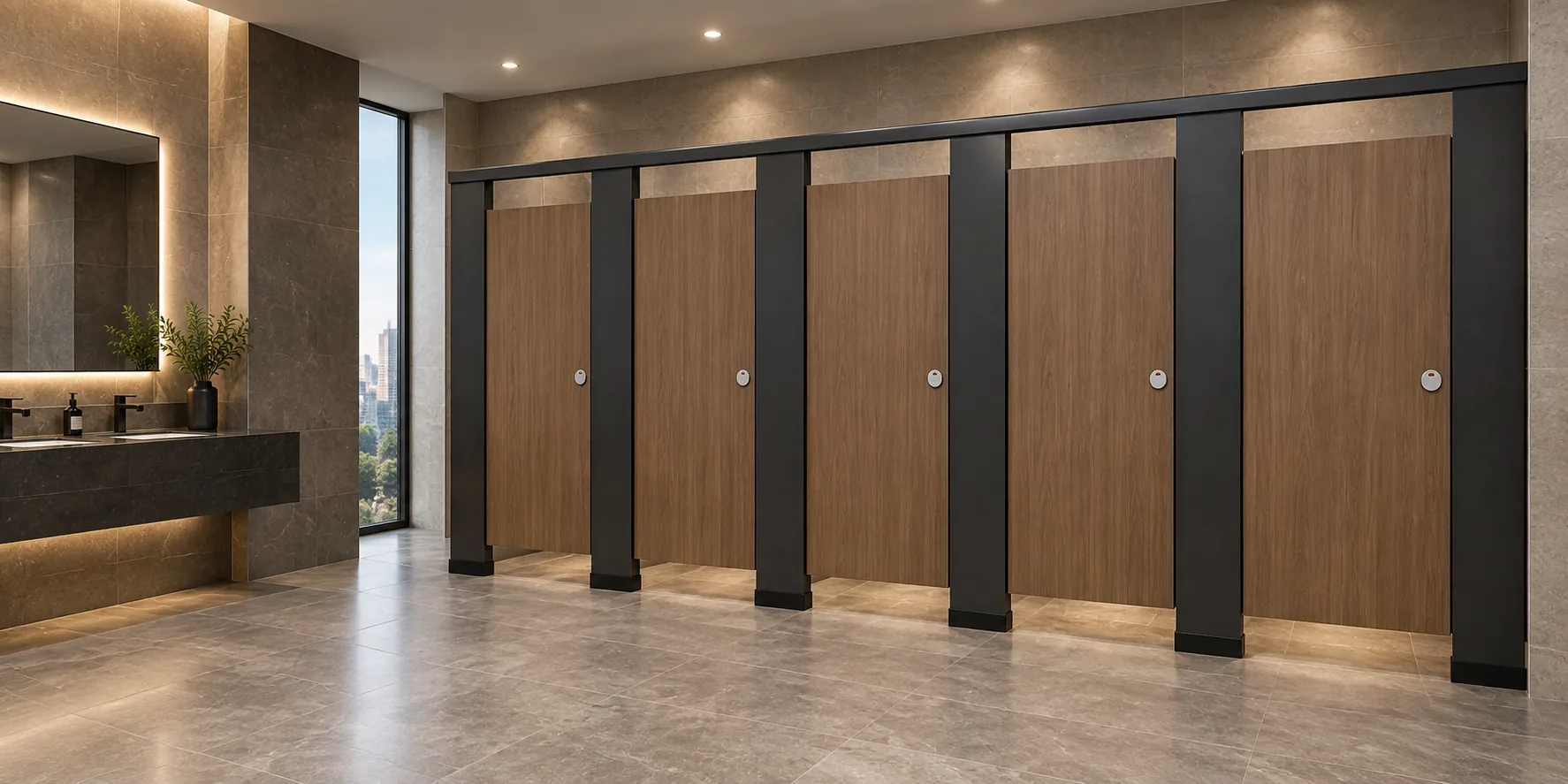
Yes, if they are clearly labeled as generic design references. Illustrations show generic design references, not completed EBUNGE customer projects. Project-specific drawings should be marked separately.
Which statements need project-specific evidence?
Any statement about material, hardware, dimension, finish, mounting or rating requires matching approved technical evidence. Do not treat HPL, compact laminate, phenolic or stainless steel as interchangeable without that evidence.
How should the binder address local requirements?
List the requirements identified by the project team and mark them for review. Do not assert compliance unless a qualified reviewer has confirmed it. The binder can reference local requirements without claiming a compliance result.
Who should own the binder?
The project team should assign a document controller or project lead. That person logs revisions, tracks pending items and ensures the evidence boundary statement remains visible.
Does the binder need to include pricing or warranty terms?
No. The binder should focus on coordination and handover records.
Conclusion and next steps
A well-built toilet partition handover documentation binder helps project teams keep layout, privacy, door operation, support interface and cleaning records in one place. It also keeps unverified claims out of the handover file. Start with the evidence boundary, use a numbered assembly process and mark every pending item clearly. For product category context, visit the EBUNGE products page. For additional planning references, see the resources section.
When your team is ready to discuss a specific project, contact EBUNGE to confirm the approved technical evidence needed for your binder.