
How to Compare Toilet Partition Hardware Tender Clarifications
Quick answer: toilet partition
Toilet partition hardware tender clarifications often arrive as a mix of drawings, schedules and written questions. For overseas project teams, the goal is not to win an argument but to compare responses on a like-for-like basis. This guide sets out a review framework that keeps every conclusion tied to maintained product facts, visible evidence limits and project-specific drawing review. EBUNGE product category includes commercial Toilet Partition / Toilet Cubicle.
That confirmed category fact is the starting point; it does not confirm any project-specific material, hardware, dimension, finish, mounting or rating.
Why tender clarifications need a comparison method
A clarification response can look complete while leaving key interfaces unresolved. The risk is that different bidders answer different questions. One may describe door operation in general terms; another may list support interfaces without explaining how they coordinate with the surrounding construction. Without a method, the comparison becomes a reading exercise rather than a decision tool.
Use a consistent evidence lens. Separate what is confirmed for the EBUNGE product category from what must be verified for the project. The confirmed fact is narrow: EBUNGE product category includes commercial Toilet Partition / Toilet Cubicle. The project team should confirm project-specific requirements against the relevant approved technical evidence.
Build a clarification register before comparing answers
Start by listing every open point in a single register. Group items by discipline so that layout, privacy, door operation, support interfaces, cleaning documentation and applicable local requirements are not mixed together.
Core categories for the register
- Layout and privacy: cubicle arrangement, sightline considerations and door swing direction as shown on project drawings.
- Door operation: how the door is intended to open, close and be operated by users, without inferring hidden hardware from illustrations.
- Support interfaces: how partitions relate to floors, walls, ceilings or adjacent construction, subject to project-specific evidence.
- Cleaning documentation: what cleaning instructions and maintenance information are expected, without asserting unverified performance.
- Local requirements: applicable codes, accessibility expectations and submission rules for the project location.
Keep the register open until each item has a written response that can be compared. A verbal assurance is not a comparable clarification because it cannot be reviewed alongside other bidders’ answers.
Compare responses against evidence, not presentation
When responses arrive, compare them line by line against the register. Look for statements that are specific to the project and supported by approved technical evidence. Treat generic marketing language as a prompt for a follow-up question, not as a confirmed fact.
Evidence note
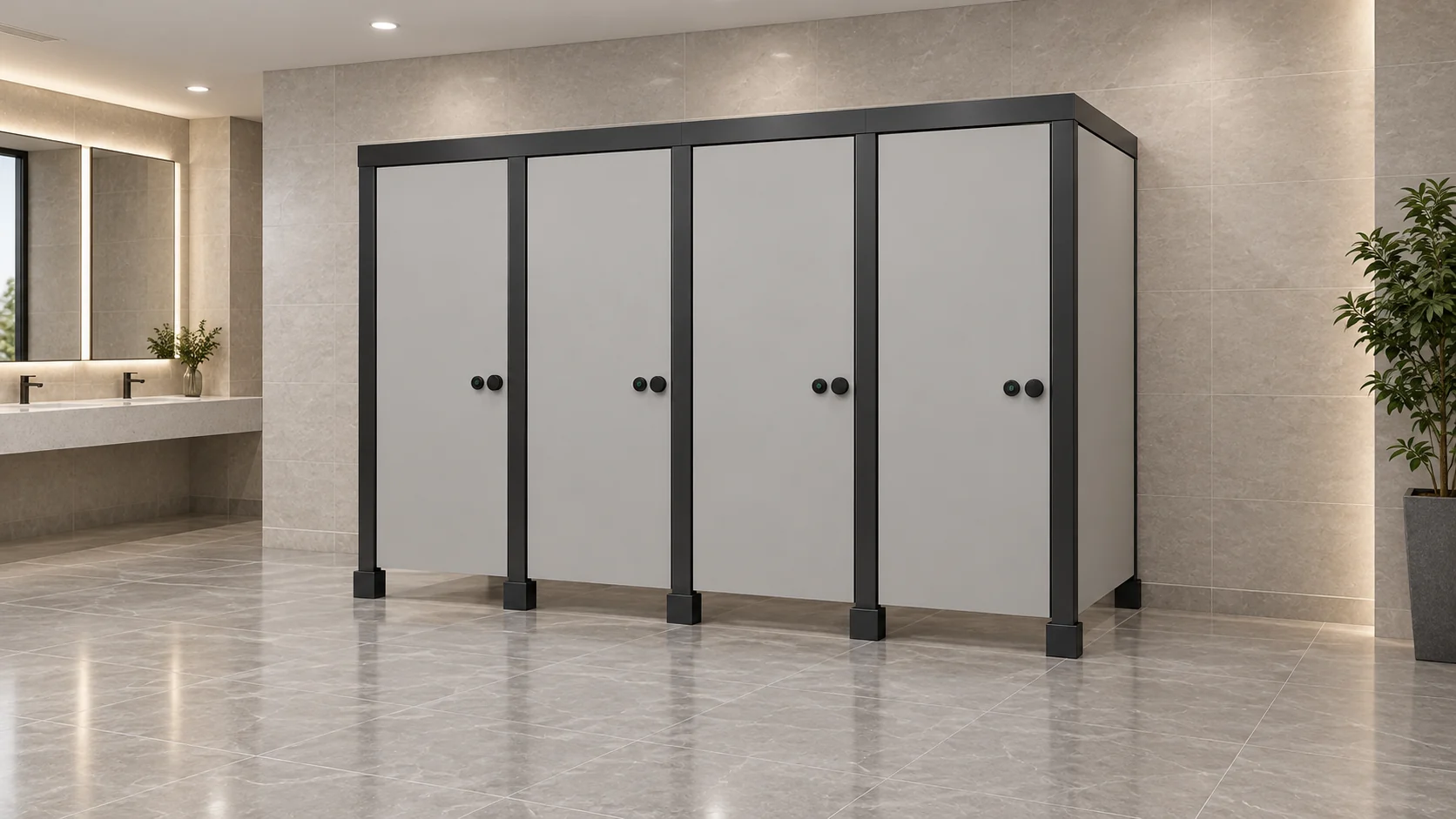
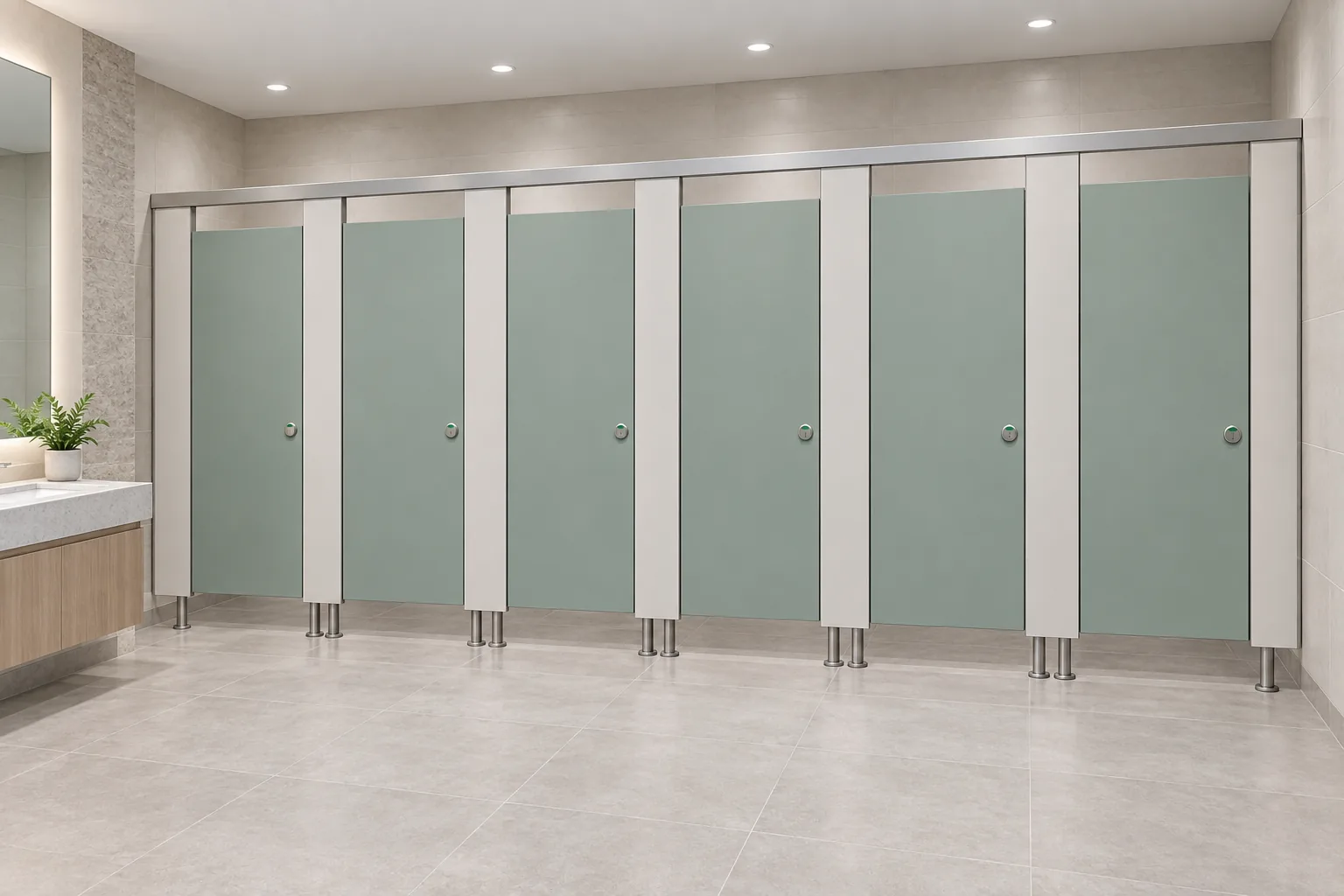
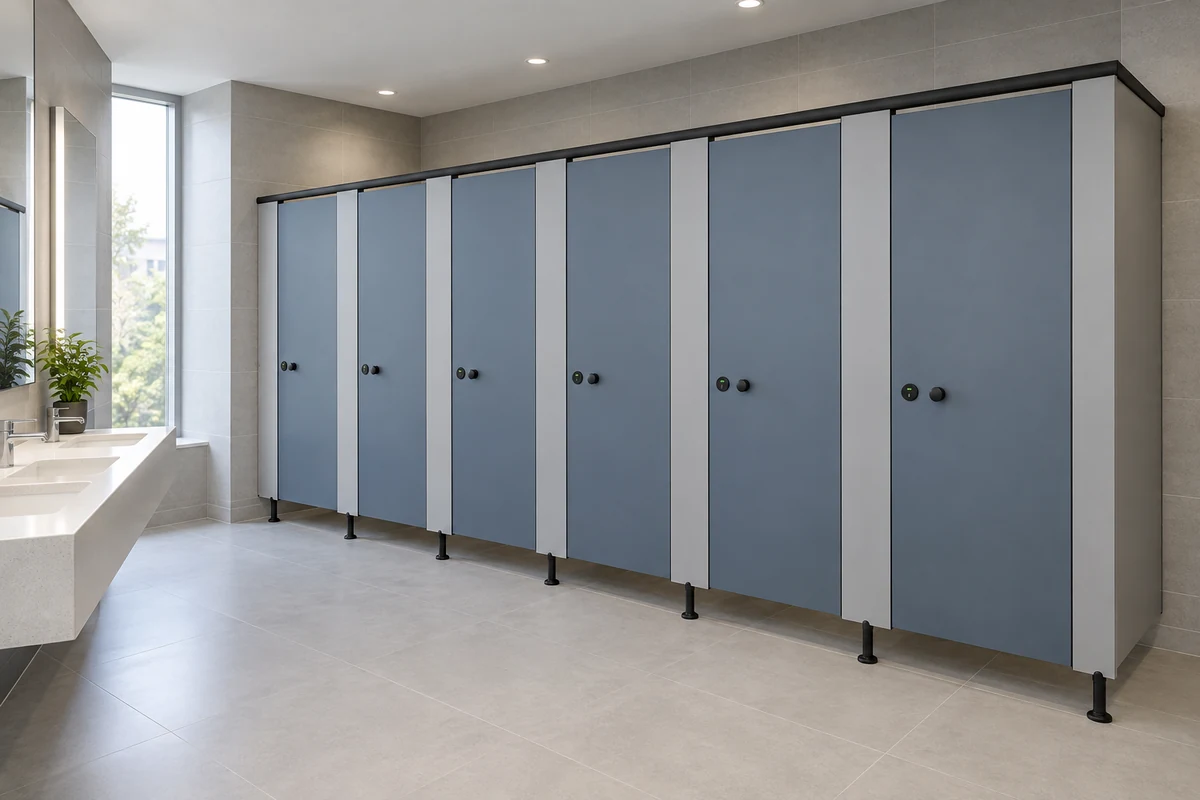
Illustrations show generic design references, not completed EBUNGE customer projects. Do not infer hidden construction, material composition or performance from an illustration. Any project-specific material, hardware, dimension, finish, mounting or rating requires matching approved technical evidence.
This boundary protects the comparison. It prevents a bidder’s rendering from being read as a commitment. It also keeps the review focused on what can be documented and verified for the project.
Use a decision checklist for each clarification item
A checklist keeps the team consistent when several people review different sections. Apply the same questions to every item in the register.
- Is the item described in project-specific terms, or only in general terms?
- Does the response reference approved technical evidence for any material, hardware, dimension, finish, mounting or rating?
- Does the response avoid treating HPL, compact laminate, phenolic or stainless steel as interchangeable?
- Does the response avoid describing toilet cubicles as movable operable walls or introducing suspended wall travel, stacking or parking mechanisms?
- Are layout, privacy, door operation, support interfaces, cleaning documentation and local requirements addressed without asserting unverified compliance?
- Is there a clear route to resolve any remaining gap before the comparison is finalised?
If an item fails any question, mark it as unresolved. Do not fill the gap with an assumption, even if the assumption seems reasonable.
Coordinate across the project team
Clarification review is a coordination task. Architects, contractors, interior designers, owners, renovation companies, distributors and construction teams each hold part of the picture. A response that satisfies one discipline may create a question for another.
Who reviews what
- Architects and designers: layout, privacy, door operation and visual coordination with the surrounding design.
- Contractors and construction teams: support interfaces, sequencing and how the partition relates to adjacent work.
- Owners and renovation companies: cleaning documentation, maintenance expectations and operational needs.
- Distributors and buyers: consistency of the clarification set and completeness of the written record.
Bring the team together before finalising the comparison. A short coordination meeting can resolve items that would otherwise remain ambiguous in writing. Record the outcome in the register so the decision trail stays visible.
Watch for common comparison errors
Some errors appear repeatedly in tender clarification reviews. Recognising them early saves time and reduces the risk of an unsupported conclusion.
Errors to avoid
- Treating a generic illustration as a project-specific commitment.
- Assuming that two bidders mean the same thing when they use the same term.
- Accepting a performance statement without approved technical evidence.
- Mixing material categories as if they were interchangeable.
- Leaving local requirements as an open question after the comparison deadline.
Review any gap between what is shown and what is confirmed before accepting the clarification. The remedy is to ask for written clarification and to keep the response with the register.
Document the outcome and next steps
Once the comparison is complete, produce a short summary that states which items are resolved, which remain open and what evidence is still required. This summary becomes the basis for the next round of questions or for a final decision.
Keep the language precise. State that the review covered layouts, privacy, door operation, support interfaces, cleaning documentation and applicable local requirements. Do not state that the project complies with any requirement unless that compliance has been verified through the appropriate evidence path. For product context, refer to the EBUNGE product range and the resources section for maintained information.
When the team is ready to discuss project-specific points, use the contact page to open a written clarification thread.
Frequently asked questions
What is the first step in comparing toilet partition hardware tender clarifications?
Build a single clarification register that groups layout, privacy, door operation, support interfaces, cleaning documentation and applicable local requirements. Then compare each bidder’s written response against that register rather than against a general impression.
Can a clarification response confirm material or performance for my project?
Only if it is supported by matching approved technical evidence for that project. The confirmed EBUNGE fact is that the product category includes commercial Toilet Partition / Toilet Cubicle.
How should illustrations be treated during the comparison?
Illustrations show generic design references, not completed EBUNGE customer projects. Use them to understand a design direction, but do not infer hidden construction, material composition or performance from them. Ask for written clarification where a project-specific detail matters.
Why is it important not to treat HPL, compact laminate, phenolic or stainless steel as interchangeable?
These are different material categories with different characteristics. Any project-specific material choice requires matching approved technical evidence before it can be treated as confirmed.
What should the final comparison summary contain?
List which items are resolved, which remain open and what evidence is still required. State that the review covered the agreed categories without asserting unverified compliance. Keep the summary factual so it can support the next round of questions or a final decision.
How do we coordinate clarification review across disciplines?
Assign each register category to the discipline that owns it, then hold a short coordination meeting before finalising the comparison. Record the outcome in the register so architects, contractors, owners, distributors and construction teams share the same written record.
Conclusion and contact
Comparing toilet partition hardware tender clarifications is a discipline of evidence, not persuasion. Keep the confirmed product category fact in view, require approved technical evidence for every project-specific material, hardware, dimension, finish, mounting or rating, and document the review of layouts, privacy, door operation, support interfaces, cleaning documentation and applicable local requirements without asserting unverified compliance. For project-specific questions, contact EBUNGE to open a written clarification thread.