
Handover Documentation Gaps That Delay Toilet Partition Acceptance
Quick project answer
Toilet partition handover documentation gaps rarely appear as a single missing file. They usually surface as small mismatches between what the project team reviewed, what was installed and what the owner expects to receive at acceptance. For overseas contractors, architects, interior designers, owners, renovation companies, distributors and construction teams, the practical task is to identify those gaps early and route each one to the right reviewer.
This guide uses an evidence-bounded approach: it does not assume compliance, performance or hidden construction, and it treats every project-specific material, hardware, dimension, finish, mounting or rating as something that requires matching approved technical evidence.
The focus keyword for this article is toilet partition handover documentation gaps. The project team should confirm project-specific requirements against the relevant approved technical evidence.
Why Handover Gaps Delay Toilet Partition Acceptance
Acceptance is often treated as a final administrative step.
For example, a drawing may show a layout concept, while the site record shows a different sequence of panels or doors. If the project team cannot trace which document was approved, the reviewer may pause acceptance until the discrepancy is resolved.
Common gap categories
- Layout and privacy review: approved drawings, sightline notes and any project-specific privacy expectations.
- Door operation: opening direction, hardware schedule and access requirements as confirmed for the project.
- Support interfaces: how the partition or cubicle relates to adjacent walls, floors and structural supports.
- Cleaning documentation: methods and products that the owner or facilities team will use.
- Applicable local requirements: the project team’s record of which local rules were considered and how they were addressed.
Each category needs a named reviewer and a clear evidence path. Without that, the acceptance process becomes a search for information rather than a confirmation of readiness.
What Project Teams Should Review Before Handover
A useful pre-handover review separates what is known from what still needs confirmation. The confirmed product fact for this topic is narrow: EBUNGE product category includes commercial Toilet Partition / Toilet Cubicle.
Project teams should therefore build a review matrix that links each item to its approved technical evidence. If evidence is missing, the item remains open.
Evidence note: what illustrations can and cannot show
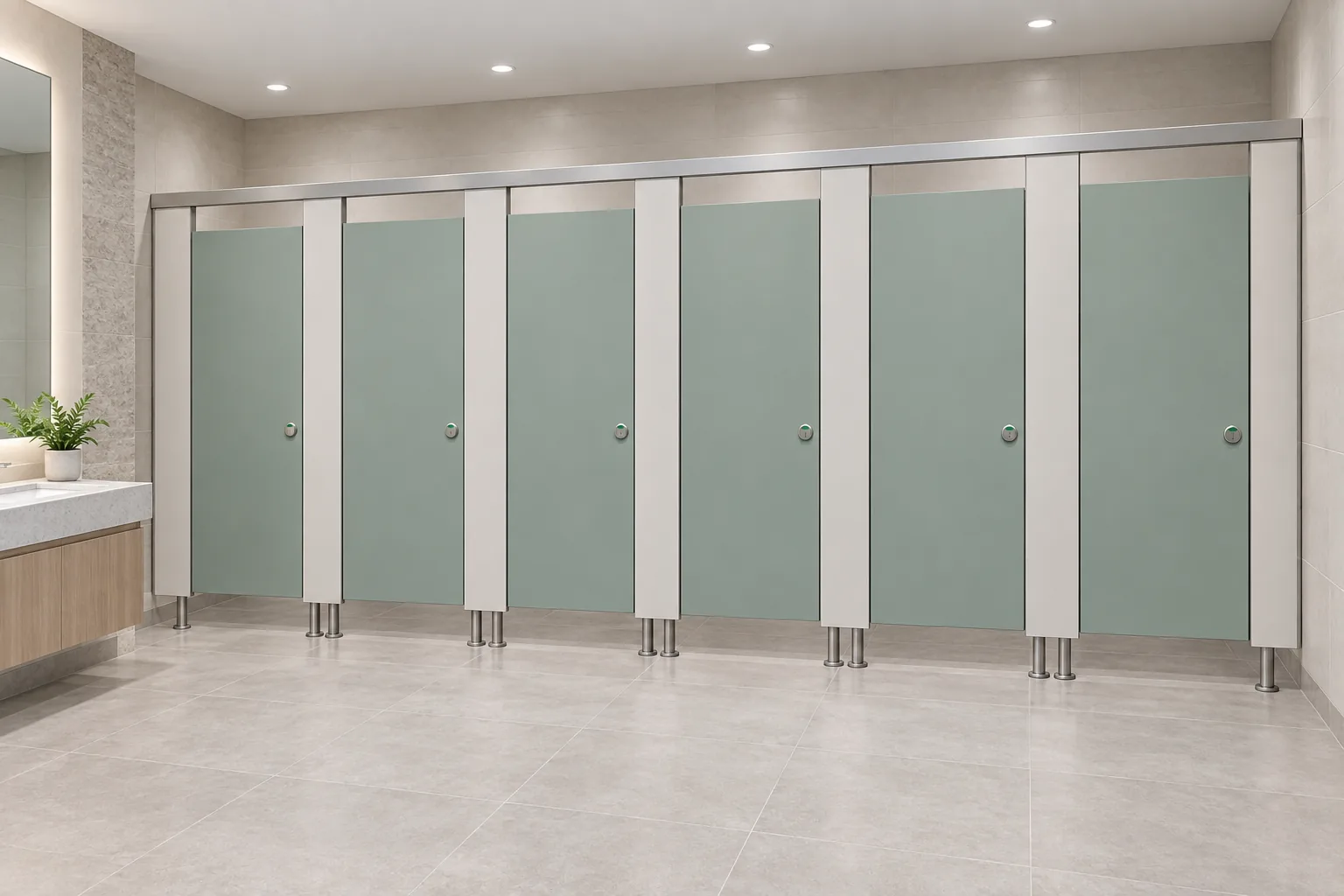
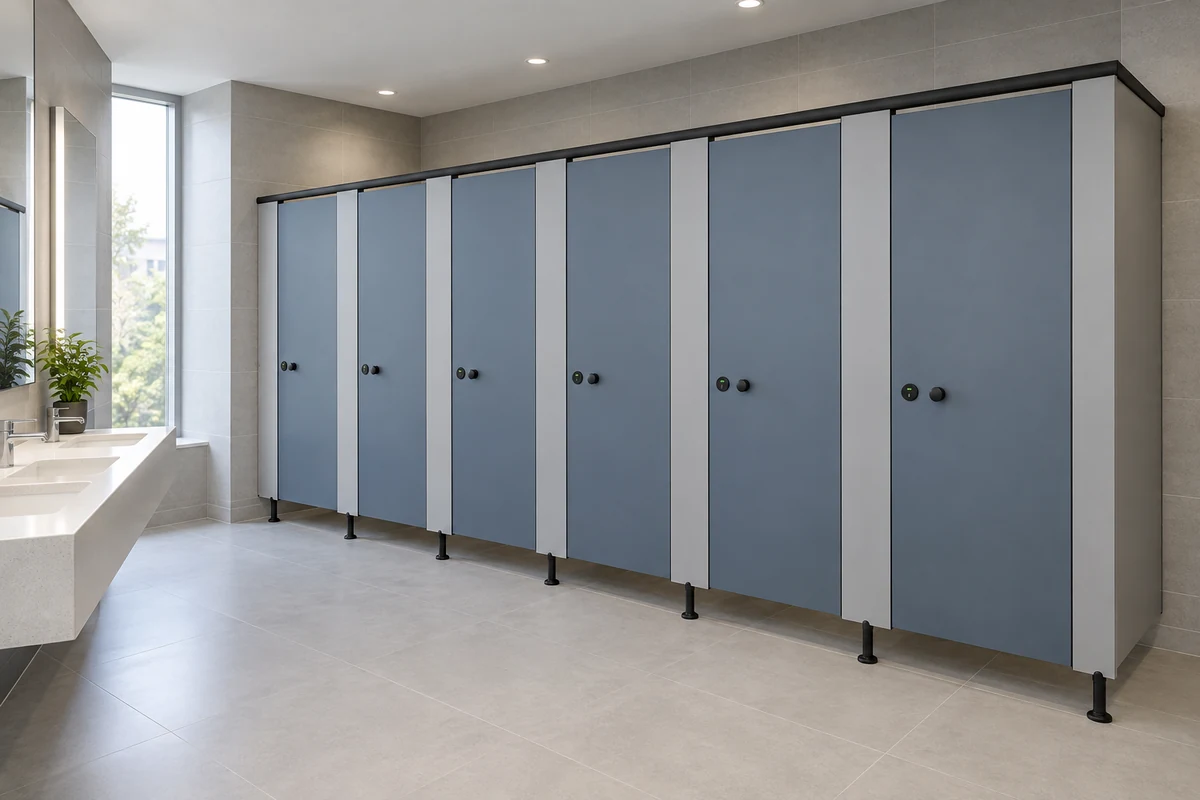
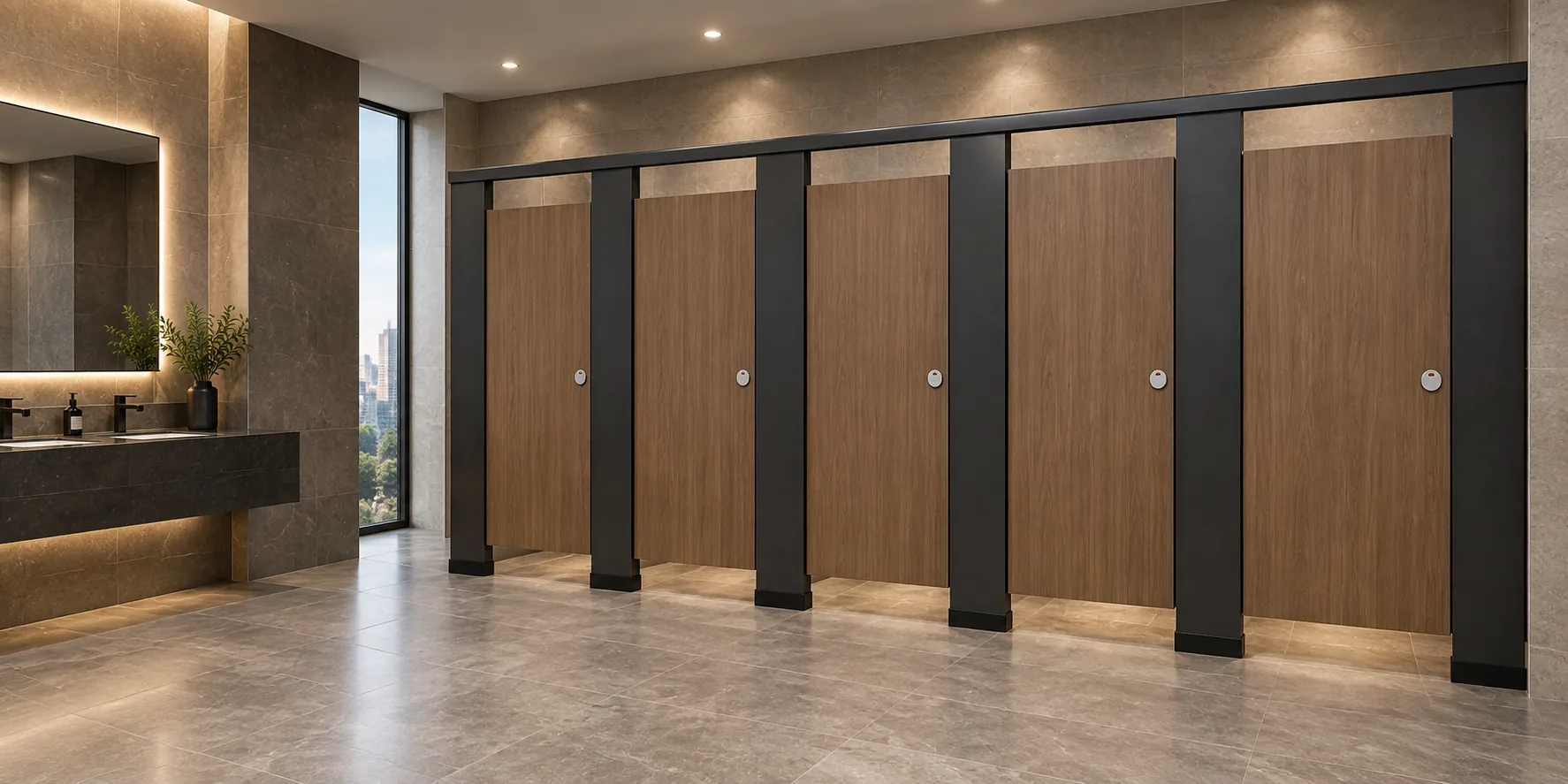
Illustrations in this article and on product pages show generic design references, not completed EBUNGE customer projects. They can help a team discuss layout, door operation and support interfaces, but they cannot be used to infer hidden construction, material composition, dimensions, load capacity or performance.
When a reviewer asks whether a partition meets a specific project requirement, the answer must come from the project’s approved technical evidence, not from a generic image or a category description.
A Practical Handover Documentation Checklist
The following checklist is a coordination tool, not a compliance certificate. It helps a project team decide which gaps to close before requesting acceptance.
- Confirm the approved layout: compare the latest approved drawing with the installed arrangement and record any deviation.
- Review privacy expectations: document how the project team defined privacy for the application and where that definition is recorded.
- Check door operation: verify that the door swing, hardware and access sequence match the approved project information.
- Map support interfaces: identify how the partition or cubicle connects to adjacent construction and who approved that interface.
- Collect cleaning documentation: obtain the cleaning methods and products that the owner or facilities team will use.
- Record local requirements: list the applicable local requirements the project team considered and where the response is documented.
- Assign open items: give every unresolved gap an owner, a required evidence type and a target date.
This sequence keeps the conversation focused on evidence. It also prevents a common failure mode: treating a generic product description as if it were a project-specific approval.
How to Coordinate Gaps Across the Project Team
Handover gaps often sit between disciplines. The architect may hold the design intent, the contractor may hold the site record, and the owner may hold the cleaning and maintenance requirements.
The register should distinguish between three states: confirmed by approved evidence, open pending evidence, and not applicable to this project.
Compact comparison: generic reference versus project evidence
| Item | Generic reference | Project-specific evidence |
|---|---|---|
| Material | Category context only | Approved project specification |
| Hardware | Not confirmed by illustration | Approved hardware schedule |
| Dimensions | Not confirmed by illustration | Approved project drawings |
| Finish | Not confirmed by illustration | Approved finish record |
| Mounting | Not confirmed by illustration | Approved interface detail |
| Rating | Not confirmed by illustration | Project-specific test or certificate where applicable |
This table is deliberately limited. It does not claim that any particular material, hardware or rating is suitable for a project. It shows where the evidence must come from.
Documentation Gaps That Commonly Affect Cleaning and Maintenance
Cleaning documentation is frequently treated as an afterthought, yet it can delay acceptance because the owner needs to know how the installed surfaces and hardware should be maintained. A gap here is not a performance claim; it is a missing operational instruction.
Project teams should confirm who will clean the facility, what methods are permitted, and how the cleaning team will report damage or wear.
Questions to resolve before acceptance
- Who is responsible for cleaning during the defects period?
- Where are the approved cleaning instructions stored?
- How will the facilities team report a damaged or loose component?
- Which local requirements affect cleaning or maintenance access?
These questions do not require a performance conclusion. They simply close the gap between installation and operation.
Using EBUNGE Resources Without Overclaiming
EBUNGE product category includes commercial Toilet Partition / Toilet Cubicle. That is the confirmed product fact available for this article. For project-specific material, hardware, dimension, finish, mounting or rating, the project team must match the requirement to approved technical evidence.
The products page provides category context and an inquiry route. The resources page can support general planning discussions. Neither page should be treated as a substitute for project drawings, specifications or local review. When a gap remains open, the correct next step is to request the missing evidence rather than infer it from a generic reference.
Frequently Asked Questions
What are toilet partition handover documentation gaps?
They are missing or mismatched records that prevent a reviewer from confirming that the installed toilet partition or cubicle matches the approved project scope. Examples include layout differences, unclear door operation, unresolved support interfaces, missing cleaning instructions and incomplete local requirement notes.
Does a documentation gap mean the installation is non-compliant?
No. A gap means the evidence is not yet available or not yet aligned. Compliance depends on the applicable local requirements and the project’s approved technical evidence. The project team should resolve the gap before making any compliance statement.
Can generic illustrations confirm material or dimensions?
No. Illustrations show generic design references, not completed EBUNGE customer projects. They cannot confirm material composition, dimensions, hardware, finish, mounting or ratings. Those items require matching approved technical evidence for the specific project.
Who should own the handover gap register?
The project team should assign an owner for each gap. Depending on the project, this may be the contractor, the architect, the owner’s representative or another responsible party.
How should cleaning documentation be handled?
Cleaning documentation should be collected before acceptance and stored where the facilities team can find it. It should describe the approved methods and products for the installed condition without assuming performance that has not been confirmed by project evidence.
When should the project team contact EBUNGE?
Contact EBUNGE when the project needs category context, an inquiry route or clarification on available product information. Project-specific material, hardware, dimension, finish, mounting or rating questions should be directed through the appropriate technical evidence path.
Conclusion: Close Gaps with Evidence, Not Assumptions
Toilet partition handover documentation gaps delay acceptance because they leave reviewers without a traceable link between approved scope and installed condition. The remedy is not a broader claim; it is a disciplined review of layouts, privacy, door operation, support interfaces, cleaning documentation and applicable local requirements. Each item should be confirmed by approved project evidence or remain open.
Project teams that maintain a simple gap register, assign owners and separate generic references from project-specific evidence can reduce uncertainty before the acceptance meeting.
For category context and an inquiry route, visit the EBUNGE products page. To discuss a specific project, contact EBUNGE and provide the approved drawings, specifications and local requirement notes that the review will require.