
How to Score Toilet Partition Hardware Bids Without Lowest-Price Bias
Quick answer: toilet partition
Review focus: toilet partition.
Toilet partition hardware bid scoring often collapses into a single question: which number is lowest? The project team should confirm project-specific requirements against the relevant approved technical evidence. This guide explains how project teams can evaluate bids without lowest-price bias while staying inside confirmed product facts and project-specific documentation.
Why Lowest-Price Bias Distorts Hardware Bid Scoring
Lowest-price bias assumes all hardware packages are equivalent. In practice, bids may describe different scopes, exclusions, coordination responsibilities or documentation packages. The scoring team should first confirm that every bid addresses the same project requirements before comparing commercial terms.
It is a procurement discipline: compare like with like, and record where information is missing. When a bid omits a detail, the correct response is a clarification request, not an assumption about hidden quality.
Start With the Project Evidence File
Before scoring, assemble the documents that define the project. These typically include architectural layouts, door schedules, finish schedules, support or framing details, cleaning requirements and applicable local regulations. The evidence file should also note which items remain open.
Any project-specific material, hardware, dimension, finish, mounting or rating requires matching approved technical evidence. If that evidence is not available, the item should be marked as unverified rather than scored as if confirmed. This protects the project team from making decisions based on illustrations or assumptions.
Evidence note: what illustrations can and cannot show
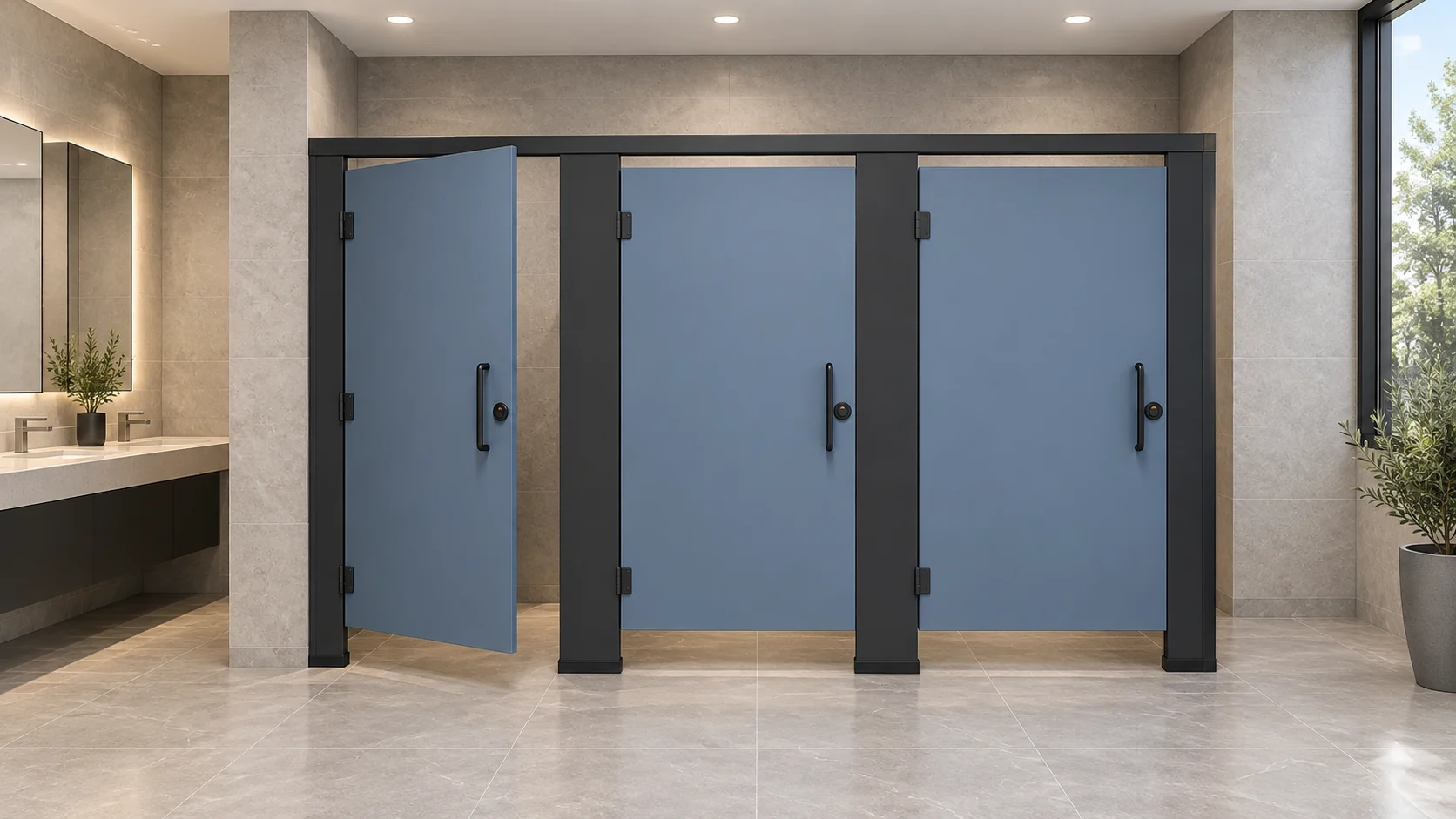
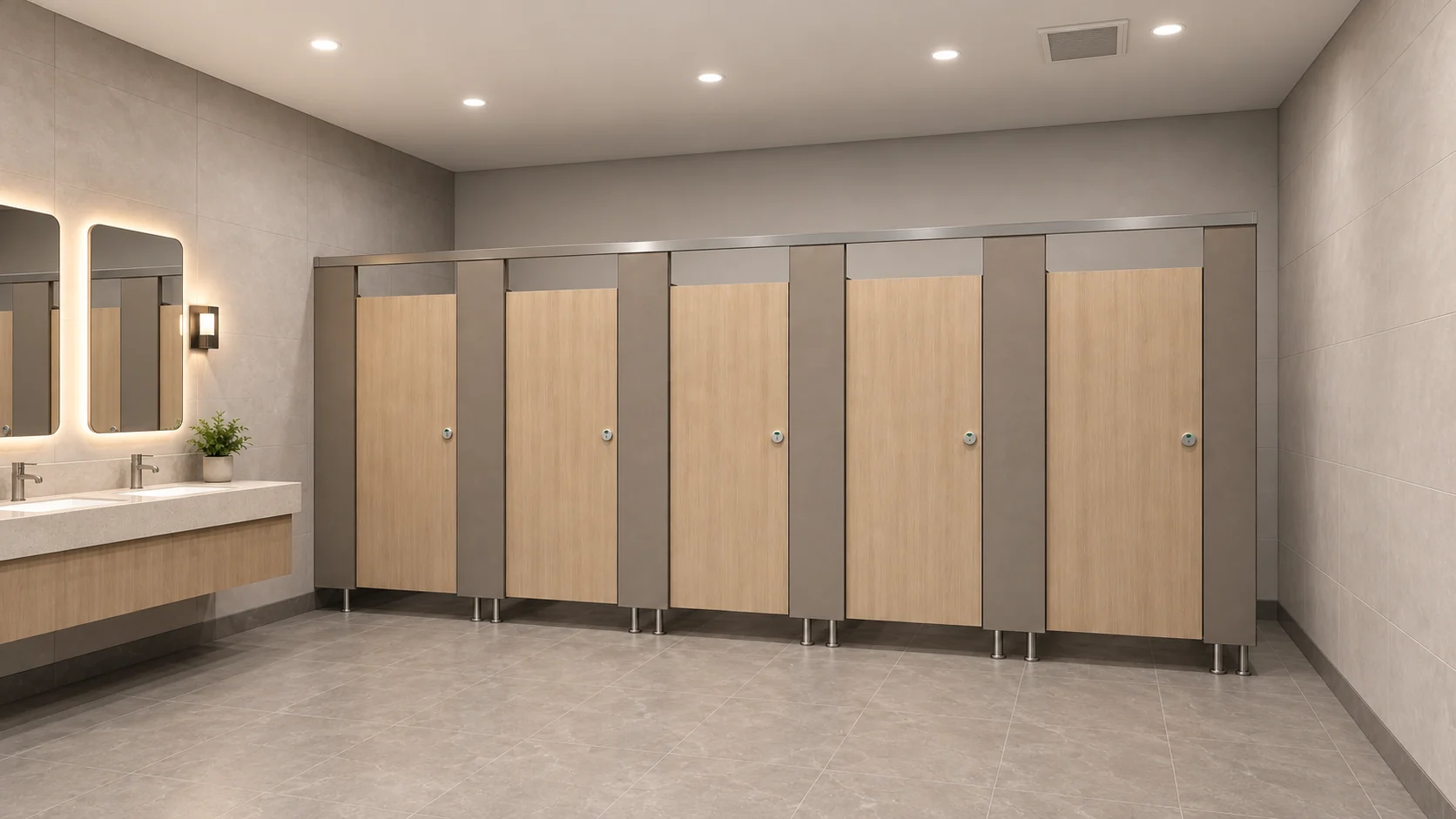
Illustrations show generic design references, not completed EBUNGE customer projects. They can support a conversation about layout or door swing, but they do not confirm material composition, dimensions, load capacity, fire performance, acoustic performance, waterproofing, antimicrobial properties, warranties or service life.
A Six-Step Scoring Process for Project Teams
- Confirm scope alignment. Check that each bid covers the same cubicle count, hardware categories and coordination responsibilities.
- Map evidence to requirements. Link each scored line to a drawing, schedule or approved technical document.
- Review door operation. Examine swing, clearance, latch and hinge interfaces against the layout, without assuming a specific hardware type.
- Review support interfaces. Confirm how partitions connect to walls, floors or framing, and note any unresolved structural questions.
- Review cleaning documentation. Ask what cleaning instructions and maintenance information will be provided, and how they align with the owner’s routines.
- Check local requirements. Identify applicable codes or accessibility rules and request evidence of how the bid addresses them, without asserting compliance.
Building a Weighted Scorecard Without Inventing Ratings
A weighted scorecard helps the team separate technical completeness from price. Weights should reflect project priorities, not generic assumptions. The table below shows a structure, not a recommendation of specific values.
| Scoring area | What to review | Evidence needed |
|---|---|---|
| Scope completeness | Items included, exclusions, coordination | Bid documents, scope matrix |
| Layout and privacy | Panel arrangement, sightlines, door position | Architectural drawings, door schedule |
| Door operation | Swing, clearance, latch and hinge interfaces | Hardware schedule, approved details |
| Support interfaces | Wall, floor and framing connections | Structural or blocking drawings |
| Cleaning and maintenance | Instructions, access, replacement planning | Cleaning documentation, O&M requirements |
| Local requirements | Applicable codes, accessibility, fire strategy | Local regulation references, project spec |
Score only what the evidence supports. Where a bidder has not provided information, record a clarification request instead of assigning a guessed score.
Coordinating With the Wider Project Team
Hardware scoring is rarely a solo task. Contractors, architects, interior designers, owners and renovation teams each hold part of the picture. A short coordination meeting can resolve interface questions before scoring begins.
Use the meeting to confirm who owns each decision: layout changes, support conditions, cleaning protocols and local compliance checks. Document the outcomes and attach them to the bid evaluation. This creates a traceable link between project requirements and the final score.
Checklist for bid clarification requests
- Which drawings and schedules define the hardware scope?
- Are door operation and clearance details shown consistently across bids?
- What support interfaces are assumed, and who confirms them?
- What cleaning and maintenance documentation will be supplied?
- Which local requirements apply, and what evidence is provided?
- Are any project-specific materials, finishes or ratings still unverified?
Common Scoring Mistakes to Avoid
One mistake is treating different material families as interchangeable. HPL, compact laminate, phenolic and stainless steel have different characteristics, and a bid should not be scored as if one automatically substitutes for another. Another mistake is inferring hidden construction from an illustration. Illustrations are design references, not construction documents.
A third mistake is describing toilet cubicles as movable operable walls. They are not. Scoring should focus on fixed cubicle layouts, door operation and support interfaces, not on suspended wall travel, stacking or parking mechanisms.
Documenting the Decision for Future Reference

Record the scoring rationale, the evidence used and any open items. This documentation helps owners, facility teams and future renovation projects understand why a bid was selected. It also supports a fair comparison if the scope changes.
Keep the record factual. Avoid statements about performance, certifications or service life unless they are supported by approved technical evidence for the specific project. The goal is a transparent decision, not a marketing summary.
Frequently Asked Questions
What is toilet partition hardware bid scoring?
It is a structured method for evaluating hardware bids against project requirements, evidence and coordination needs rather than price alone.
Why is lowest-price bias a problem?
It can compare bids with different scopes, exclusions or documentation levels, making the lowest number misleading.
What evidence is needed for scoring?
Drawings, schedules, support details, cleaning requirements and applicable local regulations. Any project-specific material, hardware, dimension, finish, mounting or rating requires matching approved technical evidence.
Can illustrations be used as proof of construction?
No. Illustrations show generic design references, not completed EBUNGE customer projects, and do not confirm hidden construction or performance.
How should the team handle missing information?
Issue a clarification request and mark the item as unverified until supporting evidence is provided.
Does EBUNGE provide project-specific hardware configurations?
EBUNGE product category includes commercial Toilet Partition / Toilet Cubicle. Project-specific configurations require confirmation through the appropriate project channel.
Conclusion: Score the Evidence, Not Just the Price
Lowest price is one data point, not the decision. By documenting scope, door operation, support interfaces, cleaning requirements and local considerations, project teams can make a more defensible choice.
To discuss your project requirements or request product information, contact EBUNGE. You can also review the product range and explore additional resources for project planning.