
How to Structure a Toilet Partition Handover Documentation Pack
Quick answer: toilet partition
A toilet partition handover documentation pack is not a single certificate or a marketing folder. It is a controlled set of project records that helps the contractor, designer, owner and maintenance team understand what was reviewed, what was supplied and what still requires project-specific confirmation. For overseas projects, the pack should separate maintained product facts from project decisions. EBUNGE product category includes commercial Toilet Partition / Toilet Cubicle.
That category fact is the starting point, not a substitute for approved drawings, schedules or local requirement checks.
Start With the Project Review Scope
Before assembling documents, define the review scope with the project team. The pack should record how layouts, privacy expectations, door operation, support interfaces, cleaning documentation and applicable local requirements were considered. This is a planning record, not a compliance assertion. Local authorities, client standards and site conditions vary, so the pack should show what was reviewed and where project-specific evidence is still required.
Use a simple scope table to prevent gaps. The table below is a planning aid, not a product specification.
| Review area | Documentation question | Evidence status |
|---|---|---|
| Layout and privacy | Which drawing version shows cubicle positions and sightline review? | Project-specific |
| Door operation | Which approved detail confirms swing, clearance and hardware interface? | Project-specific |
| Support interfaces | Which structural or substrate interface was reviewed by the project engineer? | Project-specific |
| Cleaning documentation | Which cleaning method statement was accepted for the specified finish? | Project-specific |
| Local requirements | Which authority or client standard was checked by the responsible party? | Project-specific |
Build the Pack Around Controlled Sections
A handover pack becomes useful when each section has an owner, a revision date and a clear status. Avoid mixing generic product literature with approved project records. The reader should be able to tell whether a page is a maintained product fact, a project drawing, a site record or an open item.
1. Project identification and revision control
Include the project name, location, document issue date, revision number and the parties responsible for review. This section should not claim approvals that have not been granted. It simply identifies the pack and its current status.
2. Approved layout and drawing register
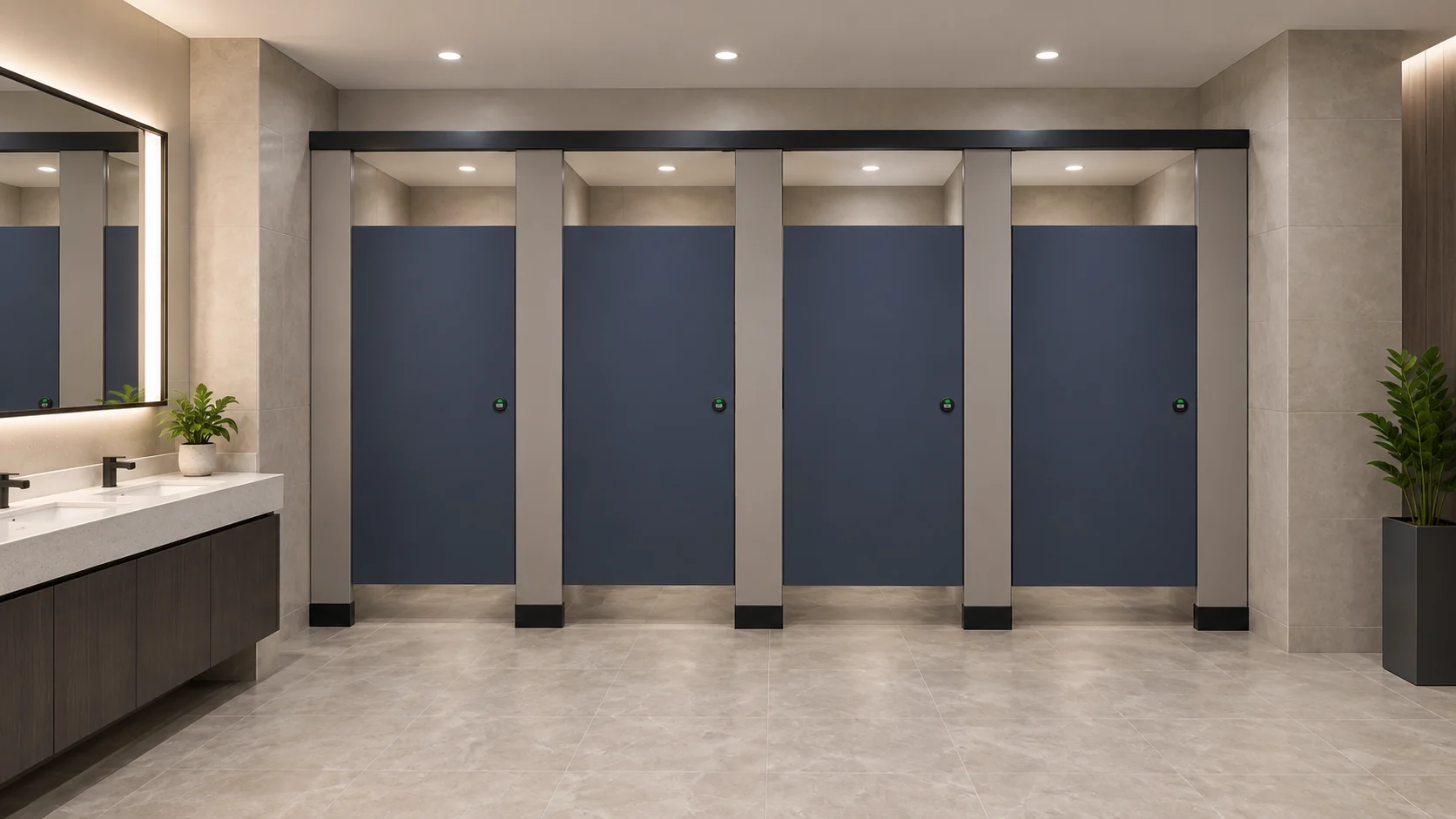
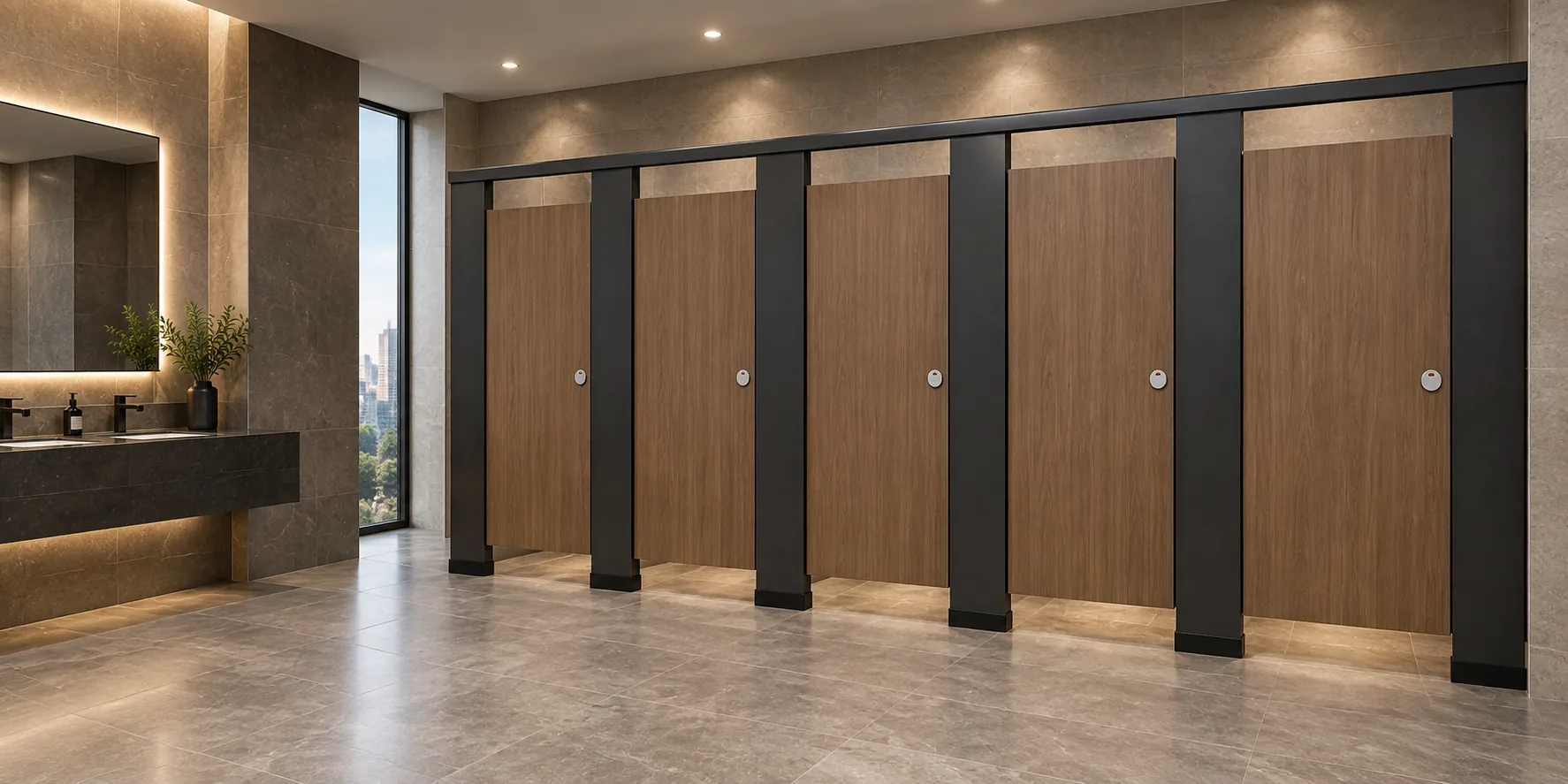
List the drawings that were reviewed for cubicle layout, privacy, door operation and support interfaces. Record the revision that applies. If a drawing is superseded, mark it clearly. Illustrations show generic design references, not completed EBUNGE customer projects.
3. Product category and configuration record
State the product category as commercial Toilet Partition / Toilet Cubicle. Any project-specific material, hardware, dimension, finish, mounting or rating requires matching approved technical evidence. Do not treat HPL, compact laminate, phenolic or stainless steel as interchangeable, and do not infer hidden construction from illustrations.
Document Door Operation and Support Interfaces
Door operation is a frequent source of handover questions because it touches privacy, clearance, hardware and daily use. The pack should reference the approved door detail and the project team’s review of swing direction, access and adjacent fixtures. It should not introduce suspended wall travel, stacking or parking mechanisms; toilet cubicles are not movable operable walls.
The project team should confirm project-specific requirements against the relevant approved technical evidence. The project engineer or responsible party should confirm how the partition system interfaces with the floor, wall or other supporting construction. The handover pack can list the interface drawings and inspection records, but it should not present an unverified structural conclusion as a general product fact.
Evidence note: A document in the pack is only as strong as its source. Maintained product facts, approved project drawings and site records should be labelled separately so readers do not confuse one with another.
Include Cleaning and Maintenance Records
Cleaning documentation helps the owner protect the installed finish and plan daily maintenance. The pack should include the cleaning method statement accepted for the specified finish, any restrictions confirmed by the finish supplier, and a record of who received the information. Do not invent antimicrobial, waterproof or chemical-resistance performance. If a cleaning product or method requires confirmation, mark it as an open item.
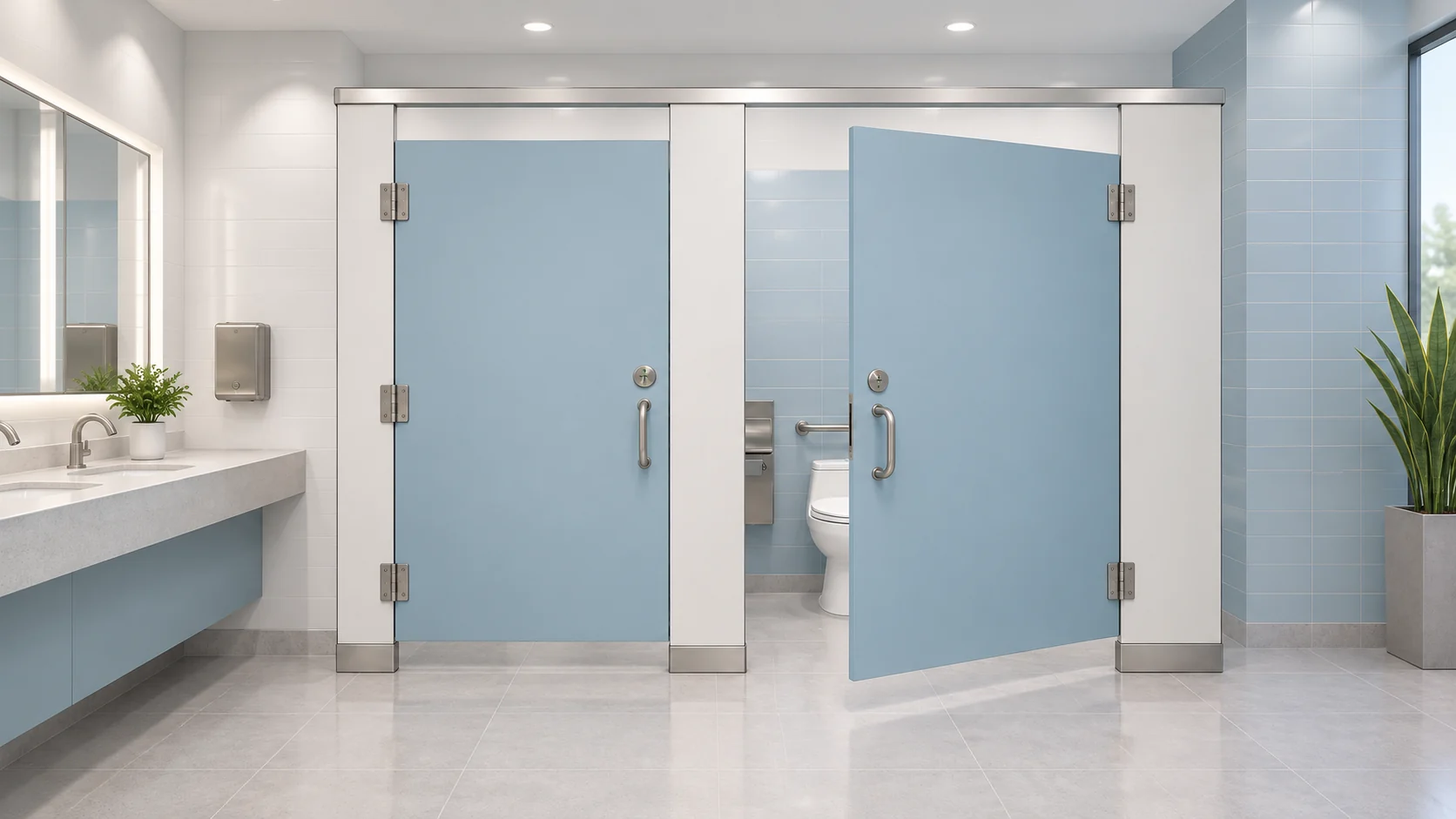
Maintenance records should also identify spare parts or hardware references only where approved project evidence exists. A generic catalogue image is not a spare parts confirmation.
Use a Numbered Handover Assembly Process
- Confirm the project review scope with the contractor, designer and owner representative.
- Collect approved drawings for layout, privacy, door operation and support interfaces.
- Separate maintained product facts from project-specific configuration records.
- Add cleaning documentation and any accepted maintenance instructions.
- Record applicable local requirements reviewed by the responsible party, without asserting compliance.
- List open items, missing evidence and revision dates.
- Issue the pack for review and log the recipients.
This process keeps the pack honest. It shows what is known, what is approved and what still needs confirmation. For product category context, see the EBUNGE toilet partition product overview. For general guidance, visit the resources section.
Coordinate Across Disciplines
Architects and interior designers typically control layout and finish intent. Contractors control installation sequencing and site records. Owners or facility teams control cleaning and maintenance expectations. Distributors may hold product documentation but should not replace project-specific approvals.
A short coordination checklist can reduce confusion:
- Who owns the latest approved layout drawing?
- Who confirmed door operation and clearance?
- Who reviewed support interfaces?
- Who accepted the cleaning method statement?
- Who checked applicable local requirements?
- Which items remain open?
If a question cannot be answered from approved evidence, record it as an open item rather than filling the gap with an assumption.
Common Documentation Gaps to Avoid
Handover packs often fail because they mix categories. A generic brochure may be useful for product context, but it should not be filed as an approved project drawing. A cleaning note may be helpful, but it should not be presented as a performance rating. A layout sketch may illustrate intent, but it should not be treated as a construction issue without review.
Another gap is missing revision control. When drawings change, the pack should show which version was reviewed and which version is current. Without that discipline, the handover record becomes unreliable.
Frequently Asked Questions
What is a toilet partition handover documentation pack?
It is a controlled set of project records that documents the review scope, approved drawings, product category context, cleaning information and open items for a commercial toilet partition installation.
Does the pack prove compliance with local regulations?
No. It can record which applicable local requirements were reviewed by the responsible party, but compliance must be confirmed through the proper project and authority channels.
Can I use generic illustrations as project evidence?
No. Illustrations show generic design references, not completed EBUNGE customer projects. Project-specific evidence must come from approved drawings and records.
Should the pack include material or hardware specifications?
Only where matching approved technical evidence exists. Any project-specific material, hardware, dimension, finish, mounting or rating requires that evidence.
How should cleaning information be handled?
Include the cleaning method statement accepted for the specified finish and record who received it. Do not add unverified performance claims.
Who should receive the final pack?
The contractor, designer, owner or facility team and any party responsible for maintenance should receive the issued revision. Log the distribution.
Conclusion and Next Step
A well-structured toilet partition handover documentation pack separates maintained product facts from project-specific decisions. It records the review of layouts, privacy, door operation, support interfaces, cleaning documentation and applicable local requirements without overstating compliance. Keep revisions clear, label evidence sources and list open items honestly.
To discuss your project documentation needs, contact the EBUNGE team. Share your drawing register and review scope so the conversation stays grounded in approved evidence.