
What Belongs in a Toilet Partition Handover File?
Quick project answer
Review focus: toilet partition.
A toilet partition handover file is the record that helps a project team confirm what was reviewed, what was approved and what remains open before a commercial washroom package is accepted. It is not a marketing document and it is not a substitute for project-specific technical evidence. EBUNGE product category includes commercial Toilet Partition / Toilet Cubicle, and this guide stays within that confirmed scope.
Every material, hardware, dimension, finish, mounting condition and rating mentioned in a real handover file must be matched to approved technical evidence for that project.
Why a Handover File Matters on Commercial Washroom Projects
Washroom cubicles sit at the intersection of several trades: architectural layout, door operation, support interfaces, cleaning routines and local requirements. The project team should confirm project-specific requirements against the relevant approved technical evidence. A structured handover file gives the project team one place to check what was actually specified and what still needs confirmation.
The file also protects against accidental overstatement. A generic illustration or a catalogue page cannot prove that a particular material, fixing or rating applies to a given building. The handover file should separate confirmed project information from items that still require approved evidence.
Core Sections of a Toilet Partition Handover File
There is no single universal template, but most commercial projects benefit from a consistent set of sections. The list below is a planning framework, not a compliance checklist.
- Project identification: project name, location, package reference and the parties involved in review.
- Approved layout set: the drawing revision that the team reviewed, including cubicle positions and door swing direction.
- Privacy and sightline review: notes on how the layout was assessed for privacy, without asserting a performance rating.
- Door operation record: the agreed opening direction, hardware interface and any access considerations raised by the team.
- Support interface notes: how the cubicle system is expected to meet the floor, wall or ceiling structure, subject to approved structural information.
- Cleaning documentation: the cleaning instructions and product-care information supplied for the specified finish.
- Open items register: questions that still need a project-specific answer before final acceptance.
Layout, Privacy and Door Operation Review
Layout review is usually the first coordination step. The project team checks cubicle counts, circulation, door swing and the relationship between the cubicle run and adjacent fixtures. Privacy is part of that review, but it should be described as a design consideration rather than a measured performance claim unless project-specific evidence exists.
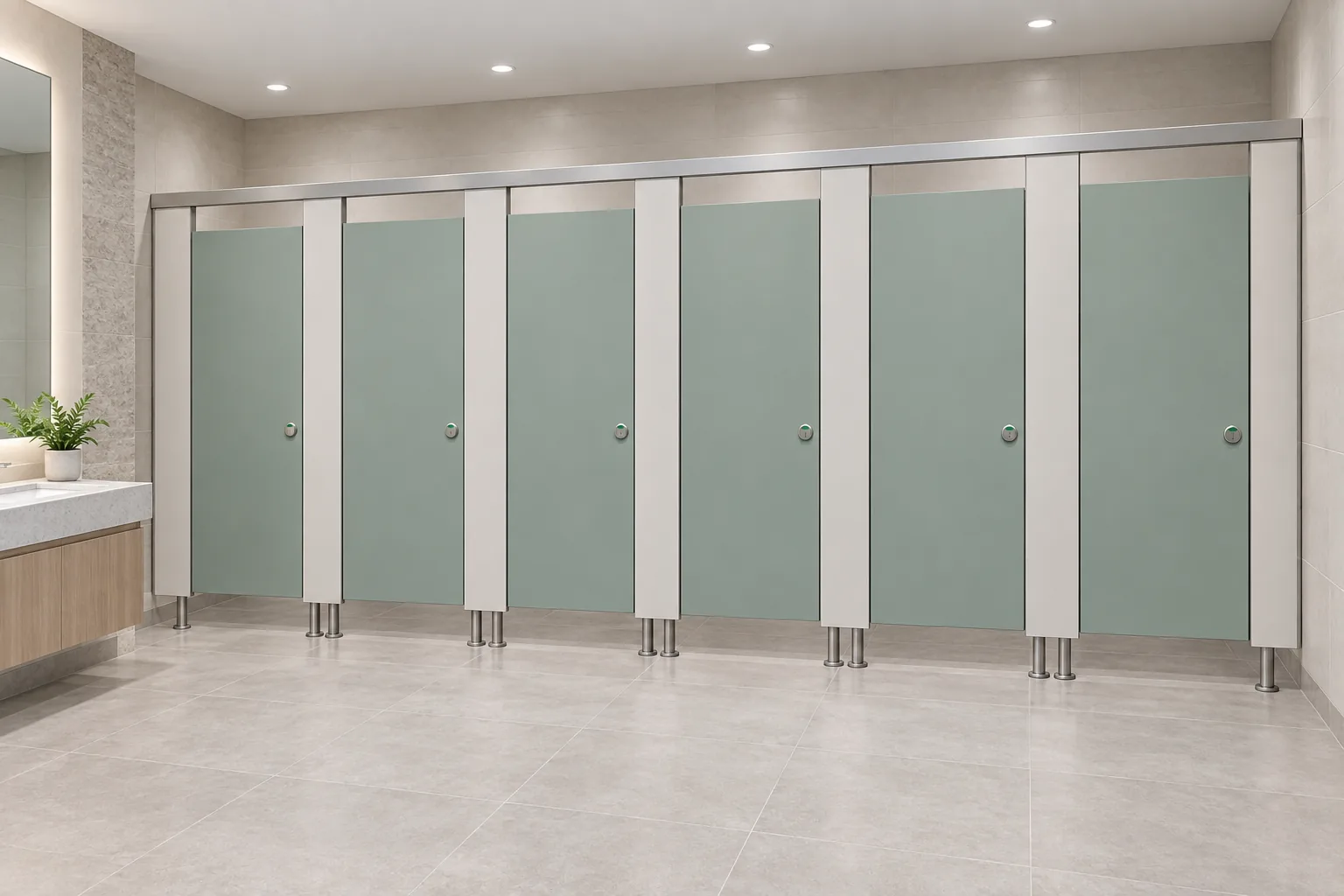
Door operation deserves its own record. The team should note the intended opening direction, the hardware interface and any constraints raised by the building’s access strategy. If the door operation depends on a specific hinge or latch type, that detail belongs in the project-specific evidence set, not in a general product description.
Questions the Team Should Answer Before Sign-Off
- Which drawing revision was used for the final layout review?
- Has the door swing been checked against the approved layout?
- Are the support interfaces confirmed by the relevant structural or architectural party?
- Has the cleaning documentation been matched to the specified finish?
- Are there any local requirements that the project team still needs to verify?
Support Interfaces and Cleaning Documentation
Support interfaces are a common source of late-stage questions. The handover file should record how the cubicle system is expected to connect to the building structure, but it should not invent fixing details, load capacities or concealed construction. Those items require approved technical evidence for the specific project.
Cleaning documentation is equally practical. Different finishes and materials may have different care instructions, and the handover file should include the documentation that applies to the specified product. This is not a claim about antimicrobial or waterproof performance; it is simply a record of the care information supplied.
Evidence Boundaries: What a Handover File Should Not Claim
A handover file becomes unreliable when it mixes general references with project-specific claims. The following evidence note is a reminder of the boundary.
Evidence note: Do not treat HPL, compact laminate, phenolic or stainless steel as interchangeable. Do not infer hidden construction from illustrations. Do not describe toilet cubicles as movable operable walls or introduce suspended wall travel, stacking or parking mechanisms. Any project-specific material, hardware, dimension, finish, mounting or rating requires matching approved technical evidence.
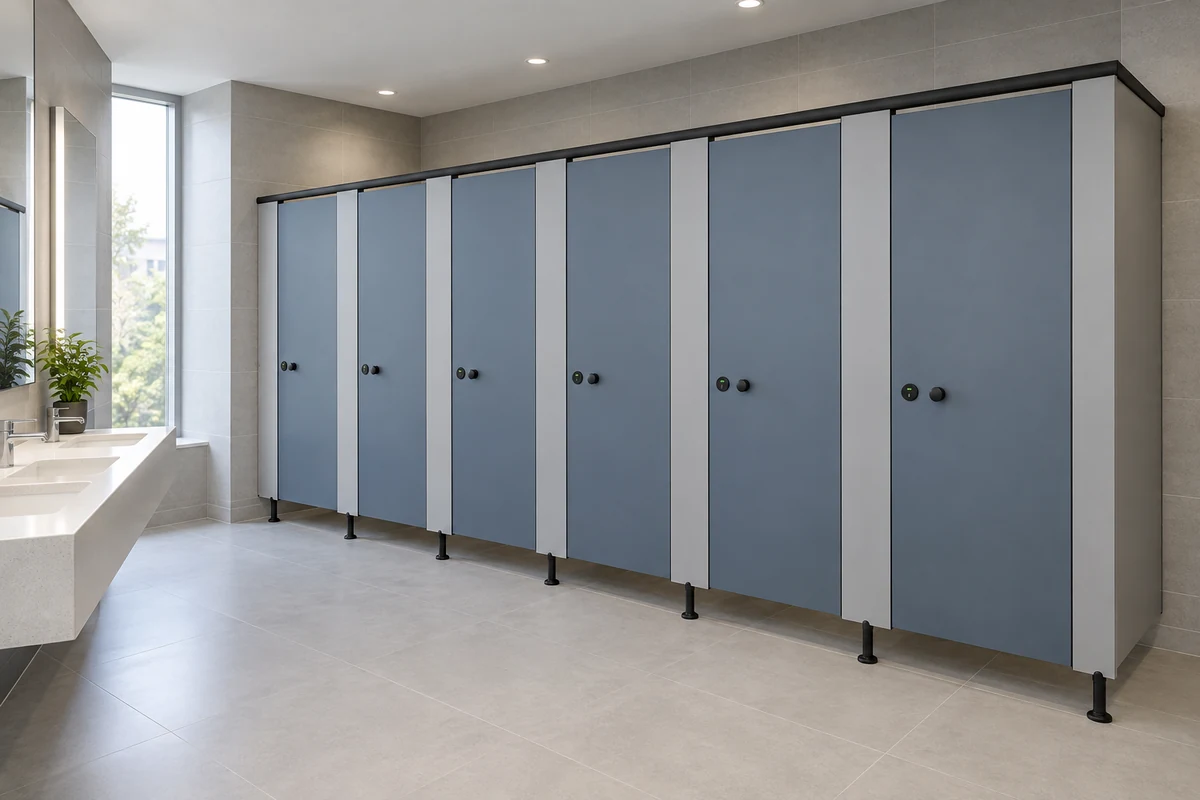
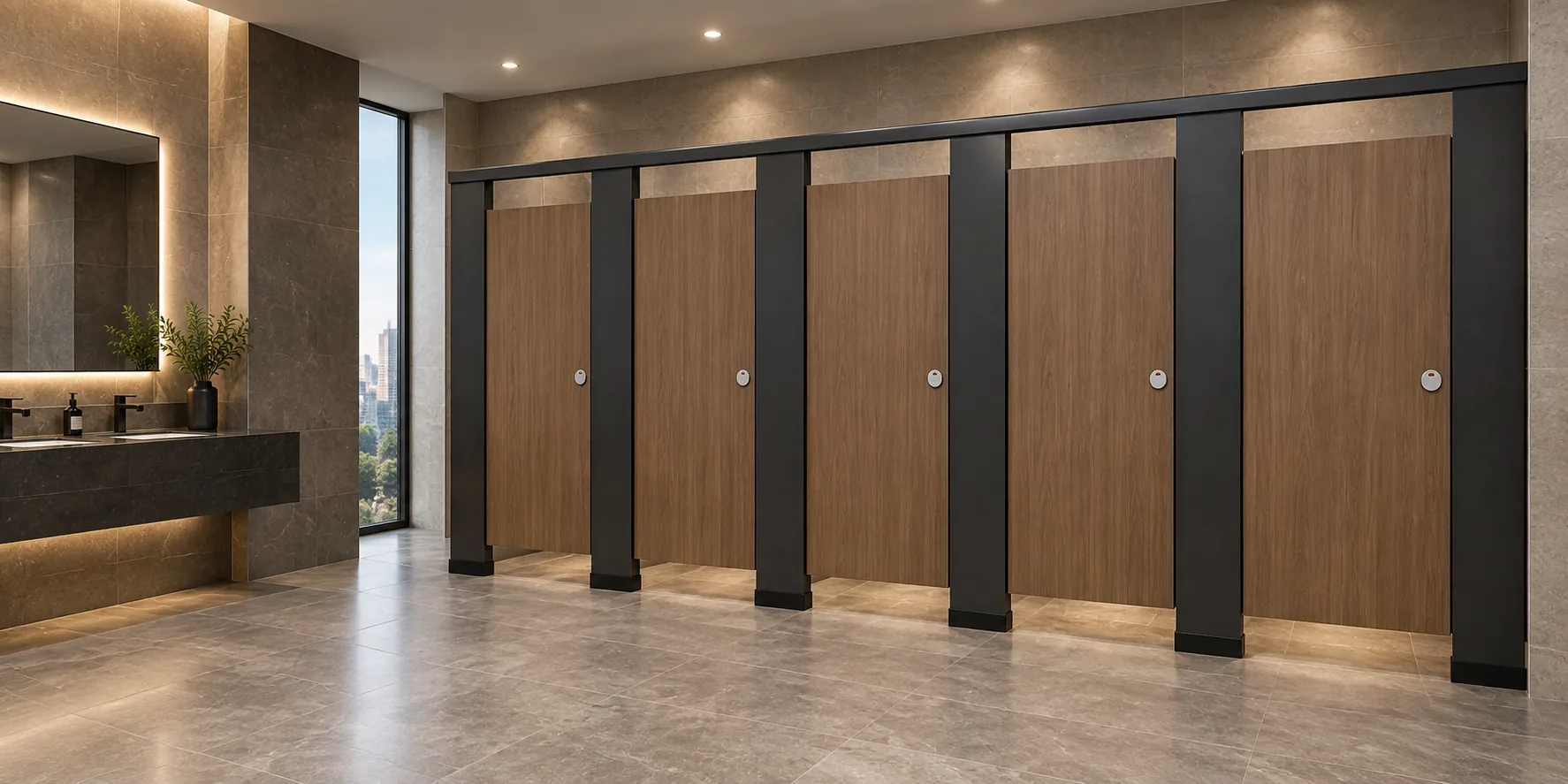
Illustrations show generic design references, not completed EBUNGE customer projects. They can support a planning conversation, but they cannot replace the approved project documents.
Coordination Between Contractors, Architects and Owners
The architect or designer typically leads the layout and privacy review. The contractor coordinates support interfaces and installation sequencing. The owner or operator reviews cleaning documentation and long-term maintenance expectations. The distributor or supplier provides the maintained product information that applies to the specified configuration.
A short coordination table can help the team track these responsibilities without turning the handover file into a contract.
| Item | Typical lead | Evidence needed |
|---|---|---|
| Layout and privacy review | Architect or designer | Approved drawing revision |
| Door operation | Contractor and supplier | Project-specific hardware confirmation |
| Support interfaces | Contractor and structural party | Approved interface details |
| Cleaning documentation | Owner or operator | Finish-specific care information |
| Local requirements | Project team | Applicable local verification |
How to Assemble the File Without Overstating Compliance
Start with the approved layout set and the project-specific evidence that already exists. Add the cleaning documentation and the open items register. Then review the file against the evidence boundaries above. If a statement cannot be supported by approved technical evidence, mark it as an open item rather than presenting it as a confirmed fact.
This approach keeps the handover file useful for closeout and honest about what still needs verification.
Frequently Asked Questions
What is the purpose of a toilet partition handover file?
It records what the project team reviewed, what was approved and what remains open. It supports closeout and coordination without replacing project-specific technical evidence.
Does a handover file need to include material certifications?
Only if those certifications exist for the specific project and have been approved by the relevant parties. A general guide cannot confirm certification, ratings or performance for a particular building.
Can a catalogue illustration be used as proof of construction?
No. Illustrations show generic design references, not completed EBUNGE customer projects. Hidden construction should not be inferred from an illustration.
Who should lead the layout and privacy review?
The architect or designer usually leads this review, with input from the contractor and owner. The handover file should record the approved drawing revision used for that review.
How should cleaning documentation be handled?
Include the care information that applies to the specified finish. Do not add antimicrobial or waterproof claims unless they are supported by approved project-specific evidence.
What should happen if an item cannot be confirmed?
List it in the open items register. The project team can then obtain the missing evidence before final acceptance rather than presenting an unverified statement as fact.
Conclusion: A Handover File Built on Evidence
A useful toilet partition handover file is clear about its sources. It documents the approved layout, the door operation review, the support interface discussion, the cleaning documentation and the local requirements the team has checked. It also marks anything that still needs project-specific evidence.
To review maintained product context or discuss a project-specific configuration, visit the EBUNGE products page, explore the resources section for planning guidance, or contact the team with your project questions.