
How to Close Out Toilet Partition Handover Records Without Gaps
Quick project answer
Toilet partition handover records are the final written trail that lets an owner, facility team or incoming contractor understand what was reviewed, what was supplied and what still needs confirmation. For overseas project teams, the goal is not a thicker file. It is a file with no silent gaps.
This guide sets out a practical closeout framework for commercial toilet partition and toilet cubicle scopes, while keeping every project-specific material, hardware, dimension, finish, mounting and rating tied to matching approved technical evidence.
Why Handover Records Fail at the Last Stage
Most closeout problems are not created on the final day. They accumulate because information was assumed rather than recorded. A drawing revision is issued, but the review comment is not logged. A door operation question is answered verbally on site. A cleaning instruction is passed to the facilities team without a document reference.
When the handover pack is assembled, these gaps become visible. The project team then has to reconstruct decisions under time pressure. The project team should confirm project-specific requirements against the relevant approved technical evidence.
Define the Record Scope Before You Build It
Before drafting any closeout document, agree what the record is expected to cover. For a toilet partition scope, that usually includes layout review, privacy considerations, door operation, support interfaces, cleaning documentation and applicable local requirements. The record should state which items were reviewed and which items remain subject to project-specific confirmation.
This is also where the evidence boundary matters. EBUNGE product category includes commercial Toilet Partition / Toilet Cubicle. Those items require matching approved technical evidence.
A Numbered Closeout Process for Project Teams
- Confirm the record owner. Name the person responsible for assembling, checking and issuing the handover pack.
- List the reviewed documents. Record drawing numbers, revision dates and the review comments that were closed.
- Separate confirmed facts from open items. Use two columns so no assumption is presented as a verified outcome.
- Log layout and privacy review. Note what was reviewed without asserting compliance with any local requirement.
- Log door operation review. Record the operation points discussed and any item still requiring project-specific evidence.
- Log support interface review. Identify the interfaces reviewed and the responsible party for each open point.
- Attach cleaning documentation. Reference the cleaning guidance provided for the project, without inventing performance claims.
- Issue the pack with a clear open-items list. A short, honest list is more useful than a closed-looking file with hidden gaps.
Decision Checklist for the Handover Pack
Use this checklist as a final review before the pack is issued. It is designed to expose gaps, not to replace project-specific technical evidence.
- Is the record owner named and contactable?
- Are all reviewed drawings listed with revision dates?
- Are layout and privacy review notes included?
- Are door operation review notes included?
- Are support interface responsibilities recorded?
- Is cleaning documentation referenced?
- Are applicable local requirements listed as review items, not as verified compliance?
- Are all open items assigned to a responsible party with a target date?
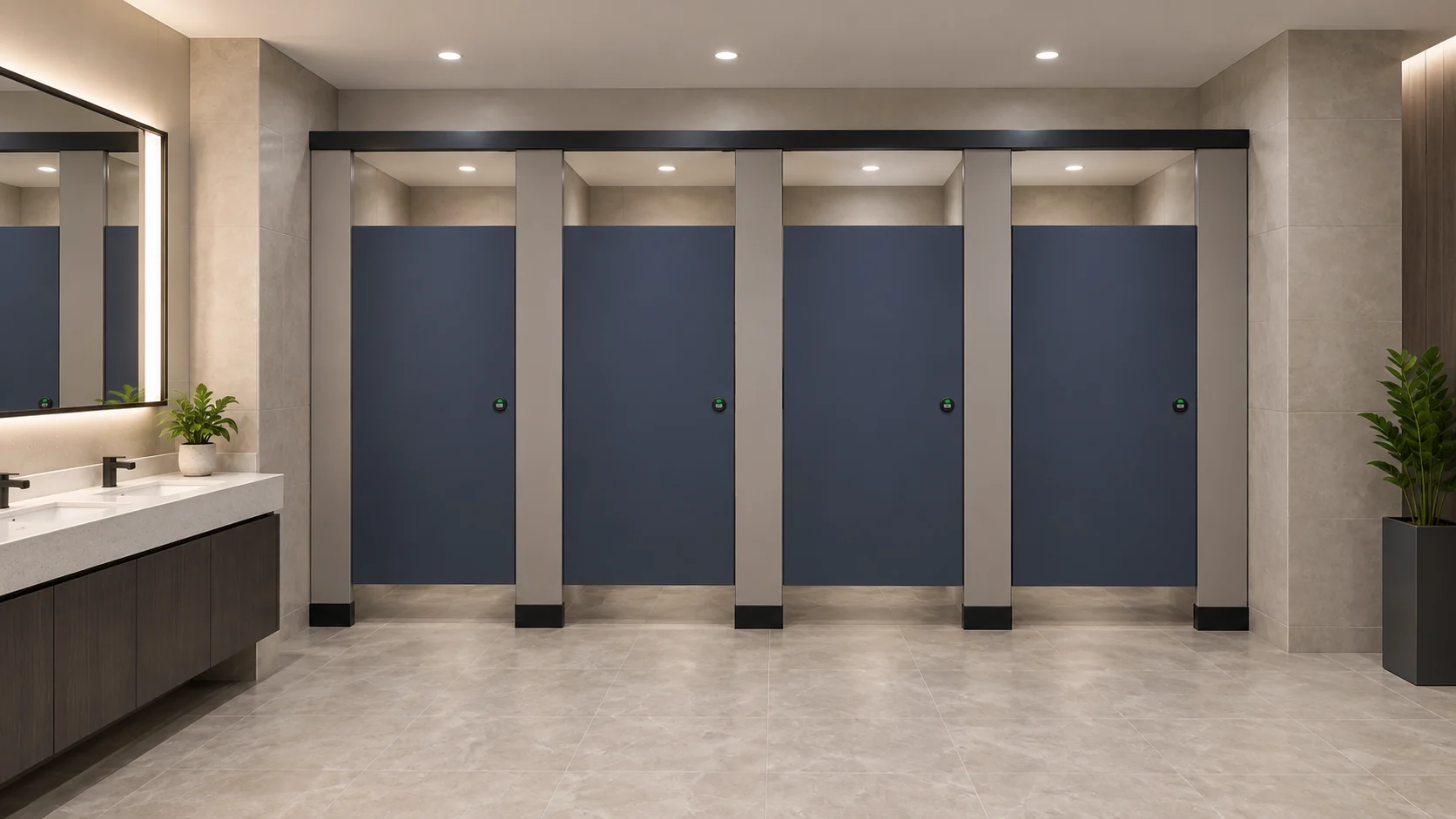
- Are illustrations labelled as generic design references, not completed EBUNGE customer projects?
Evidence Notes: What the Record Can and Cannot Say
An evidence note is a short statement that explains the status of a claim. It prevents a reader from treating a planning assumption as a confirmed product fact. In a toilet partition handover record, evidence notes are useful wherever a statement could be read as a performance, engineering or commercial conclusion.
Evidence note: This record describes project-team review items. It does not confirm material composition, dimensions, load capacity, fire, acoustic, waterproof or antimicrobial performance, prices, warranties or service life. Any project-specific material, hardware, dimension, finish, mounting or rating requires matching approved technical evidence.
Keep evidence notes close to the item they qualify. A note buried in an appendix is easy to miss. A note placed beside the relevant review line is harder to misread.
Coordinating Across Disciplines Without Overclaiming
Toilet partition handover records sit at the intersection of architecture, interior design, construction, facilities management and procurement. Each discipline reads the same document differently. The architect looks for layout and privacy review. The contractor looks for support interfaces and installation responsibilities. The owner looks for cleaning documentation and open items.
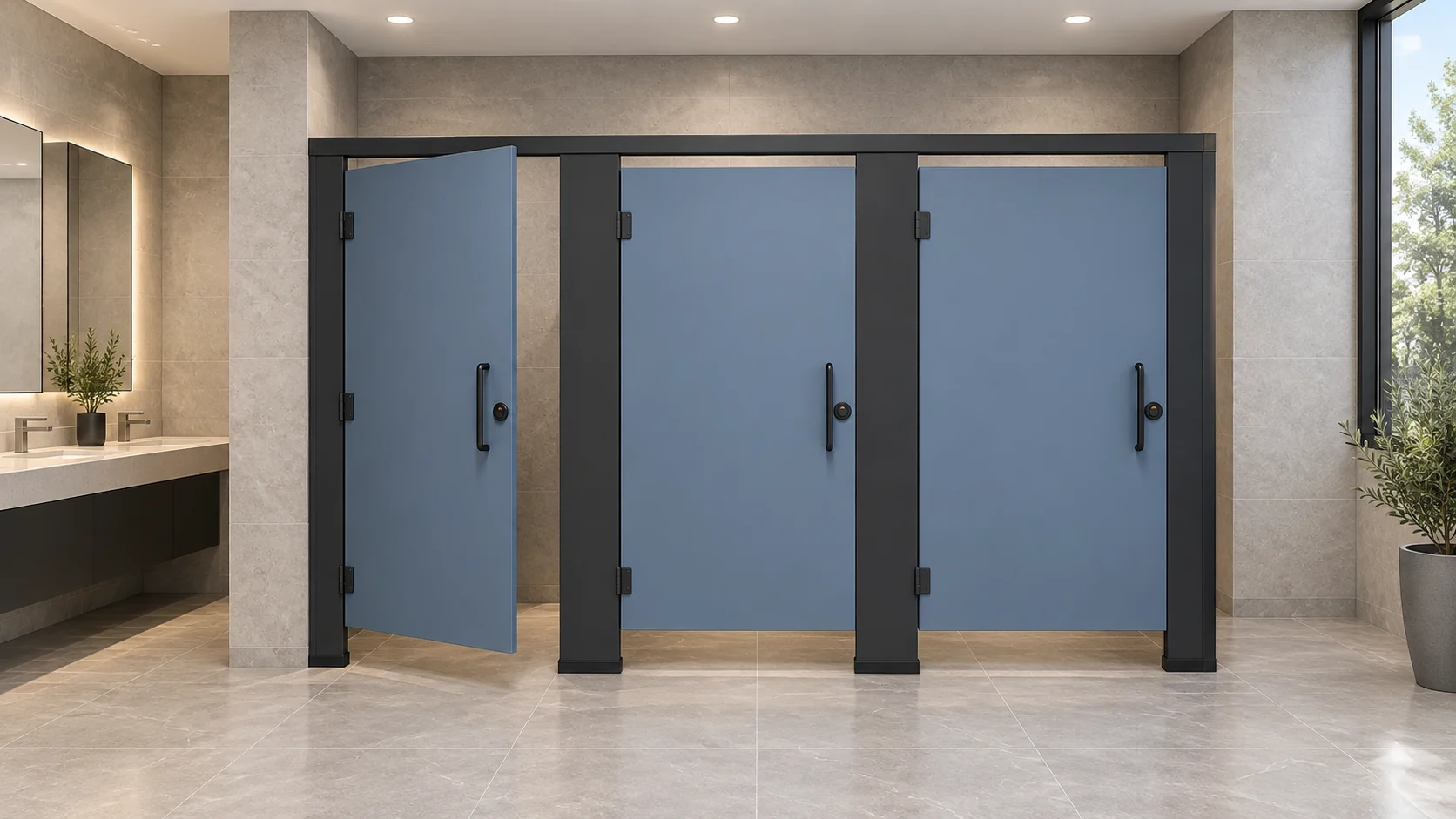
Toilet Partition coordination improves when the record uses plain status labels: reviewed, open, or requires project-specific evidence. Avoid labels such as approved or compliant unless the project has the matching approved technical evidence to support them.
Common Gaps and How to Close Them
Gap 1: Unlabelled illustrations
Illustrations show generic design references, not completed EBUNGE customer projects. Label them clearly so no reader treats a drawing as a record of a delivered installation.
Gap 2: Mixed material assumptions
Do not treat HPL, compact laminate, phenolic or stainless steel as interchangeable. If the project uses a specific material, record the evidence reference rather than inferring construction from an illustration.
Gap 3: Door operation described as a performance claim
Record what was reviewed about door operation. Do not convert that review into an unverified performance statement.
Gap 4: Cleaning documentation missing
Reference the cleaning documentation supplied for the project. If it is not yet available, list it as an open item.
FAQ: Toilet Partition Handover Records
What should a toilet partition handover record contain?
It should contain the record owner, reviewed drawing references, layout and privacy review notes, door operation review notes, support interface responsibilities, cleaning documentation references, applicable local requirements listed as review items, and a clear open-items list.
Can a handover record confirm compliance with local requirements?
No. The record can describe project-team review of applicable local requirements, but it should not assert unverified compliance. Compliance confirmation requires the relevant project-specific evidence and the responsible authority.
How should project-specific materials and hardware be recorded?
Record them only where matching approved technical evidence exists. Do not infer material composition, hardware details, dimensions, finishes, mounting methods or ratings from generic illustrations or category descriptions.
Are illustrations in the record proof of a application reference?
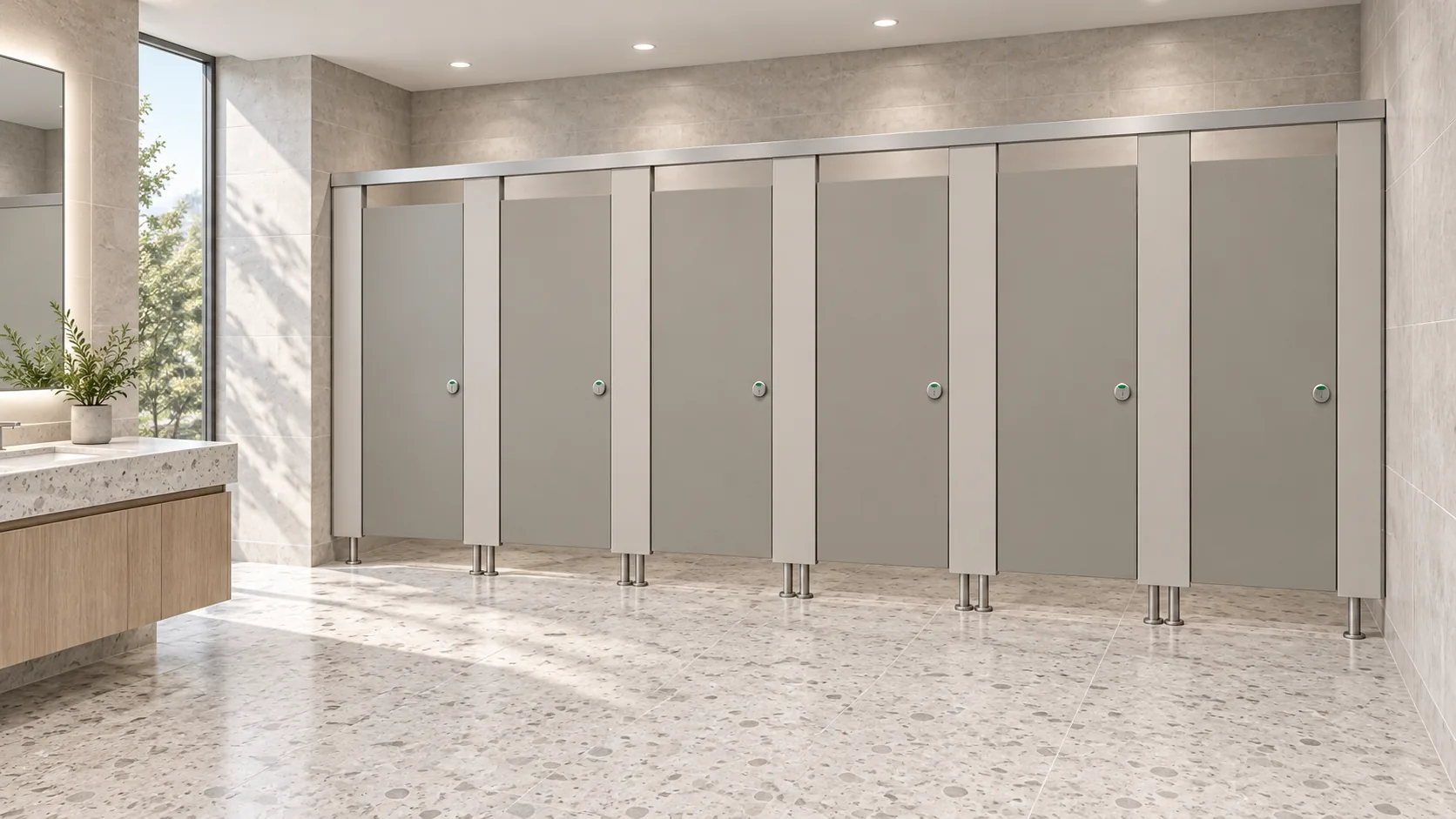
No. Illustrations show generic design references, not completed EBUNGE customer projects. They support planning discussion only.
What is the best way to handle open items at handover?
List each open item with a responsible party and a target date. A short, honest open-items list is more useful than a closed-looking pack that hides unresolved questions.
Where can project teams find product context?
Start with the EBUNGE product overview for category context, then use the resources section for general guidance. For project-specific questions, contact the team so the right evidence can be identified.
Conclusion: Close the Gaps, Not the Questions
A strong toilet partition handover record does not pretend that every question is answered. It shows which items were reviewed, which items are confirmed by matching approved technical evidence, and which items remain open. That structure protects the owner, the contractor and the facilities team long after the project team has left site.
Use the process and checklist above as a starting framework. Adapt it to your project drawings, your local requirements and your approved technical evidence. Where a project-specific material, hardware, dimension, finish, mounting or rating is involved, confirm it against the relevant evidence before it enters the record.
To discuss your project scope and the evidence you need, contact EBUNGE.