
Accessibility and Circulation Review for Toilet Partition Hardware
Quick project answer
Review focus: toilet partition.
Toilet partition hardware accessibility is a coordination topic, not a single product attribute. For overseas contractors, architects, interior designers, owners and renovation teams, the practical question is how to review layouts, door operation, support interfaces and cleaning documentation against applicable local requirements without assuming compliance. EBUNGE product category includes commercial Toilet Partition / Toilet Cubicle. That confirmed category fact is the starting point; every project-specific material, hardware, dimension, finish, mounting or rating still requires matching approved technical evidence.
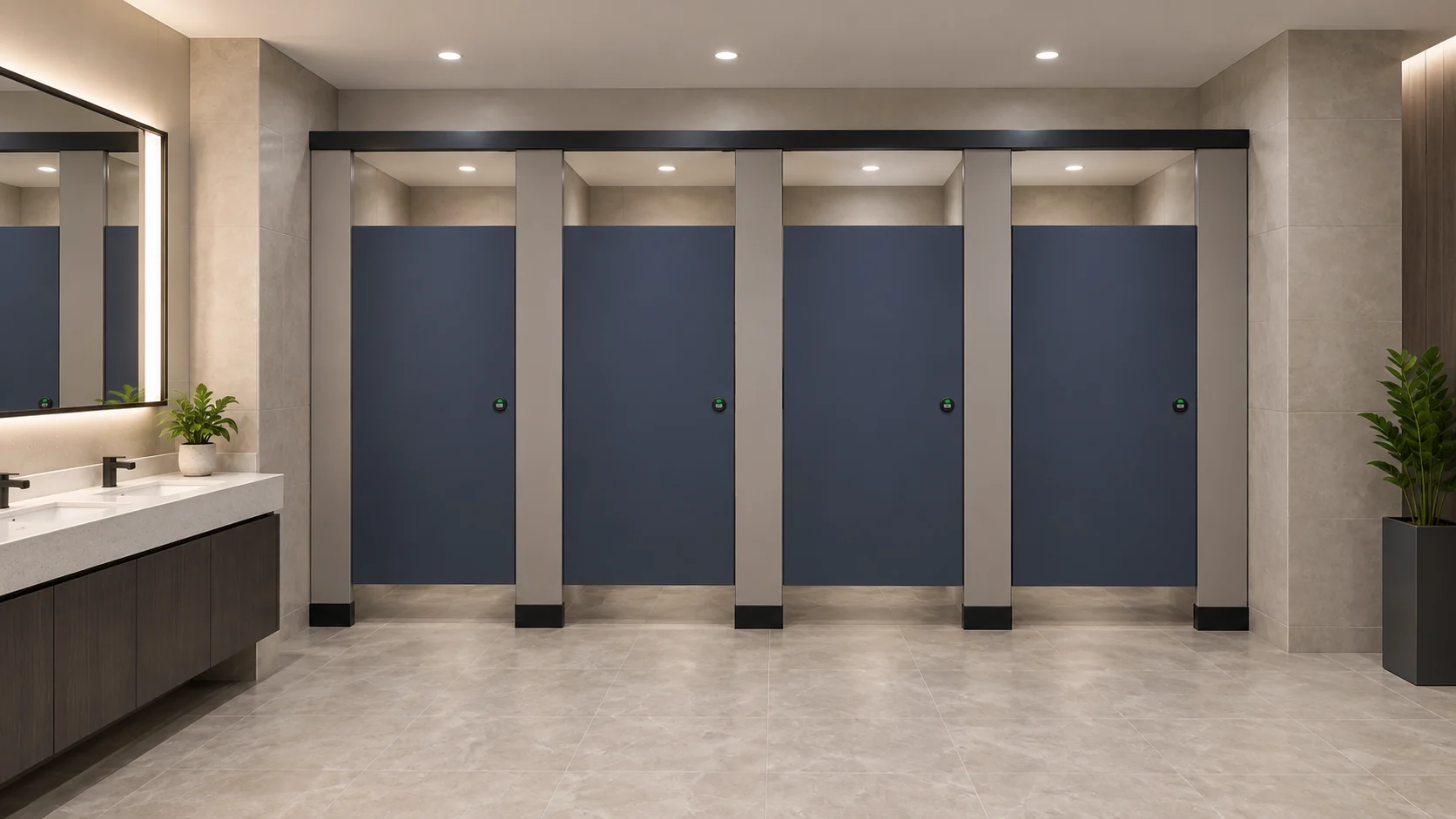
This article sets out an evidence-bounded review framework. It does not certify any configuration, and it does not treat HPL, compact laminate, phenolic or stainless steel as interchangeable. Illustrations show generic design references, not completed EBUNGE customer projects.
Why Accessibility Review Starts With Evidence Boundaries
Project review term: toilet partition.
Accessibility discussions often drift into assumptions about clearances, door forces, hardware types or performance ratings. Those assumptions can create risk when they are not tied to maintained product facts and project drawings. A disciplined review separates what is known from what must be confirmed.
For a commercial toilet cubicle project, the known fact is the product category. Everything else — panel material, hardware model, mounting detail, finish, dimension and any rating — belongs to a project-specific evidence set. If that evidence is not available, the correct action is to request it, not to infer it from a photograph or a generic illustration.
What the project team can review without new claims
Teams can review layout logic, circulation paths, privacy expectations, door operation sequences, support interfaces and cleaning documentation. These are planning and coordination subjects. They become claims only when someone asserts a measured result, a certification or a compliance outcome.
What must wait for approved technical evidence
The project team should confirm project-specific requirements against the relevant approved technical evidence. The same applies to hardware selection and mounting conditions. Without that evidence, the review should record an open item rather than a conclusion.
A Six-Step Circulation and Hardware Review Process
Coordination scope: toilet partition.
The following sequence helps a project team move from layout intent to documented decisions. It is a coordination method, not a compliance checklist, and it does not replace applicable local requirements.
- Confirm the room layout and entry sequence. Record how users approach, enter and move through the toilet area. Note any constraints that affect cubicle positions.
- Map the circulation path around open doors. Review how a door swing or an outward-opening leaf interacts with the aisle, adjacent cubicles and any turning space shown on the drawing.
- Review privacy expectations. Identify sightlines, gaps and panel interfaces that the design team intends to address. Treat these as design intentions until verified.
- Check door operation and hardware interfaces. Document the intended operation, the hardware family under consideration and the support conditions required by the partition system.
- Coordinate support interfaces. Confirm how the partition relates to floor, wall, ceiling or frame conditions shown in the project drawings. Do not infer hidden construction from an illustration.
- Record cleaning and maintenance documentation needs. Note what information the owner or facility team will require for routine cleaning and hardware checks.
Decision Checklist for Project Teams
Use this checklist during design review meetings. Each item should have an owner and a status: confirmed, open or not applicable.
- Layout drawing shows cubicle positions, aisle widths and door swing direction.
- Door operation sequence is described for each cubicle type.
- Hardware family and mounting interface are identified in the project specification.
- Support conditions at floor, wall and any frame are shown on the drawing.
- Privacy intentions are recorded as design notes, not as performance claims.
- Cleaning and maintenance documentation requirements are listed for handover.
- Applicable local requirements are identified by the responsible local party.
- Any missing technical evidence is logged as an open item before procurement.
Door Operation, Privacy and Support Interfaces
Door operation is where accessibility and circulation most often intersect. A door that is easy to understand in a plan view may raise questions about approach space, hardware reach or support conditions once the partition system is selected. The review should capture those questions early.
Privacy is similarly a design intention. Support interfaces deserve the same discipline: the drawing should show how the partition is supported, and the specification should identify the hardware family without assuming hidden construction.
Coordination questions for the design team
Ask whether the door swing conflicts with the circulation path, whether the hardware interface matches the support condition, and whether the cleaning documentation will be available at handover. These questions keep the review grounded in observable project information.
Evidence note
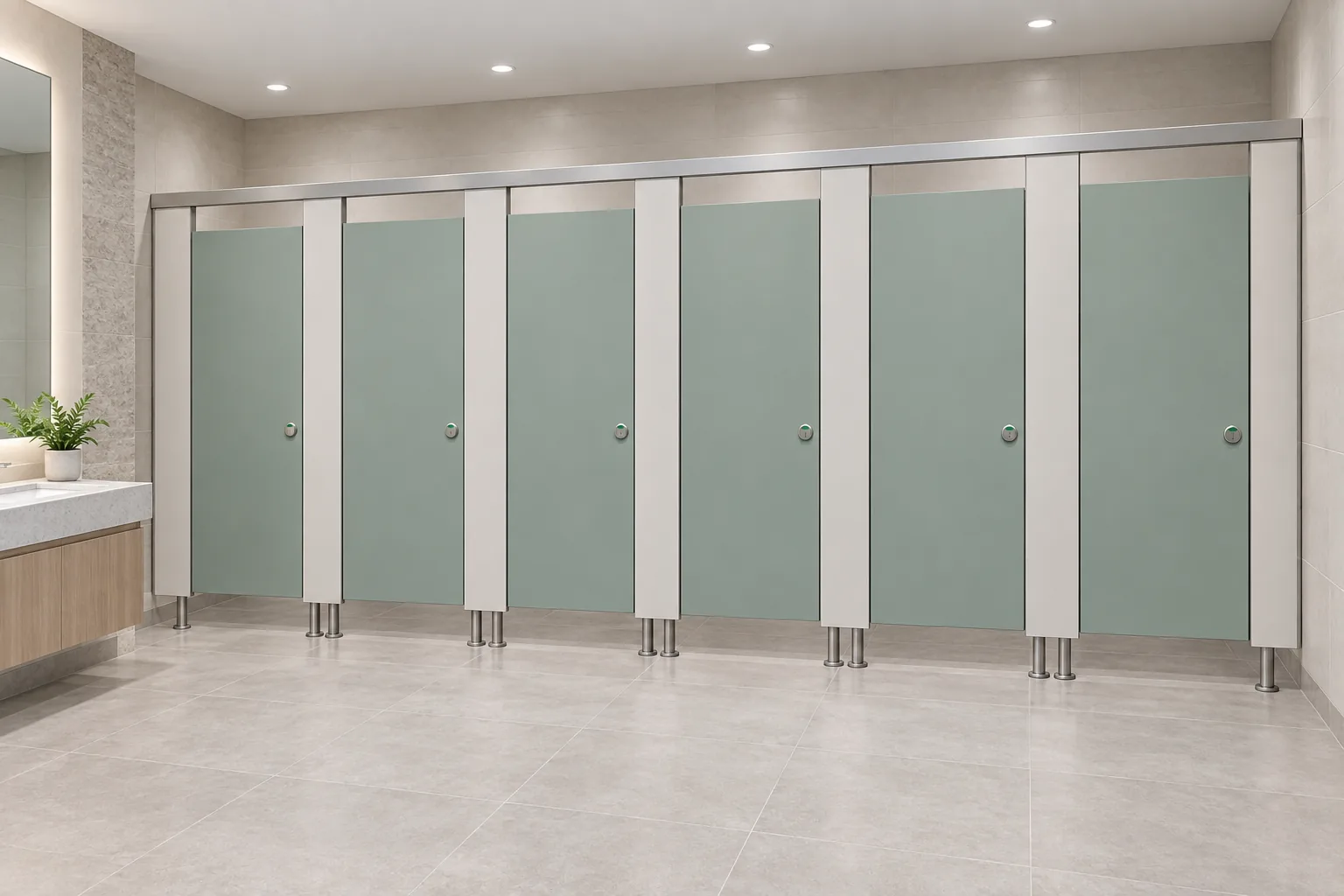
Any project-specific material, hardware, dimension, finish, mounting or rating requires matching approved technical evidence. Illustrations show generic design references, not completed EBUNGE customer projects.
Cleaning Documentation and Handover
Cleaning documentation is often treated as an afterthought, yet it affects how a facility team maintains the partition hardware over time. The project team should identify what information the owner needs, who will provide it and when it will be issued.
This is a documentation coordination task, not a performance claim. The review can note that cleaning instructions and hardware check procedures are required, without asserting a specific service life or warranty. If the project specification calls for particular documentation, that requirement should be confirmed against the approved technical evidence for the selected configuration.
Local Requirements and Compliance Language
Applicable local requirements vary by jurisdiction and by building type. The project team should identify the responsible local party and record the requirements that apply. This article does not assert compliance with any code, standard or regulation.
When a review item depends on a local requirement, the correct output is a documented question or a confirmed local interpretation. The team should avoid language that implies approval, certification or measured performance unless that evidence is part of the approved project file.
FAQ: Toilet Partition Hardware Accessibility
What information is required for a toilet partition hardware accessibility review?
At minimum, the project team needs layout drawings, door operation intent, the hardware family under consideration, support interface details and the applicable local requirements identified by the responsible local party. Any material, dimension, finish, mounting or rating claim requires matching approved technical evidence.
Can a generic illustration be used to confirm a project configuration?
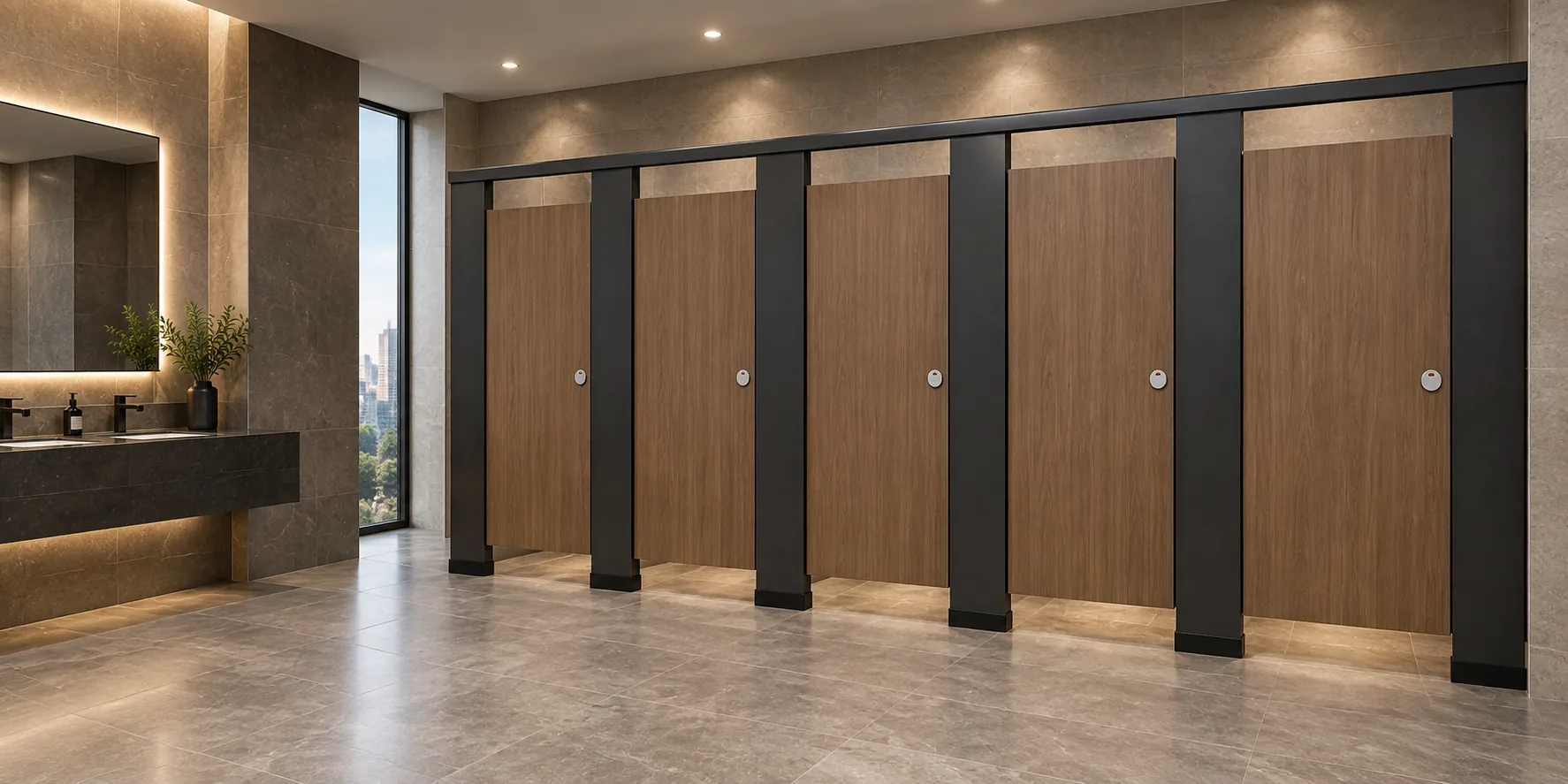
No. Illustrations show generic design references, not completed EBUNGE customer projects.
How should the team handle missing performance evidence?
Record it as an open item. The review should state what is known and what must still be confirmed.
Does this review process certify compliance?
No. It is a coordination framework for project teams. Compliance with applicable local requirements must be determined by the responsible local party using the approved project evidence.
Where can project teams find product context?
Start with the EBUNGE product category overview for maintained public context, then use the resources section for supporting guidance. Project-specific questions should be directed through the contact route so that the correct evidence can be identified.
What should be documented before procurement?
Document the confirmed layout, door operation intent, hardware family, support interfaces, cleaning documentation requirements and any open evidence items. This record helps the project team avoid unsupported assumptions during ordering and installation coordination.
Conclusion: Keep the Review Evidence-Bounded
The confirmed product category gives the team a starting point, but project-specific material, hardware, dimension, finish, mounting and rating decisions require matching approved technical evidence. By reviewing layout, privacy, door operation, support interfaces, cleaning documentation and applicable local requirements in a structured way, project teams can reduce assumptions and keep decisions traceable.
To discuss a project-specific review, contact EBUNGE with your drawings and evidence requirements. The team can help identify which items are already covered by maintained product context and which need further confirmation.