
Bid Clarification Meetings for Toilet Partition Hardware Scope
Quick answer: toilet partition
Toilet partition hardware bid clarification is the meeting stage where a project team turns a broad tender description into a reviewable scope. It is not the moment to assume a material, a fixing detail or a performance rating. It is the moment to list what is known, what is missing and who must confirm it. EBUNGE product category includes commercial Toilet Partition / Toilet Cubicle, and that category fact is the correct starting point for an evidence-bounded discussion.
Why Hardware Scope Drifts During Tendering
Hardware scope drifts because different documents describe different things. A drawing may show a cubicle layout, a specification may name a finish, and a bill of quantities may list a hardware allowance. None of these automatically confirms a project-specific material, fixing, dimension or rating.
Clarification meetings should therefore separate three layers: confirmed product category information, project-specific requirements that still need approved technical evidence, and commercial or compliance items owned by other parties. When those layers are mixed, bidders price assumptions rather than scope.
What the Meeting Should Actually Decide
A productive agenda produces decisions, not a longer question list. The chair should aim to close or formally park each item, with a named owner and a required document.
Core decision areas
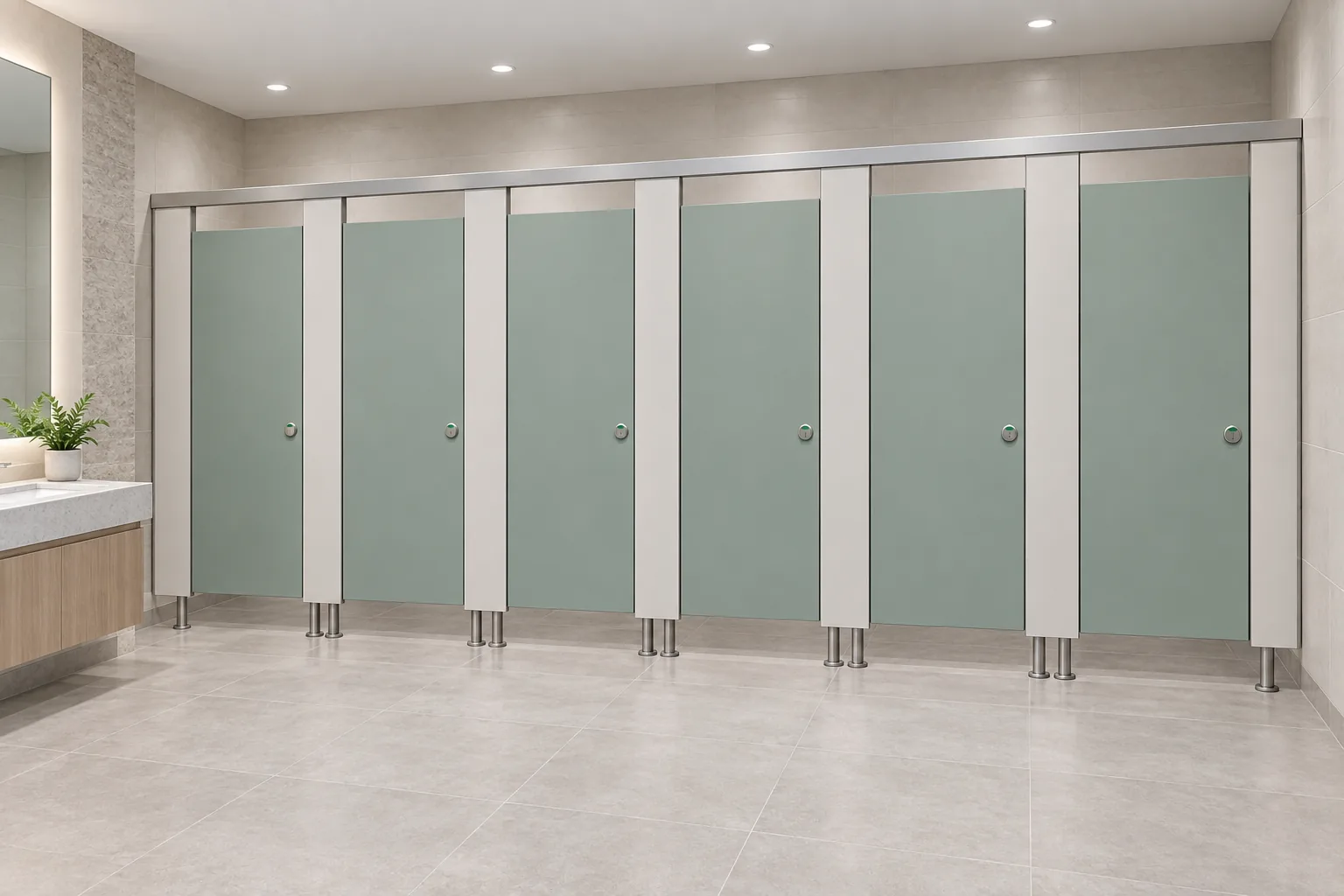
- Layout and privacy intent: confirm the cubicle arrangement shown on the current drawing and record any privacy expectation as a design requirement to be verified, not as a product claim.
- Door operation: agree the intended direction of opening, the interface with adjacent elements and who supplies each part of the assembly.
- The project team should confirm project-specific requirements against the relevant approved technical evidence.
- Cleaning documentation: agree which cleaning instructions and maintenance information the project expects to receive.
- Applicable local requirements: list the regulations the project team must check, without asserting that any unverified configuration complies.
A Numbered Process for Running the Clarification
- Issue a scope register before the meeting. List every hardware and interface item mentioned in the tender documents, with a status of confirmed, open or not applicable.
- Mark the evidence gap. For each open item, state what approved technical evidence would close it.
- Walk the drawing set. Review layouts, elevations and door swings together so that no party is reading a different revision.
- Confirm responsibility boundaries. Record who supplies, who installs and who inspects each interface.
- Capture local requirement owners. Assign each applicable local requirement to the party responsible for verifying it.
- Publish minutes with an action table. Include owner, due date and the document that will close the action.
- Re-issue the revised scope. Only after actions close should the scope be treated as stable for pricing.
Evidence Boundaries Every Bid Team Should State
Clarification is strongest when the boundaries are written into the minutes. The following evidence note can be adapted to most tender reviews.
Evidence note: This discussion covers the commercial toilet partition category and project coordination only. Any project-specific material, hardware, dimension, finish, mounting or rating requires matching approved technical evidence before it is treated as confirmed. Illustrations and generic references show design intent, not completed EBUNGE customer projects.
This wording protects both the buyer and the bidder. It prevents a verbal assumption from becoming a contractual expectation, and it keeps the review focused on documents that can actually be checked.
Coordination Between Disciplines
Toilet partition coordination touches architecture, structure, mechanical services and finishing trades. Each discipline may hold part of the answer, but none of them should be asked to confirm a product fact outside their evidence.
Practical coordination checks
- Compare the current architectural layout with the services drawing before discussing fixing positions.
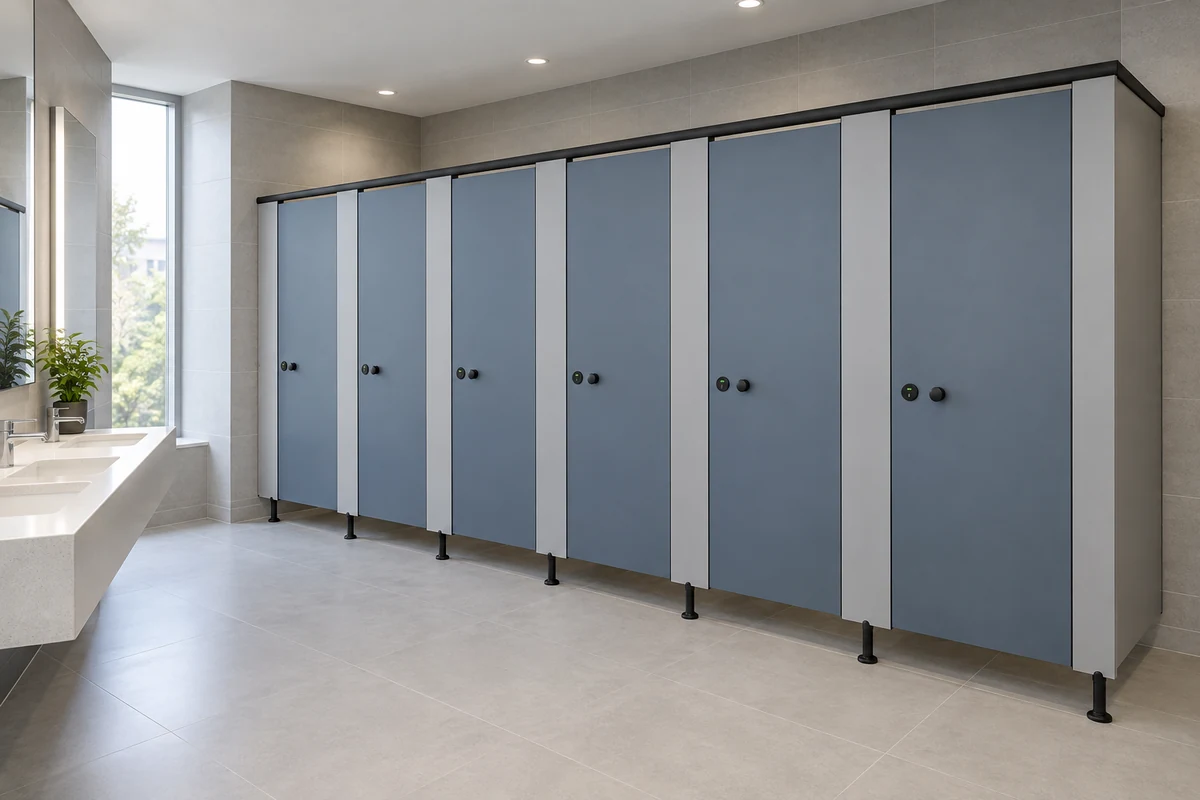
- Confirm that door operation does not conflict with adjacent fixtures, access routes or cleaning equipment.
- Record the support interface assumptions in writing so that structural and finishing teams can respond.
- Keep a single revision register so that clarification minutes reference one drawing set.
Where a coordination item cannot be closed, it should remain open in the register rather than being absorbed into a general allowance.
Common Clarification Mistakes
Several recurring mistakes make hardware scope harder to compare. Treating different partition materials as interchangeable is one example; each material family has its own evidence requirements and should not be substituted without confirmation. Another is inferring hidden construction from an illustration, which is a design reference rather than a construction record.
A third mistake is describing toilet cubicles as movable operable walls. Toilet cubicles are not suspended wall systems, and clarification minutes should not introduce travel, stacking or parking mechanisms that do not belong to the scope. Keeping language precise prevents bidders from pricing the wrong system.
Documentation to Request Before Pricing
The meeting should end with a short list of documents the project team expects to receive. Typical items include the current layout drawing, the door operation schedule, the interface responsibility matrix, the cleaning and maintenance information expected at handover, and the list of applicable local requirements with named owners.
Where a document does not yet exist, the action table should record who will produce it. Project teams can review the maintained product context at the EBUNGE product page and use the resource library for general planning references.
Frequently Asked Questions
What is the purpose of a toilet partition hardware bid clarification meeting?
Its purpose is to convert a broad tender description into a reviewable scope. The meeting records confirmed category information, open project-specific items and the evidence needed to close them.
Which items always need project-specific evidence?
Material, hardware, dimensions, finishes, mounting details and any rating require matching approved technical evidence. They should not be confirmed from a general description or an illustration.
Can the meeting confirm compliance with local requirements?
No. The meeting can list applicable local requirements and assign an owner to verify them, but it should not assert compliance that has not been evidenced.
How should cleaning documentation be handled?
Cleaning documentation should be listed as a deliverable expectation, with the responsible party named. The content of that documentation depends on the final confirmed configuration.
What should happen if a coordination item stays open?
It should remain open in the scope register with an owner and a due date. It should not be absorbed into a general allowance or treated as confirmed.
Are illustrations proof of construction?
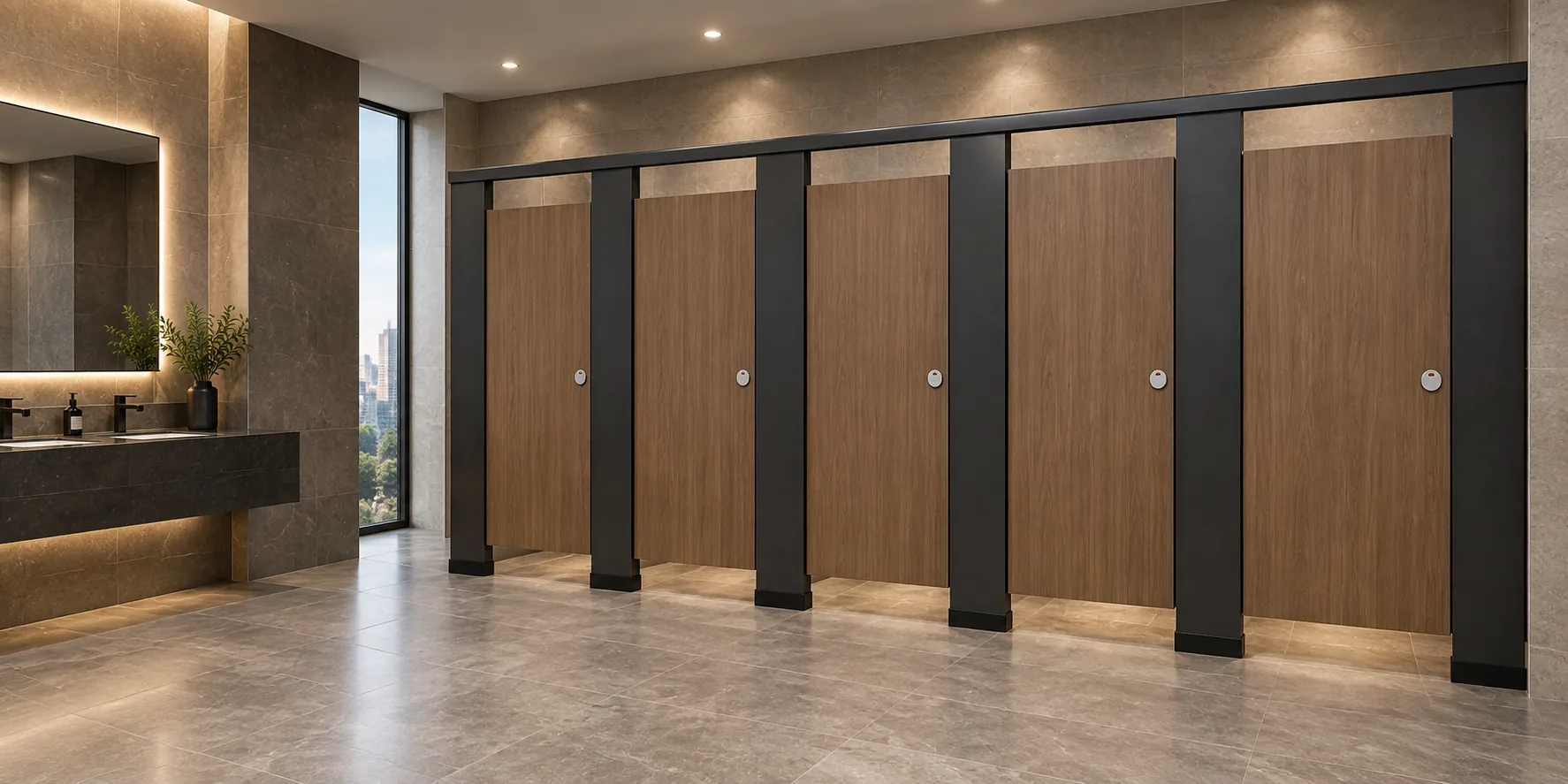
No. Illustrations show generic design references, not completed EBUNGE customer projects, and hidden construction should not be inferred from them.
Conclusion and Next Step
A disciplined toilet partition hardware bid clarification meeting leaves the project with a cleaner scope, a shorter assumption list and a clear evidence trail. Keep category facts separate from project-specific requirements, assign every open item an owner, and refuse to confirm anything that lacks approved technical evidence.
If your team is preparing a tender review, contact EBUNGE to discuss the project context and the documentation your clarification process requires.