
Toilet Partition Hardware Consultant Reviews
Quick project answer
Review focus: consultant reviews.
Toilet partition hardware consultant reviews sit at the intersection of architectural intent, contractor sequencing and facilities expectations. Architects rarely control every hardware decision, yet they are often asked to confirm that door operation, support interfaces and cleaning routines remain coherent across disciplines. This article offers a coordination framework for overseas project teams.
It does not replace project-specific technical evidence, and it does not assume that any material, finish or fixing is interchangeable. EBUNGE product category includes commercial Toilet Partition / Toilet Cubicle, and that category context is the starting point for the review process described here.
Why Hardware Coordination Deserves Its Own Review Stage
Hardware is frequently treated as a late procurement detail, but its interfaces affect early design decisions. Door swing, privacy gaps, support positions and cleaning access all touch architecture, structure and services. When these items are reviewed only at handover, changes become expensive and difficult to document.
A dedicated review stage gives each consultant a defined question set. The architect can then compare responses against approved drawings rather than verbal assumptions. The goal is not to standardise every project, but to make each decision traceable to a maintained document.
What the review stage should not do
It should not convert a generic illustration into a construction detail. It should not treat HPL, compact laminate, phenolic or stainless steel as interchangeable. It should not describe toilet cubicles as movable operable walls or introduce suspended wall travel, stacking or parking mechanisms. Those boundaries keep the conversation factual.
Building the Evidence Base Before Consultant Reviews
Before a consultant review, the project team should assemble the documents that already exist. These typically include architectural layouts, door schedules, finish schedules, cleaning specifications and local authority submissions. The purpose is to identify what is confirmed and what remains open.
Any project-specific material, hardware, dimension, finish, mounting or rating requires matching approved technical evidence. If that evidence is not yet available, the review should record the item as open rather than assume a default. This discipline prevents unverified compliance statements from entering the minutes.
A compact evidence note for the review file
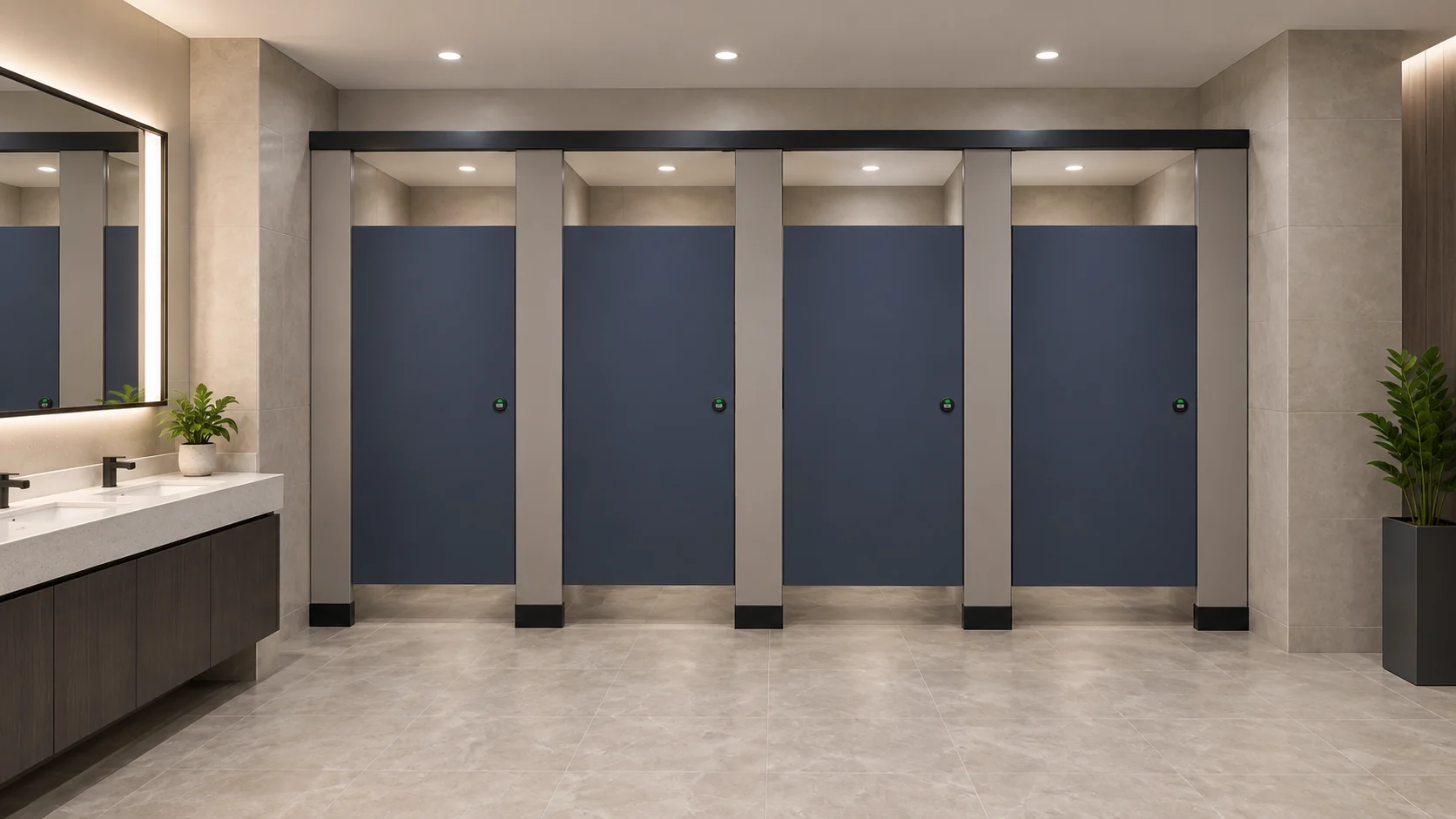
Record each hardware-related decision with its source document, revision date and responsible consultant. If a source is missing, mark the item as pending evidence. Do not infer hidden construction from illustrations, and do not present a generic design reference as a completed EBUNGE application reference.
A Numbered Process for Cross-Consultant Coordination
- Confirm the layout baseline. Agree which drawing revision is under review and note any unresolved dimensional or setting-out questions.
- List hardware interfaces. Identify where door operation, support interfaces and adjacent finishes meet other trades.
- Assign evidence owners. For each interface, name the consultant or supplier responsible for providing approved technical evidence.
- Review privacy and door operation. Discuss sightlines, closing behaviour and user expectations without asserting unverified performance.
- Check cleaning documentation. Confirm that cleaning teams can access surfaces and moving parts as described in the project documents.
- Record local requirements. Note applicable local requirements and the evidence needed to demonstrate them, without claiming compliance before it is verified.
- Issue a consolidated response. Circulate open items, agreed items and evidence gaps to all reviewers.
Decision Checklist for Toilet Partition Hardware Consultant Reviews
The following checklist helps architects keep consultant reviews focused. It is a planning aid, not a compliance certificate.
- Is the reviewed layout the current approved revision?
- Are door operation and privacy expectations described in the project documents?
- Are support interfaces coordinated with structure and adjacent finishes?
- Has the cleaning team’s access and documentation been considered?
- Are applicable local requirements identified with their evidence source?
- Are all project-specific material, hardware, dimension, finish and mounting items backed by approved technical evidence?
- Are generic illustrations clearly labelled as design references rather than completed projects?
Handling Specification Language in Consultant Reviews
Specification language can drift during review. A phrase that begins as a preference may be copied into a tender document as a requirement. Architects can reduce this risk by separating confirmed project facts from open questions in every response.
When a consultant asks for a material or finish, the answer should point to the approved evidence rather than a general product description. This is especially important where the project team is comparing options across different supply chains. The product overview provides category context, but project-specific configuration still requires confirmation.
Questions to ask before closing a review item
Does the item have a named evidence source? Is the evidence current? Does it cover the exact configuration under discussion? If any answer is no, the item should remain open. This approach supports further reading without overstating what a general resource can prove.
Common Coordination Gaps and How to Close Them
One common gap is a mismatch between the architectural layout and the contractor’s installation sequence. Another is a cleaning specification that assumes access that the layout does not provide. A third is a support interface that is left to the contractor without a documented review point.
These gaps are not product failures. They are coordination issues that become visible when the right questions are asked early. The architect’s role is to keep the questions visible and the evidence trail complete.
Working with distributors and renovation teams
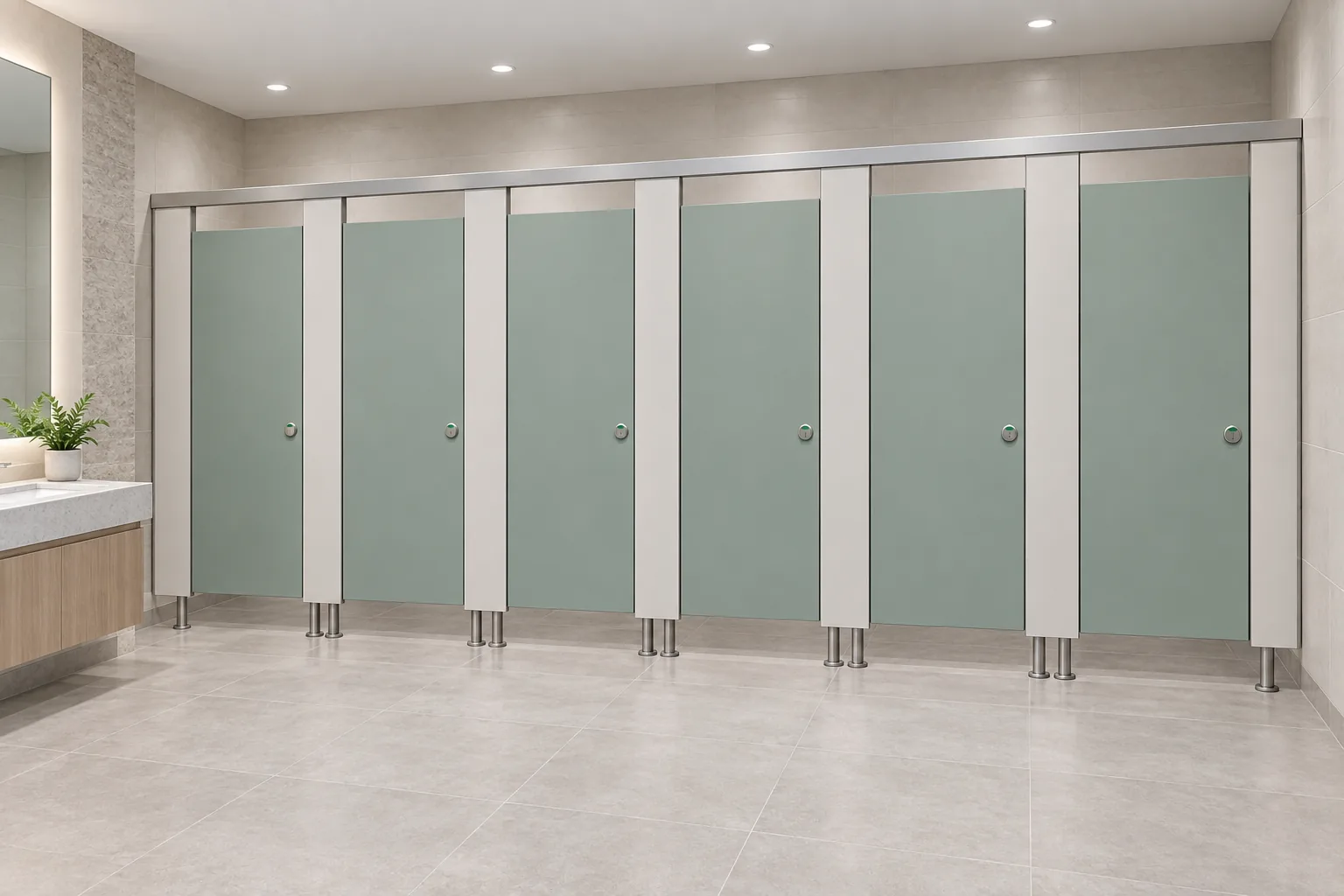
Distributors and renovation companies often hold practical knowledge about site conditions. The project team should confirm project-specific requirements against the relevant approved technical evidence. The same rule applies to any illustration: it shows a generic design reference, not a completed EBUNGE application reference.
Documenting Outcomes Without Overclaiming
After the review, the project team should issue a short record. It can list agreed items, open items, evidence owners and the next review date. This record helps future consultants understand why a decision was made.
It should avoid language that implies certification, rating or performance unless that evidence exists in the project file. It should also avoid treating different materials as equivalent. Clear documentation protects the design team and supports a smoother handover.
Frequently Asked Questions
What information is required before toilet partition hardware consultant reviews begin?
Teams typically need the current layout revision, door and finish schedules, cleaning documentation and any applicable local requirements. Project-specific material, hardware, dimension, finish and mounting items require matching approved technical evidence.
Can a generic illustration be used as a construction detail?
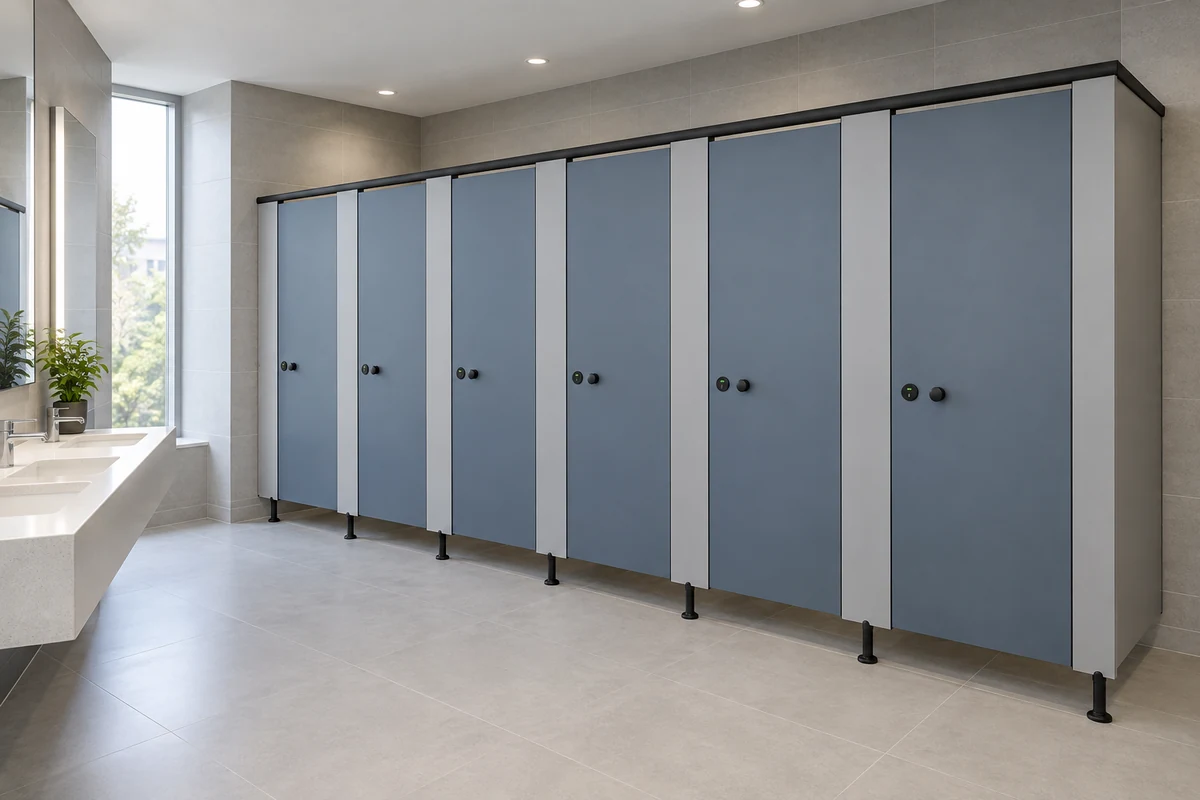
No. Illustrations show generic design references, not completed EBUNGE customer projects. They can support discussion, but they do not replace project-specific drawings or approved technical evidence.
How should the review handle different partition materials?
Do not treat HPL, compact laminate, phenolic or stainless steel as interchangeable. Each material question should be resolved against the approved evidence for that specific project configuration.
Who should attend a hardware coordination review?
Attendance depends on the project, but architects, contractors, relevant consultants and cleaning representatives are common participants. The goal is to align interfaces and evidence owners, not to approve unverified performance.
What should happen when evidence is missing?
The item should be recorded as open. The review can continue, but no compliance or performance conclusion should be drawn until the missing evidence is supplied and checked.
How does this relate to local requirements?
Applicable local requirements should be identified and matched with their evidence source. The review process can describe how the team will address them, but it should not assert unverified compliance.
Conclusion and Next Steps
Coordinating toilet partition hardware across consultant reviews is primarily a documentation and communication task. Architects add value by keeping layouts, privacy, door operation, support interfaces, cleaning documentation and local requirements visible in one evidence-bounded conversation. When a project-specific material, hardware, dimension, finish, mounting or rating is proposed, the team should match it with approved technical evidence before treating it as confirmed.
If your project team needs to discuss category context or request project-specific information, contact EBUNGE to continue the conversation.