
How to Run a Tender Compliance Matrix for Toilet Partition Hardware
Quick answer: toilet partition
Toilet partition hardware tender compliance is rarely a single document. It is a working matrix that connects each tender line to a maintained product fact, a project drawing or an open item that still needs evidence. For overseas contractors, architects, interior designers, owners, renovation companies, distributors and construction teams, the matrix is a coordination tool, not a marketing sheet.
It helps the project team see what is confirmed, what is assumed and what must be resolved before procurement. This guide sets out a practical, evidence-bounded method for building that matrix without inventing performance, materials, dimensions or commercial terms.
Why a Compliance Matrix Beats a Narrative Response
A narrative tender response can read well while hiding gaps. A matrix forces each requirement into a row with a status, a reference and an owner. The project team should confirm project-specific requirements against the relevant approved technical evidence.
The matrix does not replace the specification. It sits beside it, showing where the project team has matching approved technical evidence and where it does not. When a line cannot be evidenced, the honest entry is an open item, not a positive claim.
Define the Matrix Scope Before Writing Rows
Start by agreeing what the matrix covers. For a commercial toilet cubicle package, the scope usually includes layout coordination, privacy expectations, door operation, support interfaces, cleaning documentation and applicable local requirements. Each of these areas needs a named reviewer.
Separate product facts from project decisions
EBUNGE product category includes commercial Toilet Partition / Toilet Cubicle. That is a confirmed category fact. It does not confirm a material, a hardware item, a dimension, a finish, a mounting detail or a rating for any specific project. Those items require matching approved technical evidence before they enter the matrix as compliant.
Record the evidence source for every row
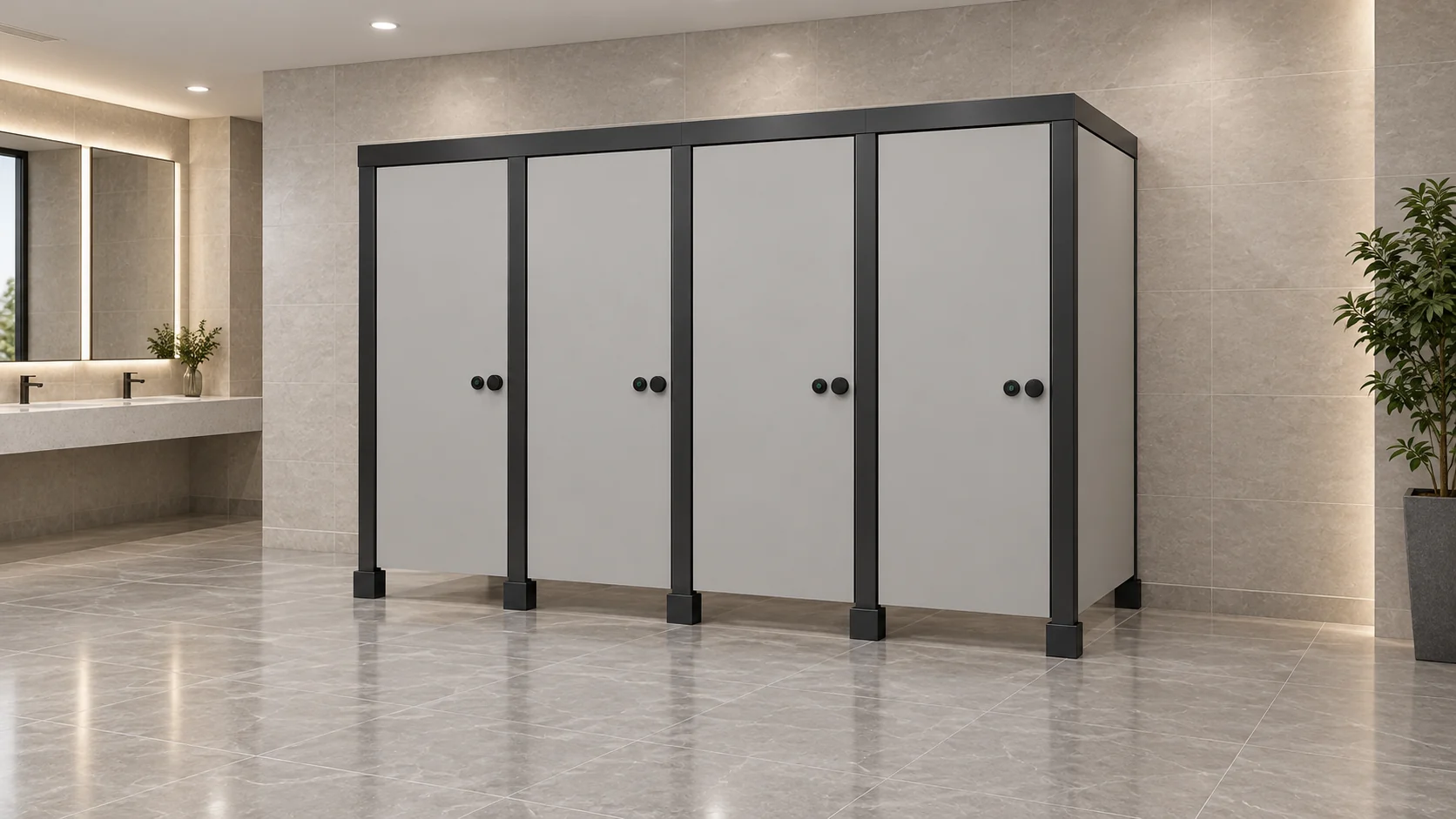
Each row should carry a source column: approved drawing, approved technical submittal, project specification clause or open query. If the source is an illustration, treat it as a generic design reference, not as a completed EBUNGE application reference.
A Step-by-Step Process for Building the Matrix
- Collect the tender documents and list every clause that touches toilet partition hardware.
- Split each clause into a testable requirement, such as door operation, support interface or cleaning access.
- Assign an evidence owner for each requirement: architect, contractor, distributor or owner representative.
- Attach only approved technical evidence; mark everything else as an open item.
- Review the matrix with the project team and record decisions, not assumptions.
- Re-issue the matrix after each design or specification change.
This sequence keeps the conversation on evidence. It also prevents a common failure mode: treating a generic illustration as proof of hidden construction or performance.
Checklist for Project-Team Review
- Layout: does the cubicle arrangement match the approved architectural drawing?
- Privacy: has the project team agreed what privacy means for this facility without asserting an unverified rating?
- Door operation: is the intended direction, clearance and hardware interface documented?
- Support interfaces: are wall, floor and ceiling interfaces coordinated with other trades?
- Cleaning documentation: is the cleaning method and access route described for the facility team?
- Local requirements: has the project team identified applicable local requirements and the evidence needed to address them?
Use this checklist as a review agenda. It is not a compliance certificate. It is a way to expose gaps early, while changes are still inexpensive.
Evidence Notes: What the Matrix Must Not Claim
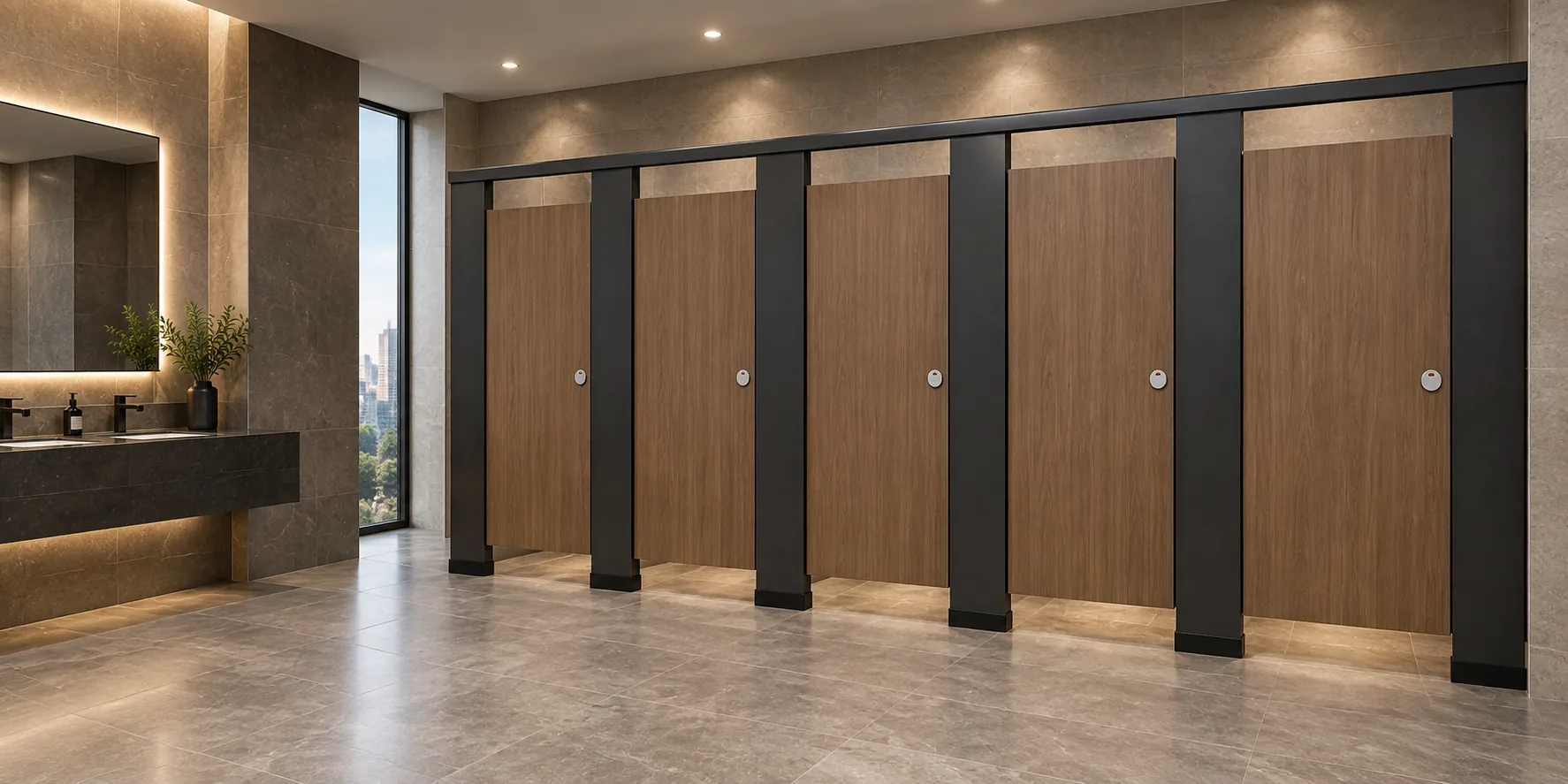
Any project-specific material, hardware, dimension, finish, mounting or rating requires matching approved technical evidence. Illustrations show generic design references, not completed EBUNGE customer projects.
Do not treat HPL, compact laminate, phenolic or stainless steel as interchangeable, and do not infer hidden construction from an illustration. Toilet cubicles are not movable operable walls, so the matrix should not introduce suspended wall travel, stacking or parking mechanisms.
These boundaries protect the project. They also make the matrix more credible to reviewers, because every positive statement can be traced to a maintained fact or an approved project document.
Common Coordination Gaps and How to Close Them

Most tender disputes come from gaps between trades, not from the cubicle itself.
Use a status column that everyone understands
Keep statuses simple: confirmed, open, or not applicable. Avoid vague labels such as compliant or approved unless the evidence is attached. A confirmed row should point to a specific document and revision.
Keep the matrix alive through procurement
A matrix issued once and filed away loses value. Revisit it at each design freeze, at submittal review and before delivery. When a specification changes, update the affected rows and re-circulate the matrix to the project team.
How the Matrix Connects to Product and Resource Pages
The matrix is a project document, but it should link back to maintained public context. The commercial toilet partition product overview gives the category starting point. The resources section supports documentation habits. When a row needs a project-specific answer, the team should use the contact route to request matching approved technical evidence rather than guessing.
It also gives reviewers a clear path from a question to an answer, without turning a generic page into a project commitment.
Frequently Asked Questions
What is a toilet partition hardware tender compliance matrix?
It is a structured table that maps each tender requirement to a status, an evidence source and an owner. It helps the project team separate confirmed facts from open items.
Can a product illustration be used as compliance evidence?
No. Illustrations show generic design references, not completed EBUNGE customer projects. Project-specific material, hardware, dimension, finish, mounting or rating requires matching approved technical evidence.
Which project areas should the matrix cover?
Typical areas include layout, privacy, door operation, support interfaces, cleaning documentation and applicable local requirements. The project team should confirm the exact scope for each facility.
How should the matrix handle local requirements?
The project team should identify applicable local requirements and record the evidence needed to address them. The matrix should not assert unverified compliance.
How often should the matrix be updated?
Update it at each design freeze, submittal review and specification change. A matrix that is not maintained becomes a source of risk rather than a coordination tool.
Does the matrix replace the specification?
No. It sits beside the specification and shows where evidence exists and where it does not. The specification remains the controlling project document.
Conclusion and Next Step
Use it to expose gaps in layout, privacy, door operation, support interfaces, cleaning documentation and local requirements before they become procurement problems. Keep every positive statement tied to approved technical evidence, and mark everything else as open.
If your project team needs to confirm a project-specific configuration or request matching approved technical evidence, contact EBUNGE with your tender context and drawing references. The local publisher will place the approved reference images and CTA cards around this article; they are generic design references, not completed EBUNGE customer projects.