
Toilet Partition Hardware Decision Tracking
Quick answer: toilet partition
Toilet partition hardware decision tracking is the discipline of recording, reviewing, and coordinating every hardware-related choice across architectural, structural, mechanical, and finishing trades. For overseas contractors, architects, interior designers, and owners, the goal is not to standardise hardware prematurely but to maintain a traceable decision log that links each choice to approved project evidence. This article provides an evidence-bounded framework for that work.
It does not assert compliance, performance, or hidden construction. EBUNGE product category includes commercial Toilet Partition / Toilet Cubicle. All project-specific material, hardware, dimension, finish, mounting, or rating requires matching approved technical evidence.
Why Hardware Decisions Drift Across Trades
Hardware decisions rarely sit with one trade. The architect sets the layout and privacy intent. The project team should confirm project-specific requirements against the relevant approved technical evidence. The mechanical team coordinates services above or behind the cubicle. The finishing trade installs doors and panels. Without a shared tracking method, each trade may assume another has confirmed a hinge type, latch position, or support detail.
That assumption is where drift begins.
Drift is not a product failure. It is a coordination gap. The remedy is a visible decision log that states what is confirmed, what is pending, and what evidence is still required. Each material family carries different project implications, and none should be inferred from an illustration.
Building a Decision Log That Trades Can Use
A decision log is a simple table or register. It records the decision, the responsible party, the date, the evidence reference, and the status. The log should be accessible to all trades and reviewed at each coordination meeting. It is not a substitute for approved drawings, but it prevents verbal agreements from disappearing.
Start with the layout and privacy intent. Then move to door operation, support interfaces, and cleaning documentation. Each entry should cite a drawing, a specification section, or a written confirmation. If evidence is missing, the status remains open. This approach keeps the project team honest about what is actually known.
Checklist for Cross-Trade Hardware Review
- Layout and privacy: Confirm cubicle dimensions, sightline intent, and door swing direction against approved drawings.
- Door operation: Record hinge side, latch type, and any accessibility requirements without assuming a specific hardware model.
- Support interfaces: Identify how panels and doors connect to walls, floors, and ceilings, and who confirms structural capacity.
- Cleaning documentation: Note the cleaning methods and products expected by the owner, and verify they align with the selected finish.
- Local requirements: List applicable codes or standards that the project team must review, without claiming compliance.
- Evidence status: Mark each item as confirmed, pending, or requiring project-specific technical evidence.
Numbered Process for Tracking Decisions
- Identify decision points: List every hardware-related choice that affects more than one trade.
- Assign an owner: Name the person responsible for confirming each decision.
- Link to evidence: Attach the drawing, specification, or written confirmation that supports the decision.
- Review in coordination meetings: Walk through the log with all trades and update statuses.
- Freeze confirmed items: Once evidence is approved, mark the item as locked and note the revision.
- Reopen when changes occur: If a design change affects hardware, reopen the item and repeat the process.
Evidence Boundaries and What Not to Infer
These assumptions are not evidence. They are guesses. The safe approach is to state what is known and what still requires project-specific technical evidence.
Do not treat HPL, compact laminate, phenolic, or stainless steel as interchangeable. Do not infer hidden construction from illustrations. Do not describe toilet cubicles as movable operable walls or introduce suspended wall travel, stacking, or parking mechanisms.
Coordinating with Structural and MEP Trades
Structural and MEP trades influence hardware decisions more than many teams expect. A support interface may depend on wall type, floor build-up, or ceiling void. A door closer may conflict with a duct or pipe. The decision log should capture these interfaces early, before installation begins.
Use the log to ask precise questions. For example: Who confirms the wall substrate? What is the approved fixing method? Has the mechanical team confirmed clearance above the door? These questions do not require inventing answers. They require documenting who will provide the evidence.
Documentation for Cleaning and Maintenance
Cleaning documentation is often overlooked during hardware selection. The owner may have preferred cleaning agents or methods. The project team should record those preferences and verify that the selected finish and hardware can be maintained accordingly. This is not a performance claim. It is a coordination step.
If the cleaning method is unknown, mark it as pending. Do not assume that a finish is compatible with a cleaning product without evidence. The decision log should reflect this uncertainty until the owner or facility team confirms.
Reviewing Local Requirements Without Claiming Compliance
Local requirements vary by jurisdiction. The project team should list applicable codes, standards, and accessibility rules that may affect toilet partition hardware. The log should record who is responsible for reviewing those requirements and where the evidence is stored.
This article does not assert compliance with any local requirement. It simply recommends that the project team document its review process. Compliance is a project-specific determination that requires approved technical evidence and, where necessary, local professional advice.
Using EBUNGE Resources for Project Planning
EBUNGE provides commercial Toilet Partition / Toilet Cubicle as a product category. Project teams can use the product overview to understand the category and the resources section for general planning guidance. These materials do not replace project-specific technical evidence. They are starting points for discussion.
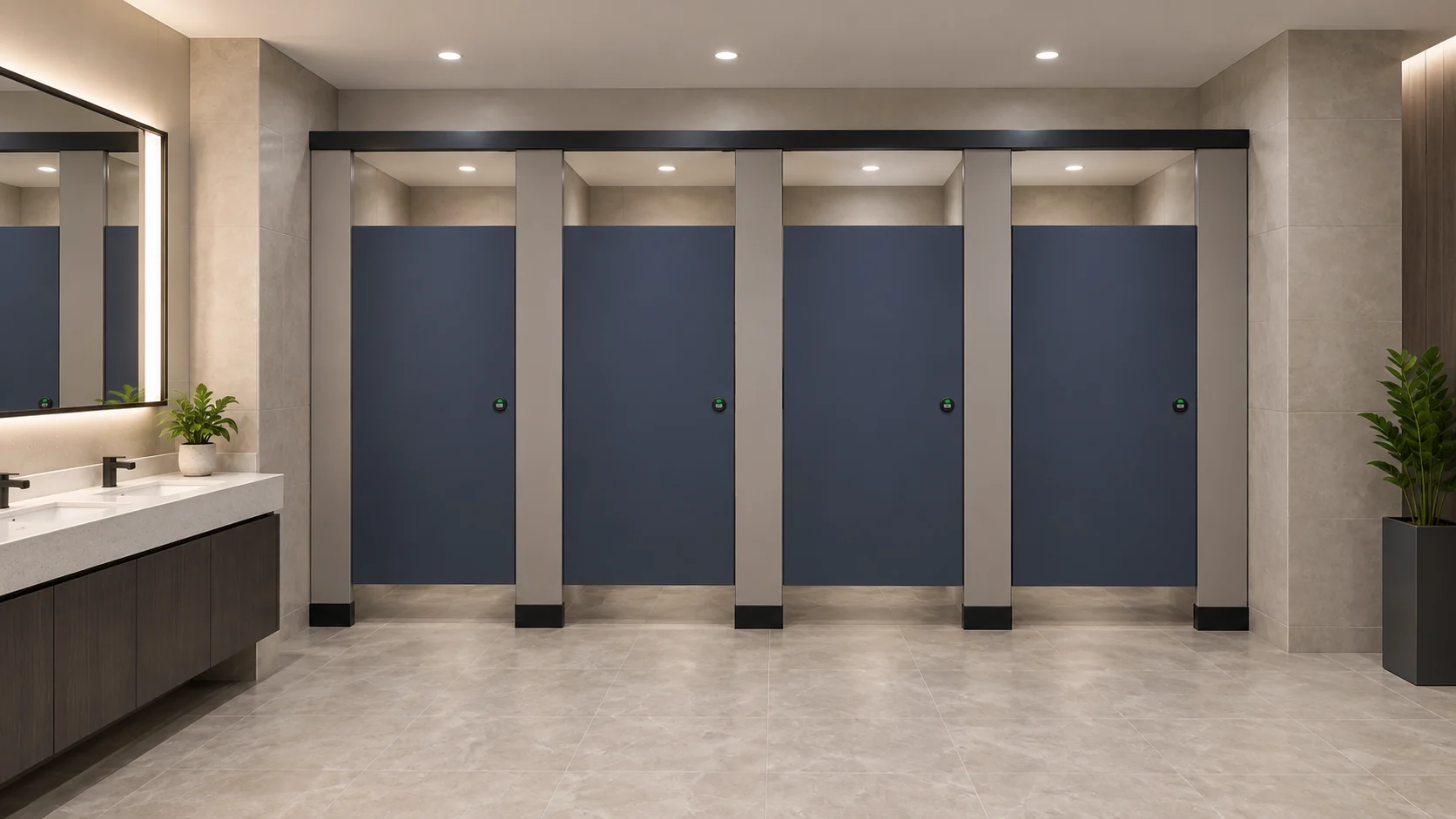
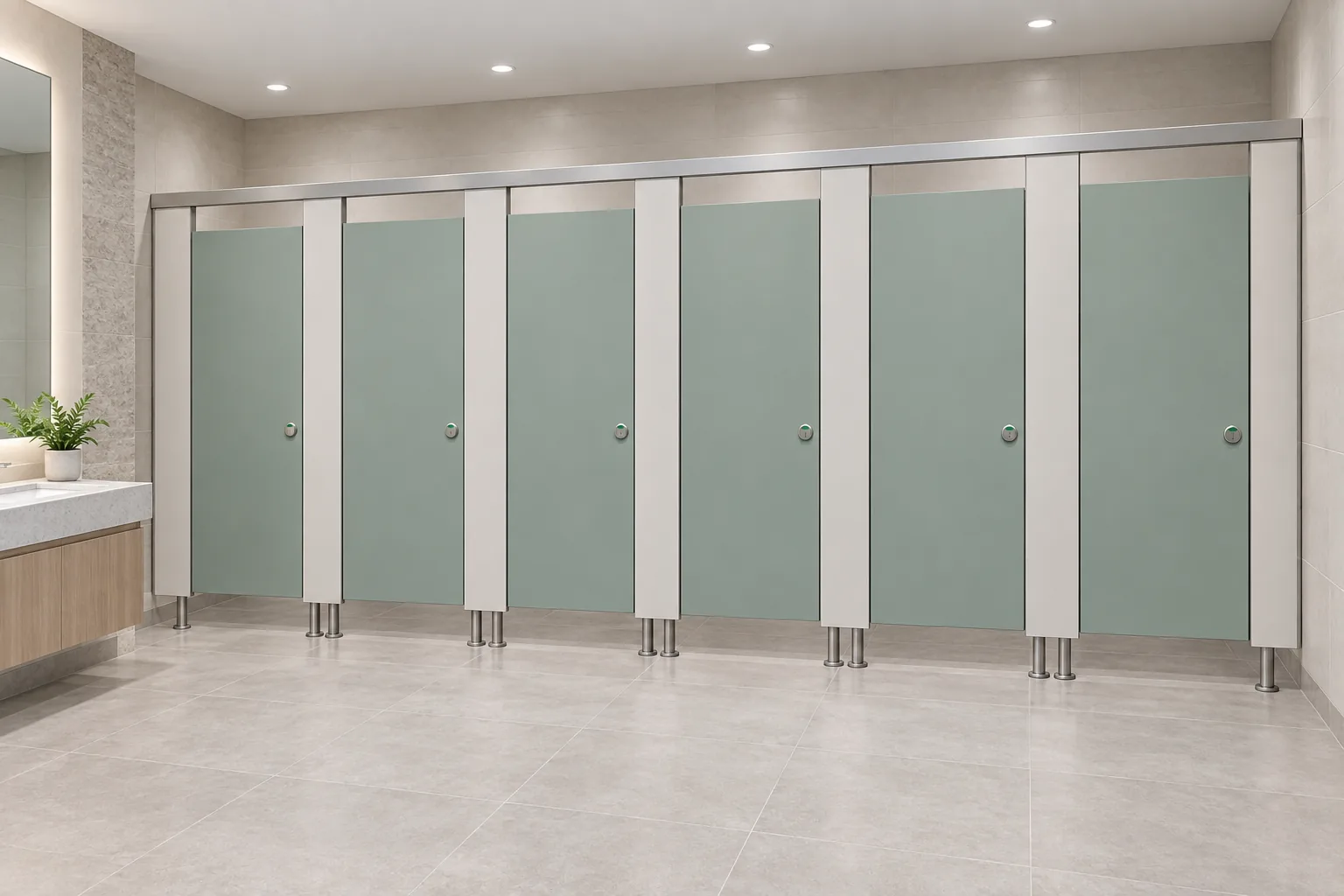
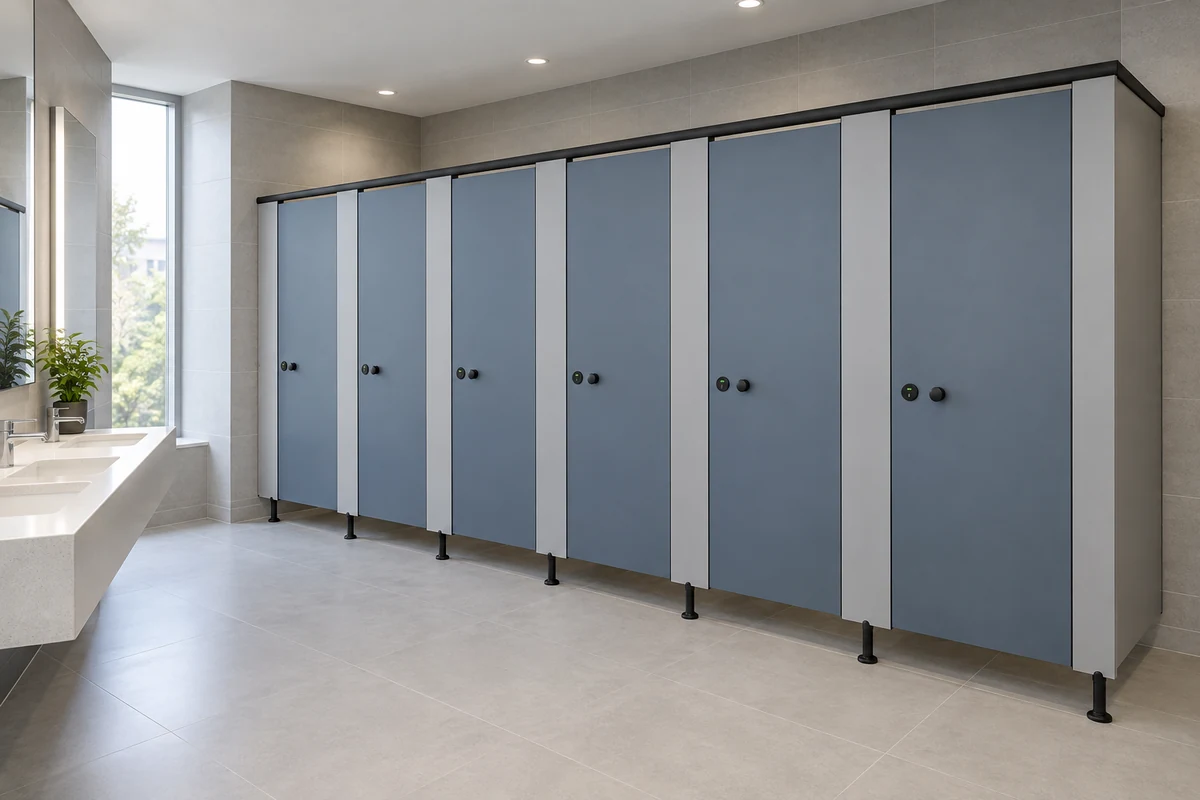
When a project requires specific material, hardware, dimension, finish, mounting, or rating, the team should request matching approved technical evidence. The contact page is the route for those inquiries. Illustrations on the website show generic design references, not completed EBUNGE customer projects.
Frequently Asked Questions
What is toilet partition hardware decision tracking?
It is a documented process for recording, reviewing, and coordinating hardware-related choices across trades. It links each decision to approved evidence and keeps the project team aligned.
Who should own the decision log?
The architect or project manager typically maintains the log, but each trade contributes entries and confirms status. Ownership should be named at the start of the project.
Can I use the same hardware across different material types?
Do not assume interchangeability. HPL, compact laminate, phenolic, and stainless steel are different material families. Any hardware selection requires project-specific technical evidence.
How do I handle missing evidence?
Mark the item as pending and assign a responsible party to obtain the evidence. Do not proceed with installation until the evidence is approved.
Does this article confirm compliance with local codes?
No. Compliance is project-specific and requires approved technical evidence and, where necessary, local professional review. This article provides a coordination framework only.
Where can I find EBUNGE product information?
Visit the products page for category information. For project-specific inquiries, use the contact page.
Conclusion and Next Steps
Toilet partition hardware decision tracking is not about predicting every outcome. It is about creating a transparent record of what is confirmed, what is pending, and what evidence is required. By using a decision log, checklist, and numbered process, architects and project teams can reduce cross-trade drift and avoid unsupported claims.
Any project-specific configuration requires matching approved technical evidence.
To discuss your project requirements or request technical documentation, please contact EBUNGE. The team can help you identify the evidence needed for your specific application.