
How to Compare Toilet Partition Hardware Schedules in Tender Reviews
Quick answer: toilet partition
A toilet partition hardware schedule comparison is not a beauty contest between documents. It is a structured review of what each tender actually states, what remains unstated, and which items require project-specific evidence before a team can rely on them. The project team should confirm project-specific requirements against the relevant approved technical evidence.
EBUNGE product category includes commercial Toilet Partition / Toilet Cubicle, and this guide stays within that confirmed scope. Illustrations and generic references show design intent only; they are not completed EBUNGE customer projects.
Why Hardware Schedules Deserve a Formal Review
Hardware schedules sit between design intent and site execution. They list items such as hinges, latches, keepers, brackets, foot assemblies and other components, but the level of detail varies widely between tender packages. A schedule may reference a product family, a finish, a mounting condition or a standard without explaining how those items interact.
During tender review, the comparison should focus on completeness, consistency and traceability. Does each line item point to an approved technical document? Does the same component appear under different names in different packages? Are assumptions about support interfaces, door operation or cleaning access written down or left to the installer?
This is where a disciplined toilet partition hardware schedule comparison saves time later. It gives the project team a shared record of what was compared, what was accepted and what still needs confirmation.
Start With the Project Evidence Boundary
Before comparing schedules, agree on the evidence boundary. Any project-specific material, hardware, dimension, finish, mounting or rating requires matching approved technical evidence. If a tender schedule states a material or component without a supporting document, the review should flag it rather than infer hidden construction from an illustration.
Do not treat HPL, compact laminate, phenolic or stainless steel as interchangeable. They are different material categories, and a schedule that swaps one for another without an approved substitution record creates a coordination risk. The same applies to hardware items that look similar in a drawing but may have different fixing or adjustment requirements.
Project teams should also avoid describing toilet cubicles as movable operable walls. Toilet partitions are not suspended wall systems, and introducing travel, stacking or parking mechanisms into a tender review would misrepresent the product category.
A Practical Comparison Process for Tender Teams
The following numbered process can be used in a tender kick-off meeting or a technical clarification workshop. It is deliberately evidence-bounded and does not assume any particular project outcome.
- Collect the schedules. Gather every hardware schedule, drawing note and specification section that references toilet partition components.
- Normalise the item names. Create a single list of component descriptions so that the same item is not counted twice under different wording.
- Map each item to evidence. For every line, note whether an approved technical document, drawing or written clarification exists.
- Flag unsupported statements. Mark any material, dimension, finish, mounting or rating that lacks matching approved evidence.
- Review interfaces. Check how the partition hardware interacts with supports, adjacent finishes, floor conditions and door operation.
- Record open questions. List items that require a request for information, a substitution request or a design clarification.
- Issue a comparison summary. Distribute the findings to the project team and keep the summary with the tender record.
Checklist for Comparing Hardware Schedule Submissions
Use this checklist as a scannable companion to the process above. It is not a compliance checklist and does not confirm that any local requirement has been met.
- Does each hardware item have a clear description and a referenced source document?
- Are door operation, privacy and access assumptions stated consistently across drawings and schedules?
- Are support interfaces and fixing conditions described without assuming hidden construction?
- Are cleaning documentation and maintenance access considered in the layout review?
- Are applicable local requirements identified for the project team to verify separately?
- Are all substitutions and clarifications recorded with their approval status?
- Are generic illustrations clearly separated from project-specific evidence?
Comparing Schedule Detail Without Inventing Performance
A common tender-review mistake is to fill gaps with assumptions. Those items require project-specific evidence and applicable local review.
Instead, compare the level of detail. One schedule may describe a hinge by function, while another may add a reference to a technical submittal. The project team can then decide what additional evidence is needed.
Where a schedule references a finish or mounting condition, treat it as a project-specific requirement until the approved technical evidence confirms it.
Coordination Questions for Architects and Contractors
Toilet Partition coordination improves when the comparison raises specific questions rather than general concerns. Architects may need to confirm layout and privacy intent. Contractors may need to confirm support interfaces and installation sequencing. Owners and renovation teams may need to confirm cleaning access and maintenance expectations.
Distributors and construction teams can help by checking that the schedule references the correct product category and that no item has been carried over from an unrelated system. The review should also confirm that any project-specific material, hardware, dimension, finish, mounting or rating has matching approved technical evidence before it is treated as settled.
For maintained product context, the EBUNGE product overview is a useful starting point, while resources can support document review. When a question cannot be resolved from the tender package, the project team should use the contact route to request clarification rather than assume an answer.
Documenting the Comparison Outcome
The output of a toilet partition hardware schedule comparison should be a short, traceable record. It does not need to be a long report. A table or structured note can show each item, the evidence status, the open question and the responsible party.
Keep the record with the tender documentation. If a substitution is later proposed, the team can refer back to the original comparison and see what was verified at the time. This is especially useful for renovation projects where existing conditions may differ from the original drawings.
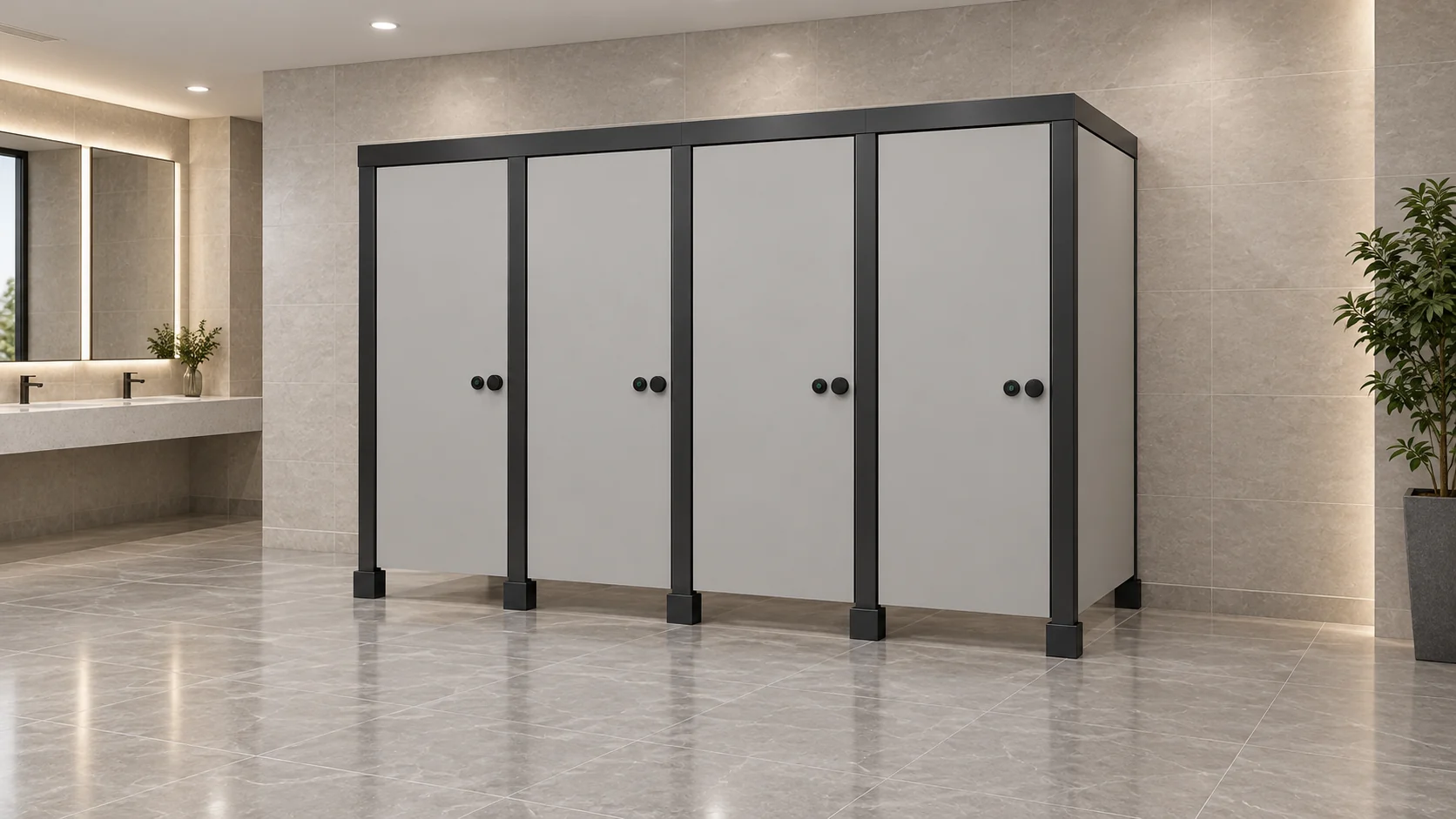
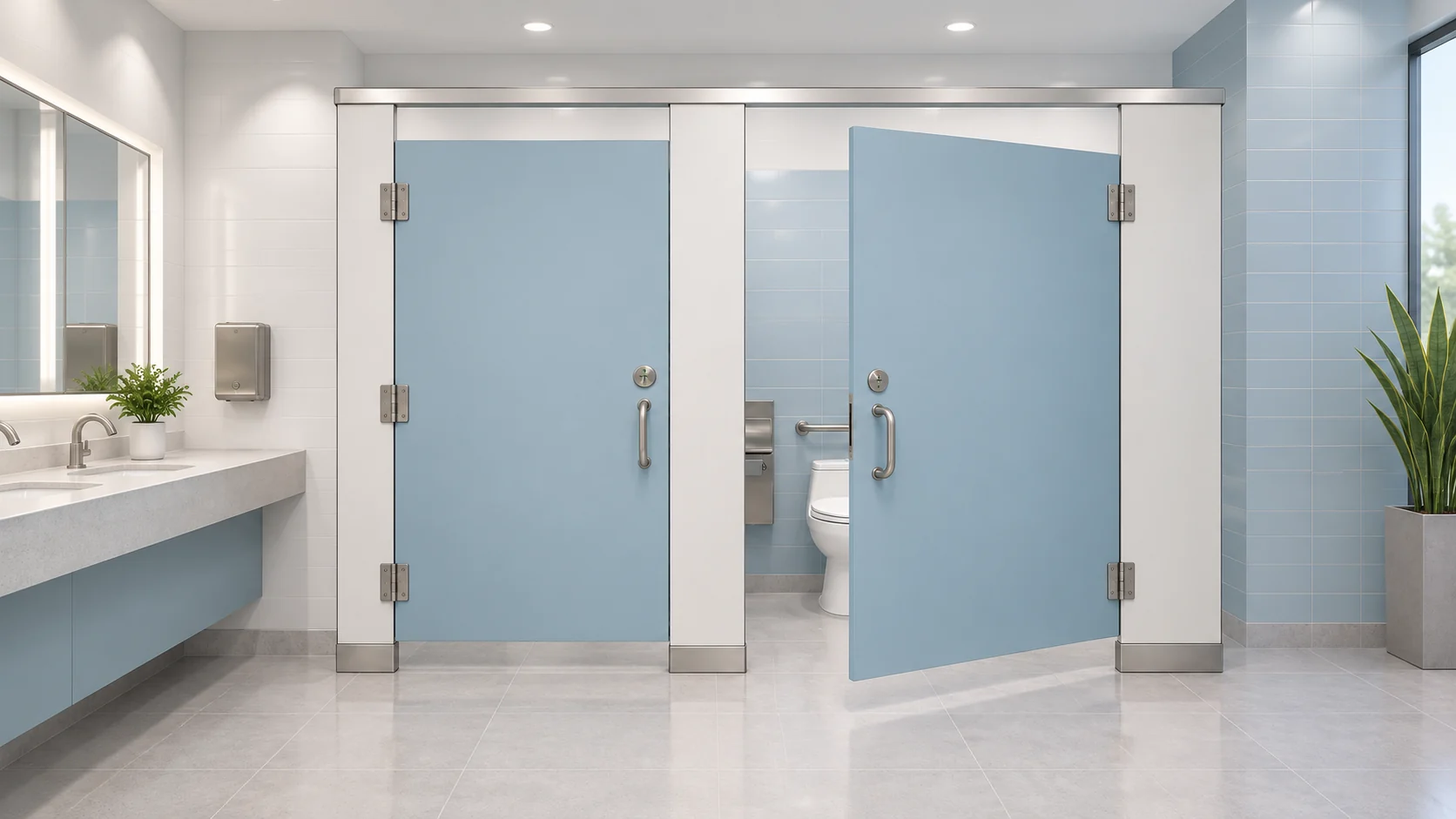
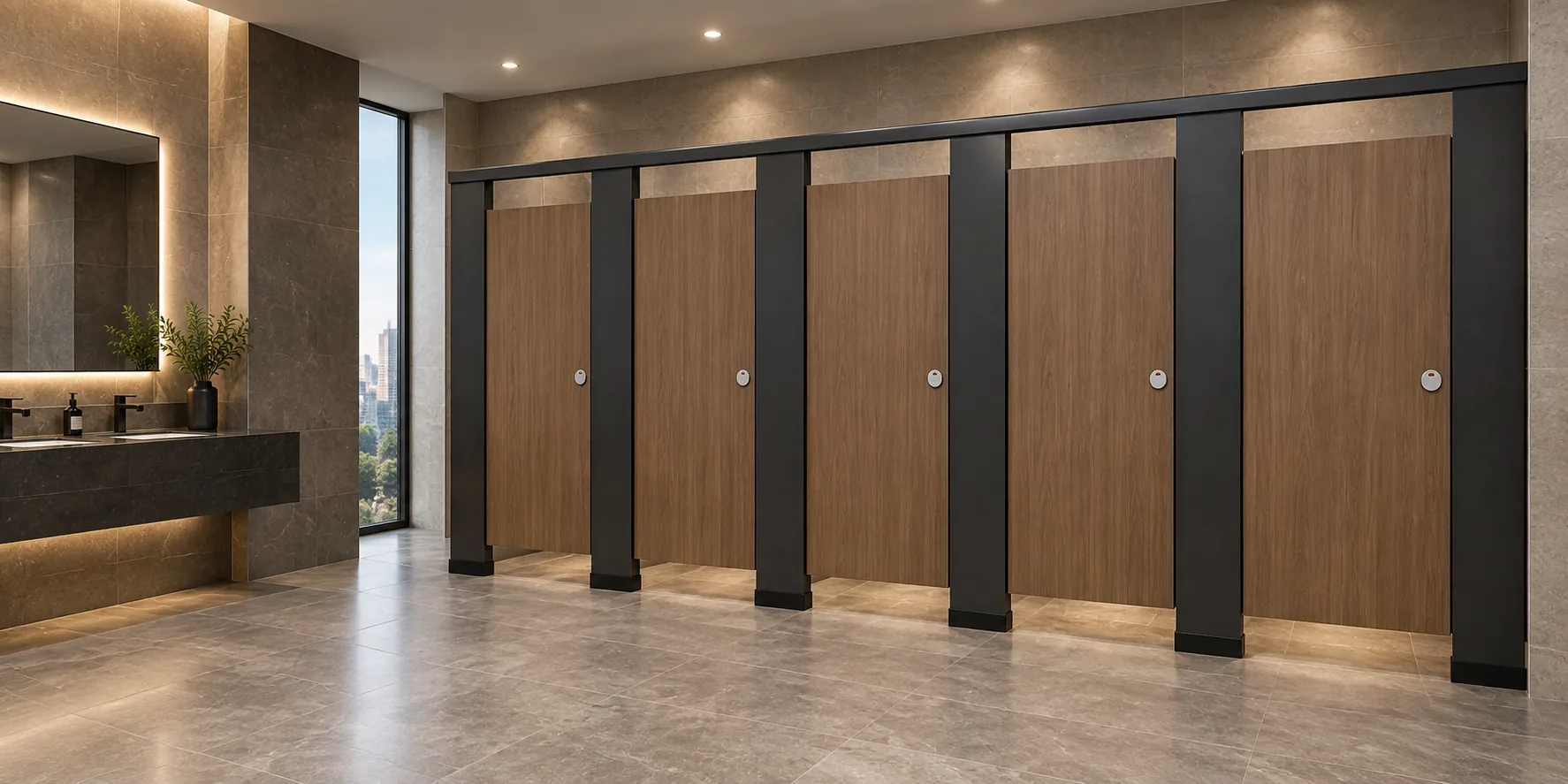
Remember that illustrations show generic design references, not completed EBUNGE customer projects. They can support a discussion about layout or door operation, but they do not replace project-specific evidence.
Frequently Asked Questions
What is a toilet partition hardware schedule comparison?
It is a structured review of hardware schedules submitted during a tender, comparing item descriptions, evidence references, interfaces and open questions without assuming unverified performance or compliance.
Which project information is required before comparing schedules?
Project teams typically need the tender drawings, specification sections, hardware schedules, approved technical documents and any written clarifications. Any project-specific material, hardware, dimension, finish, mounting or rating requires matching approved technical evidence.
Can a comparison confirm that a partition meets local requirements?
No. The comparison can identify where applicable local requirements need separate verification, but it should not assert unverified compliance. The project team remains responsible for confirming local requirements.
How should substitutions be handled during the review?
Substitutions should be recorded with their approval status and supporting evidence. Do not treat HPL, compact laminate, phenolic or stainless steel as interchangeable without an approved substitution record.
Are generic illustrations acceptable evidence?
No. Illustrations show generic design references, not completed EBUNGE customer projects. They can support layout discussions but do not replace project-specific technical evidence.
What should the final comparison record include?
It should include the item list, evidence status, open questions, responsible parties and any agreed next steps. Keep it concise and traceable so it can support later clarifications.
Conclusion and Next Step
A disciplined toilet partition hardware schedule comparison helps project teams separate confirmed information from assumptions. By reviewing layouts, privacy, door operation, support interfaces, cleaning documentation and applicable local requirements without asserting unverified compliance, the team can reduce tender ambiguity and document its decisions.
If your project needs clarification on a hardware schedule or a project-specific configuration, contact EBUNGE to discuss the next step. Project-specific material, hardware, dimension, finish, mounting or rating will require matching approved technical evidence before it can be treated as confirmed.