
How Architects Set Toilet Partition Hardware Coordination Hold Points
Quick project answer
Toilet partition hardware hold points are the moments in a project schedule when the design team, contractor and supplier must confirm that the cubicle layout, door operation, support interfaces and cleaning documentation align with the approved drawings. For architects, these hold points are not a single inspection. They are a sequence of evidence checks that prevent assumptions from becoming site instructions.
EBUNGE product category includes commercial Toilet Partition / Toilet Cubicle, and this guide explains how to structure those checks without inventing performance, material or compliance claims.
Why Hardware Hold Points Matter in Toilet Partition Coordination
Toilet cubicle work sits between architectural intent and site tolerance. A drawing may show a door swing, a panel junction or a support condition, but the actual interface depends on the approved submittal, the selected hardware family and the surrounding construction. A hold point creates a pause where those dependencies are reviewed together.
Without hold points, teams often resolve cubicle issues after finishes are installed. That sequence can force late changes to framing, blocking or cleaning access. A structured review does not guarantee a problem-free installation, but it makes the decision trail visible and keeps project-specific claims tied to approved evidence.
What Architects Should Confirm Before the First Hold Point
The first hold point should establish what is known and what still requires project-specific evidence. The project team reviews layouts, privacy expectations, door operation, support interfaces, cleaning documentation and applicable local requirements. This review is a coordination step, not a statement of compliance.
Layout and Privacy Review
Confirm the cubicle count, circulation path and door approach against the architectural plan. Privacy expectations should be described in the project brief, not inferred from a generic illustration. Any dimension, finish or mounting detail must match approved technical evidence before it is treated as fixed.
Door Operation and Support Interfaces
Door operation depends on the selected hardware and the supporting construction. The team should identify who confirms the interface between the partition system and the wall, floor or ceiling structure. If that interface is unresolved, it becomes an open item for the next hold point rather than a default assumption.
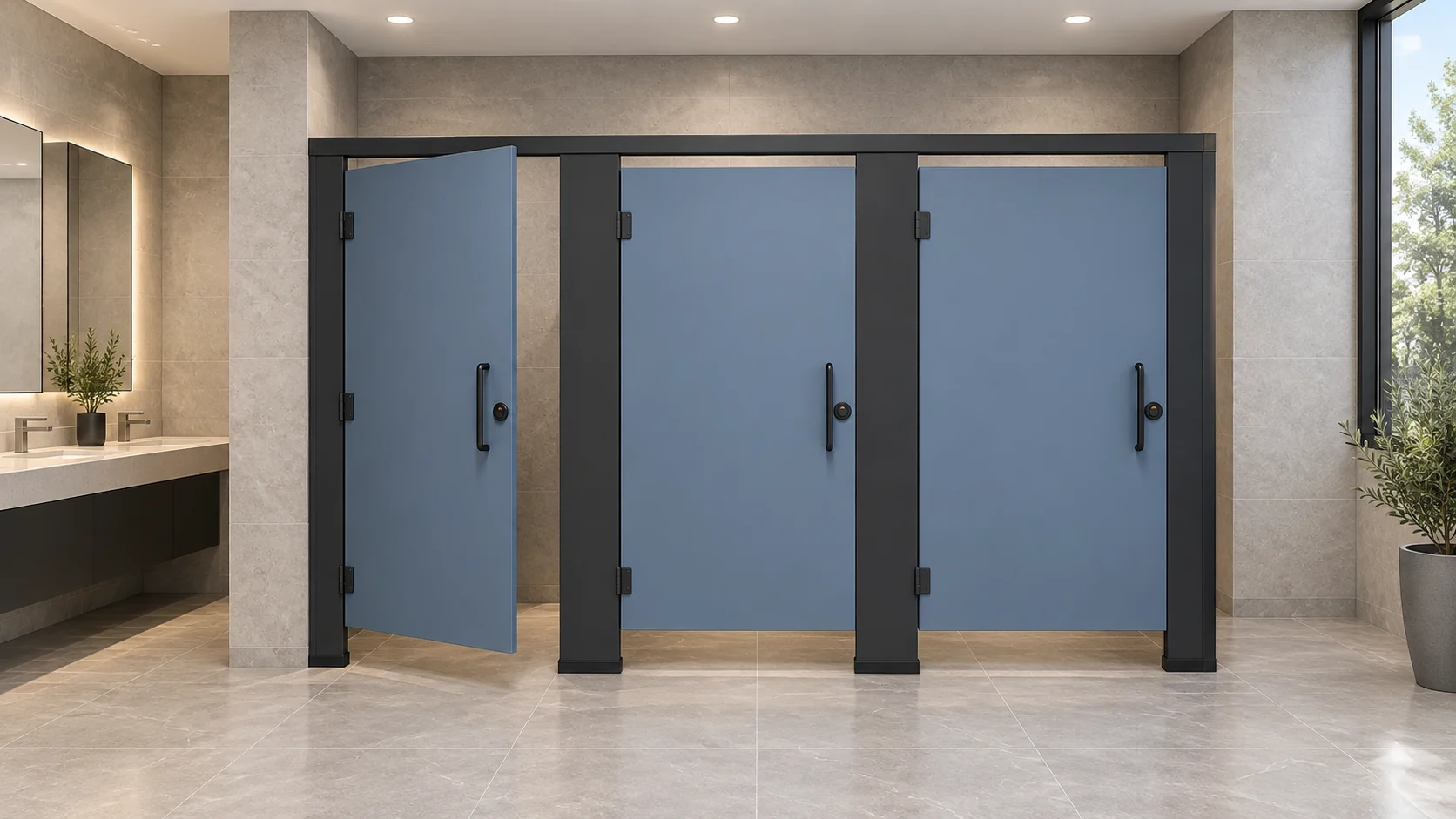
A Numbered Process for Setting Hold Points
- Define the review stage. State whether the hold point covers concept coordination, submittal review, procurement release or pre-installation verification.
- List the required evidence. Identify the drawings, schedules and approved technical documents needed for that stage.
- Assign a reviewer. Name the discipline responsible for confirming each item, such as the architect, contractor or supplier.
- Record open items. Capture unresolved dimensions, finishes, hardware selections or interface conditions in a written log.
- Release the next stage. Only release the following activity when the hold point criteria are met or formally deferred.
This process keeps toilet partition hardware hold points project planning grounded in evidence. It also prevents a generic product description from being treated as a project-specific specification.
Evidence Boundaries for Toilet Partition Hardware Hold Points Specification
A specification note should distinguish between confirmed product category information and project-specific requirements. EBUNGE product category includes commercial Toilet Partition / Toilet Cubicle. The project team should confirm project-specific requirements against the relevant approved technical evidence.
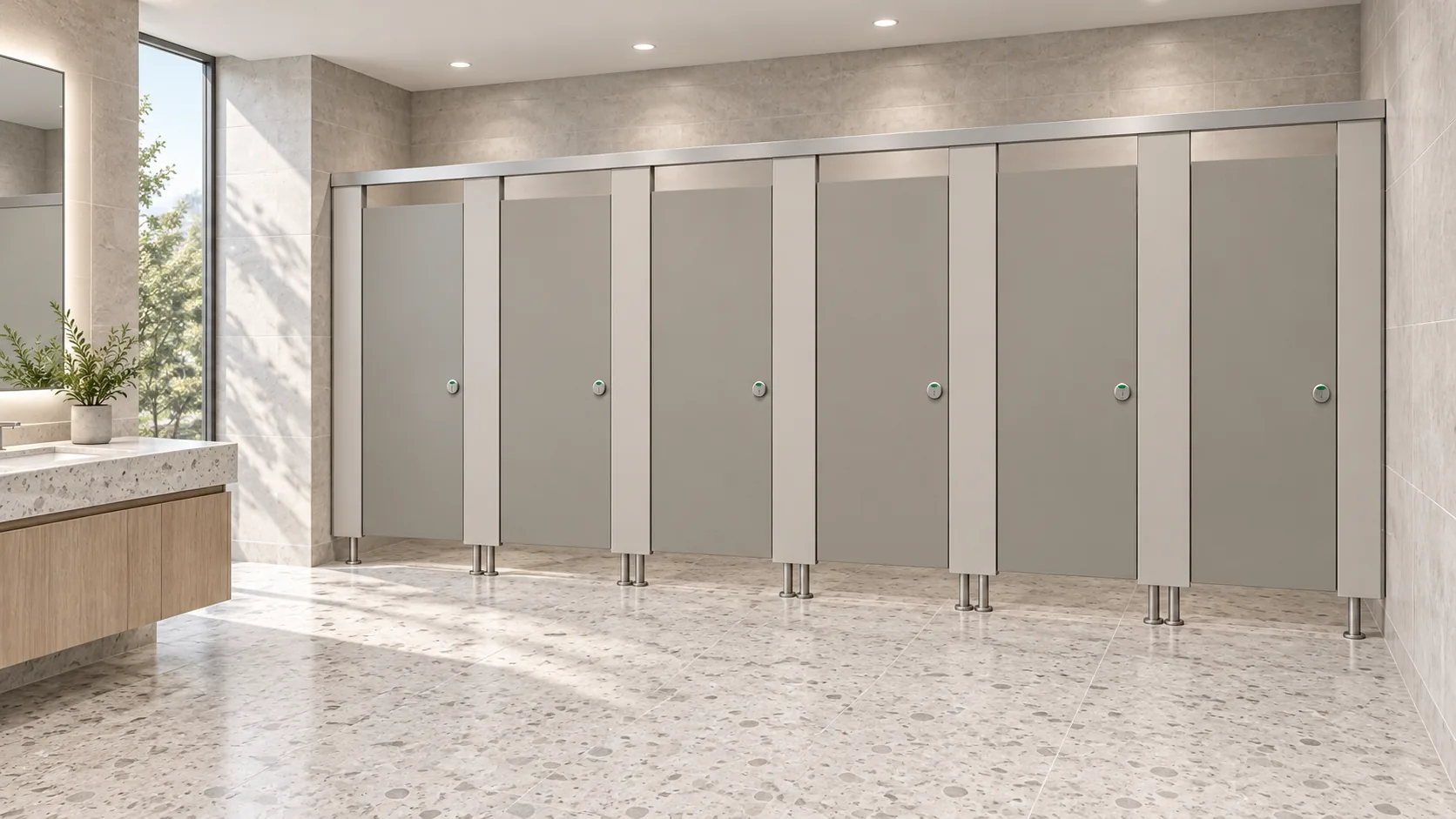
Any project-specific material, hardware, dimension, finish, mounting or rating requires matching approved technical evidence. Illustrations show generic design references, not completed EBUNGE customer projects.
Architects should avoid treating HPL, compact laminate, phenolic or stainless steel as interchangeable. Each material family has its own documentation and coordination implications. If a drawing or illustration suggests a construction detail, that detail still requires separate confirmation before it is used in a specification.
Coordination Checklist for Project Teams
Use this checklist to prepare for a hold point meeting. It is a planning tool, not a compliance certificate.
- Current architectural layout and cubicle schedule
- Door operation and swing direction noted for review
- Support interface responsibilities identified
- Cleaning access and maintenance documentation requested
- Applicable local requirements listed for the project team to verify
- Open items logged with an owner and due date
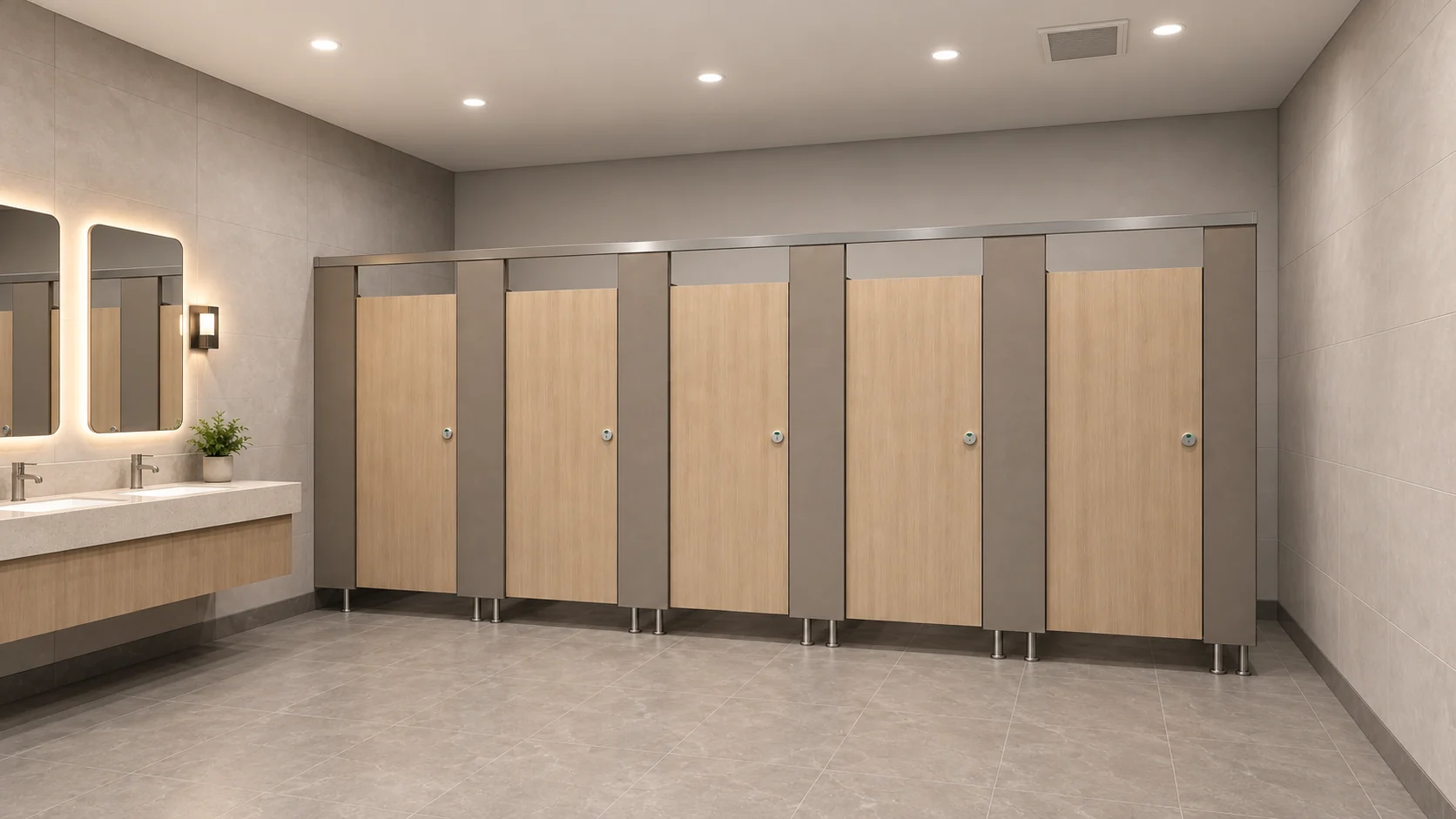
Teams can also review the EBUNGE product category for maintained public context, then use the resources section to organize project documentation. Neither step replaces project-specific evidence.
Common Coordination Gaps and How to Close Them
One common gap is treating a generic illustration as a construction drawing. Another is assuming that a hardware item shown in a reference image is included in the scope. A third is delaying the support interface review until after framing is complete.
To close these gaps, the project team should maintain a written log of assumptions and convert each one into a confirmed item or an open action. The log should reference the approved drawing or technical document that resolves the item. This approach keeps Toilet Partition coordination traceable without asserting unverified compliance.
Frequently Asked Questions
What is a toilet partition hardware hold point?
It is a scheduled review where the project team confirms that layout, door operation, support interfaces and documentation align with approved evidence before the next stage proceeds.
Who should attend a hold point review?
The attendees depend on the project stage. Typical participants include the architect, contractor, relevant trade partners and the supplier or distributor responsible for the partition scope.
Can a generic illustration be used as a specification?
No. Illustrations show generic design references, not completed EBUNGE customer projects. Any project-specific material, hardware, dimension, finish, mounting or rating requires matching approved technical evidence.
How should the team handle unresolved items?
Record each unresolved item in a written log with an owner and due date. Do not release the next stage until the item is resolved or formally deferred by the responsible discipline.
Does a hold point confirm local code compliance?
No. The project team should review applicable local requirements, but a hold point is a coordination step and does not assert unverified compliance.
Where can project teams find maintained product context?
Review the EBUNGE product category for public product context and use the contact page to direct project-specific questions to the appropriate team.
Conclusion
Toilet partition hardware hold points give architects and project teams a disciplined way to separate confirmed information from open items. By reviewing layouts, privacy, door operation, support interfaces, cleaning documentation and applicable local requirements at defined stages, teams reduce the risk of late assumptions. Every project-specific material, hardware, dimension, finish, mounting or rating still requires matching approved technical evidence.
For project-specific coordination, reach out through the EBUNGE contact page and share the current drawings, schedules and open items for review.