
Comparing Toilet Partition Hardware Schedules in Tender Packages
Quick answer: toilet partition
Toilet partition hardware schedules comparison is rarely a like-for-like exercise. Tender packages arrive with different drawing conventions, specification languages and levels of detail. Some schedules list every hinge, latch and support interface; others group items under a single line. For overseas contractors, architects and owners, the risk is not the comparison itself but the assumptions made when information is missing. This guide sets out an evidence-bounded review framework.
It does not confirm compliance, performance or product suitability. Every project-specific material, hardware, dimension, finish, mounting or rating requires matching approved technical evidence.
Why Hardware Schedules Differ Between Tender Packages
A hardware schedule is a coordination document, not a product catalogue. It reflects the author’s scope, local drafting habits and the stage of design. One package may describe door operation in detail while leaving support interfaces to structural drawings. Another may focus on cleaning access and privacy without naming hardware families. These differences are normal. They become a problem when a reviewer treats a schedule as a complete technical description.
EBUNGE product category includes commercial Toilet Partition / Toilet Cubicle. That confirmed fact defines the product family only. It does not confirm any hardware item, material composition or dimension. When comparing schedules, separate what is stated from what is assumed.
Common Sources of Mismatch
- Different naming conventions for the same functional item.
- Hardware listed by performance intent rather than by component.
- Support interfaces shown on structural drawings instead of the schedule.
- Cleaning and maintenance notes placed in a separate specification section.
- Door operation described in elevation notes rather than in the schedule table.
A Review Framework for Project Teams
Use a repeatable process so that comparisons stay grounded in the documents actually issued. The steps below are a coordination aid, not a compliance check.
- Confirm the tender package revision and issue date.
- List every hardware schedule included in the package.
- Map each schedule line to the drawing or specification it references.
- Mark items that are described only by intent, not by component.
- Identify support interfaces shown outside the schedule.
- Record cleaning and maintenance documentation locations.
- Flag any item that requires project-specific evidence before comparison.
What to Record for Each Schedule Line
For each line, note the referenced drawing, the stated function, the responsible discipline and whether the item is fixed or open. This record becomes the basis for clarification requests. It also prevents a later reader from inferring hidden construction from an illustration. Illustrations show generic design references, not completed EBUNGE customer projects.
Comparing Door Operation and Privacy Intent
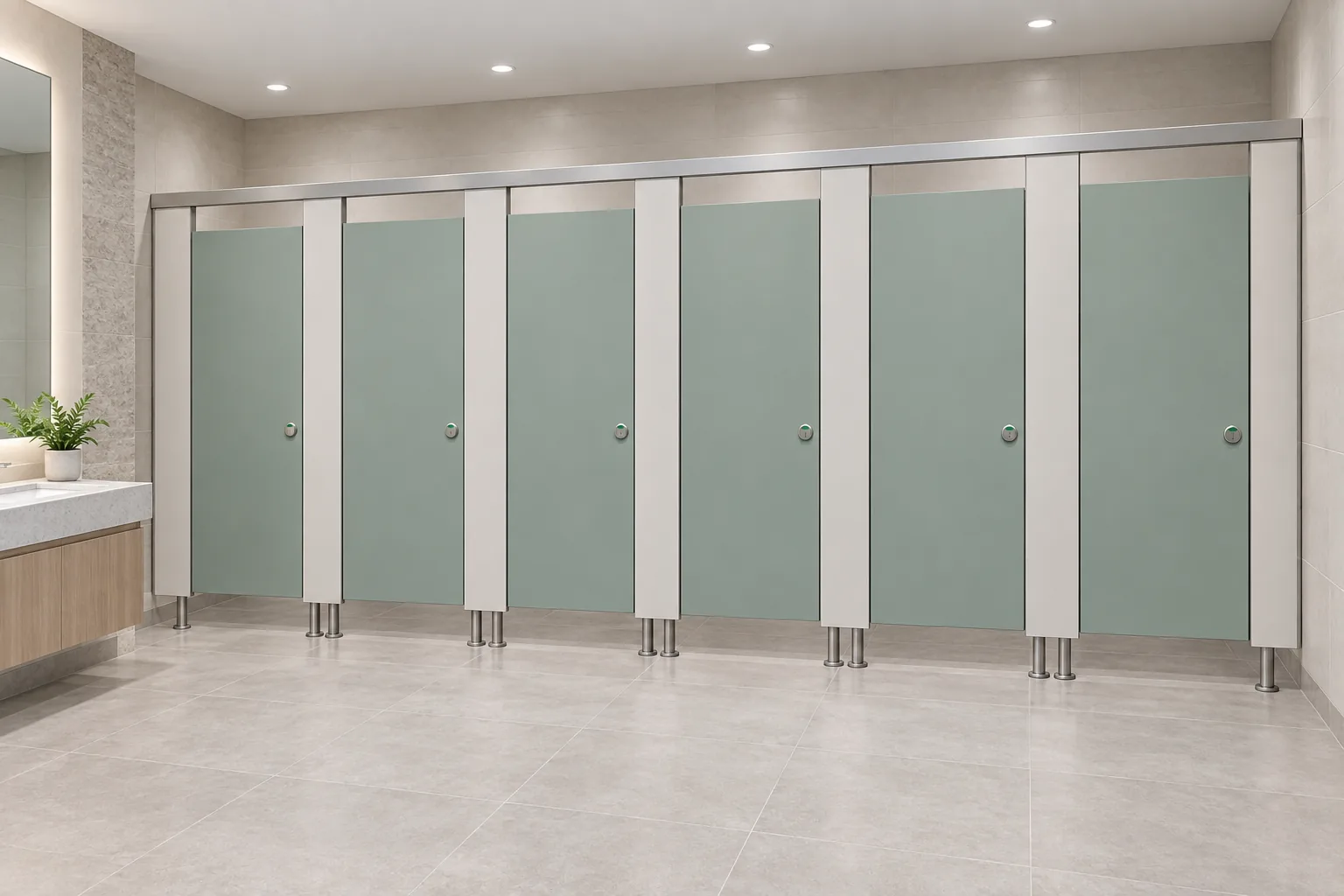
Door operation and privacy are frequent comparison points because they affect user experience and layout. However, a schedule may describe intent without confirming the hardware that delivers it. Compare only what the documents state. Where a package describes privacy intent but not the related hardware, treat that as an open item.
Do not assume that similar wording across two packages means identical hardware. Do not treat HPL, compact laminate, phenolic or stainless steel as interchangeable. Each material family has its own documentation requirements, and none should be inferred from a generic illustration.
Questions to Raise in Clarification
- Which drawing governs the door operation shown in the schedule?
- Is the privacy intent linked to a specific hardware line?
- Which discipline owns the support interface?
- Where is the cleaning documentation referenced?
Support Interfaces and Cleaning Documentation
Support interfaces connect the partition system to the building structure. They are often split across disciplines, which makes them easy to overlook in a schedule comparison. Identify who owns each interface and whether the tender package shows it. If it is not shown, record it as missing rather than assuming a standard detail.
Cleaning documentation matters for owners and facility teams. A schedule may reference cleaning access without describing it. Compare packages by asking whether cleaning information is present, absent or deferred. Do not assert compliance with any local requirement. Describe project-team review of layouts, privacy, door operation, support interfaces, cleaning documentation and applicable local requirements without asserting unverified compliance.
Evidence Note
This article provides an application reference for coordination. It does not confirm dimensions, ratings, materials, finishes, mounting methods or compliance. Any project-specific configuration requires matching approved technical evidence.
Using a Compact Comparison Table
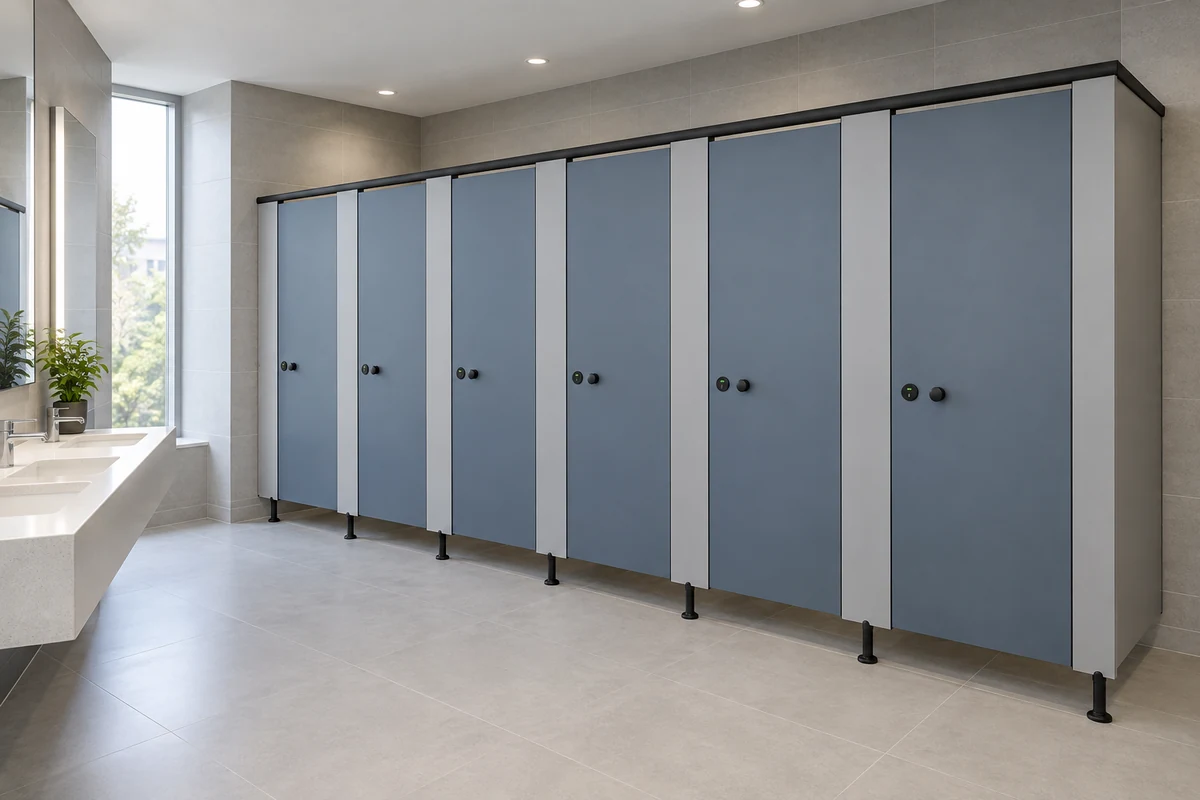
The table below is a coordination aid. It helps teams organise what each package states, not to rank products or confirm suitability.
| Review Area | What to Check | Evidence Status |
|---|---|---|
| Layout and privacy | Drawing reference and intent statement | Open until confirmed |
| Door operation | Schedule line and governing drawing | Open until confirmed |
| Support interfaces | Responsible discipline and detail reference | Open until confirmed |
| Cleaning documentation | Location and scope of notes | Open until confirmed |
| Local requirements | Applicable authority and submission route | Project-specific |
Coordination Across Disciplines
Hardware schedule comparison is a Toilet Partition coordination task that touches architecture, structure, MEP and facilities. Each discipline may hold part of the answer. A schedule that looks incomplete in isolation may be complete when read with the structural package. Conversely, a schedule that looks detailed may omit interfaces owned elsewhere.
Set up a single comparison register. Record the source document, the reviewer and the date. The project team should confirm project-specific requirements against the relevant approved technical evidence. For broader product context, see the commercial toilet partition range. Additional guidance is available in the resources section.
Practical Checklist Before Issuing Clarifications
- All schedule revisions are recorded.
- Each line has a drawing or specification reference.
- Open items are separated from confirmed items.
- Support interfaces are assigned to a discipline.
- Cleaning documentation is located or flagged.
- Local requirements are listed for the project team to verify.
Frequently Asked Questions
What is a toilet partition hardware schedule?
It is a project document that lists hardware items and their references within a tender package. It supports coordination and should be read with the related drawings and specifications.
Can I compare schedules from different projects directly?
Only with caution. Naming conventions, scope and drawing references differ. Compare the stated information and record open items rather than assuming equivalence.
Does a schedule confirm product performance?
No. A schedule is a coordination document.
How should missing support interfaces be handled?
Record them as open items and raise a clarification with the responsible discipline. Do not assume a standard detail or infer hidden construction.
Where does cleaning documentation fit in the comparison?
Treat it as a review area. Note whether it is present, absent or deferred, and include it in the clarification register.
Can illustrations be used as evidence?
No. Illustrations show generic design references, not completed EBUNGE customer projects. They do not confirm dimensions, materials or mounting.
Conclusion and Next Steps
A disciplined toilet partition hardware schedules comparison depends on traceable documents, clear ownership and honest evidence boundaries. Use the framework above to separate stated information from assumptions. Keep every project-specific material, hardware, dimension, finish, mounting and rating tied to matching approved technical evidence. Where information is missing, raise a clarification rather than filling the gap.
To discuss your project requirements, contact the EBUNGE team. Share your tender package references and the review areas you need to coordinate.