
How Finish Sample Approval Shapes Toilet Partition Order Release
Quick project answer
Toilet partition finish sample approval is often treated as a late cosmetic decision. In practice, it is a coordination gate that connects design intent, project drawings, material documentation and order release. When that gate is weak, teams release orders against assumptions rather than verified evidence. This guide sets out an evidence-bounded framework for overseas contractors, architects, interior designers, owners and renovation teams. It does not replace project-specific technical review, and it does not assert compliance with any local requirement. Instead, it shows how to organise the approval conversation so that every project-specific material, hardware, dimension, finish, mounting detail or rating is matched to approved technical evidence before release.
Why Finish Sample Approval Is an Order-Release Gate
Finish sample approval is the point where a visual reference meets a documented specification. It is not simply a colour check. It confirms that the project team has reviewed the proposed finish against the approved drawings, the intended application and the maintained product information available for the selected toilet partition category.
For commercial toilet partition and toilet cubicle projects, the approval record should identify what was reviewed, who reviewed it and which documents formed the basis of the decision. Without that record, order release can drift into assumptions about material composition, construction or performance that are not supported by evidence.
What the approval gate should capture
- The project reference and the area or level covered by the sample.
- The finish reference as described in the project specification.
- The drawing revision used for layout, door operation and support interfaces.
- The cleaning and maintenance documentation relevant to the proposed finish.
- Any open item that still requires project-specific technical evidence.
Information the Project Team Should Prepare
Before a finish sample is presented, the project team should assemble the information that makes the review meaningful. This is a planning exercise, not a compliance claim. The aim is to reduce ambiguity at the point where the order is released.
Layout and privacy review
Layout drawings should show cubicle positions, door swing, circulation and the relationship between partitions and adjacent building elements. Privacy expectations should be discussed as a design objective, not asserted as a verified performance outcome. Where local requirements apply, the project team should identify them and confirm how they will be addressed through the appropriate approval route.
Door operation and support interfaces
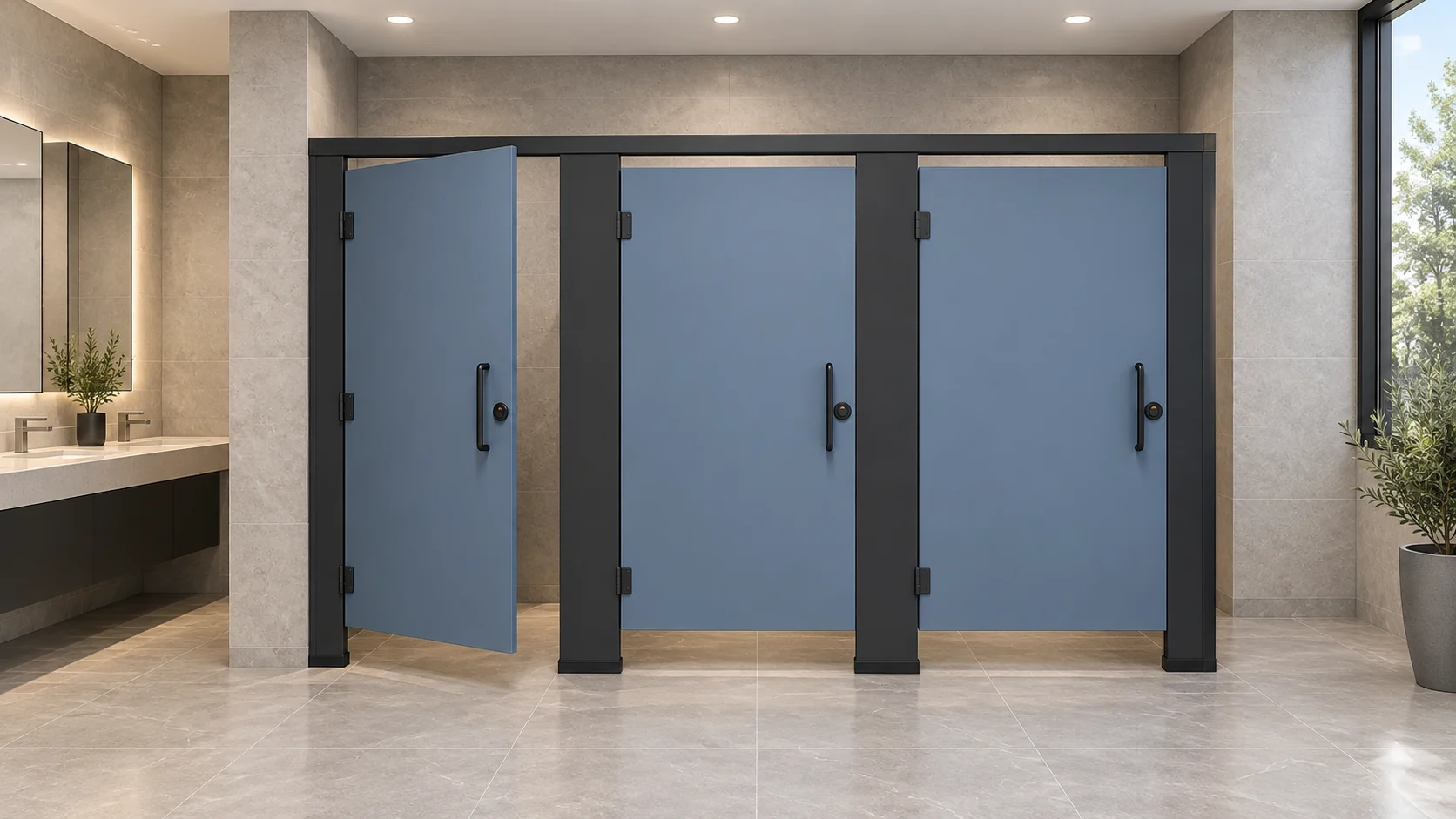
Door operation, hinge strategy and support interfaces should be reviewed against the approved drawings. The review should confirm that the interface between the partition system and the building structure is understood by all parties. Any project-specific hardware, fixing or mounting detail requires matching approved technical evidence before it is treated as confirmed.
Cleaning documentation
Cleaning documentation helps the owner and facilities team understand how the selected finish should be maintained. It should be reviewed alongside the finish sample so that the approval decision considers long-term care, not only initial appearance.
A Step-by-Step Approval Workflow
The following sequence is a coordination model. It does not replace the project’s own quality or approval procedures.
- Confirm the scope. Identify the project areas, levels and cubicle types covered by the finish sample approval.
- Collect the evidence pack. Gather the approved drawings, specification extracts, finish references and cleaning documentation.
- Review the sample against the specification. Compare the physical sample with the documented finish reference and note any discrepancy.
- Record open items. List any project-specific material, hardware, dimension, finish, mounting or rating that still needs approved technical evidence.
- Obtain sign-off. Confirm who approves the sample and which drawing revision applies.
- Release the order only when the gate is closed. Order release should follow the approved record, not precede it.
Evidence Boundaries That Keep Approval Honest
Finish sample approval is vulnerable to overreach. The project team should confirm project-specific requirements against the relevant approved technical evidence. Those subjects require their own approved technical evidence.
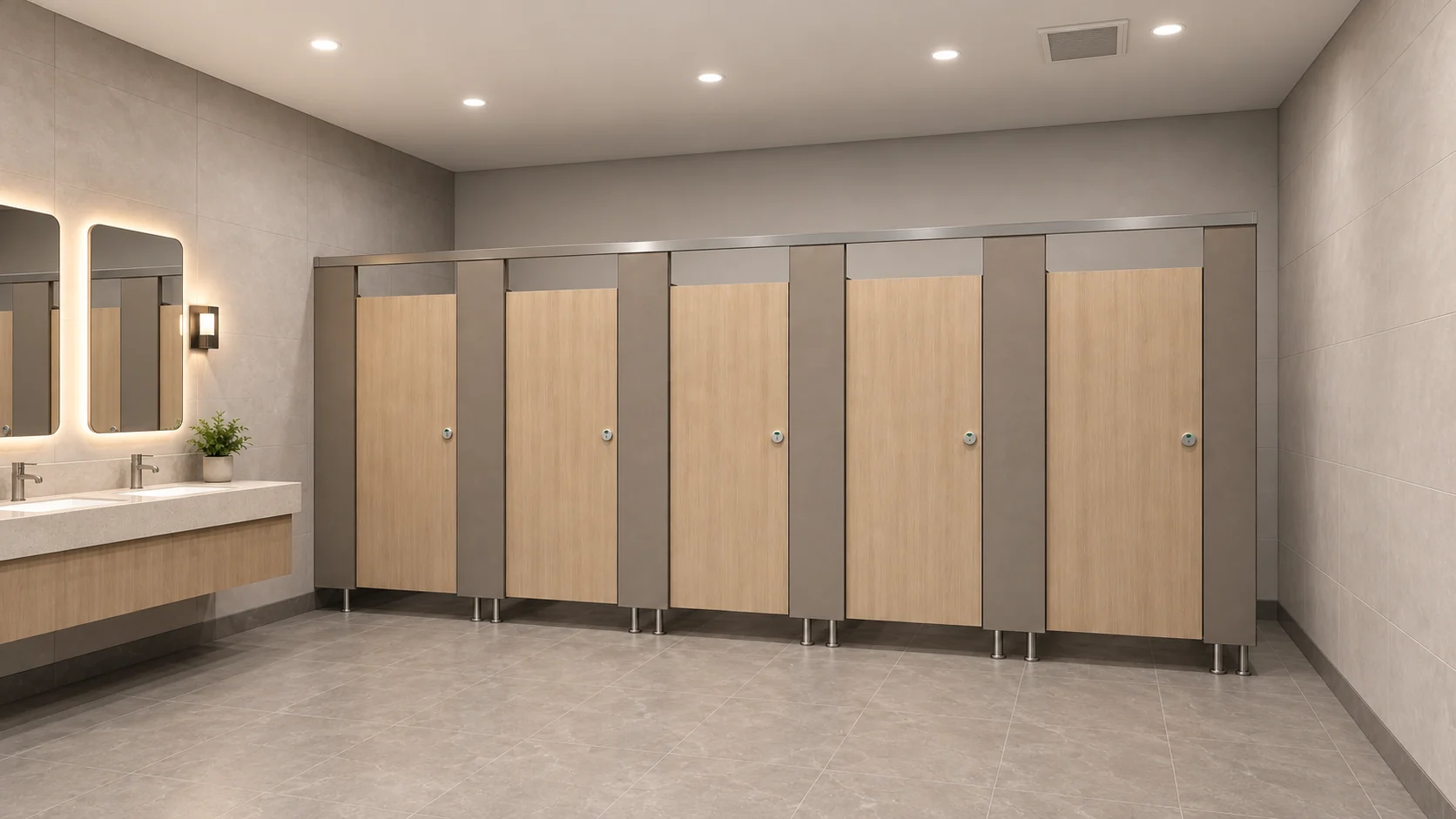
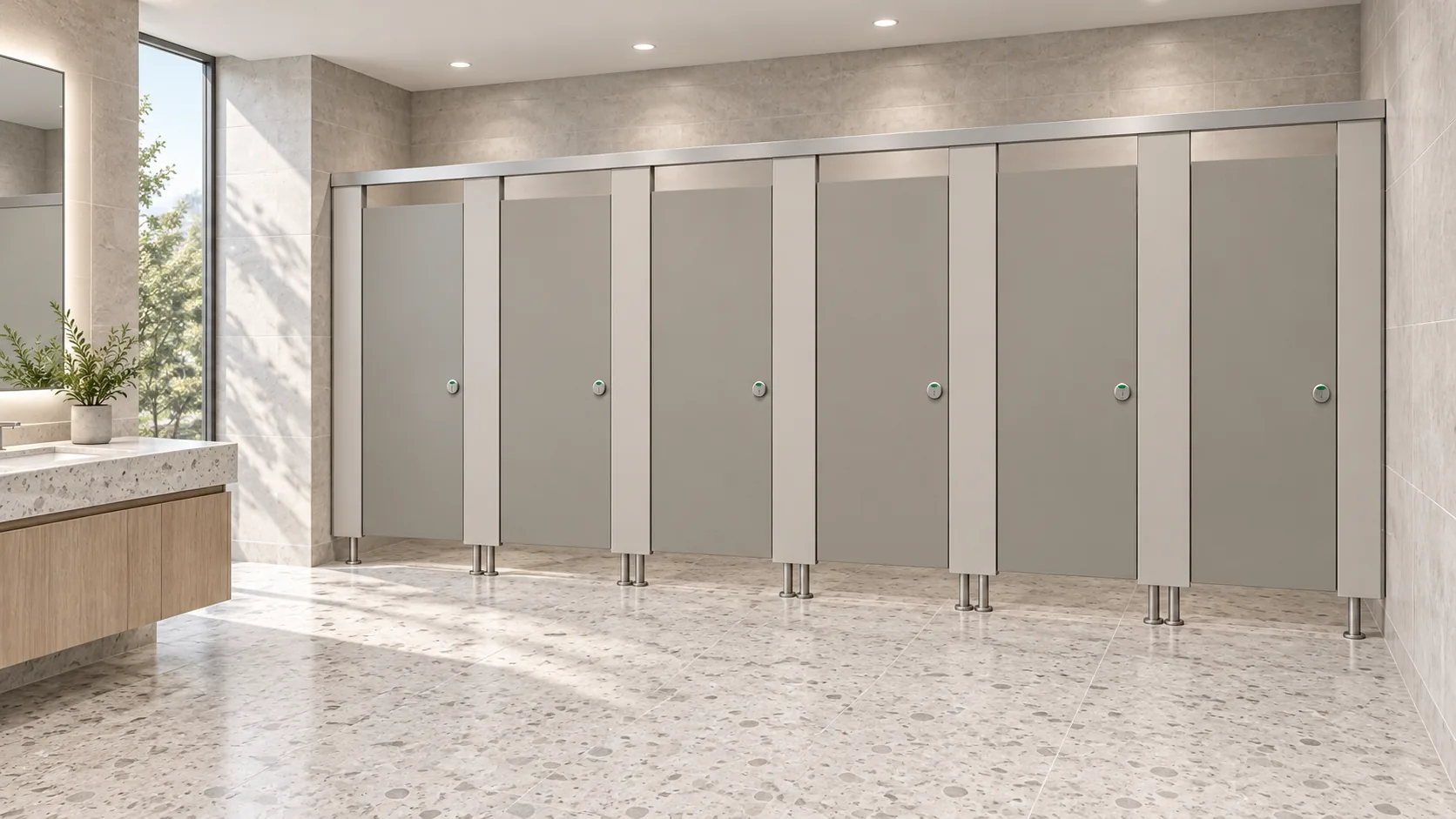
Illustrations and generic design references are useful for orientation, but they are not completed EBUNGE customer projects. They should not be read as evidence of a specific configuration, material or performance result.
Evidence note
Approved technical evidence is the only basis for project-specific material, hardware, dimension, finish, mounting or rating decisions. A finish sample approval record should point to that evidence rather than replace it.
Coordination Across Disciplines
Finish sample approval sits between design, procurement, construction and facilities management. Each discipline needs a clear role in the approval record.
Design and specification
Designers should confirm that the finish reference in the sample matches the specification and that any deviation is documented. Where the specification refers to a material family, the project team should avoid treating different families as interchangeable unless the approved evidence supports that substitution.
Procurement and order release
Procurement should not release an order against an unapproved sample or an unresolved open item. The order release should reference the approved sample record, the drawing revision and any confirmed project-specific details.
Installation and handover
Installation teams should work from the approved drawings and the released order. At handover, the cleaning documentation and the approval record should be available to the owner or facilities team.
Common Pitfalls in Finish Sample Approval
Most problems arise from treating approval as a formality. A sample approved without a drawing revision, or an order released while a technical question remains open, creates avoidable risk.
- Approving a sample without linking it to a drawing revision.
- Assuming that a visual match confirms material composition or performance.
- Releasing an order before project-specific hardware or mounting details are supported by approved evidence.
- Leaving cleaning documentation out of the approval pack.
- Treating a generic illustration as a application reference reference.
Frequently Asked Questions
What is toilet partition finish sample approval?
It is a project coordination step in which the proposed finish is reviewed against the specification, approved drawings and relevant documentation before the order is released. It is not a substitute for project-specific technical evidence.
Does a finish sample prove material composition or performance?
No.
Which drawings should be referenced in the approval record?
The record should reference the drawing revision used for layout, privacy review, door operation and support interfaces. Any change to those drawings should trigger a review of the approval record.
Can an order be released before sample approval is complete?
Releasing an order before the approval gate is closed increases the risk of mismatch. Project teams should confirm that the sample record, drawing revision and any project-specific details are supported by approved evidence before release.
How should cleaning documentation be used?
Cleaning documentation should be reviewed alongside the finish sample so that the approval decision considers maintenance expectations. It should be included in the handover information for the owner or facilities team.
Are illustrations completed EBUNGE projects?
No. Illustrations show generic design references, not completed EBUNGE customer projects. They should be used for orientation only and not as evidence of a specific configuration or result.
Conclusion: Close the Gate Before You Release
The project team should review layouts, privacy, door operation, support interfaces, cleaning documentation and applicable local requirements without asserting unverified compliance. Every project-specific material, hardware, dimension, finish, mounting or rating should be matched to approved technical evidence.
When the approval record is clear, order release becomes a controlled step rather than a hopeful one. To discuss your project requirements and the evidence needed for your approval process, contact the EBUNGE team. You can also review the toilet partition product category and explore further project resources for planning guidance.