
How to Structure a Tender Query Log for Toilet Partition Hardware
Quick project answer
A toilet partition hardware tender query log is a controlled register that captures every question, assumption and clarification raised during tender review. For overseas contractors, architects, interior designers, owners and renovation teams, the log prevents verbal agreements from disappearing and keeps project-specific decisions traceable. This guide explains how to structure that log using maintained product facts, visible evidence limits and drawing review.
EBUNGE product category includes commercial Toilet Partition / Toilet Cubicle. Every project-specific material, hardware, dimension, finish, mounting or rating still requires matching approved technical evidence.
Why a Tender Query Log Matters for Toilet Partition Hardware
Toilet partition hardware sits at the intersection of layout, privacy, door operation and support interfaces. A query log turns scattered emails and meeting notes into a single reference. It also separates confirmed product facts from project-specific requirements that need drawing review.
Without a structured log, teams risk treating illustrations as construction details or assuming that different materials are interchangeable. The log should record the question, the responsible party, the evidence required and the status. The project team should confirm project-specific requirements against the relevant approved technical evidence.
Core Sections Every Query Log Should Contain
A useful log is more than a numbered list. It needs consistent fields so that reviewers can filter by discipline, urgency and evidence status. The following structure works for most commercial toilet cubicle tenders.
- Query ID and date: a unique reference and the date the question was raised.
- Origin: drawing number, specification clause or meeting minute that triggered the query.
- Discipline: layout, privacy, door operation, support interface, cleaning or local requirement.
- Question: a clear, single-issue statement without embedded assumptions.
- Evidence required: approved technical evidence, drawing review or local documentation.
- Owner and due date: the person responsible for a response and the deadline.
- Status: open, answered, superseded or closed with reference.
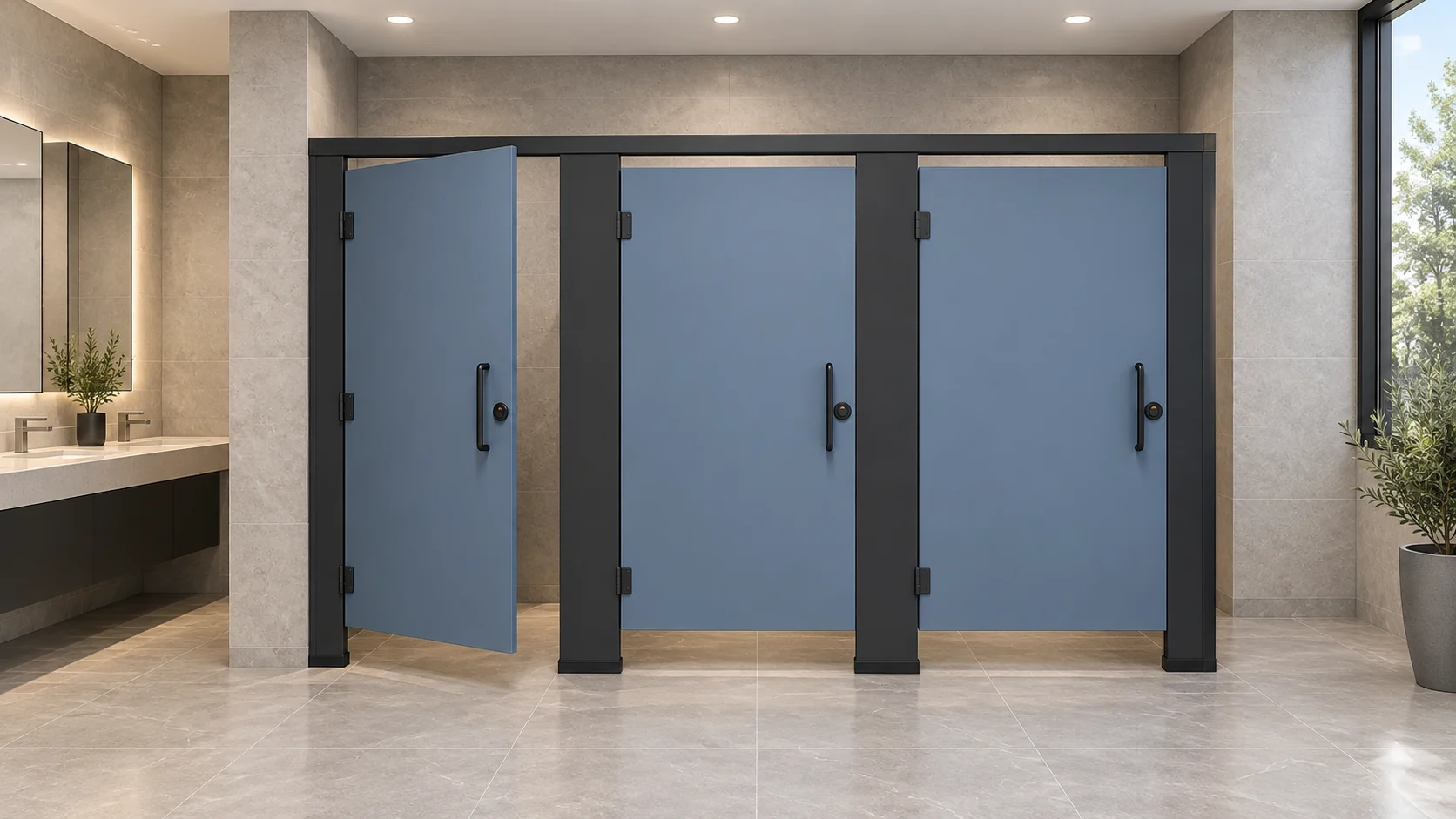
Layout and Privacy Queries
Layout queries often concern cubicle count, circulation, sightlines and privacy expectations. The log should record the project team’s review of these items without asserting unverified compliance. For example, a query might ask whether a proposed arrangement meets the owner’s privacy brief, but the answer must reference approved drawings or local requirements.
Privacy is not a single product property. It depends on panel arrangement, door operation and interface details. Do not infer hidden construction from illustrations.
Door Operation and Support Interface Queries
Door operation queries cover swing direction, clearance, latch position and hardware coordination. Support interface queries cover how partitions connect to walls, floors and adjacent elements. Both areas require project-specific evidence before any conclusion is recorded.
A query log should flag when a response depends on a structural interface that is not yet confirmed. It should also note when a hardware item is shown generically in a drawing rather than specified. The log must not treat HPL, compact laminate, phenolic or stainless steel as interchangeable. Each material family requires its own approved technical evidence.
Cleaning Documentation and Local Requirements
Cleaning documentation queries often arise when owners need to confirm maintenance routines. The log should record what documentation is requested and who will provide it. It should not claim antimicrobial or waterproof performance unless that evidence exists.
Local requirements vary by jurisdiction. The log can track applicable local requirements as a review item, but it must not assert unverified compliance. Instead, record the requirement, the evidence source and the reviewer.
Evidence Notes and Status Tracking
Every answer in the log should link to its evidence. An evidence note can be a drawing reference, a specification clause or a maintained product fact. If evidence is missing, the query remains open. This discipline prevents assumptions from becoming tender commitments.
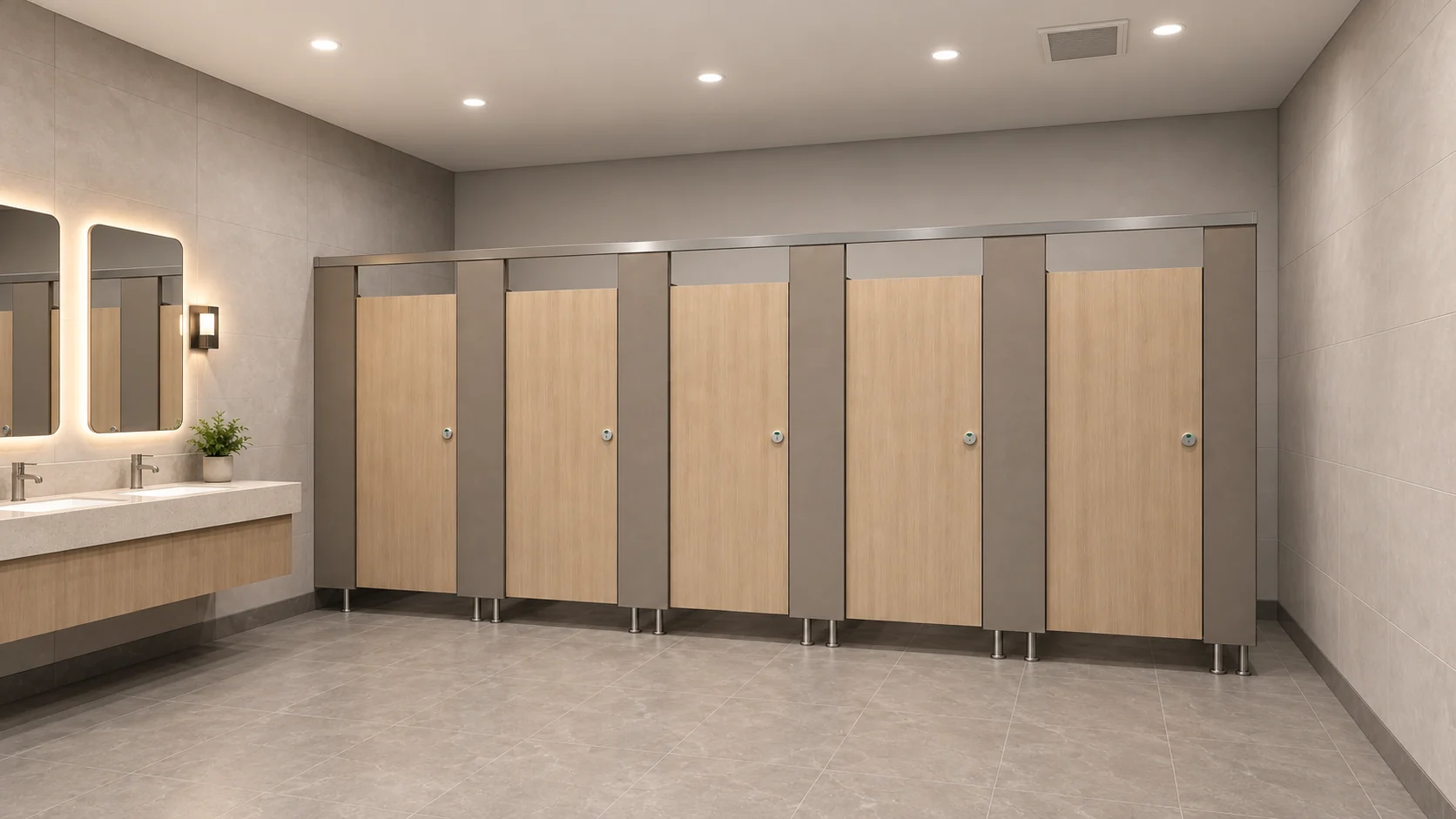
Evidence note: Illustrations show generic design references, not completed EBUNGE customer projects. Any project-specific material, hardware, dimension, finish, mounting or rating requires matching approved technical evidence.
Status tracking should be reviewed at each tender meeting. Closed queries should reference the evidence that resolved them. Superseded queries should remain visible so that later readers understand why a decision changed.
Common Pitfalls to Avoid
One common pitfall is mixing product facts with project assumptions. Another is using the log to record commercial terms that belong in a separate quotation schedule. The log should stay focused on technical and coordination queries.
A third pitfall is treating toilet cubicles as movable operable walls. They are not. Do not introduce suspended wall travel, stacking or parking mechanisms into the log. Keep the scope aligned with commercial Toilet Partition / Toilet Cubicle applications.
FAQ: Structuring a Toilet Partition Hardware Tender Query Log
What is a toilet partition hardware tender query log?
It is a controlled register that records questions, assumptions and clarifications about toilet partition hardware during tender review. It helps project teams track evidence, owners and status.
Who should maintain the query log?
The general contractor or lead designer usually maintains the log, with input from architects, owners, renovation teams and distributors. One nominated coordinator should control updates.
Can the log include material preferences?
Yes, but material preferences must be recorded as project-specific requirements. Do not treat HPL, compact laminate, phenolic or stainless steel as interchangeable. Each requires matching approved technical evidence.
How should privacy queries be handled?
Record privacy expectations as a review item linked to layout and door operation. Do not assert acoustic or visual performance without approved evidence. The project team should review drawings and local requirements.
What evidence closes a query?
A query closes when the responsible party provides approved technical evidence, a drawing review outcome or a local requirement reference. If evidence is missing, the query stays open.
Should the log include cleaning documentation?
Yes. Cleaning documentation queries should record what is requested and who will provide it. Do not claim antimicrobial or waterproof performance unless that evidence exists.
Conclusion and Next Steps
A well-structured toilet partition hardware tender query log keeps commercial toilet cubicle projects transparent. It separates confirmed product facts from project-specific requirements and ensures that every answer is backed by evidence. Start by defining the log fields, assigning a coordinator and reviewing open items at each tender meeting.
For product context, visit the EBUNGE products page. For broader guidance, explore our resources. To discuss your project requirements, contact our team.