
How Architects Coordinate Toilet Partition Hardware Across Review Cycles
Quick project answer
Review focus: review cycles.
Toilet partition hardware review cycles sit at the intersection of design intent, construction sequencing and documented evidence. For overseas project teams, the challenge is not simply choosing a cubicle type. It is keeping every hardware decision traceable across architectural, structural, MEP and procurement reviews. This guide sets out a coordination framework for architects and project teams.
It uses only confirmed product context: EBUNGE product category includes commercial Toilet Partition / Toilet Cubicle. Every project-specific material, hardware, dimension, finish, mounting or rating still requires matching approved technical evidence.
Why Hardware Review Cycles Need a Single Evidence Trail
Hardware review cycles often begin with a generic layout and end with a construction issue. Between those points, door operation, support interfaces and cleaning access may be discussed in separate meetings. Without one evidence trail, assumptions can harden into apparent requirements. A reviewer may treat an illustration as a construction detail, or treat a preliminary note as a confirmed specification.
The safer approach is to separate maintained product facts from project-specific decisions. The confirmed fact for this topic is narrow: EBUNGE product category includes commercial Toilet Partition / Toilet Cubicle. That fact supports category-level discussion. The project team should confirm project-specific requirements against the relevant approved technical evidence. Those items belong in a project evidence file.
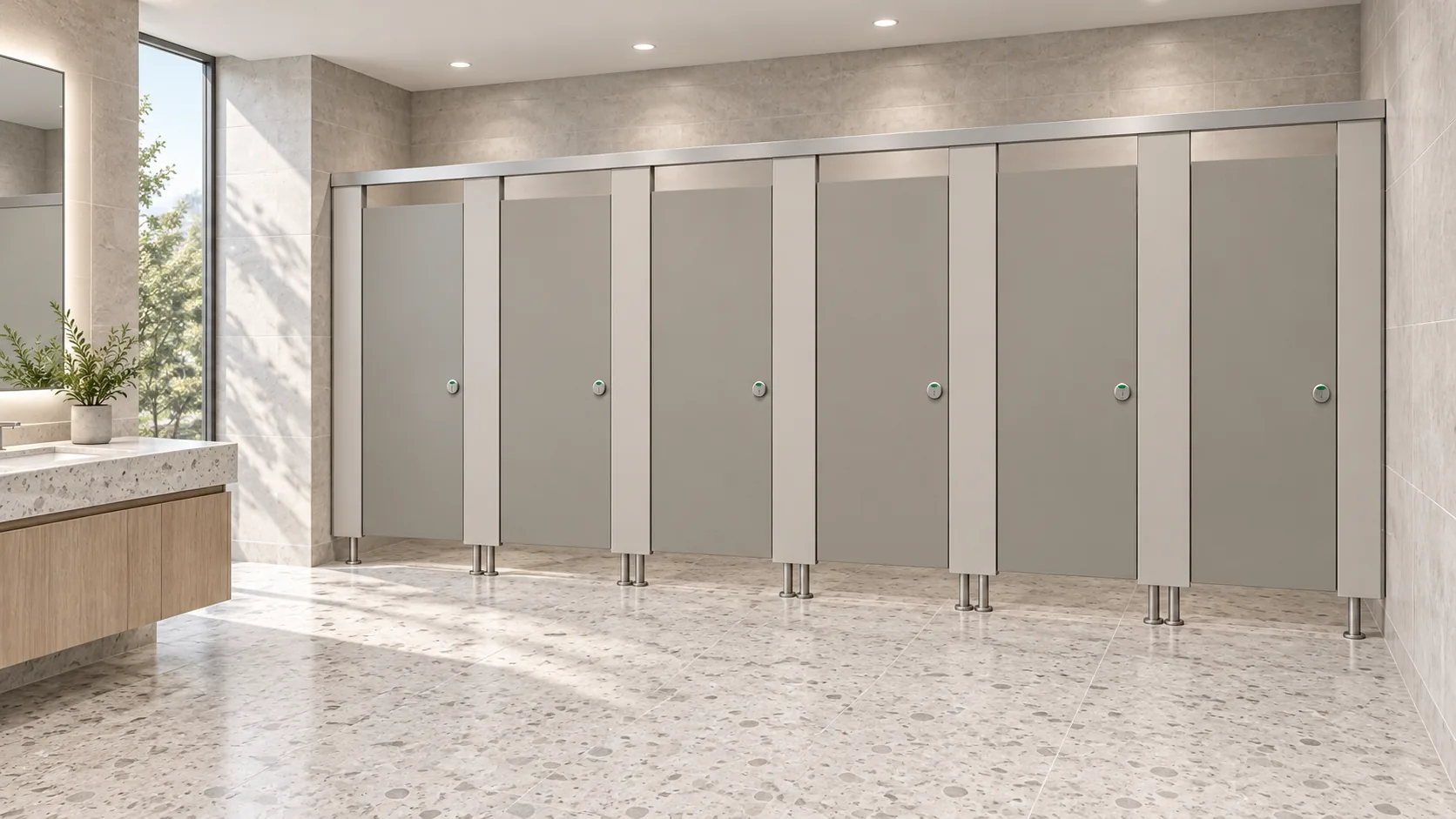
Evidence note: Illustrations show generic design references, not completed EBUNGE customer projects. Do not infer hidden construction, material composition or performance from any drawing or image.
What Architects Should Confirm Before the First Review
Before the first formal review, the project team should agree what is being reviewed. A hardware review cycle is not a single approval event. It is a sequence of checks across layout, door operation, support interfaces and documentation. Each check needs an owner and a reference document.
Layout and privacy review
Review the cubicle layout against the architectural plan. Confirm that the arrangement shown in the drawing matches the intended use of the room. Privacy expectations should be discussed as a project requirement, not assumed from a generic image. Any privacy-related performance claim requires project-specific evidence.
Door operation and support interfaces
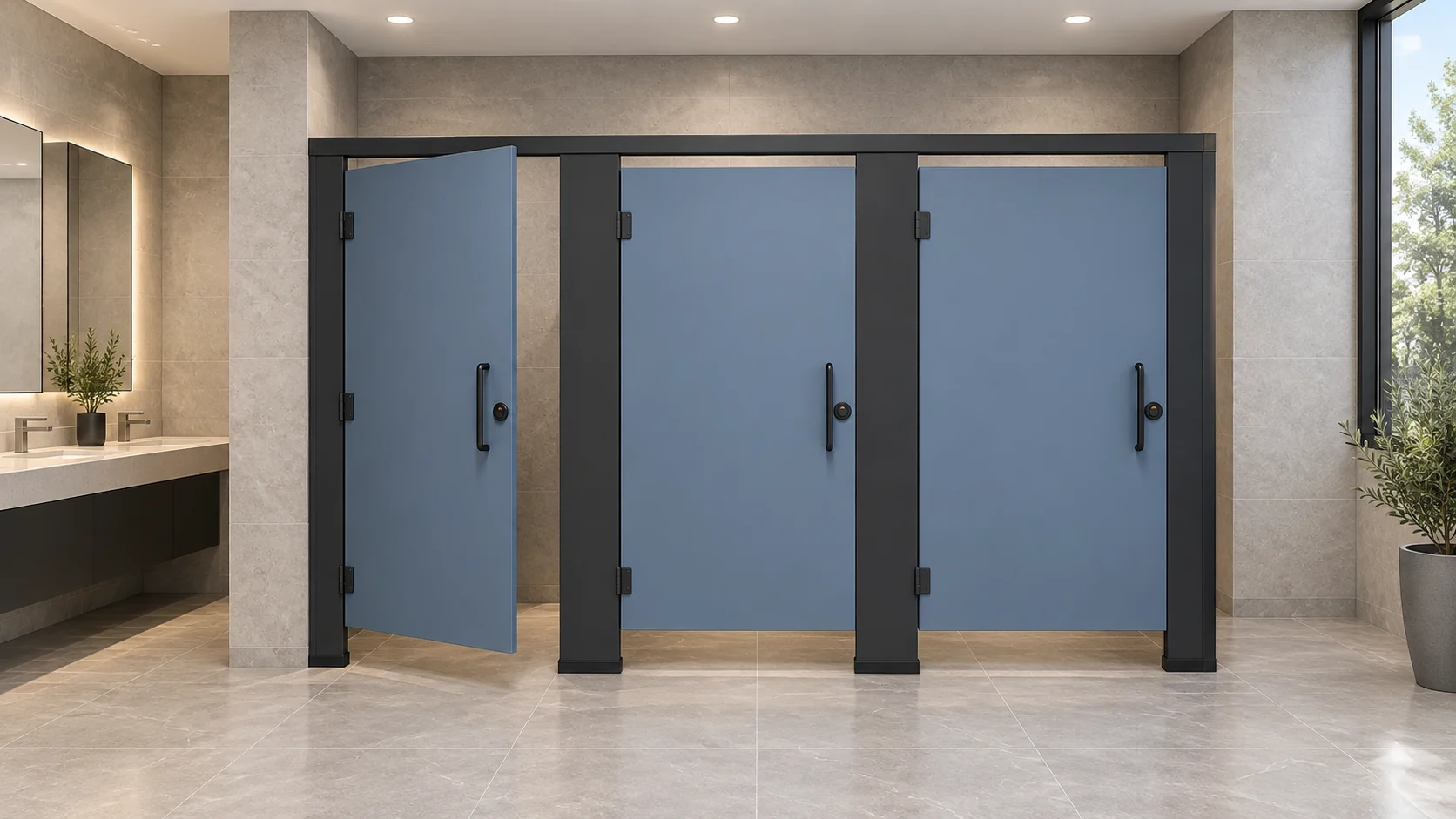
Door operation should be reviewed with the surrounding construction. The team should identify how the partition interfaces with the floor, wall and any supporting structure. Do not assume a mounting detail from an illustration.
Cleaning documentation and local requirements
Cleaning access and maintenance documentation should be part of the review pack. Applicable local requirements must be checked by the project team. This article does not assert compliance with any code or standard. It describes a review process only.
A Step-by-Step Coordination Process for Review Cycles
The following numbered process helps architects keep hardware discussions tied to evidence. It is a planning aid, not a substitute for project-specific engineering or code review.
- Register the review baseline. Record the drawing revision, date and scope of each hardware review cycle.
- Separate confirmed facts from project decisions. Keep category-level facts distinct from project-specific material, hardware, dimension, finish and mounting choices.
- Assign reviewers. Identify who checks layout, privacy, door operation, support interfaces and cleaning documentation.
- Log open items. Record every question that cannot be answered by the current evidence set.
- Request matching technical evidence. For any project-specific claim, obtain approved documentation before including it in the specification.
- Close the cycle with a controlled revision. Update the drawing and specification only after the evidence is attached.
Decision Checklist for Hardware Review Meetings
Use this checklist to keep meetings focused and to prevent unsupported conclusions from entering the record.
- Is the reviewed layout clearly marked as a generic design reference or a project-specific drawing?
- Are door operation and support interfaces described without inferring hidden construction?
- Has the project team confirmed applicable local requirements separately?
- Are cleaning documentation and maintenance access included in the review pack?
- Does every project-specific material, hardware, dimension, finish or mounting item have matching approved technical evidence?
- Are HPL, compact laminate, phenolic and stainless steel treated as distinct options rather than interchangeable?
- Have all open items been assigned an owner and a due date?
Common Coordination Gaps Across Review Cycles
Several gaps appear repeatedly in partition coordination. One is treating a generic illustration as a construction detail. Another is allowing a preliminary hardware note to become a specification without evidence. A third is reviewing door operation without reviewing the support interface at the same time.
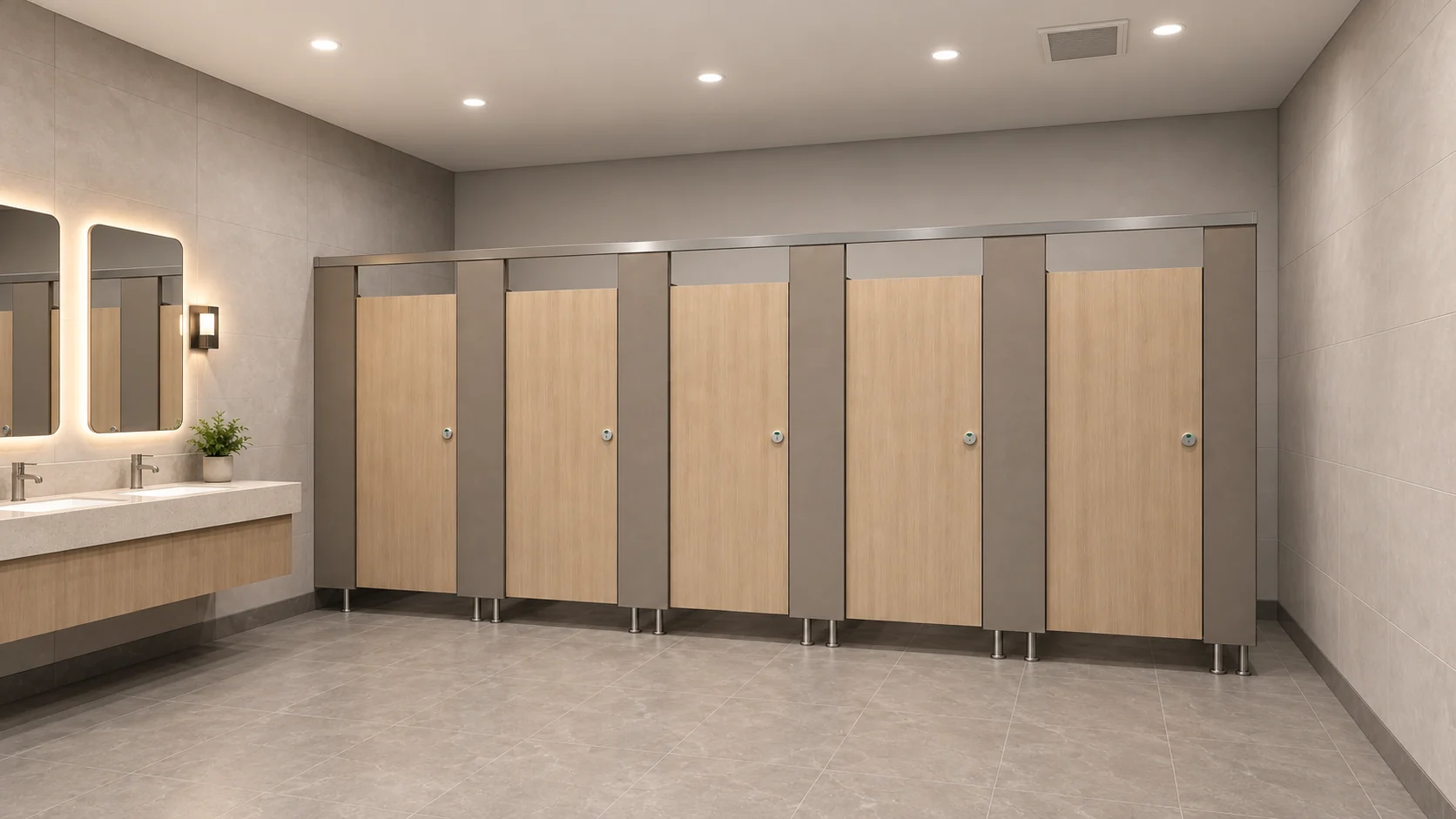
These gaps are not product defects. They are process gaps. They can be reduced by keeping a single evidence log and by requiring that every project-specific claim be traceable to an approved document. The product overview can support category-level orientation, but it does not replace project evidence.
Architects should also avoid describing toilet cubicles as movable operable walls. Toilet cubicles are not suspended wall systems, and review cycles should not introduce travel, stacking or parking mechanisms. Keeping the terminology precise prevents confusion during procurement and installation planning.
How to Document Review Outcomes Without Overclaiming
Documentation should record what was reviewed, what evidence was available and what remains open. A useful review note distinguishes three states: confirmed category facts, project-specific decisions supported by approved evidence, and unresolved items. This structure prevents a later reader from mistaking a planning assumption for a verified fact.
When a project-specific material, hardware, dimension, finish or mounting detail is required, the note should reference the matching approved technical evidence. If that evidence is not available, the item remains open. This discipline is especially important for overseas projects where multiple teams may review the same drawing at different times.
For further guidance on documentation and coordination, the resources section provides general reference material. It should be used alongside, not instead of, project-specific evidence.
Frequently Asked Questions
What is a toilet partition hardware review cycle?
It is a structured sequence of checks covering layout, privacy, door operation, support interfaces, cleaning documentation and applicable local requirements. Each cycle should record the drawing revision, reviewers and open items.
Can an architect rely on a generic illustration for hardware selection?
No. Illustrations show generic design references, not completed EBUNGE customer projects. Project-specific material, hardware, dimension, finish and mounting choices require matching approved technical evidence.
Are HPL, compact laminate, phenolic and stainless steel interchangeable?
They should not be treated as interchangeable. Each option has its own characteristics, and any project-specific use requires approved technical evidence rather than inference from an image or a general description.
How should privacy be addressed in a hardware review?
Privacy should be discussed as a project requirement. The review team should confirm what evidence supports any privacy-related claim. This article does not assert a privacy rating or performance value.
What should happen when evidence is missing?
The item should remain open. The team should request matching approved technical evidence before including the item in a specification or construction drawing.
Does this article confirm compliance with local codes?
No. Applicable local requirements must be checked by the project team. This article describes a review process and does not assert compliance with any code, standard or regulation.
Conclusion: Keep Every Cycle Evidence-Bound
Coordinating toilet partition hardware review cycles is primarily a documentation discipline. Architects and project teams should separate confirmed category facts from project-specific decisions, keep a single evidence log, and require approved technical evidence for every material, hardware, dimension, finish and mounting choice. Generic illustrations should remain clearly labeled as design references. Local requirements should be verified by the responsible project team.
EBUNGE product category includes commercial Toilet Partition / Toilet Cubicle. For project-specific questions, please contact the team to discuss your review requirements and the evidence needed for your next cycle.