
Renovation Phasing When Toilet Partition Hardware Must Stay Compatible
Quick answer: toilet partition
Toilet partition hardware renovation compatibility is rarely a single decision. It is a sequence of reviews that must survive phased handovers, partial closures and changing site conditions. EBUNGE product category includes commercial Toilet Partition / Toilet Cubicle. That confirmed scope is the starting point, not a shortcut to project-specific conclusions.
Every material, hardware item, dimension, finish, mounting condition and rating still requires matching approved technical evidence before it can be treated as settled.
Why phasing changes the compatibility question
In a phased renovation, the first completed bay becomes a reference for later work. If the project team has not agreed how door operation, support interfaces and cleaning routines will be reviewed, later phases may inherit assumptions rather than confirmed decisions. Compatibility is therefore a coordination outcome, not a product label.
Contractors, architects, interior designers, owners and distributors each hold part of the picture. The useful question is not whether a hardware set is universally compatible, but whether the project has the evidence needed for the specific interface being proposed.
Start with a documented review baseline
Before any phase is released, the project team should record what is being reviewed and what remains open. This baseline protects later phases from inheriting unverified assumptions. It also gives reviewers a clear place to attach approved technical evidence when it becomes available.
Layout and privacy review
Review cubicle layouts against the approved project drawings. Confirm sightline expectations, door swing direction and the relationship between adjacent units. Privacy expectations should be described as project requirements, not as performance claims, unless supporting evidence exists.
Door operation and support interfaces
Door operation and support interfaces are common sources of phased rework. The team should identify which interfaces are fixed by the existing structure and which remain open. Any proposed hardware, mounting detail or dimension must be matched to approved technical evidence before it is treated as compatible.
Use a phased compatibility checklist
The following checklist is a planning tool. It does not confirm compliance, performance or suitability. It helps the project team decide what must be verified before each phase proceeds.
- Confirm the approved drawing set for the phase and note revision dates.
- List every hardware item proposed for that phase and its evidence status.
- Record support interface conditions that the phase will rely on.
- Identify cleaning documentation requirements relevant to the project.
- Note applicable local requirements that the project team must review.
- Flag any item still awaiting approved technical evidence.
- Agree who signs off before the next phase begins.
Separate confirmed facts from project-specific evidence
EBUNGE product category includes commercial Toilet Partition / Toilet Cubicle. Beyond that confirmed scope, project-specific material, hardware, dimension, finish, mounting or rating requires matching approved technical evidence. This boundary keeps the renovation plan honest and prevents illustrations from being read as construction details.
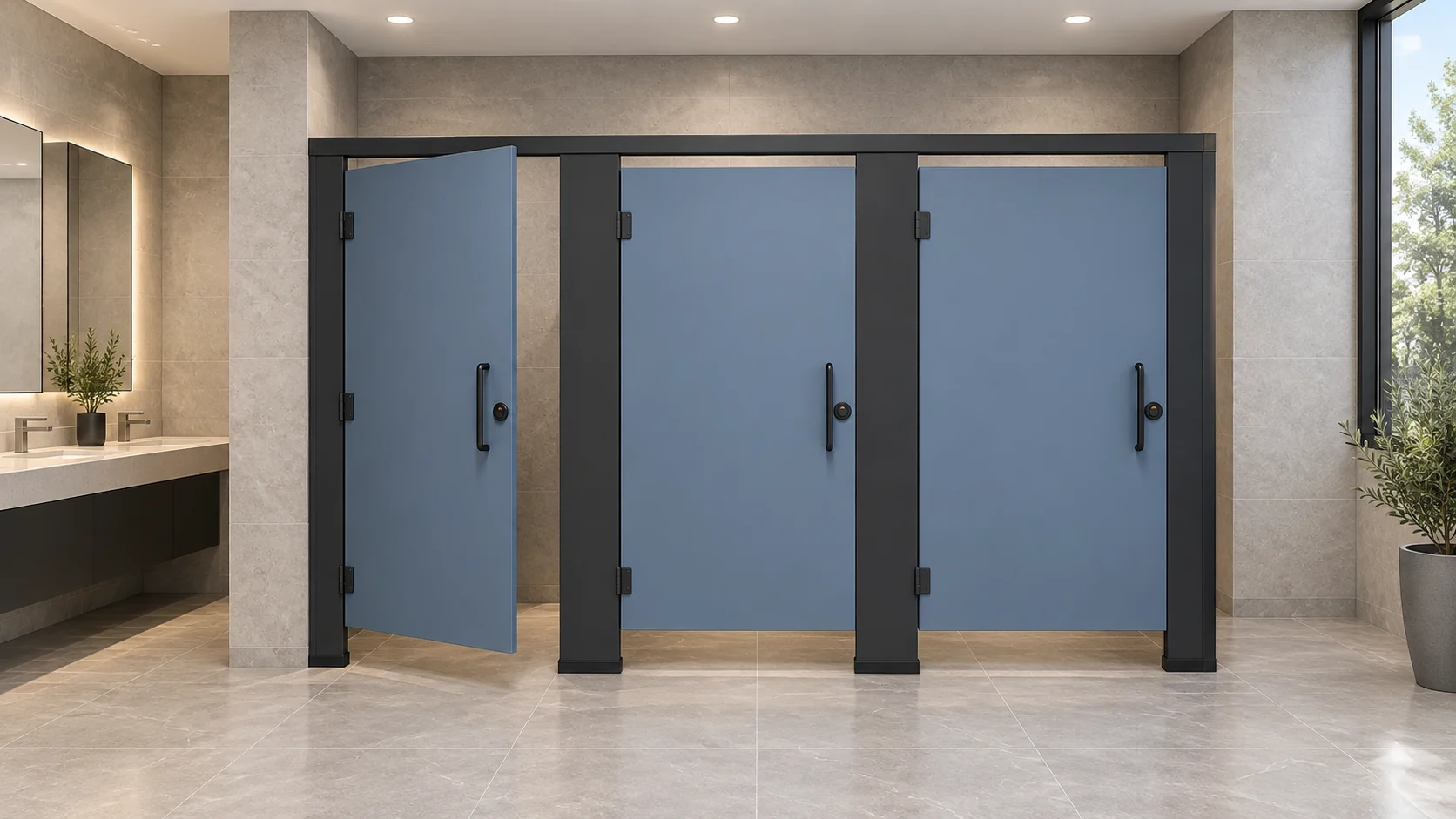
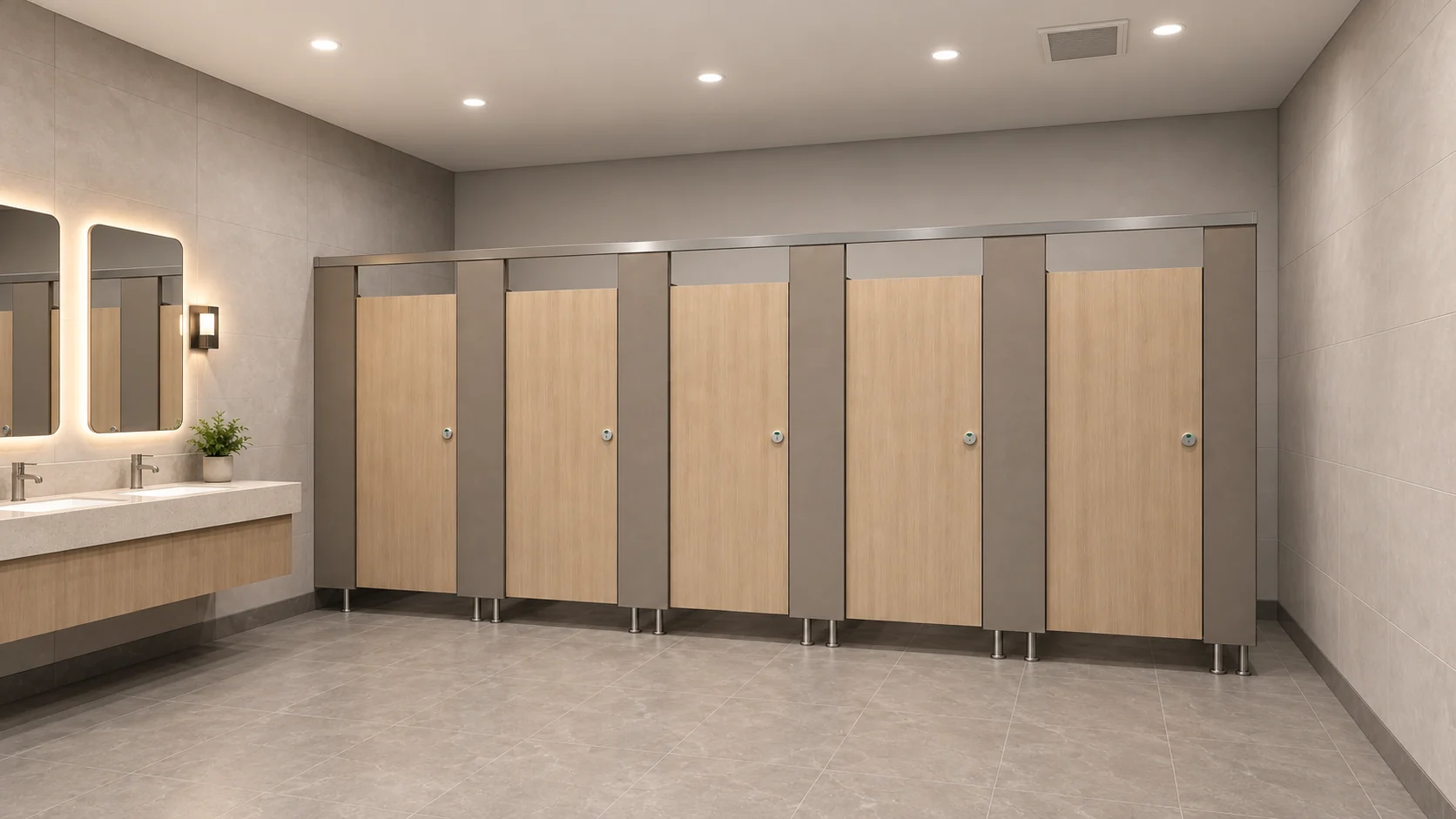
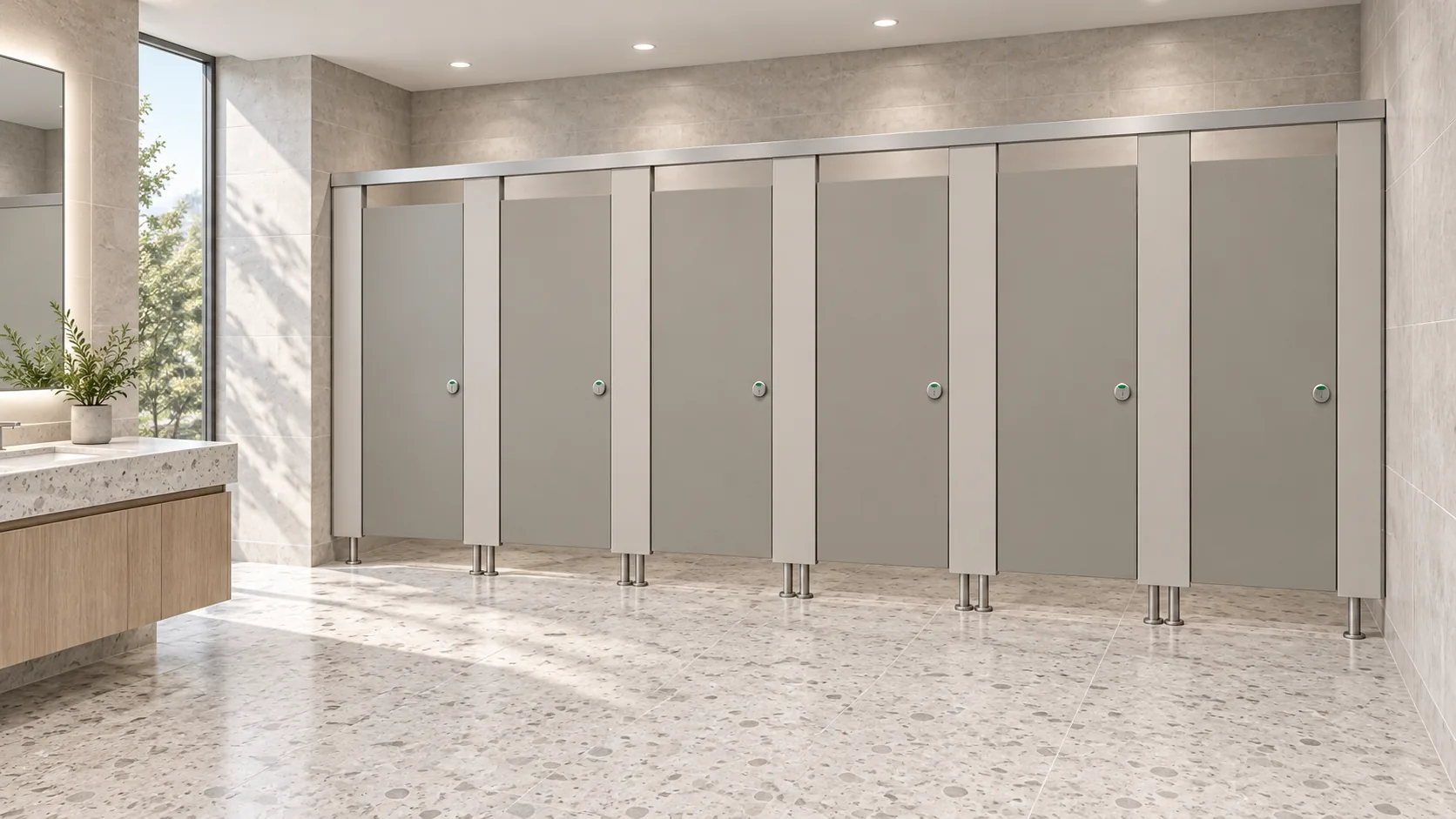
Illustrations show generic design references, not completed EBUNGE customer projects. They should not be used to infer hidden construction, material composition or performance.
When a reviewer cannot locate evidence for a proposed item, the correct action is to mark it open. Open items should not be resolved by assumption, by comparison with a different material family, or by treating HPL, compact laminate, phenolic or stainless steel as interchangeable.
Coordinate across phases without overclaiming
Phased work often overlaps with occupied areas. The project team should describe review of layouts, privacy, door operation, support interfaces, cleaning documentation and applicable local requirements without asserting unverified compliance. This wording matters because compliance is a project-specific determination, not a general product statement.
Handover between phase teams
Each phase team should receive the same baseline, the same open-item list and the same evidence register. If a later team changes a hardware item or mounting approach, the change should return to the review process rather than being absorbed silently.
Cleaning and maintenance documentation
Cleaning documentation should be reviewed as part of the project record. The team should confirm which documents are required, who holds them and how they transfer between phases. This is a documentation review, not a claim about surface performance.
Common planning risks to manage
Most compatibility problems in phased renovations come from unresolved assumptions rather than from the hardware itself. The table below lists typical risks and a planning response. It does not provide technical values or compliance conclusions.
| Planning risk | Why it matters | Planning response |
|---|---|---|
| Unverified hardware substitution | Later phases may rely on an item that was never reviewed | Return the item to the evidence register before release |
| Assumed support interface | Existing structure may not match the proposed detail | Confirm the interface against approved project evidence |
| Illustration treated as a drawing | Generic references do not define construction | Use approved project drawings for construction decisions |
| Missing cleaning documentation | Handover records become incomplete | Confirm document ownership and transfer at each phase |
Review the specification before release
A toilet partition hardware renovation compatibility specification should state what is confirmed, what is open and what evidence is required. It should not present a project-specific configuration as a general product fact. Reviewers can use the product category overview for maintained public context and the resource library for planning material, but project decisions still depend on approved technical evidence.
Before each phase is released, the project team should confirm that open items are either closed with evidence or explicitly deferred. Deferral should be recorded, not hidden in a drawing note or a verbal instruction.
Frequently asked questions
What does toilet partition hardware renovation compatibility mean in a phased project?
It means the project team has reviewed the proposed hardware, interfaces and documentation for each phase against approved technical evidence. It is a coordination status, not a universal product claim.
Can a previous phase be used as evidence for the next phase?
A previous phase can inform planning, but it does not automatically confirm compatibility for a different layout, interface or hardware item. Each change should return to the evidence review.
How should illustrations be used during renovation planning?
Illustrations show generic design references, not completed EBUNGE customer projects. They can support early discussion but should not be used to infer hidden construction, material composition or performance.
What should be included in a compatibility specification?
Include the approved drawing set, the hardware items under review, support interface conditions, cleaning documentation requirements, applicable local requirements and a clear list of open items awaiting evidence.
Who should sign off before the next phase begins?
The project team should agree a named reviewer or review group for each phase. The sign-off should confirm that open items are closed with evidence or formally deferred.
Does EBUNGE confirm project-specific compliance?
No general statement can confirm project-specific compliance. EBUNGE product category includes commercial Toilet Partition / Toilet Cubicle, and project-specific material, hardware, dimension, finish, mounting or rating requires matching approved technical evidence.
Conclusion and next step
Phased renovation success depends on disciplined review, not on assumed compatibility. Keep the confirmed scope visible, separate generic references from approved drawings, and record every open item until evidence is available. This approach helps contractors, architects, designers, owners and distributors coordinate without overclaiming.
To discuss your project requirements, contact the EBUNGE team and share your approved drawing set, phase plan and evidence register so the review can begin from a clear baseline.